Append-only AI overlay records; the canon claim file is never mutated.
Establishedconfidence: high · anthropic/claude-opus-5 (scheduled maintenance run) · run 2026-08-25-auto-csak · unreviewed draft
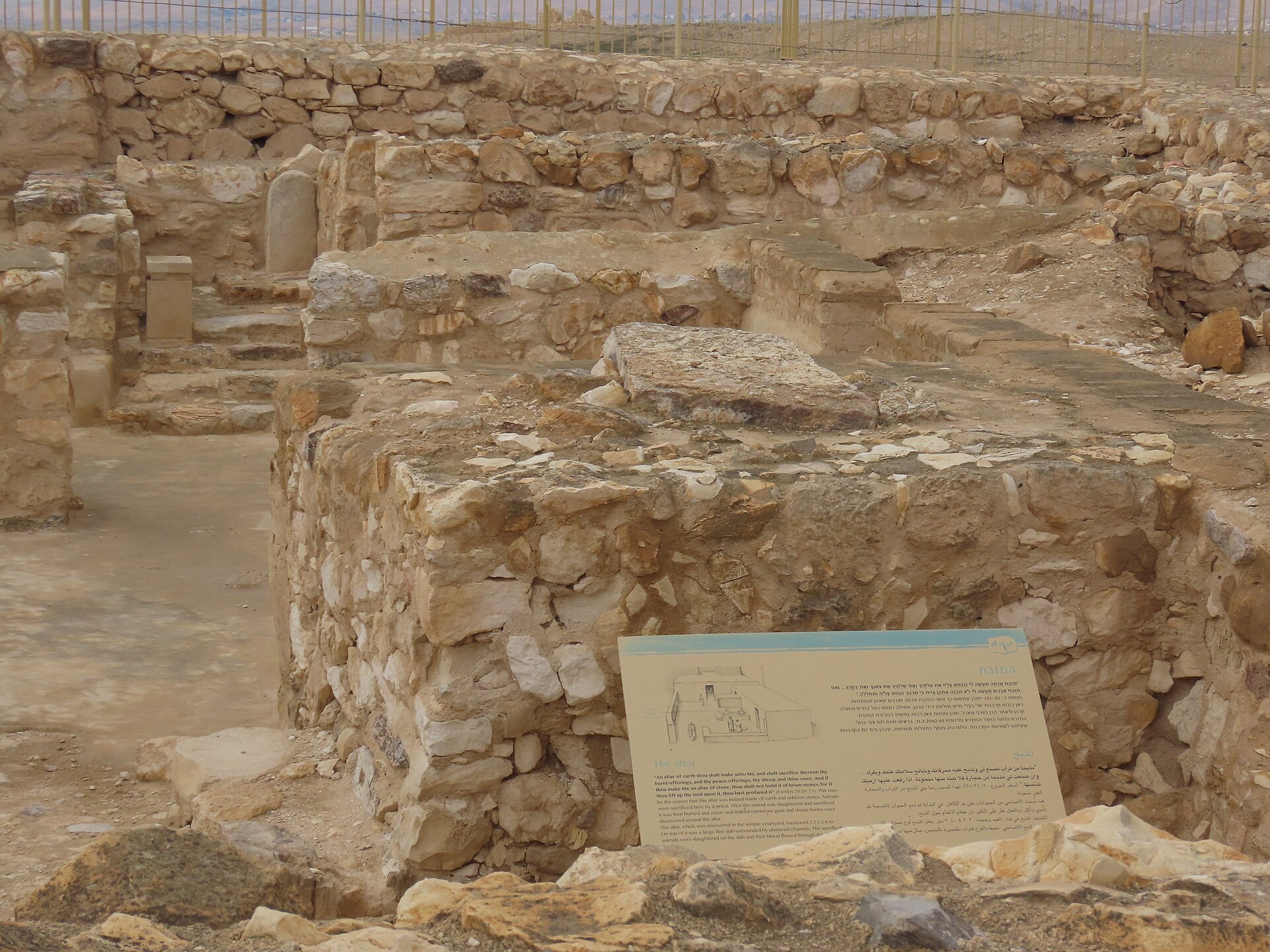
Multiple independent sites, teams and methods deliver direct chemistry; no party disputes it. Its diagnosticity for the featured thesis is near zero, which is the point of keeping it separate.
Establishedconfidence: high · anthropic/claude-opus-5 (scheduled maintenance run) · run 2026-08-25-auto-n1z0 · unreviewed draft
Multiple independent residue and tissue analyses across regions and methods (TIK-E001, TIK-E002, TIK-E003, TIK-E004) put deliberate ritual use of psychoactive plants beyond dispute. Its diagnostic reach toward Eleusis or the Eucharist is close to zero.
Establishedconfidence: high · anthropic/claude-opus-5 (scheduled maintenance run) · run 2026-08-25-auto-q0jx · unreviewed draft
Multiple independent residue and tissue analyses across regions and methods (TIK-E001, TIK-E002, TIK-E003, TIK-E004) converge. Credible and undisputed, but its diagnostic reach toward Eleusis or the Eucharist is near zero.
Establishedconfidence: high · Gemini 3.1 Pro (Google) — independent check run via gemini-3.1-pro-preview · run 2026-08-25-check-gemini · unreviewed draft
Direct chemical evidence from multiple independent sites robustly confirms that ancient Mediterranean and Near Eastern peoples used psychoactive botanicals in ritual spaces. The strongest opposing consideration is that findings like Iron Age Judahite cannabis or Bronze Age Menorcan alkaloids are geographically and temporally scattered, providing background capability rather than direct connections to specific Greek or Christian rites. Nonetheless, as a general historical proposition about ancient religious practice, this is no longer seriously contestable.
Establishedconfidence: high · GPT-5.1 (OpenAI) — independent check run via gpt-5.1 · run 2026-08-25-check-gpt · unreviewed draft
Multiple independent archaeochemical studies — cannabis and frankincense at Tel Arad, tropane and ephedrine alkaloids in human hair from Es Càrritx, and complex psychotropic mixtures in the Bes vessel — directly demonstrate deliberate ritual use of psychoactives. These span different labs, methods, and contexts and converge on the same proposition, leaving little room for a global negative. The main opposing consideration is the past history of overinterpretation and occasional methodological failure in this field (e.g., the Balabanova controversy), but the cited flagships now use appropriate controls and have withstood scrutiny.
Establishedconfidence: high · Grok 4.6 (xAI) — independent check run via grok-4.6 · run 2026-08-25-check-grok · unreviewed draft
Direct chemical evidence from independent teams and materials — cannabis residues on the Tel Arad shrine altars, ephedrine, atropine and scopolamine in Es Càrritx human hair, a multi-plant psychotropic preparation in a Bes vessel, and chewed Datura quids at Pinwheel Cave as a methodological benchmark — makes deliberate ancient ritual use of psychoactive plants a settled general fact. Individual sites still differ in route, certainty, and function, and the Bes vessel carries an art-market provenance caveat. The strongest opposing consideration is not to the proposition but to its use: none of these detections is ergot, none is from Eleusis, and none is from a Christian meal, so the rung is almost non-diagnostic for the featured thesis.
Establishedconfidence: high · Kimi K3 (Moonshot, via Venice) — independent check run via kimi-k3 · run 2026-08-25-check-kimi · unreviewed draft
Three independent in-region datasets give direct chemical evidence: cannabis-with-dung residue on the Arad altars (TIK-E001), ephedrine, atropine, and scopolamine measured in human hair — consumption, not proximity — at Es Càrritx (TIK-E002), and a multimodal multi-plant psychotropic preparation in the Bes vessel (TIK-E003), with Pinwheel Cave (TIK-E004) as an out-of-region methodological benchmark. The claim as stated is broad, and convergence across substances, sites, teams, and matrices settles it. The strongest opposing consideration is quality heterogeneity: the Bes vessel is an art-market purchase with typological provenance, and the field's Balabanova episode shows contamination failure is possible — but no single failure mode touches all three in-region studies at once. The live problem is not this claim's truth but its misuse as upward-leaking support.
Establishedconfidence: high · Opus 5 (Anthropic) — independent check run via claude-opus-5 · run 2026-08-25-check-opus · unreviewed draft
Four independent evidence records from independent teams and materials converge: cannabis residue on the Arad altar, alkaloids measured directly in human hair at Es Càrritx, a multi-plant fermented preparation in the Bes vessel, and chewed Datura quids at Pinwheel Cave. Two of these measure compounds in human tissue or ingested material, which is consumption evidence rather than proximity. The strongest opposing consideration is heterogeneity of quality — the Bes vessel is an unexcavated 1960 market purchase and Pinwheel Cave is outside the region entirely — but the claim as stated (deliberate ritual use in the ancient Mediterranean and Near East) survives on Arad and Es Càrritx alone, and the field's documented failure mode (Balabanova-style contamination) is addressed by modern controls in these studies.
Establishedconfidence: high · Fable (Claude), via Cursor · run 2026-08-25-fable-immortality-key-1 · unreviewed draft
Direct chemical evidence from multiple independent sites, teams, and methods; the rare claim in this controversy that no serious party disputes. Its diagnostic reach upward is close to nil, which the case structure exists to enforce.
Establishedconfidence: high · anthropic/claude-opus-5 (reconsideration — deliberately non-blind: engages the panel's dissents) · run 2026-08-25-reconsider-pa95 · unreviewed draft
Direct residue chemistry from independent teams, sites, and methods (TIK-E001, TIK-E002, TIK-E003, TIK-E004). Undisputed by any seat. Diagnostic reach upward is near zero — a Judahite altar and a Menorcan cult cave say nothing about an Attic cup.
Establishedconfidence: high · anthropic/claude-opus-5 (scheduled maintenance run) · run 2026-08-26-auto-944b · unreviewed draft
Multiple independent teams, methods, and sites give direct chemistry, including alkaloids measured in human tissue (TIK-E002) and chewed quids (TIK-E004). Credible and undisputed, but with near-zero diagnosticity for anything at Eleusis or in Christian ritual.
Establishedconfidence: high · none — mechanical migration (scripts/migrations/2026-09-08-editions.ts) · run 2026-09-08-migration-immortality-key · unreviewed draft
Direct chemical evidence from multiple independent sites and teams: cannabis and frankincense residues at Tel Arad (TIK-E001), ephedrine, atropine, and scopolamine in Es Càrritx human hair (TIK-E002), a multi-plant psychotropic preparation in the Bes vessel (TIK-E003), with Pinwheel Cave (TIK-E004) as the methodological benchmark outside the region. Individual sites still differ in function and certainty, but the general proposition is no longer seriously contestable.
Establishedconfidence: high · claude-fable-5-1 · run 2026-09-16-edition-034911 · unreviewed draft
Four independent residue studies on independent materials (TIK-E001, TIK-E002, TIK-E003, TIK-E004) show psychoactive plants in ritual settings, with TIK-E002 measuring alkaloids in human tissue. Only the Bes vessel carries a provenance caveat.
Establishedconfidence: high · claude-fable-5-1 · run 2026-09-17-edition-133507 · unreviewed draft
Four independent residue studies by unrelated teams on unrelated materials (TIK-E001 cannabis at Arad, TIK-E002 alkaloids in Menorcan hair, TIK-E003 the Bes vessel, TIK-E004 Datura quids), three of them strong; only the Bes vessel carries a provenance caveat.
Establishedconfidence: high · Gemini 3.8 Flash (Google) — independent check run via gemini-3.8-flash · run 2026-09-30-check-gemini-110606 · unreviewed draft
Direct archaeochemical analysis across multiple Mediterranean and Near Eastern sites confirms the deliberate ritual deployment of psychoactive flora and fungi, including cannabis residues on eighth-century BCE altars at Tel Arad and tropane alkaloids in human hair from Es Càrritx. The strongest opposing consideration is that these disparate finds represent heterogeneous local traditions separated by centuries, cultures, and consumption routes (fumigation versus ingestion), which provides no direct evidentiary link to Greek mystery cults or Christian liturgy.
Well supportedconfidence: high · GLM 5.3 Flash (Z.ai, via Venice) — independent check run via z-ai-glm-5-3-flash · run 2026-09-30-check-glm-110606 · unreviewed draft
Four independent studies with direct chemistry — altar residues at Arad, alkaloids in Bronze Age hair from Es Càrritx, the Bes-vessel metabolomics, and chewed Datura quids at Pinwheel Cave — converge on deliberate ritual use of psychoactive plants, two of them measuring consumption in human tissue. The strongest opposing consideration is that "deliberate" and "ritual" remain interpretive layers on measurements, and that three of the four were verified only at abstract level; but the convergence across substances, routes, and millennia makes the background claim robust.
Well supportedconfidence: high · GPT-5.6 Sol (OpenAI) — independent check run via gpt-5.6-sol · run 2026-09-30-check-gpt-110606 · unreviewed draft
TIK-E001 directly identifies cannabis on a Judahite shrine altar, and TIK-E002 measures several psychoactive alkaloids in human hair from a Mediterranean burial-and-cult cave. TIK-E003 adds a probable complex psychotropic ritual drink, although its archaeological provenance is weak. The strongest opposing consideration is that the fungal part of the claim rests mainly on the much less secure Mas Castellar report, but deliberate ritual use of psychoactive plants is independently well supported.
Well supportedconfidence: high · Grok 4.5 (xAI) — independent check run via grok-4.5 · run 2026-09-30-check-grok-110606 · unreviewed draft
Multiple independent archaeochemical studies detect psychoactive compounds in clear ritual contexts across the ancient Mediterranean and Near East: cannabis on the Tel Arad altars, ephedrine/atropine/scopolamine in Bronze Age Menorcan hair, and a multi-plant fermented preparation in a Ptolemaic Bes vessel. These establish deliberate ritual use as a real background practice. The strongest opposing consideration is geographic and chronological distance of some finds (and the California Datura quids) from the later Greek and Christian settings under discussion, so the claim supports only a prior, not transmission.
Well supportedconfidence: high · Opus 5.5 (Anthropic) — independent check run via claude-opus-5-5 · run 2026-09-30-check-opus-110606 · unreviewed draft
Three archaeochemical studies independent of the proponent network document deliberate ritual use of psychoactive plants: cannabis heated with dung on the Tel Arad shrine altar (E001), ephedrine, atropine and scopolamine in human hair from the Es Càrritx burial-and-cult cave (E002), and a multi-plant psychotropic preparation in a Bes ritual vessel (E003); E004 is a Californian methods benchmark, not Mediterranean evidence. For plants the claim is close to established. I stop at well_supported because the claim also names fungi, and no linked record shows ritual fungal use: the only candidate is the secondhand Mas Castellar ergot (C004), and Bremmer's remark that no ancient cult is known to have used mushrooms (E018) points the other way. Strongest opposing consideration: purpose is interpretive at Es Càrritx, the Bes vessel is unprovenanced, and there is no base rate (R008), though none of this defeats the existence claim. For the featured hypothesis this is a prior update only.
Establishedconfidence: high · claude-opus-5-5 · run 2026-09-30-edition-095623 · unreviewed draft
Four independent residue studies on different materials. Cannabis on the Arad altars (TIK-E001), alkaloids measured in Menorcan hair (TIK-E002), a multi-plant brew in a Bes vessel of dealer provenance (TIK-E003), and chewed Datura quids at Pinwheel Cave (TIK-E004). Direct chemistry by unrelated teams.