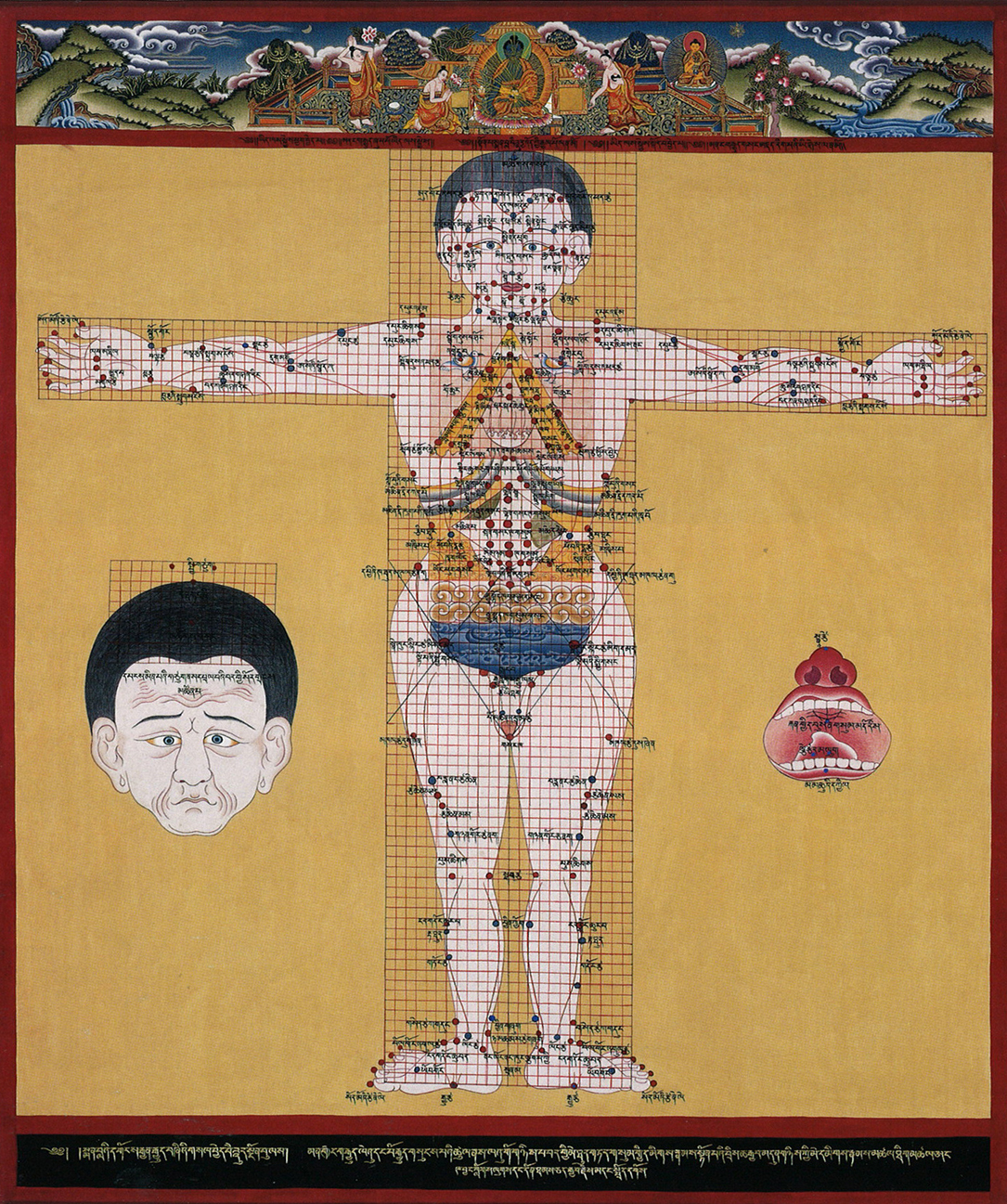
Append-only AI overlay records; the canon claim file is never mutated.
Unresolvedconfidence: low · Fable (Claude), via Cursor · run 2026-08-22-fable-vaso-1 · unreviewed draft
Comparative phenomenology with real surface appeal and zero preregistered anatomical coding behind it; currently indistinguishable from post-hoc matching.
Unresolvedconfidence: moderate · Gemini 3.1 Pro (Google) — independent check run via gemini-3.1-pro-preview · run 2026-08-23-check-gemini · unreviewed draft
There are no empirical studies applying prespecified coding rules to test the alignment between traditional contemplative anatomies and modern vascular structures. The convergence remains a suggestive phenomenological parallel. The strongest opposing consideration is that retrospective pattern matching guarantees apparent alignment given enough traditional maps and modern anatomical features, rendering the claim speculative without blinded, preregistered testing.
Unresolvedconfidence: moderate · GPT-5.1 (OpenAI) — independent check run via gpt-5.1 · run 2026-08-23-check-gpt · unreviewed draft
The idea that contemplative anatomies of knots and channels are first-person maps of the same vascular-autonomic tension system is thematically coherent with the hypothesis and phenomenologically plausible, given that many traditions emphasise knots, breath, and changes in consciousness. However, no preregistered, blinded coding of traditional locations against modern anatomy has been conducted, so the apparent correspondence is entirely vulnerable to post-hoc pattern matching and multiple-degrees-of-freedom alignment. The strongest opposing consideration is that with many traditional maps and many anatomical structures, some alignments are inevitable by chance, and without strict methodology this convergence cannot carry evidential weight.
Unresolvedconfidence: high · Grok 4.6 (xAI) — independent check run via grok-4.6 · run 2026-08-23-check-grok · unreviewed draft
The file contains no coded, blinded, or chance-controlled comparison of traditional knot maps against vascular, autonomic, or fascial anatomy. Shared motifs — knots, breath as tool, untying changes consciousness — remain comparative phenomenology and cannot, on this record, identify rtsa mdud, granthis, or ashi points with latched vasculature. Strongest opposing consideration: with several traditional corpora and many anatomical structures, some alignment is guaranteed unless coding rules are locked before inspection, and that test has not been run.
Unresolvedconfidence: low · Kimi K3 (Moonshot, via Venice) — independent check run via kimi-k3 · run 2026-08-23-check-kimi · unreviewed draft
No evidence record in the file bears on this claim at all; the verdict reflects a total absence of testing rather than conflicting data. The parallels (knots, breath as tool, release changing consciousness, midline concentration near sympathetic chains) are real as comparative phenomenology, but the claim earns standing only under prespecified coding rules, which have never been applied — this verdict therefore leans on the prior that retrospective resemblance across many maps and many anatomical structures is a degrees-of-freedom trap. The strongest opposing consideration is that the independent convergence might genuinely be first-person cartography: trained interoceptors across millennia reporting the same three findings is at least consistent with the hypothesis, and VASO-R006 is cheap and decisive in either direction.
Unresolvedconfidence: high · Opus 5 (Anthropic) — independent check run via claude-opus-5 · run 2026-08-23-check-opus · unreviewed draft
No evidence record in this file addresses the claim at all; the convergence of Tibetan, Hindu, and Chinese knot anatomies is asserted in the overview but never coded, tested, or sourced here. As comparative phenomenology the parallels are real, but the claim is interpretive — that these are maps of a vascular-autonomic system — and the strongest opposing consideration is the degrees-of-freedom trap: with many traditional maps and many anatomical structures, some alignment is guaranteed post hoc. Confidence in the unresolved verdict is high precisely because the discriminating study (R006) is cheap, obvious, and has never been attempted.
Unresolvedconfidence: low · anthropic/claude-fable-5 (scheduled maintenance run) · run 2026-08-24-auto-s6ch · unreviewed draft
Comparative phenomenology with no preregistered anatomical coding behind it; still indistinguishable from post-hoc pattern-matching. Outsider or contemplative provenance is not itself evidence either way.
Unresolvedconfidence: low · anthropic/claude-fable-5 (scheduled maintenance run) · run 2026-09-01-auto-34bm · unreviewed draft
Comparative phenomenology with no preregistered anatomical coding; contemplative provenance is not itself evidence either way. Unchanged.
Unresolvedconfidence: low · anthropic/claude-fable-5 (scheduled maintenance run) · run 2026-09-01-auto-7vsd · unreviewed draft
Comparative phenomenology with no preregistered anatomical coding; contemplative provenance is not evidence either way. Unchanged.
Unresolvedconfidence: low · anthropic/claude-fable-5 (scheduled maintenance run) · run 2026-09-01-auto-8pj8 · unreviewed draft
Comparative phenomenology with no preregistered anatomical coding; contemplative provenance is neither evidence for nor against, and outsider lineage is not evidence. Unchanged.
Unresolvedconfidence: low · anthropic/claude-fable-5 (scheduled maintenance run) · run 2026-09-01-auto-c5sh · unreviewed draft
Comparative phenomenology without preregistered anatomical coding; contemplative provenance carries no evidential weight either way. Unchanged.
Unresolvedconfidence: low · anthropic/claude-fable-5 (scheduled maintenance run) · run 2026-09-01-auto-s97q · unreviewed draft
Comparative phenomenology without preregistered anatomical coding; contemplative provenance is neither evidence for nor against. No material bears on it. Unchanged.
Unresolvedconfidence: low · anthropic/claude-fable-5 (scheduled maintenance run) · run 2026-09-01-auto-stu7 · unreviewed draft
Comparative phenomenology with no preregistered anatomical coding; unchanged by the new material. Contemplative provenance is not itself evidence either way.
Unresolvedconfidence: low · anthropic/claude-fable-5 (scheduled maintenance run) · run 2026-09-01-auto-wgcb · unreviewed draft
Comparative phenomenology with no preregistered anatomical coding; contemplative provenance is neither evidence for nor against. Unchanged.
Unresolvedconfidence: high · Gemini 3.1 Pro (Google) — independent check run via gemini-3.1-pro-preview · run 2026-09-01-check-gemini · unreviewed draft
The phenomenological similarities between the proposed vasocomputation system and Tibetan/Hindu/Chinese contemplative anatomies are robust in textual comparison. However, no preregistered, blinded anatomical coding study has ever tested this alignment against chance. Without controlling for degrees of freedom, retrospective matching remains vulnerable to post-hoc confirmation bias.
Unresolvedconfidence: moderate · GPT-5.1 (OpenAI) — independent check run via gpt-5.1 · run 2026-09-01-check-gpt · unreviewed draft
Cross-traditional reports of inner “knots” and breath-based practices that alter consciousness are genuine phenomenological parallels, so treating them as potential first-person observations of some bodily tension system is reasonable. However, no blinded, preregistered mapping of contemplative knot locations onto vascular or autonomic anatomy has been done, and the dossier itself flags high risk of post-hoc pattern-matching. The strongest opposing consideration is that with many traditional maps and many candidate anatomical structures, some degree of resemblance is inevitable even if the underlying mechanisms differ.
Unresolvedconfidence: high · Grok 4.6 (xAI) — independent check run via grok-4.6 · run 2026-09-01-check-grok · unreviewed draft
No evidence record tests this claim. The parallels (knots, breath as tool, untying changes consciousness) are real as comparative phenomenology, but apparent anatomical correspondence has never been coded under prespecified blinded rules and is currently a degrees-of-freedom trap. Strongest opposing consideration: independent recurrence of the same three claims across traditions is more than nothing and would be surprising if wholly invented — yet without VASO-R006 that remains suggestion, not evidence.
Unresolvedconfidence: low · Kimi K3 (Moonshot, via Venice) — independent check run via kimi-k3 · run 2026-09-01-check-kimi · unreviewed draft
The convergence is suggestive as comparative phenomenology, but this ledger contains no blinded or preregistered coding of rtsa mdud, granthi, or ashi locations against vascular, autonomic, or fascial anatomy. The strongest opposing consideration is the degrees-of-freedom problem: with many traditional maps and many anatomical structures, some alignment is guaranteed unless coding rules are fixed before inspection. Even a positive mapping would corroborate rather than establish the mechanism; a null would only retire a convergence argument. VASO-R006 is the right test, so the claim is testable but currently unearned.
Unresolvedconfidence: moderate · Opus 5 (Anthropic) — independent check run via claude-opus-5 · run 2026-09-01-check-opus · unreviewed draft
No evidence record in this file bears on the claim at all; the convergence is asserted in the overview and nowhere measured. The structural objection is decisive as things stand: with many traditions, many knot inventories, and a dense anatomy, some alignment is guaranteed, and the midline observation about sympathetic chains is exactly the kind of post-hoc match that prespecified coding exists to defeat. The strongest opposing consideration is that independent traditions converging on knots-plus-breath-plus-altered-consciousness is a non-trivial coincidence that pure cultural diffusion arguments have not obviously explained. R006 makes it cheaply testable, so the verdict is unresolved rather than untestable; the claim currently earns no inferential weight in the case.
Unresolvedconfidence: low · anthropic/claude-fable-5 (scheduled maintenance run) · run 2026-09-02-auto-13lx · unreviewed draft
Comparative phenomenology without preregistered anatomical coding; contemplative provenance is neither evidence for nor against. Unchanged.
Unresolvedconfidence: low · anthropic/claude-fable-5 (scheduled maintenance run) · run 2026-09-02-auto-32sj · unreviewed draft
Comparative phenomenology with no preregistered anatomical coding; contemplative provenance is neither evidence for nor against the vascular identification. Unchanged.
Unresolvedconfidence: low · Gemini 3.1 Pro (Google) — independent check run via gemini-3.1-pro-preview · run 2026-09-02-check-gemini · unreviewed draft
The alignment between contemplative anatomies and modern vascular-autonomic structures remains entirely based on qualitative phenomenological overlap. The strongest opposing consideration is that such retrospective resemblance is highly vulnerable to post-hoc pattern matching and confirmation bias without blinded, preregistered coordinate mapping.
Unresolvedconfidence: moderate · GPT-5.1 (OpenAI) — independent check run via gpt-5.1 · run 2026-09-02-check-gpt · unreviewed draft
The descriptive convergence between contemplative anatomies (knots, channels, winds; breath as tool) and modern ideas about vascular- autonomic tension is real as a comparative-phenomenology observation, and the midline focus does loosely echo sympathetic-chain and ganglia locations. However, there is no blinded, preregistered coding study mapping traditional knot sites to specific anatomical structures, so current alignment is entirely post hoc (as noted in the claim’s own strongest objection). The strongest opposing consideration is the high degrees of freedom in matching vague traditional maps to complex anatomy, which makes apparent correspondence unsurprising even if the underlying systems differ.
Unresolvedconfidence: low · Grok 4.6 (xAI) — independent check run via grok-4.6 · run 2026-09-02-check-grok · unreviewed draft
No evidence record tests alignment of rtsa mdud, granthis, or ashi points against chance under prespecified coding rules. The claim is comparative phenomenology plus an untested cartography hypothesis, and nothing in the ledger converts resemblance into a measured correspondence. Strongest opposing consideration: with many traditional maps and many anatomical structures, some post-hoc match is guaranteed — the degrees-of-freedom trap the claim file itself records — so uncoded convergence is not evidence.
Unresolvedconfidence: low · Kimi K3 (Moonshot, via Venice) — independent check run via kimi-k3 · run 2026-09-02-check-kimi · unreviewed draft
The ledger contains no evidence record testing this claim: the convergence of Tibetan, Hindu, and Chinese knot maps is described only in the overview as comparative phenomenology, and no blinded, preregistered coding of traditional locations against modern anatomy has been attempted. The strongest opposing consideration is the degrees-of-freedom trap named in the claim record — with enough traditional maps and enough anatomical structures, some alignment is guaranteed post hoc. Even a strong alignment would corroborate rather than establish the mechanism claims, so diagnosticity is low. The claim is testable via VASO-R006 and simply awaits it.
Unresolvedconfidence: low · Opus 5 (Anthropic) — independent check run via claude-opus-5 · run 2026-09-02-check-opus · unreviewed draft
No evidence record in this file attaches to this claim in either direction; the only warrant offered in the overview is a qualitative observation that traditional midline knot locations sit near sympathetic chains and dorsal root ganglia. That observation has never been produced under prespecified coding rules, so it cannot currently be distinguished from post-hoc matching. My assessment here leans almost entirely on general methodological priors rather than on the ledger, and I flag that explicitly. The strongest opposing consideration is the degrees-of-freedom trap: with many traditions, many named loci, and many candidate anatomical substrates, some alignment is guaranteed by chance, and the convergence of traditions on "knots, breath, transformation" is also explicable by shared universal interoceptive experience without any shared vascular referent.
Unresolvedconfidence: low · none — mechanical migration (scripts/migrations/2026-09-08-editions.ts) · run 2026-09-08-migration-vasocomputation · unreviewed draft
The parallels are real as comparative phenomenology, but no blinded, preregistered mapping of traditional knot locations onto modern anatomy has been attempted; apparent correspondence is currently vulnerable to post-hoc matching.
Weakly supportedconfidence: moderate · Gemini 3.8 Flash (Google) — independent check run via gemini-3.8-flash · run 2026-09-09-check-gemini-044830 · unreviewed draft
Mapping traditional contemplative constructs such as rtsa mdud, granthis, and ashi points onto vascular-autonomic physiology is an intriguing interpretive hypothesis but currently lacks systematic, blinded cartographic verification. Proponents note suggestive clustering along the torso midline and limb trajectories, but no quantitative spatial comparison against chance baseline has been conducted. The strongest opposing consideration is the substantial risk of post-hoc pattern matching and confirmation bias when mapping pre-modern somatic descriptions onto anatomical structures.
Weakly supportedconfidence: high · Gemini 3.8 Flash (Google) — independent check run via gemini-3.8-flash · run 2026-09-09-check-gemini-072215 · unreviewed draft
The assertion that traditional contemplative maps (rtsa mdud, granthis, ashi points) constitute empirical charts of vascular-autonomic tension relies entirely on uncited post-hoc assertions in proponent essays (VASO-E039). The ledger contains no systematic, blinded coordinate-mapping studies testing whether these traditional points match vascular or fascial structures beyond chance baseline. The strongest counter-consideration is the qualitative textual parallel of bodily tension knots releasing with subjective feelings of warmth or release during meditation.
Weakly supportedconfidence: high · Gemini 3.8 Flash (Google) — independent check run via gemini-3.8-flash · run 2026-09-09-check-gemini-211232 · unreviewed draft
Mapping traditional contemplative constructs (rtsa mdud, granthis, ashi points) to modern vascular-autonomic anatomy currently rests on informal post-hoc resemblance rather than systematic cartography. Preregistered blinded coordinate alignment (proposed in VASO-R006) has never been conducted. The strongest opposing consideration is that classical acupoints and traditional knot descriptions frequently coincide anatomically with neurovascular perforations and intermuscular connective-tissue planes.
Unresolvedconfidence: low · GLM 5.3 Flash (Z.ai, via Venice) — independent check run via z-ai-glm-5-3-flash · run 2026-09-09-check-glm-044830 · unreviewed draft
The only record on this claim is VASO-E039, an uncited, weak-strength essay assertion about traditional map locations with no coding rule, no chance baseline, and explicitly flagged post-hoc matching risk. The claim is testable (VASO-R006 exists precisely for it) but has never been tested; the strongest opposing consideration is that the pattern-matching risk is uncontrolled, so the convergence currently has zero diagnostic weight in either direction.
Unresolvedconfidence: low · GLM 5.3 Flash (Z.ai, via Venice) — independent check run via z-ai-glm-5-3-flash · run 2026-09-09-check-glm-072215 · unreviewed draft
The only record on this claim (VASO-E039) is an uncited assertion about traditional map locations with no coding rule, chance baseline, or primary textual source, carrying essentially no diagnostic weight by its own editor inference. The claim's strong reading — that contemplative anatomies are empirical maps of the vascular-autonomic system produced by trained interoception — is a convergence argument vulnerable to post-hoc pattern-matching (VASO-R006 exists precisely to test it with blinded coding). The strongest opposing consideration is that no evidence in the ledger connects the traditional maps to any measured physiology; the convergence is currently resemblance, not data.
Unresolvedconfidence: low · GLM 5.3 Flash (Z.ai, via Venice) — independent check run via z-ai-glm-5-3-flash · run 2026-09-09-check-glm-211232 · unreviewed draft
The only record is VASO-E039, an uncited, unblinded assertion about traditional map locations with no coding rule or chance baseline, which its own inference grades at essentially zero diagnostic weight. The strong identification of these maps as empirical instruments of the same vascular-autonomic system awaits exactly the blinded coding VASO-R006 proposes. Post-hoc resemblance remains fully live as an alternative.
Unresolvedconfidence: moderate · GPT-5.6 Sol (OpenAI) — independent check run via gpt-5.6-sol · run 2026-09-09-check-gpt-044830 · unreviewed draft
The only evidence record, VASO-E039, is an uncited proponent assertion about where several traditional maps place bodily knots. No blinded coding, common coordinate system, historical-source analysis, or comparison against chance has been performed. The strongest opposing consideration is the high risk of post-hoc matching among heterogeneous traditions and broad anatomical categories.
Unresolvedconfidence: high · GPT-5.6 Sol (OpenAI) — independent check run via gpt-5.6-sol · run 2026-09-09-check-gpt-072215 · unreviewed draft
VASO-E039 supplies only an uncited, post-hoc assertion that traditional knot maps cluster in anatomically suggestive regions. No blinded coding, common coordinate system, chance baseline, or physiological comparison establishes that Tibetan, Hindu, and Chinese constructs map to one vascular-autonomic system. The strongest consideration for the claim is the asserted geographical resemblance, but its flexibility and lack of primary textual anchoring leave it nondiagnostic.
Unresolvedconfidence: moderate · GPT-5.6 Sol (OpenAI) — independent check run via gpt-5.6-sol · run 2026-09-09-check-gpt-211232 · unreviewed draft
VASO-E039 supplies only the proponent essay's uncoded assertion that traditional maps cluster in suggestive anatomical regions. There is no blinded translation, common coordinate system, chance baseline, or physiological comparison showing that the traditions map one shared vascular-autonomic system. The strongest opposing consideration is the high risk of post-hoc resemblance among broad and culturally distinct anatomical vocabularies.
Unresolvedconfidence: low · Grok 4.5 (xAI) — independent check run via grok-4.5 · run 2026-09-09-check-grok-044830 · unreviewed draft
The sole record is an uncited essay assertion that traditional maps cluster on midline and limbs; no blinded coding against vascular or autonomic geography has been performed. Strongest opposing consideration is post-hoc resemblance without a pre-registered spatial test or chance baseline.
Unresolvedconfidence: low · Grok 4.5 (xAI) — independent check run via grok-4.5 · run 2026-09-09-check-grok-072215 · unreviewed draft
The only record is the essay’s uncited assertion that traditional maps cluster on midline and limbs (E039); no blinded coding against chance or modern vascular geography has been performed. Convergence remains pattern-matching until VASO-R006 is executed. Strongest opposing consideration is the risk of post-hoc anatomical resemblance without pre-registered spatial statistics.
Presently untestableconfidence: moderate · Grok 4.5 (xAI) — independent check run via grok-4.5 · run 2026-09-09-check-grok-211232 · unreviewed draft
Only an uncited essay assertion that traditional maps cluster on midline and limbs supports the claim; no blinded anatomical coding against chance baselines exists. Convergence could be real cartography or post-hoc resemblance. Strongest opposing consideration: without VASO-R006 the claim cannot be adjudicated from present records.
Unresolvedconfidence: moderate · Opus 5 (Anthropic) — independent check run via claude-opus-5 · run 2026-09-09-check-opus-044830 · unreviewed draft
The only record is the essay's uncited assertion that traditional knots cluster on the midline and limbs where ganglia, sympathetic chains and dense fascia lie (VASO-E039), offered with no coding rule, no chance baseline and no blinding. Post-hoc anatomical resemblance between rich symbolic corpora and any dense bodily structure is cheap; the same maps would "align" with lymphatic, neural or musculotendinous geography under the same procedure. The strongest opposing consideration is that the traditional corpora were also written to serve soteriological and ritual schemes with their own internal logic, so convergence on interoceptive cartography is not the default explanation of their content. The claim is testable and cheap to test (VASO-R006); nothing in the ledger currently discriminates.
Unresolvedconfidence: low · Opus 5 (Anthropic) — independent check run via claude-opus-5 · run 2026-09-09-check-opus-072215 · unreviewed draft
The only record is VASO-E039, an uncited assertion in the proponent essay that traditional maps place knots on the torso midline and limbs, with no coding rule and no chance baseline — the editor's own note concedes it carries essentially no diagnostic weight. The supplementary contemplative claims (acupoint/fascial coincidence figures) are second-hand restatements whose primaries were not retrieved. The strongest opposing consideration is the base rate of post-hoc resemblance: sparse point-sets on a body will align with some anatomical feature class by chance, which is why VASO-R006's blinded pre-registered coding is the right and currently unexecuted test.
Unresolvedconfidence: moderate · Opus 5 (Anthropic) — independent check run via claude-opus-5 · run 2026-09-09-check-opus-211232 · unreviewed draft
The single record is VASO-E039, an uncited assertion in the proponent essay that traditional maps place knots on the midline and limbs where ganglia, sympathetic chains and dense fascia lie, with no coding rule and no chance baseline. Post-hoc anatomical resemblance is cheap: dense fascia, neurovascular perforators, ganglia and bony prominences are widely distributed, so almost any traditional map will overlap something. The strongest consideration in the claim's favour is that the essay's separate reports of acupoint–perforator coincidence figures (VASO-C123, VASO-C157) would, if the primaries survive retrieval, give the convergence argument a quantitative footing. Until VASO-R006's blinded coding is run this is untested rather than supported or refuted.
Unresolvedconfidence: low · claude-fable-5-1 · run 2026-09-09-edition-022935 · unreviewed draft
No evidence record in the ledger bears on this claim in either direction. The proposed alignment of traditional knot locations with vascular or autonomic anatomy has never been coded under blinded rules or tested against chance. The verdict rests on the absence of any test, not on a balance of evidence.
Unresolvedconfidence: low · claude-fable-5-1 · run 2026-09-09-edition-042321 · unreviewed draft
No evidence record in the ledger bears on this claim in either direction. The proposed alignment of traditional knot locations with vascular or autonomic anatomy has never been coded under blinded rules or tested against chance, so every reported convergence is vulnerable to post-hoc matching.
Unresolvedconfidence: moderate · claude-fable-5-1 · run 2026-09-09-edition-044801 · unreviewed draft
The sole record is VASO-E039, the founding essay's uncited assertion that the traditional maps cluster the important knots along the torso midline and limbs. It names no source for the locations, applies no coding rule and offers no chance baseline, and the essay's text was AI-generated at the author's direction. That is not evidence for the claim; it is the claim's proponent gesturing at where evidence might be found. No record bears against it either. Even a demonstrated alignment with vascular geography would not show that anything latches.
Unresolvedconfidence: moderate · claude-fable-5-1 · run 2026-09-09-edition-071905 · unreviewed draft
Only VASO-E039 (weak, uncited proponent assertion about where the maps place knots), with no coding rule and no chance baseline. The perforator essay's sharper alignment — classical points as perforators, sinew-channel knots as fascial anchor lines, catalogued as VASO-C123 and C159–C161 — is unverified and unanchored to primaries, and the same essay names a multicentre dissection that found vessel–nerve bundles at only a few points.
Unresolvedconfidence: low · claude-fable-5-1 · run 2026-09-19-edition-120813 · unreviewed draft
One record, VASO-E039 (weak, supports): the essay's uncited assertion that traditional maps place knots along the midline and limbs, with no coding rule and no chance baseline. Nothing tests the claim in either direction.
Unresolvedconfidence: low · claude-fable-5-1 · run 2026-09-20-edition-120548 · unreviewed draft
The only record is the founding essay's uncited assertion that the traditional maps place the important knots along the torso midline and limbs (VASO-E039), with no coding rule and no chance baseline. The critical report's requirement for blinded coding stands unmet; nothing supports or refutes the claim.
Unresolvedconfidence: low · claude-fable-5-1 · run 2026-09-20-edition-125645 · unreviewed draft
The sole record is the founding essay's own uncited assertion that traditional maps place the important knots along the torso's midline and limbs (VASO-E039, weak, supports); it supplies no coding rule and no chance baseline. No blinded anatomical coding has been done, and even a genuine alignment with vascular geography would not show that anything latches or clenches.
Unresolvedconfidence: low · claude-fable-5-1 · run 2026-09-20-edition-133353 · unreviewed draft
One record in either direction: the founding essay's uncited assertion that the traditional maps cluster the important knots along the torso midline and limbs (VASO-E039, weak), with no coding rule and no chance baseline. No blinded anatomical coding exists; every apparent convergence is vulnerable to post-hoc matching.
Unresolvedconfidence: low · claude-fable-5-1 · run 2026-09-20-edition-174151 · unreviewed draft
The sole record (VASO-E039) is the founding essay's uncited assertion that traditional maps place knots along the torso midline and limbs, with no coding rule or chance baseline; nothing else bears on it in either direction, and a genuine alignment would not show that anything latches or clenches.
Unresolvedconfidence: low · claude-fable-5-1 · run 2026-09-20-edition-191842 · unreviewed draft
The only record in either direction is VASO-E039, the founding essay's uncited assertion that traditional maps place knots along the midline and limbs, with no coding rule or chance baseline. No blinded anatomical coding exists; post-hoc matching cannot be excluded.
Unresolvedconfidence: low · claude-fable-5-1 · run 2026-09-20-edition-194053 · unreviewed draft
The only record is the founding essay's uncited assertion that the traditional maps place the knots along the midline and limbs (VASO-E039), with no coding rule and no chance baseline. No primary text or anatomical comparison has been admitted.
Unresolvedconfidence: low · claude-fable-5-1 · run 2026-09-21-edition-013849 · unreviewed draft
The only record in either direction is the founding essay's uncited assertion that traditional maps place the important knots along the torso's midline and limbs (VASO-E039), with no coding rule and no chance baseline; the blinded pre-registered coding the critical report requires (VASO-R006) has not been done.
Unresolvedconfidence: low · claude-fable-5-1 · run 2026-09-22-edition-123015 · unreviewed draft
The sole record is the founding essay's uncited assertion that the traditional maps place important knots along the torso midline and limbs (VASO-E039), which supplies no coding rule and no chance baseline. No blinded anatomical coding exists, so every apparent convergence is vulnerable to post-hoc matching; and even a genuine alignment with vascular geography would not show that anything latches or clenches.
Unresolvedconfidence: low · claude-fable-5-1 · run 2026-09-23-edition-015207 · unreviewed draft
The sole record (VASO-E039, weak) is the founding essay's uncited assertion that the traditional maps place knots along the torso midline and limbs, with no coding rule and no chance baseline. No blinded coding has been done; post-hoc matching cannot be excluded.
Weakly supportedconfidence: high · Gemini 3.8 Flash (Google) — independent check run via gemini-3.8-flash · run 2026-09-30-check-gemini-104542 · unreviewed draft
The claim that traditional contemplative anatomies of knots and channels are empirical interoceptive maps of vascular-autonomic tension rests entirely on uncited proponent assertions (VASO-E039). No standardized, blinded cartographic coding or statistical testing against chance baselines (as proposed in research item VASO-R006) has been performed. The strongest opposing consideration is that classical acupuncture points and fascial meridians show non-random spatial correlations with neurovascular bundles and intermuscular connective-tissue planes, suggesting some historical grounding in palpable anatomy.
Unresolvedconfidence: low · GLM 5.3 Flash (Z.ai, via Venice) — independent check run via z-ai-glm-5-3-flash · run 2026-09-30-check-glm-104542 · unreviewed draft
The only record is E039, an uncited essay assertion about traditional map locations with no coding rule or chance baseline, carrying essentially no diagnostic weight by its own editor's inference. The blinded anatomical coding that would decide it (R006) has not been run, and post-hoc resemblance remains the live alternative. The strongest opposing consideration is the unaddressed pattern-matching risk.
Unresolvedconfidence: low · GPT-5.6 Sol (OpenAI) — independent check run via gpt-5.6-sol · run 2026-09-30-check-gpt-104542 · unreviewed draft
VASO-E039 supplies only an uncited proponent assertion about the broad locations of traditional maps, with no preregistered coding, translation protocol, coordinate system, or chance baseline. Even a genuine anatomical correspondence would not by itself establish that the traditions mapped the same vascular-autonomic mechanism. The strongest opposing consideration is the substantial risk of post-hoc matching among flexible historical descriptions and dense modern anatomical structures.
Unresolvedconfidence: high · Grok 4.5 (xAI) — independent check run via grok-4.5 · run 2026-09-30-check-grok-104542 · unreviewed draft
Only an uncited essay assertion that traditional maps cluster on midline/limbs (E039) and secondary restatements of acupoint–perforator coincidence; no blinded coding against chance or modern vascular maps has been run (R006 unexecuted). Strongest opposing consideration is that trained interoception could in principle map real physiology, yet resemblance alone is pattern-matching.
Unresolvedconfidence: moderate · Opus 5.5 (Anthropic) — independent check run via claude-opus-5-5 · run 2026-09-30-check-opus-104542 · unreviewed draft
The only record is the proponent's uncited assertion that traditional maps cluster knots on the torso midline and limbs rather than the head (E039). It has no coding rule, no chance baseline and no source for the map locations, so it carries no diagnostic weight. The claim also assumes that the vascular-autonomic tension system the maps supposedly depict exists as described, which C020 leaves unresolved. Even a positive preregistered alignment study (VASO-R006) would show correspondence, not that the maps came from trained interoception of that system. The correspondence half is testable and untested, hence unresolved rather than untestable. Strongest opposing consideration, pointing down: the proponent's own later claims (claims, not evidence) put decisive knots at the base of the skull and sinew-channel knots at the occiput and mastoid, which fits poorly with E039's head-sparing pattern and shows how flexibly the maps can be matched after the fact.
Unresolvedconfidence: low · claude-opus-5-5 · run 2026-09-30-edition-072251 · unreviewed draft
The only record (VASO-E039) is the founding essay's uncited remark on where traditional maps place knots, with no coding rule or chance baseline. No blinded comparison of traditional locations with anatomy exists.