case file VASO-001Musculoskeletal medicine · Autonomic physiology · Contemplative scienceupdated 30 September 2026
State, Not Scar
Are muscle knots maintained vascular-autonomic states — latched smooth muscle — rather than damaged tissue, and does vascular tension participate in the mind?
The decisive experiments are cheap, specified and unrun; one imaging study, or one breath-randomised repeat of an existing protocol, would move the central verdict in either direction.
AI-generated editorial artwork
What is claimed
Muscle knots are maintained vascular-autonomic states, not damaged tissue — in the graded form, latched microvascular smooth muscle throttling local flow, with guarding on top, released by pressure plus slow exhalation.
▸ read the rest▾ less
Admitted evidence carries the surroundings: palpated points differ in chemistry, graded stiffness and partly in flow; a stress-sensitive electrical nidus; the latch in conduit arteries; slow breathing's global effect. The breath's necessity and a skin-perforator variant are held on their sources alone; vascular memory in the mind rests on hypothesis statements.
Where the disagreement lives
The crux is whether anything objective happens locally when a knot 'releases' on a slow exhale — stiffness falling and perfusion rising within seconds, beyond pressure, expectation and global relaxation. Behind it sit three disputes.
▸ read the rest▾ less
Which tissue holds the state: an intramuscular arteriole (where measurements show maintained activation, not latch), a skin perforator (unmeasured), stress-sensitive endplates, or fascial hyaluronan? Is the breath a key at all, given a pressure-only protocol that cleared imaged points with breathing uninstructed? And can palpation reliably find the points?
What would settle it
A time-locked imaging study of single releases would settle it: elastography and sensitive Doppler over blinded-located knots, with pressure-only, breath-only, inhale-hold and sham controls.
▸ read the rest▾ less
Stiffness and perfusion changing together within seconds of the exhale, blood first, beyond all controls, would favour a vascular state; felt releases with no local change would return knots to guarding. Cheaper companions: the runners' compression protocol repeated with breathing randomised, a blinded tender-point-to-perforator map, and a paired-caliber arteriole study with stimulus withdrawal.
this edition · 30 September 2026
No verdict moved in this edition.
The article was re-told: 2,906 words, from 7,502.
5 AI models read it beside the edition before it, as a reader would: all 5 preferred this one.
ratified by 5 of 5 independent models · 30 September 2026
an AI-generated assessment · not reviewed by a human · ratified by independent models, which is not human review
The case stays unresolved because its best-evidenced parts decide nothing and its deciding parts are unmeasured. The latch model (VASO-E003, on VASO-C010), slow breathing's autonomic shift (VASO-E009, on VASO-C013) and vascular-to-neural modulation in rat brain (VASO-E005, on VASO-C012) are credible, but guarding and ordinary physiology predict them too.
▸ the full reasoning▾ less
The observation base is real at group level: acidic, mediator-rich chemistry (VASO-E006, on VASO-C005) and graded stiffness at blinded sonography (VASO-E087 and VASO-E089 on VASO-C182; VASO-E090 on VASO-C187). The Doppler signature is partial (VASO-E022 on VASO-C031 and VASO-C032). It is capped by the absence of pain-free controls (VASO-E026) and by a null resistivity index (VASO-E024, on the resistivity claim). The electrical nidus is a prevalence gradient centred on the endplate zone (VASO-E001 and VASO-E031, on VASO-C002). A mental stressor raises it (VASO-E002, on VASO-C003), but against an unmatched control. Palpation is unreliable (VASO-E011, VASO-E010 and VASO-E081, on VASO-C030). Where the original thesis needs the latch, the record points away. On VASO-C020, pressurized skeletal-muscle arterioles show maintained activation (VASO-E020), no arteriole's holding cost has been measured (VASO-E019), and no latch has been identified at a tender point (VASO-E016). On VASO-C010, latch behaviour vanished one branch downstream in the only paired comparison (VASO-E021). The felt release rests on proponent testimony (VASO-E014, on VASO-C004). The two-key necessity (VASO-C039) has one context record (VASO-E067), which establishes only that a pressure-only protocol gave no breathing instruction. What that protocol achieved is recorded on VASO-C005 (VASO-E072) and is not spent on the two-key claim. Palpable points (VASO-C190) are provisionally supported on sibling imaging records. Their commonness (VASO-C191) has no measuring record: VASO-E108 and VASO-E109 are context. The perforator account, densification's reversibility and the blood-first ordering are held on their sources alone. The memory attribution fails the write–store–read test (VASO-E017). No single removal flips the verdict. Removing VASO-E020 would most change the case, returning the arteriole compartment to unexamined.
the steelman — the strongest argument this judgment does not answer
The classic energy-crisis account has never explained how skeletal fibres stay contracted for years without exhausting themselves. A latch holds tension for almost nothing; and on the perforator proponent's reading, a skin arteriole, which the body already keeps constricted by ordinary tone, would not even need the economy.
▸ read the rest▾ less
The electrical nidus is millimetre-scale, and a mental stressor raised it at trigger points while nearby control sites stayed comparatively quiet. Its presence at four of eleven non-tender endplate-zone sites does not explain its presence at eleven of eleven trigger points. Blinded sonographers in two laboratories found stiffer regions exactly where examiners palpated, graded active above latent above normal in the trapezius, and nearby arteries behaved differently. Preregistered experiments show attention regulating a peripheral vascular bed at a chosen site without any change in arousal — a demonstrated write channel. Every arteriole study showing maintained activation kept its stimulus on, so none could have detected a hold that outlasts its input, which is the only state a knot needs. The one pressure-only protocol neither instructed nor recorded breathing. Proponents argue that people under painful pressure tend to exhale, and the inhale-and-hold arm that would exclude this has not been run. The vascular accounts also predict something their rivals do not — perfusion rising before stiffness falls — and it is cheap to test. None of this shows that knots are vessels; it is why the verdict cannot close against them.
5 AI models from different vendors each judged the evidence without seeing this judgment or one another. A model concurs when its verdict is within one step of the one above.
▸Gemini 3.8 Flash (Google)Weakly supportedconcursThe "State, Not Scar" vasocomputation hypothesis is an ambitious multi-tiered framework attempting to unify smooth-muscle biophysics, musculoskeletal pathology, autonomic breathwork, and contemplative psychology.
The "State, Not Scar" vasocomputation hypothesis is an ambitious multi-tiered framework attempting to unify smooth-muscle biophysics, musculoskeletal pathology, autonomic breathwork, and contemplative psychology. When evaluated strictly against the provided evidence records, the case displays a stark divergence between its lower physiological rungs and its load-bearing synthesis claims.
At the lower rungs, several constituent mechanisms are well supported or established: vascular smooth muscle can maintain force at low energetic cost via the latch-bridge mechanism in conduit vessels (VASO-C010; Hai & Murphy 1988), slow breathing reliably shifts systemic autonomic tone toward parasympathetic dominance (VASO-C013; Zaccaro 2018), local hemodynamics can directly modulate central neuronal firing through mechanosensitive channels (VASO-C012; Salameh 2024), and focused voluntary attention can measurably attenuate localized inflammatory responses (VASO-C006; Mizrachi 2026). Furthermore, active myofascial trigger points consistently demonstrate objective local abnormalities across independent modalities, displaying elevated inflammatory biochemicals, increased tissue stiffness on sonoelastography, and higher Doppler pulsatility indices compared to surrounding tissue (VASO-C005, VASO-C031, VASO-C182, VASO-C187).
However, the critical linchpin holding the case together—that palpable muscle knots are maintained microvascular smooth-muscle latch states producing ischemia and pain (VASO-C020)—is not only unevidenced but directly challenged by the available microvascular data. Study VASO-S001 (VASO-E019, VASO-E020) reveals that pressurized skeletal-muscle resistance arterioles maintain tone through continuous activation and sustained myosin light-chain phosphorylation, rather than an economical dephosphorylated latch bridge. Additionally, latching is not generic across vascular beds, disappearing across a single branch order (VASO-E021), and has never been measured energetically in arterioles. The critical report assigns a Grade D to both the smooth-muscle latch identity and the objective seconds-scale release (VASO-E016). Proponents have attempted to relocate the hypothesis from intramuscular arterioles to cutaneous perforators (VASO-E044, VASO-E045), but this ad hoc adaptation remains completely untested. At the upper rung, strong vasocomputation (VASO-C021)—identifying vascular tone with mental prediction and Buddhist clinging—remains pure theoretical speculation: physical hysteresis is not biological memory (VASO-E017). Finally, the entire observational foundation is complicated by the established lack of inter-examiner reliability and diagnostic standards for manual palpation (VASO-C030).
Sensitivity analysis: The single evidence record whose removal would most change this case verdict is VASO-E020 (Study VASO-S001's finding that pressurized skeletal-muscle arterioles maintain constriction via active phosphorylation rather than the latch state). Removing VASO-E020 would eliminate the direct physiological mismatch in the resistance compartment, shifting the latch mechanism from contradicted in arterioles to merely unmeasured. Nevertheless, the case verdict of weakly_supported easily survives without VASO-E020, as the Grade-D audit of the linchpins (VASO-E016), the complete absence of time-resolved imaging of release (VASO-C073), and the unevidenced leap to cognitive representation (VASO-E017) leave the overall hypothesis without affirmative empirical foundation.
its steelman
The empirical convergence of sustained needle-EMG electrical chatter confined to a millimeter-scale nidus, site-selective electrical amplification under mental arithmetic, elevated Doppler pulsatility with retrograde flow, and the demonstration that voluntary interoceptive attention can modulate local microvascular inflammation forms a coherent cluster of localized neurovascular-autonomic coupling that conventional structural or purely skeletal-muscle contracture accounts have not satisfactorily unified.
run 2026-09-30-check-gemini-104542 · 2026-09-30 · Weakly supported · an AI seat, blind to the judgment · not human reviewed · per-claim verdicts on each claim page
▸GPT-5.6 Sol (OpenAI)Weakly supportedconcursThe evidence supports several lower-level components of the proposed stack, but it does not establish the featured vascular attribution.
The evidence supports several lower-level components of the proposed stack, but it does not establish the featured vascular attribution. Vascular smooth muscle can maintain force economically through latch-like behavior, slow breathing changes global autonomic indices, and vascular pulsations can causally modulate nearby neural activity. Palpation-defined trigger-point sites also have measurable correlates: needle-EMG activity, biochemical abnormalities, larger stiff areas on elastography, and group-level Doppler differences. These findings make a dynamic physiological account more plausible than the suggestion that every reported knot is simply inert scar tissue, but they do not identify the maintained element as microvascular smooth muscle.
The strongest case for the hypothesis is the convergence of state-like observations. A psychological stressor selectively increased activity at nominated sites in a small study, instrumented imaging distinguishes active, latent, and palpably normal sites, and first-person reports describe rapid pressure-and-exhalation releases. Latch physiology supplies a candidate economical hold, while demonstrated hemo-neural coupling supplies a possible read pathway. No evidence record establishes scar remodeling as the explanation of these observations, so the vascular-state account remains a coherent, testable alternative rather than a refuted idea.
The opposing case is stronger at the attribution step. No record shows a latch-state microvessel at a tender point, an objective seconds-scale pressure-and-breath transition, or the predicted ordering of reperfusion before stiffness loss. VASO-E020 is especially important because the available measurements in pressurized skeletal-muscle arterioles show maintained activation and phosphorylation rather than the economical dephosphorylated hold invoked by the hypothesis, although those experiments retained their stimuli and were not studies of knots. The electrical signature is also compatible with motor-endplate physiology, local hemodynamic resistance is compatible with skeletal-muscle compression or inflammation, and manual localization lacks a validated, reliably reproducible reference standard. The cognitive extension is weaker still: vascular modulation of neural gain is demonstrated, but content-specific writing, persistence, discrimination, and later neural readout have not been shown.
Accordingly, the case is weakly supported rather than contradicted or unresolved wholesale. It has multiple consistent observations and viable mechanisms, but its defining causal identity remains unobserved and faces a relevant compartment-level mismatch. Provisional records VASO-E012, VASO-E015, and VASO-E018 were treated as absent. In sensitivity analysis, removing VASO-E020 would most improve the case by eliminating the clearest physiological mismatch in the required vessel compartment; the weakly_supported verdict nevertheless survives because VASO-E016 documents the missing direct demonstrations, while VASO-E019 and VASO-E021 preserve the caliber and generalization gaps.
its steelman
The assessment does not answer the hypothesis's central time-resolved prediction: during a genuine felt release, a spatially local perfusion rise may reproducibly precede a stepwise stiffness loss at the same tender site, while sham sites and pressure-only, breath-only, and failed attempts show no such transition. That specific blood-first event has never been measured in the supplied records and would directly connect the otherwise separate vascular, mechanical, autonomic, and phenomenological observations.
run 2026-09-30-check-gpt-104542 · 2026-09-30 · Weakly supported · an AI seat, blind to the judgment · not human reviewed · per-claim verdicts on each claim page
▸Grok 4.5 (xAI)MixedconcursThe featured hypothesis stacks established smooth-muscle physiology and autonomic levers under a contested musculoskeletal construct and then leaps to untested vascular memory and contemplative identity.
The featured hypothesis stacks established smooth-muscle physiology and autonomic levers under a contested musculoskeletal construct and then leaps to untested vascular memory and contemplative identity. Latch-bridge force maintenance at low energetic cost (C010) is textbook and strongly evidenced by kinetic models; slow extended exhalation shifts global autonomic balance parasympathetically (C013) is likewise well-supported by systematic review. Active tender sites show measurable local differences in biochemistry, stiffness area on elastography, and some Doppler indices versus latent or palpably normal sites within the same symptomatic muscle (C005, C031, C032, C182, C187), though the differences are graded, classifiers are imperfect, vessels imaged are conduit-scale rather than micro, and all comparisons lack pain-free controls. Manual trigger-point identification lacks reliability and a reference standard, and the classic construct is contested (C030). Spontaneous millimeter-scale EMG activity is more prevalent at tender nidi than adjacent non-tender sites (C002) and can rise selectively under pure cognitive stress (C003), yet the same activity occurs at non-tender endplate-zone sites, so exclusivity fails and the generator remains skeletal-endplate or spindle rather than vascular. Felt seconds-scale release under pressure-plus-exhale is only first-person testimony (C004); the conditional that such speed implies state-not-structure (C011) is logically sound but rests on an unmeasured premise. Fascial densification reversibility (C077), pressure-alone insufficiency (C039), blood-first ordering (C073), composite three-element hold (C174), site-selective sympathetic write as blushing (C143), and contemplative-map identity (C022) lack non-proponent primary measurements. Hemo-neural modulation exists in weak form (C012) via demonstrated mechanosensitive channel effects of pressure pulsations, yet storage of content-specific predictions or tanha (C021) has no write–store–read demonstration and is undermined by the absence of latch energetics or dephosphorylated hold in the pressurized skeletal-muscle arterioles the hypothesis requires. The central identification of knots as latched microvascular smooth muscle producing ischemia plus secondary guarding (C020) therefore inherits real lower-rung physiology and real local abnormalities but supplies no direct observation of latch, of smooth-muscle identity, or of seconds-scale objective release at a tender point; critical audits grade both linchpins D. Sensitivity is high to the critical-report absence-of-evidence matrix and the arteriole audit: without them the vascular attribution would look merely untested rather than mismatched. Overall the case is mixed—lower mechanism and observation rungs hold or are provisionally supported, the construct is methodologically fragile, and the synthesis/attribution rungs remain unresolved or weakly supported. State-not-scar is more plausible than pure scar, yet the specific vascular-autonomic latch-and-mind implementation is an extrapolation that the ledger's own studies have begun to constrain rather than confirm.
its steelman
Consistent multi-practitioner first-person reports of discrete, exquisitely tender points that release under sustained pressure timed to a long exhale within seconds, accompanied by local warmth or paresthesia and sometimes cascading regional softening, remain unexplained by scar or simple endplate noise and predict a low-energy, history-dependent, autonomically gated hold that no completed imaging study has yet directly tested or falsified.
run 2026-09-30-check-grok-104542 · 2026-09-30 · Mixed · an AI seat, blind to the judgment · not human reviewed · per-claim verdicts on each claim page
▸GLM 5.3 Flash (Z.ai, via Venice)MixedconcursThis case splits almost perfectly by rung, and the honest roll-up is "mixed" rather than a hedge: the lower floors are genuinely supported, the central floor is under-evidenced, and the top floors are untested.
This case splits almost perfectly by rung, and the honest roll-up is "mixed" rather than a hedge: the lower floors are genuinely supported, the central floor is under-evidenced, and the top floors are untested. The mechanism rung is real: the latch-bridge (C010) is strong, textbook smooth-muscle physiology, qualified by the project's own study VASO-S001, which found latch behaviour is vessel-phenotype-dependent, never followed downstream, and never energetically measured in any arteriole. The hemo-neural read path (C012) moved from hypothesis to demonstrated mechanism with Salameh 2024, and the breath lever (C013) rests on a strong systematic review. The observation rung is substantially firmer than skeptics allow: palpated tender points carry graded, instrumented differences in stiffness (blinded sonographers, AUC 0.8-0.9), biochemistry, and group-level Doppler flow, and the EMG signature survives its correct endplate-zone qualification. Against this, the featured attribution — C020's claim that knots are latched microvascular smooth muscle — has grade-D support on both linchpins: no seconds-scale objective release has ever been imaged (C073, C004), and the one direct look at the compartment the hypothesis names found maintained activation rather than an economical latch (E020). The Doppler and biochemistry evidence that would seem to support the vascular reading is close to zero in diagnosticity, since skeletal-muscle contracture compressing the bed fits it equally. The construct critique (C030) is well supported and caps everything: any decisive experiment must first solve blinded instrumented localization. The upper rungs (C021, C174, C143, C022) are hypothesis statements, several anchored only to a source the ledger itself marks as unreadable. Sensitivity: the case verdict hangs least on any single thread — remove the grade-D audit (E016) and the arteriole audit records E019-E021 still carry the same burden, so the verdict survives, with reduced confidence. The single most valuable next act is the keystone experiment R001, which would decide C011, C004, C020 and C073 in one study, in either direction.
its steelman
The convergent four-way signature remains unrebutted: a palpable point that is simultaneously stiffer on elastography, electrically active on needle EMG, chemically inflamed/ischemic on microdialysis, and hemodynamically abnormal (raised pulsatility, retrograde diastolic flow) on Doppler — with no structural lesion ever demonstrated on T1 MRI — while a purely cognitive stressor selectively drives the nidus's activity with a centimeter-away control site staying quiet (McNulty 1994). No conventional account (fibrosis, scar, endplate noise alone, tendinous cores) predicts a psychologically writable, mechanically and chemically abnormal, electrically maintained spot; a sympathetically maintained state does, and Hubbard and Berkoff proposed exactly that in 1993. A proponent can rightly say the assessment shows the ingredients exist and the phenomenon is measurable, and that nothing in the ledger explains the McNulty site-selectivity or the felt seconds-scale release under breath in non-vascular terms — those observations stand unrebutted, merely unmeasured.
run 2026-09-30-check-glm-104542 · 2026-09-30 · Mixed · an AI seat, blind to the judgment · not human reviewed · per-claim verdicts on each claim page
▸Opus 5.5 (Anthropic)UnresolvedconcursThe ledger has plenty of evidence for the lower parts of this case and none where the featured hypothesis becomes distinctive.
The ledger has plenty of evidence for the lower parts of this case and none where the featured hypothesis becomes distinctive.
At the mechanism rung, the components are real: - Tonic vascular smooth muscle can hold force economically as activation falls (E003; C010). - Slow breathing shifts global autonomic indices (E009; C013). - Pulsatile hemodynamics can drive neurons (E005; C012). - Voluntary attention can regulate a peripheral vascular bed without a change in measured arousal (E008; C006).
At the observation rung, trigger points are measurably distinct tissue: - They are stiffer on blinded sonoelastography, in a graded order: active > latent > normal (the admitted E087–E107 records; C182, C187). - An independent group found the same active > latent ordering in another muscle (E070, E071, E085). - They carry an endplate-zone electrical signature (E001, E031, E032). - They show group-level Doppler and biochemical differences (E006, E022). - In one small study they responded selectively to mental arithmetic (E002).
Each of these is also predicted by the conventional accounts: endplate dysfunction and sustained contracture compressing the local vascular bed, with secondary sensitization. Ballyns's own authors offer that account for the high-resistance flow (E027). These findings show that knots are active, reversible tissue states worth explaining. They do not distinguish the latch account from its rivals.
Where the records do discriminate, they lean against the latch formulation: - The only data on the compartment C020 names show pressurized skeletal-muscle arterioles holding tone by maintained or rising myosin phosphorylation, not a latch signature (E020). - The one paired comparison found latch behaviour in a conduit artery and not one branch order downstream (E021). - No energetic measurement exists in any arteriole (E019). - The electrical signature tracks the motor endplate zone, not anything vascular (E031, E032). - The only instrumented pressure-only protocol saw most stiff foci become sonographically undetectable with breathing unmanipulated (E067, E072). At face value this contradicts the two-key premise (C039).
The remaining rungs are thin: - The anchor phenomenon, a felt release within seconds on the exhale, is uncontrolled proponent testimony (E014), and its objective counterpart has never been imaged (E016). - The step from a fast release to an actively maintained state (C011) ignores passive mechanisms. That point comes from general biomechanics, not from ledger records. - The top rung has a read path only in instantaneous form and no write–store–read demonstration (E017; C021). - The contemplative-map claim rests on one uncited assertion (E039; C022).
Steelman for the hypothesis: the conventional rival is not established here either. Its premise that the stiff focus is sustained contraction with high metabolic demand is untested, and no structural lesion has ever been demonstrated (E010). Taken together, the observations fit the phenotype a low-cost, autonomically writable hold predicts: maintenance without a lesion, erasure within minutes under compression, a site-selective write by a mental event, and high-resistance flow nearby. The discriminating experiments (VASO-R001, VASO-R004, VASO-R013, VASO-R016) are cheap and unrun, so the latch has not been excluded where it matters.
Steelman against the hypothesis: the latch has never been observed at a tender point. The compartment where it was checked holds tone another way, the signal taken as the knot's is neuromuscular, and pressure alone appears to suffice. The proponent's own second essay also moves the vascular element to cutaneous perforators (E044). That concession is not evidence, but it means "latched smooth muscle" is no longer the proponent's working formulation.
Verdict: unresolved, as a finding rather than a default. The hypothesis's discriminating predictions have no data: blood-first timing (C073), a latch at a tender point, metabolically cold knots, a localized stress-induced perfusion fall (C143), and breath-gated release. The supportive record cannot tell the accounts apart. The mechanism-level records lean against the latch without testing it where the hypothesis needs it.
I withhold "contradicted" for three reasons. No study has looked for a latch at a knot. The arteriole studies held their stimulus throughout, so they could not show persistence after the input stops. The perforator variant is untouched by them. I withhold "weakly supported" because no record favours the featured account over its rivals.
Sensitivity: the record whose removal would most change this verdict is VASO-E020, the only measurement in the compartment C020 names. Without it the verdict survives as unresolved but loses most of its negative lean, which would then rest on E019's absence of measurement and E021's single paired comparison. The verdict does not hang on one thread; it rests on the absence of any discriminating test, not on any single result. E016, which the ledger calls its most important undermining record, is not load-bearing here, because the absence it reports is visible directly in the records.
its steelman
My assessment discounts the stiffness, Doppler and biochemical abnormalities at trigger points as equally predicted by a contracture or energy-crisis account. But that rival's own distinctive premise is untested in this ledger: that the stiff focus is sustained sarcomere contraction with high local metabolic demand. The observation that would separate the two accounts has never been made: a knot that is stiff on elastography, electrically active on EMG and metabolically cold on FDG-PET (VASO-R013). Add three more observations: stiff foci that become sonographically undetectable within minutes of compression (E072), a site-selective rise in activity under a purely mental stressor (E002), and the absence of any demonstrated structural lesion (E010). A proponent can then rightly say the ledger describes a low-cost, stress-writable, rapidly erasable hold, the phenotype a latch-like state predicts. No mechanism in the ledger, featured or rival, has been shown to supply that maintenance.
run 2026-09-30-check-opus-104542 · 2026-09-30 · Unresolved · an AI seat, blind to the judgment · not human reviewed · per-claim verdicts on each claim page
Claim by claim, against this judgment: 4 of 24 exact, 20 within one step, 0 split.
3 accounts, side by side · the edition of 2026-09-30
1A knot is a latched arteriole inside the muscle — smooth muscle in its low-energy latch throttling a small territory, with the electrical nidus, the acid and the guarding downstream
2A knot is a stuck cutaneous perforator held by vessel tone, a hyaluronan collar and a fascial tether — a vessel-and-nerve bundle where it pierces the fascia under the skin, held by ordinary sympathetic firing with no latch required
3Tender points are neuromuscular guarding with fascial densification and interpretation — stress-sensitive skeletal endplate activity under central control, possibly with thickened fascial lubricant, and a felt release supplied by expectation and global relaxation
the article · a marked sentence opens the exact claim behind it
about 13 minutes
Anyone who has leaned on a foam roller knows the small, sharp, oddly specific spots it finds. This case asks what those spots are. One proposal, set out in a self-published essay whose text its author had AI models generate, is that a knot is a state rather than a scar. On this view it is smooth muscle in a small blood vessel, held in a low-energy “latch,” throttling its patch of tissue until the breath shifts the nervous system and lets it go. More boldly, the proposal says such vascular holds take part in the mind.
What the evidence shows so far: palpated knots differ measurably from nearby tissue, carry a small electrical signal, and respond to mental stress. The latch is real physiology, and slow breathing shifts autonomic balance. What is open: whether anything objective happens in the tissue during a felt release, whether what releases is a vessel at all, and whether the breath matters. The experiments that would decide it are cheap, and none has been run.
The research literature is less sure the spots are even a stable object. A 2009 systematic review found that manual examination for “trigger points,” the clinical name, has never been shown to be reliable, partly because no reference standard exists. A 2015 critique in Rheumatology argued that the construct rests on circular reasoning, and drew a rebuttal. The dispute reaches the observation itselfC030. A 2025 Polish study that imaged runners' calves wrote that “there is no gold standard technique for detecting them.” Its ultrasound confirmed 71.5 percent of the hard spots the examiner had palpated; the rest were tendon or the junction where tendon meets muscle.
▸ claims behind this paragraph (1)▾ claims behind this paragraph
Whether such points are common across the general populationC191 has never been measured. The nearest data come from a 1994 survey in two English general practices that used rheumatology's eighteen-site tender-point exam. Its examined sample was chosen for reported pain, so it yields no prevalence figure. Even so, two people who reported no pain at all had eleven or more tender points.
▸ claims behind this paragraph (1)▾ claims behind this paragraph
Some findings survive the critique. Microdialysis — sampling tissue fluid through a fine probe — found the fluid at active trigger points more acidic and loaded with mediators of pain and inflammationC005. The study was small, about nine volunteers, and as its title says, the mediators were raised at sites remote from the points as well as near them.
▸ claims behind this paragraph (1)▾ claims behind this paragraph
The same paper carries its own caveats. Backward flow also appeared near 31 percent of normal sitesC032. A companion resistance index showed no difference at all, and the flow measures could not classify individual sites. There were no pain-free controls: the “normal” sites sat in the same painful muscles. The vessels measured were arteries more than a millimetre across, not the microvessels a latch account needs. And the authors listed three causes for the flow pattern: muscle contracture squeezing the capillary bed, inflammation, and pressure from the probe itself. They did not mention a latch.
▸ claims behind this paragraph (1)▾ claims behind this paragraph
A 2025 study of 30 runners' calves found active points larger, stiffer and more painful than latent ones — a parallel in another muscle, again without normal tissue for comparison. So palpated knots are stiffer than their surroundings, in a graded way and inside the muscle, and nearby arteries behave somewhat differently. None of this says what the stiff tissue is.
A signal the brain can address
In 1993 Hubbard and Berkoff put fine needle electrodes into trapezius trigger points. They found sustained spontaneous electrical activity in a nidus one to two millimetres across, and none in nearby non-tender muscle. A 2002 study qualified that finding. Skeletal muscle receives its nerves in a band called the endplate zone, where faint “endplate noise” is normal. With needles placed by an electrical map of that zone, the noise appeared at all eleven trigger points, at four of eleven non-tender sites inside the zone, and at no site outside it. The fair summary is that trigger points carry the signal more often than non-tender sites in the same endplate zone, and never where there is no endplate zoneC002. That is a gradient, not an island.
▸ claims behind this paragraph (1)▾ claims behind this paragraph
In 1994 McNulty and colleagues kept the electrodes in place in fourteen people and gave them mental arithmetic. Activity rose at the trigger point while control sites in the same muscle stayed comparatively quietC003. A purely mental task turned up the signal at one tender spot. Both studies are small, old and from one research lineage. Neither took a vascular measurement, and neither placed its control needle in a matched endplate-zone site. Three readings are live. The first is stress-sensitive endplates. The second is a sympathetic signal to a vessel inside the muscle. The third, proposed in the proponent's second essay, a source this site has not verified, is a regional constriction written to a patch of skin, as in blushing or blanchingC143. A skin-perfusion camera over the point during the arithmetic would tell them apart.
▸ claims behind this paragraph (2)▾ claims behind this paragraph
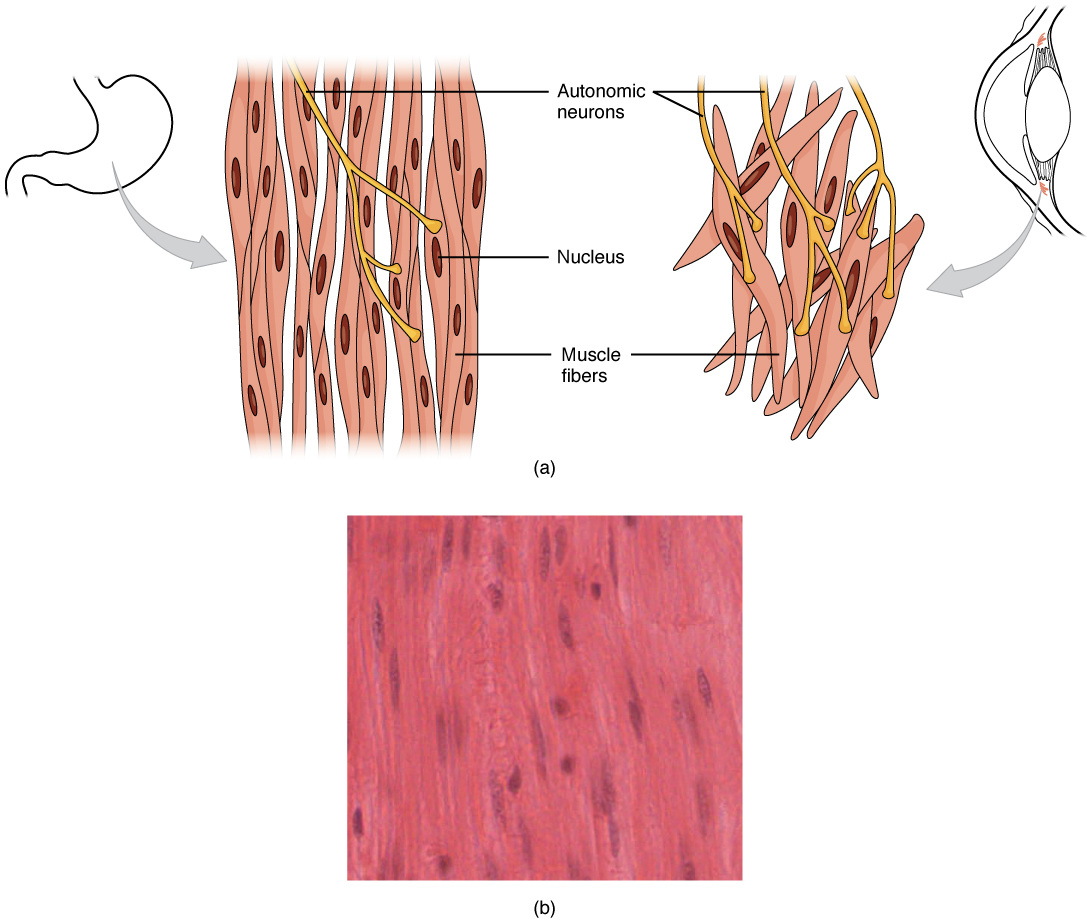
plate II · photograph — duotone applied in display; original unmodified
OpenStax Anatomy & Physiology figure of smooth muscle tissue: fiber arrangement with autonomic innervation (diagram) and a light micrograph. Shown as textbook context for the tissue whose latch-bridge state the case examines (VASO-C010) — smooth muscle takes no voluntary commands and answers to autonomic state.
OpenStax College (CC BY textbook figure) · 2016-05-18 · source · CC BY 4.0
Smooth muscle lines the blood vessels and answers to the autonomic nervous system rather than to the will. Since Hai and Murphy's 1988 model it has been textbook physiology that it can hold force for long periods at a fraction of the usual energy cost after its activating signal fallsC010. This is the latch-bridge state: motor proteins that have been chemically switched off stay attached and let go only slowly. The signal falls low, not to zero. A cheap hold that outlasts its input is, in engineering terms, a memory element.
▸ claims behind this paragraph (1)▾ claims behind this paragraph
Where has the latch actually been seen? A study run for this case mapped sixteen published experiments by vessel type and size, with three results. First, every measurement of holding cost came from large pig carotid arteries; no arteriole's cost has ever been measured. Second, three studies of pressurized rat skeletal-muscle arterioles, about a tenth of a millimetre across, found that maintained constriction came with maintained or rising activation. In one, the molecular marker of activation rose from 27.7 to 39.6 percent as pressure rose. That is the opposite of the latch signature. Third, the one comparison of an artery with its own branch found latch behaviour in the rabbit femoral artery and a forty-percent loss of held force one branch downstream. The caution cuts both ways: none of the arteriole studies withdrew its stimulus, so none could have seen a hold that outlasts its input. But the compartment the original hypothesis names has been examined, and what was found there does not look like a latch.
Blood that talks back
In 2008 the neuroscientists Christopher Moore and Rosa Cao proposed the hemo-neural hypothesis: that local vascular and blood-flow state can modulate the activity of nearby neuronsC012. In 2024 a Science paper showed blood-pressure pulsations modulating neurons in rats through pressure-sensitive ion channels. The read path exists, but as instantaneous nudging in the brain, not as storage.
▸ claims behind this paragraph (1)▾ claims behind this paragraph
The researcher Michael Edward Johnson has built a self-published program on these pieces, which he calls vasocomputation. Neural activity writes to vessels, the latch stores what is written, and vessels read it back: vascular tension as a memory medium in mental life, with the grasping Buddhism calls tanha as its felt signatureC021. The critical report commissioned for this case supplies the sharpest objection. Memory needs a state that depends on past input, can be read out later, and tells different inputs apart. A thermostat has hysteresis without having an autobiography.
▸ claims behind this paragraph (1)▾ claims behind this paragraph
Tender points sit on Doppler-mapped perforators more often than chance.
The “star” felt at a release is the tingle of blood returning to one perforator's patch of skin.
Pressure applied during an inhale-and-hold fails.
A few millilitres of saline injected around the collar release a knot with no breath at all.
Nothing yet measured bears on the account. It must also explain why the stiff regions sonographers report lie inside muscle rather than under the skin.
Guarding, densification and interpretation
On this account, tender points are sustained, stress-sensitive motor drive at skeletal endplates under central control, perhaps with densified fascia. The felt release is expectation and attention riding the breath's global calm. The account needs no new physiology, fits the endplate-zone gradient, and gains from the imaging authors' own listing of contracture as a cause of the flow pattern. It predicts that a matched endplate-zone site rises as much as a trigger point under arithmetic, and that pressure alone suffices. It predicts that the sparks felt at release are tingling from overbreathing that tracks carbon dioxide, and that knots are metabolically hot on PET. Its gap is the set of localized, blinded findings a purely central story must still explain: graded stiffness in two muscles, and one spot answering a mental task.
The breath question
One published protocol comes close to a natural test. The 2025 runners' study released trigger points by thumb compression alone, in thirty-second bouts for up to three rounds, and nothing in its methods mentions breathing. After the first round, 60 percent of active and 86 percent of latent points were no longer visible on ultrasound. This edition reads that as a lead against the two-key rule, not a verdict on it. Breathing was neither instructed, held nor recorded, so a person under painful pressure may have exhaled slowly unprompted. And the treatment lasted minutes, not seconds. What it does show is that an imaged stiff spot can vanish within a single session, which is not how scar behaves.
The oldest maps
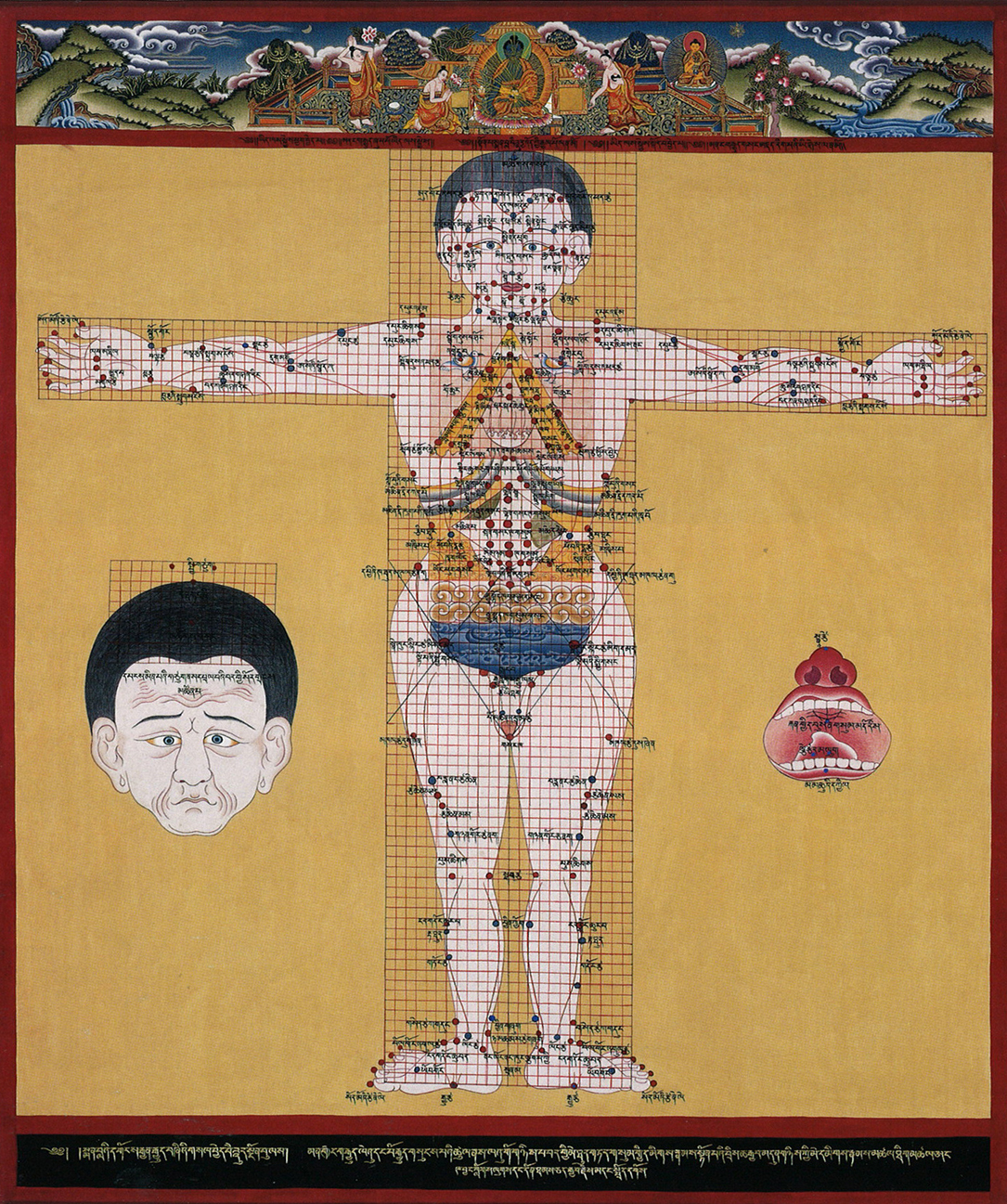
plate I · photograph — duotone applied in display; original unmodified
A Tibetan medical thangka charting points of the body used for bloodletting, moxibustion, and minor surgery, plotted on a proportional grid — an example of the traditional body-point cartography whose correspondence to modern anatomy the case treats as an open, testable question (VASO-C022), not an established equivalence.
dockedship (photograph of the painted scroll) · 2009-07-23 · source · CC BY 2.0
Tibetan medicine describes channel-knots, rtsa mdud, that breath practice unties; yoga names the granthis; Chinese medicine records ashi points, named for the patient's cry when they are pressed. One reading is that trained practitioners were mapping the same vascular-autonomic system from insideC022. The only support is the founding essay's uncited remark that the maps put the important knots along the midline of the torso and in the limbs. No one has coded the traditional locations blind and tested them against anatomy and chance. Until someone does, every match is vulnerable to hindsight.
▸ claims behind this paragraph (1)▾ claims behind this paragraph
The crux is one question. When a knot “releases” on a slow exhale, do stiffness fall and perfusion rise locally, within seconds, beyond what pressure, expectation and general relaxation produce? The keystone experiment would put shear-wave elastography and sensitive Doppler over knots located in advance by blinded examiners, apply calibrated pressure, and record a button press at each felt release. Its controls: pressure without the breath, breath without pressure, an inhale-and-hold, sham sites and failed attempts, plus a mental-arithmetic block. It would cost less than a mid-size grant. The cheapest next step is to repeat the runners' protocol with breathing recorded and randomized — free breathing, slow exhalation, or pressure only during an inhale-and-hold — with sham and untreated points alongside.
What would move the case toward a vascular account:
Stiffness and perfusion changing together within seconds of the exhale at knots but not sham sites, with blood first.
An inhale-and-hold blocking the clearance that free or slow breathing achieves.
Tender points sitting on perforators more often than chance; a knot released by saline at its perforator.
A pressurized skeletal-muscle arteriole holding constriction after its stimulus stops, while its activation marker falls.
Arithmetic raising the trigger point but not a matched endplate-zone site, or dimming skin perfusion over the point.
What would move it toward the conventional account:
Felt releases with no reproducible local change, or equal changes at sham sites.
Equal clearance under held breath, slow exhalation and free breathing.
Densification reversing under pressure with no change in perfusion.
Sparks at release that track carbon dioxide and appear equally at sham sites.
A matched endplate-zone site rising as much as the trigger point under arithmetic.
For the claim about the mind, the test belongs in animals. Do different induced vascular states produce reliably different later neural responses under identical stimulation, with oxygen supply held constant?
Where the case stands
The verdict is unresolved, and that is a finding. The best-supported pieces are the least decisive: the latch exists, slow breathing shifts autonomic state, vessels nudge neurons, and palpated points are stiffer than their surroundings. Every account predicts them. The pieces that would decide the case have no time-resolved evidence in either direction. The latched-arteriole version is the most exposed, because the arteriole measurements lean against it. The perforator version has nothing behind it yet but its proponent's essay. The conventional account is economical but still owes an explanation of the localized findings.
Proponents have a strong case that this verdict does not answer. The energy-crisis puzzle remains unsolved, and a latch, or a skin vessel the body already keeps constricted, would solve it. A mental task picks out one tender spot. Blinded imaging finds graded stiffness exactly where examiners press. And no one has run the inhale-and-hold arm. The vascular accounts also make a prediction their rival does not — perfusion changing before stiffness — and it is cheap to test.
Someone should film one release. Until then, press into a knot if you find one, and breathe however you like; whether the exhale matters is exactly the question.
the argument ladder
evidence for a lower rung does not automatically climb
Attribution
Was it actually done? The claims the thesis stands or falls on.
The strongest records on each side, structurally symmetric. Every record separates what the source states from what we infer. Browse the full ledger (83 records) →
strongest supporting
▲Supports· strongVASO-E003
The latch-bridge model: force maintained after activation falls
what the source states
A minimum kinetic model of smooth-muscle cross-bridge interaction in which dephosphorylated but still-attached cross-bridges ("latch bridges") detach only slowly, reproducing the experimental observation of high sustained stress at low levels of myosin phosphorylation — economical force maintenance after activation subsides.
what we infer
Biology ships a cheap, history-dependent hold: the mechanism the featured hypothesis needs exists and is textbook physiology. Whether it is engaged at tender points is a separate, untested question.
limitations
Established in vascular/visceral smooth-muscle preparations over minutes-to-hours timescales; indefinite in-vivo holds at addressable sites are an extrapolation.
Molecular interpretation still under refinement (regulated phosphatase activity, cooperativity).
Blood-pressure pulsations modulate neurons via mechanosensitive channels
what the source states
Physiological blood-pressure pulsations were shown to modulate central neuronal activity through mechanosensitive ion channels in rat preparations and awake animals, on rapid timescales.
what we infer
Direct causal evidence for the vascular-mechanical-to-neural direction the hemo-neural hypothesis requires — sixteen years after it was proposed, the read path has a demonstrated mechanism.
limitations
Rat brain, not human periphery; demonstrates instantaneous mechanosensation, not storage or content-specific readout.
In preregistered within-subject experiments (57 volunteers), directing attention toward the sensations of a standardized histamine skin prick produced ~1.5-fold smaller and faster-resolving wheal and flare responses than distraction, in ~90% of participants across two cohorts. Skin conductance, heart rate, skin temperature, and self-reported anxiety did not differ between conditions, while heart-rate variability was higher under internal attention; a sensory route (degraded by lidocaine) and a top-down vagal route (surviving lidocaine) both contributed.
what we infer
A controlled existence proof of the channel the synthesis needs: voluntary interoceptive attention, with no arousal change, measurably regulating peripheral physiology at a specific site. The measured tissue was a vascular bed — but the demonstrated route is vagal immune regulation over ~20 minutes, not seconds-scale latch release.
limitations
Single lab, published 2026-08-17; acute model in healthy skin; molecular mediators not directly measured (authors' own caution).
The authors note the parasympathetic system does not innervate skin directly; nothing here concerns trigger points or smooth-muscle latches.
The critical report's grade-D audit of the two linchpins
what the source states
The report's graded evidence matrix assigns grade D — no direct evidence located — to both linchpin propositions: "a knot releases objectively in seconds during exhalation" (no synchronized time-resolved imaging study found) and "the releasing element is vascular smooth muscle" (no study identifies a smooth-muscle latch at a trigger point; the EMG chatter is neuromuscular, not vascular).
what we infer
The featured hypothesis's two load-bearing empirical steps are currently unevidenced, not merely under-evidenced: the mechanism is borrowed from vascular physiology, not observed at a tender point. This is the case's single most important undermining record.
limitations
Absence of evidence after one AI literature search is not a completed systematic review; the report itself frames these as unrun experiments rather than refutations.
Study table: energetic cost has never been measured in any arteriole, so the economy argument rests entirely on conduit arteries
what the source states
Across sixteen rows spanning 1981-2022, contemporaneous energetic measurement — oxygen consumption, lactate release, or ATP turnover — appears only in large tonic arterial preparations (swine and porcine carotid, at zero transmural pressure), and in no arteriole or resistance microvessel of any bed. No located study satisfies all four conditions the study set: skeletal-muscle arteriole or smaller, physiological temperature and transmural pressure, maintained force or diameter, and a contemporaneous energetic or cycling measurement. The frozen literal queries aimed at microvascular energetics returned nothing, as did two further searches run specifically for arteriole-level oxygen consumption and ATP economy.
what we infer
The energetic feasibility step under VASO-C020 — that a knot can be held cheaply — is an extrapolation across both vessel class and caliber, not a borrowed-and-demonstrated mechanism. The extrapolation may still be correct; what the ledger can now say is that nobody has measured it where the hypothesis needs it, and that this is a gap in the literature rather than a gap in this case's reading of it.
limitations
Absence of a demonstration is not a demonstration of absence; the study's own limitations record that discovery ran against PubMed, Europe PMC and Crossref, which cover the older non-indexed energetics literature poorly.
Study table: in pressurized skeletal-muscle arterioles, maintained constriction tracks maintained activation rather than the latch signature
what the source states
Three rows are pressurized skeletal-muscle resistance vessels — rat cremaster and gracilis — in which LC20 phosphorylation was measured against diameter. In all three, maintained constriction is accompanied by maintained or rising phosphorylation rather than by force held while activation falls: 27.7% at 30 mmHg rising to 39.6% at 120 mmHg (Zou, Ratz & Hill 1995, at 34 degrees C in roughly 100-micrometre arterioles); a monophasic rise correlated with instantaneous wall tension (Zou, Ratz & Hill 2000); and 40% already at 10 mmHg rising to about 55% at 80 mmHg with no further change to 140 mmHg (Moreno-Dominguez et al. 2013, which attributes the sustained constriction to Rho-kinase-mediated Ca2+ sensitization and actin polymerization). The 2000 paper states that spontaneous arteriolar tone "represents a state of maintained smooth muscle activation that requires increases in [Ca2+]i and myosin light-chain phosphorylation."
what we infer
This is the first record in the case bearing directly on the tissue compartment VASO-C020 names, and it does not fit the latch picture: at arteriole caliber the published measurements show sustained activation, not an economical dephosphorylated hold. It is a mismatch rather than a refutation — none of the three studies was designed as a latch test, all held their stimulus present throughout, and none measured energetic cost. What it removes is the assumption that the arteriole compartment is simply unexamined; it has been examined with the right molecular readout, and what was found there points at a different mechanism for holding constriction.
limitations
All three rows were built from published abstracts; full texts were not accessible, so temperature is recorded for only one of the three and endothelial status for none.
Myogenic tone is by construction a response to a maintained stimulus, so these studies could not have shown input-free persistence even if it exists.
steelmanned — the account the featured hypothesis must beat
Tender points are neuromuscular guarding: sustained, centrally maintained, stress-sensitive motor drive and endplate activity in skeletal muscle, possibly with densified fascial hyaluronan. The electrical signature is endplate noise, commoner where tissue is tender and present at some non-tender endplate-zone sites; a stressor raising drive to endplates raises it. The stiff region sonographers map is contracted fibre, graded with symptoms. The acidic chemistry and high-resistance Doppler waveforms follow from contracture compressing the bed, which the imaging authors themselves list as a cause, while a second resistance index shows no difference at all. Pressure switches guarding off or thins the lubricant. That is why a compression protocol with breathing uninstructed made most imaged points undetectable within minutes. The felt release on an exhale is expectation and attention riding slow breathing's global parasympathetic shift. Poor palpation reliability means part of the observation base may be artifact. The account's gap is the localized, blinded, instrumented findings a purely central story must still explain.
What would change our mind
The case does not end in a verdict; it ends in the studies that would move it, in the order this edition judges they would move it most. A result in either direction counts.
VASO-R001Small grant · Lab
The keystone experiment: image a single release event, both directions
Put ultrafast shear-wave elastography and sensitive microvascular Doppler (or NIRS) over a palpated knot; apply calibrated constant pressure through a load-cell-instrumented probe; have a skilled releaser press a button at each felt release while respiration, HRV, and EMG are recorded. Sites localized in advance by two blinded examiners with the analysis volume predefined. Factorial controls: pressure with normal breathing, slow breathing without pressure, sham sites, and failed attempts. Add the stressor block: mental arithmetic under the imager, predicting local stiffening and perfusion drop during a purely cognitive event, then reversal on breath-assisted release. Preregistered prediction: stiffness step-drops and perfusion rises together, within seconds, time-locked to the exhale, exceeding all controls — with the latch-specific ordering that perfusion rises before stiffness falls. Falsification: felt releases without reproducible local transitions, or equal transitions at shams.
expected information gain
Decides the case's central crux in one study (~$50–150K, one lab, one year): either direction is decisive, and a positive stressor block would demonstrate the full write–erase cycle in a single session.
Repeat the runners' compression protocol with breathing recorded and randomised: free breathing, slow exhale, inhale-and-hold
Take the now-verified single-session ischemic-compression protocol (30-s thumb compressions with 10-s rests, up to three rounds, palpation plus B-mode and strain or shear-wave elastography before, after each round and at 24 h) and add the one factor it left uncontrolled: breath. Record respiration continuously (inductance belt and end-tidal CO2) and randomise each trigger point within a participant to one of three conditions during compression — free breathing, instructed slow exhalation, or pressure applied only during an inhale-and-hold — with sham compression at a matched non-tender site as a fourth arm and a no-treatment point followed at the same time points. Measure, per point, whether the stiff focus is undetectable after the session and at 24 h, its stiffness ratio and cross-sectional area, and the pain score. Decision rule: if the elimination rate under inhale-and-hold is no lower than under free breathing, the breath is not a necessary key and the two-key claim fails; if inhale-and-hold blocks elimination while slow exhalation matches or exceeds free breathing, the breath-gating the perforator account predicts is real; if all three active arms exceed sham and no-treatment equally, pressure alone suffices and the felt release is a correlate. Archive cine loops and, where available, add power Doppler over the same region so the order of perfusion and stiffness change can be read.
expected information gain
The one pressure-only protocol the ledger has read in full (Landfald 2025) applied its compressions with breathing uninstructed and unrecorded, over up to three thirty-second rounds — a course of minutes, not a release of seconds — and its record (VASO-E067) is context for the two-key claim, not evidence against it: it establishes what the method omitted, not what breath did or did not do. One session per participant with the breath factor randomised separates the three readings — breath necessary, breath gating, breath irrelevant — and, with the sham and no-treatment arms, separates the compression effect from expectation and regression. A positive inhale-hold block would be the first evidence for breath-gated release in any tissue; a null would return the exhale to the status of a felt correlate and move the case's anchor observation onto pressure alone.
Film a star: laser speckle over a superficial knot with exhale, inhale-hold, sham-site and CO2 controls
Laser speckle contrast imaging over the occiput or upper trapezius during breath-assisted release; mark a knot and a sham site, record respiration, end-tidal CO2, surface EMG and a button press at each felt release; apply calibrated pressure on exhale and, in matched trials, during an inhale-and-hold. Preregistered predictions: local perfusion flash time-locked to exhale and button, absent at sham and under inhale-hold (perforator account); versus global changes tracking CO2 (hyperventilation account).
expected information gain
Directly discriminates the perforator, hyperventilation and no-local-event accounts of the felt release at the surface, where no depth problem exists, and tests the blood-first ordering with a non-contact method.
Demonstrate (or exclude) a smooth-muscle latch at a tender point
The mechanism study the hypothesis cannot skip: in animal or ex-vivo preparations, create candidate tender-point-like regions (sustained low-level motor activity; controlled stress paradigms) and measure vessel radius, smooth-muscle calcium, myosin light-chain phosphorylation, perfusion, and tissue mechanics simultaneously. Make it a paired-caliber design rather than a single positive-or-negative arteriole test: take a feeding artery and successive arteriole orders from the same skeletal-muscle bed, cannulated and pressurized to physiological transmural pressure rather than held isometric, so the experiment reports whether latch capacity persists, weakens, or disappears as vessels get smaller — the boundary condition VASO-S001 has now audited in the published record, where latch behaviour was present in a parent artery and absent one branch order later. Include an explicit stimulus-withdrawal phase: economical force maintenance under continuing activation is a different finding from a state that holds after its input stops, and only the second is what a knot requires. Separately manipulate neural drive and vascular tone (sympathetic blockade, nitric-oxide pathway agents) and test whether releasing vascular tone precedes normalization of stiffness and nociception. In humans, add vasomotor endpoints to the keystone rig — the latch prediction is a timing signature: blood first, stiffness second. And run the small FDG-PET overlay testing the triple signature no conventional lesion carries: stiff on elastography, electrically active on EMG, metabolically cold.
expected information gain
Turns "the mechanism is borrowed, not observed" into a direct test: finding latch-state smooth muscle at tender points would transform the case; excluding it would force the featured hypothesis back to conventional guarding accounts.
▸ 15 more studies on the agenda▾ the rest of the agenda
VASO-R012Prize or grant · Desk
Open the located-but-unretrieved primaries behind this pass (Banks 1998, Hubbard 1996, Chen 1998, Zhang 2009, Ge 2011)
The report located, but the pipeline could not retrieve, five papers each of which would anchor a record the ledger lacks (the sixth the report located, Landfald, Podgórski & Olewnik 2025, was retrieved and entered on 2026-09-20 as SRC-LANDFALD-2025): Banks et al. 1998 (autogenic relaxation lowering trigger-point needle EMG, same lineage as VASO-E002); Hubbard 1996 and Chen et al. 1998 (alpha-blockade quieting the nidus in humans and rabbits, VASO-R009); Zhang et al. 2009 (attenuated skin blood-flow response at latent points); Ge et al. 2011 (open-access review recording the curare-vs-botulinum conflict on whether the nidus is cholinergic). Routes: PMC or publisher PDFs where open access (Ge), PubMed abstract pages with cookies enabled (Chen, Zhang, Simons full text), a library or interlibrary copy for the Haworth-journal items (Banks, Hubbard).
expected information gain
Would convert four blocked observations into anchored records: bidirectional autonomic modulation of the nidus (Banks), the phentolamine result VASO-R009 asks for (Hubbard, Chen), a measured autonomic-vascular abnormality at a latent point (Zhang), and the cholinergic-generator conflict (Ge). The imaged stiffness reversal under pressure alone that this item once waited for is now in the ledger from Landfald 2025 (VASO-E067 and its siblings), as context: the protocol recorded no breathing and its course ran to minutes, so it bears on 'state, not scar' only by inference.
Needle EMG at a trigger point versus a matched endplate-zone control site under mental arithmetic
Simons 2002 shows endplate noise occurs at non-tender endplate-zone sites, so the silent control sites in Hubbard–Berkoff 1993 and McNulty 1994 may simply have been off the endplate zone. Repeat the McNulty stressor paradigm with the endplate zone located electrically first, placing the control needle in a non-tender endplate-zone site of the same muscle and recording both sites during baseline, serial subtraction, and slow-exhalation recovery. Preregister the contrast: does the stressor raise activity selectively at the trigger point, or at any endplate-zone site?
expected information gain
Selective rise at the trigger point with a quiet matched endplate-zone control would restore the 'addressable nidus' reading VASO-C003 rests on; a comparable rise at the control would relocate the phenomenon to stress-sensitive endplates generally and remove the localization argument for a discrete maintained element.
Map the staples: blinded coincidence of palpated tender points with pencil-Doppler perforators against chance
One blinded examiner marks tender points on a region of scalp, neck, back or hip; a second blinded operator maps cutaneous perforators on the same region by continuous-wave pencil Doppler at fixed light pressure; a third computes spatial coincidence against a chance baseline from randomized point sets. Settles whether ordinary knots sit on perforators (VASO-C101) and whether the most tender sit on the largest trunks; a null returns the vascular hypothesis to the intramuscular compartment or dissolves it.
expected information gain
A cheap, afternoon-scale test that either licenses or kills the perforator alternative before any imaging is bought; a positive coincidence above chance would be the first objective anatomical identity for a palpated knot.
Free a collar without breath: ultrasound-guided saline hydrodissection at a mapped perforator under a tender point
In a clinic already performing nerve hydrodissection, place a few milliliters of saline around a Doppler-mapped perforator at its fascial ring beneath a blinded-examiner tender point, with no breath instruction and no manual pressure; record tenderness (algometry), the felt star, and elastography before and after; sham injection adjacent to the bundle as control.
expected information gain
The cleanest single test of the collared-perforator identification: release without breath refutes the two-key necessity (VASO-C039) and supports VASO-C101; no effect leaves the knot with motor guarding or another account.
Densification versus latch: does fascial hyaluronan densification account for a reversible, non-vascular release?
The essay invokes the Stecco group's distinction between fascial densification (viscous hyaluronan between fascial sheets, reversible with pressure, movement, and warmth) and true scarring. If densification reverses on a timescale of seconds under sustained pressure, it is a state-not-structure mechanism that needs no vascular smooth muscle, competing directly with the latched-arteriole account. Desk route: retrieve the primary densification literature (Stecco and colleagues on hyaluronan viscosity, temperature dependence, and mechanical reversal), extract the measured or modelled timescale of viscosity change under load and warmth, and record whether any study reports reversal within the seconds-scale window the anchor phenomenon requires.
expected information gain
If densification can reverse in seconds under pressure alone, VASO-C011 (state not structure) survives but the vascular attribution in VASO-C020 loses its claim to be the only fast mechanism, and the keystone experiment (VASO-R001) needs a discriminating prediction — perfusion change with the stiffness drop (vascular) versus stiffness drop without perfusion change (densification). If densification reversal is minutes-to-hours, the vascular account remains the only candidate for a seconds-scale objective release.
FDG-PET overlaid on elastography at palpated knots: is the stiff, electrically active spot metabolically cold?
Small overlay study: palpate and mark knots under blinded examiners, confirm stiffness by shear-wave elastography and spontaneous activity by needle EMG at a subset, then acquire FDG-PET and compare uptake at knot sites with matched non-tender muscle. The latch account predicts uptake at or below surrounding muscle; an energy-crisis (maximally contracting fibers) or inflammatory account predicts elevated uptake. Radiation limits this to a single small study, not a census.
expected information gain
Cold knots would be the first finding that does not fit conventional lesion taxonomies and would specifically favour a low-energy holding state over active contraction or inflammation; hot knots would fit the energy-crisis or inflammatory accounts and remove the essay's distinctive metabolic prediction. Either result moves VASO-C020 in a way no imaging of stiffness or flow can.
Locate the phentolamine trigger-point study: does sympathetic blockade quiet the nidus?
The essay states that later work from the Hubbard–Gevirtz lineage infused trigger-point sites with phentolamine, an alpha-adrenergic antagonist, and substantially quieted the spontaneous EMG activity. The report's works list did not carry this item and no candidate was resolved. Desk route: search the needle-EMG trigger-point literature of the 1990s (Hubbard, Gevirtz, McNulty, Banks and co-authors; journals of pain, psychophysiology, and physical medicine) for a sympathetic-blockade study, retrieve the primary paper, and record the design, n, control condition, and effect. A sympathetic-dependence result would be the strongest existing link between the electrical nidus and autonomic maintenance.
expected information gain
A retrieved primary study showing phentolamine quiets trigger-point EMG would support autonomic maintenance of the nidus (bearing on VASO-C002/C003) and supply the pharmacological arm of VASO-R004, though it would not by itself distinguish vascular smooth-muscle latching from sympathetically driven intrafusal or endplate activity. Failure to locate any such study would show the essay's autonomic-maintenance argument rests on stress-induction alone.
The factorial intervention trial: separate the probe from the permission
Randomize intensive rolling with breath work against rolling without breath instruction, breath work without rolling, and a stretching control over 8–12 weeks. Outcomes: knot counts from the census protocol, hip range of motion, elastography, HRV, and interoceptive awareness. The factorial design cleanly tests the two-key claim — that pressure and exhalation are jointly, not separately, sufficient — against the conventional prediction that generalized relaxation plus mechanical stimulus explains everything.
expected information gain
The most clinically legible study in the program: it either validates a cheap, teachable release protocol or shows breath adds nothing local beyond relaxation — and buys credibility for the stranger tiers either way.
Retrieve the fibromyalgia-era community tender-point-count surveys as a proto-census
The essay reports, without citation, that population-based studies using the 18-site fibromyalgia tender-point exam found tender points nearly universal (medians 6 in women, 3 in men) and counts tracking distress and sleep rather than tissue damage. If a primary paper exists — the candidates are the 1990s population surveys of tender-point counts in general-population samples (e.g., the UK and Wichita community studies) — it is the only instrumented prevalence data behind VASO-C001 and the only existing curve of tender-point burden against sex, age, and distress. Desk task: locate the primary papers, retrieve the count distributions, and record whether the exam sites and pressure protocol map onto what the case calls a 'knot'.
expected information gain
Would give VASO-C001 its first population-level, examiner-administered evidence record (currently supported only by proponent testimony and qualified by the reliability critique), would reveal whether tender-point counts already correlate with age, and would tell VASO-R002 what the census must add beyond what rheumatology already measured and abandoned.
The knot census: a natural-history atlas of human tension
The dataset that has never existed: several hundred participants across the age span, standardized blinded palpation plus pressure algometry plus elastography and Doppler sampling at fixed bilateral anatomical sites. Report variance and spatial heterogeneity (lumpiness), not just means — every prior aging study discarded the heterogeneity as noise. Distinguish active from latent points, which separate on flow measures. Include the two discriminating populations: young children (if guarding is learned, they should be nearly clean) and long-term meditators against sedentary controls. Train imaging thresholds on one cohort and lock them before validation.
expected information gain
Produces the two curves the field lacks (knot burden by age; distribution across the body), converts the ubiquity claim from anecdote to data, and supplies the localization protocol every other study needs.
The decisive vasocomputation experiment: can vascular state carry a neural trace?
From the critical report, the experiment that separates vascular modulation from vascular memory: in an animal preparation with optical access, repeatedly evoke a neural pattern while inducing a candidate vascular state; stop the input; after a delay, test whether the maintained vascular state biases neural responses back toward the trained pattern under identical stimulation — with oxygenation and metabolic variables clamped, so nonspecific ischemic suppression cannot masquerade as memory. Positive result: different induced vascular states produce reliably different later neural response distributions. Falsification: vascular manipulation affects neural gain only through instantaneous perfusion.
expected information gain
The theory-deciding study: a positive result would establish a genuinely new biological memory mechanism; a clean negative would collapse strong vasocomputation to ordinary neurovascular physiology.
Preregistered anatomical coding of the contemplative knot maps
The unglamorous scholarship the convergence argument needs: translate and annotate the rtsa mdud (channel-knot) literature and the granthi and ashi-point corpora with scholars fluent in both traditions and modern anatomy. Code traditional knot locations into a common coordinate system before inspecting modern maps, then test whether they align with vascular branch points, sympathetic chains, dorsal root ganglia, or dense-fascia geography better than chance — the blinded design that separates first-person cartography from post-hoc resemblance.
expected information gain
Either elevates the traditional maps to admissible empirical documents or retires the convergence argument as pattern-matching — cheap, decisive for its claim, and publishable in either direction.
The knot-free endpoint as a natural experiment, with a sensory exam to exclude a damaged finder
Recruit practitioners who report having completed the release process; blinded examiner, standardized sites, pressure algometry, light-touch and pinprick sensory exam, Doppler perforator map, elastography, against age-matched controls. A blinded finding of no tender points in a middle-aged adult with normal sensation and normally perfused perforators supports the perforator account; reduced sensation with constricted perforators supports the hypoesthesia confound.
expected information gain
Cheap and decisive for the endpoint prediction, and it cannot be gamed by expectation because the sensory exam separates 'no knots' from 'no finder'.
Retrieve the primaries behind the newly catalogued affective and adverse-effect claims (Britton; Leknes & Tracey; Moseley/Flor)
Desk retrieval: the peer-reviewed meditation adverse-effects study from Britton's Brown program (for VASO-C133), Leknes & Tracey's review of the shared neurobiology of pain and pleasure (for VASO-C128/C130's pain-offset reading), and a primary Moseley or Flor paper on somatosensory cortical reorganization in chronic pain (for VASO-C106). Each is named only in the essay; nothing can be anchored to them until their text is read.
expected information gain
Replaces essay-only anchors with primary sources for five claims, and tells the case whether the affective phenomenology of release (bliss, immobility, destabilization) has any instrumented literature behind it or rests wholly on testimony.
Open the primaries behind the second essay's audit (Heine 1988; Langevin & Yandow 2002; Dorsher 2009; Segal & Duling 1986; Hong & Simons 1993; Taylor & Palmer 1987; Lindahl 2017; Sikdar 2009; Moraska 2013; Cagnie 2012; Fede 2022)
Desk retrieval of the eleven published works the essay restates as support, so that the essay's remaining claims (C128–C130, C136–C143) can be anchored to primaries and the essay-derived evidence records re-weighed; check Maurer et al. 2019 as the contrary dissection.
expected information gain
Every one of these claims currently rests on an AI-generated essay's restatement; retrieval converts them to primary-anchored observations or exposes misreadings.
▸ 1 settled — answered, superseded or retired▾ settled — kept as the record of what was asked
VASO-R007Publication prize · Desk
answered · 2026-09-19 · set by 2026-09-19-edition-vasocomputation-115913
Where has the latch actually been demonstrated? An evidence map by vessel type and caliber
Executed as study VASO-S001 (criteria frozen 2026-09-01; sixteen rows collected). Its table produced VASO-E019 (no energetic measurement exists in any arteriole; the economy argument rests on conduit arteries), VASO-E020 (pressurized skeletal-muscle arterioles show maintained or rising phosphorylation, not a latch signature) and VASO-E021 (latch behaviour present in the rabbit femoral artery and absent in its saphenous branch; never followed downstream). The map answered its own question — where the latch has been demonstrated — and fixed the boundary condition VASO-R004's paired-caliber design now targets; whether knots are vascular remains open under R001, R004 and R016.
The mechanism rung rested on an inferential step nothing in the ledger then checked: latch behaviour exists in vascular smooth muscle, therefore it can hold a skeletal-muscle microvessel shut. Build a preregistered evidence map of every eligible primary study — located through a frozen search strategy, citation chaining, and author-family searches — in which sustained force or constriction was measured alongside a contemporaneous readout of activation, cross-bridge cycling, or energetic cost. Record the vessel and its branch order, the luminal diameter and the pressure at which it was measured, the preparation (isometric ring versus cannulated pressurized vessel), temperature, the stimulus, whether the stimulus was withdrawn, and what the force did afterwards. Grade every record twice and independently: how directly it evidences the phenomenon, and how close its preparation is to the pressurized skeletal-muscle arteriole VASO-C020 needs. Models, reviews, and purified-protein reconstitutions are kept in distinct evidence classes rather than counted as vessel-level demonstrations. Executed as VASO-S001.
expected information gain
Executed as VASO-S001, the map returned the extrapolation finding and the mixed finding together: the demonstration record is concentrated in large tonic conduit preparations, no energetic measurement exists in any arteriole, pressurized skeletal-muscle arterioles show maintained activation rather than an economical dephosphorylated hold, and the one paired comparison found latch behaviour in a parent artery but absent one branch order downstream — establishing C020 as an extrapolation across vessel type and caliber and fixing the boundary condition VASO-R004's paired-caliber design now targets. What it could not settle is whether knots are vascular; only whether the mechanism has ever been observed in the compartment the hypothesis needs it in — and, on the located record, it has not.
Trust comes partly from showing changed minds. Each entry is an edition that changed a verdict, with the word before and the word after — a reversal included.
Provisionally supported→moved from Provisionally supported to Weakly supported:Weakly supportedDiscrete, exquisitely tender, palpable points occur commonly in human muscle and fascia across the general population. since refused
Unresolved→moved from Unresolved to Provisionally supported:Provisionally supportedActive and latent trigger point sites had significantly larger areas on vibration elastography than palpably normal sites (0.17 ± 0.22 cm²; P < .01). since refused
Well supported→moved from Well supported to Provisionally supported:Provisionally supportedDiscrete, exquisitely tender, palpable points occur commonly in human muscle and fascia across the general population. since refused
Aletheia records every change to a case: what changed, why, and who made it — including the AI's role. The latest:
Answer to the panel's objections on #412: 2 record(s) named by a seat re-read by the second reader with the objection in view (2026-09-23-answer-vasocomputation-014335): answer: promoted…
Records relinked to the parts of a split claim, read against them (VASO-C001 → VASO-C190, VASO-C191) (2026-09-21-reverify-vasocomputation-021624): re-verify: promoted 0, appended 2…
Answer to the panel's objections on #372: 3 record(s) named by a seat re-read by the second reader with the objection in view (2026-09-21-answer-vasocomputation-021449): answer: promoted…