Append-only AI overlay records; the canon claim file is never mutated.
Contradictedconfidence: high · Fable (Claude), via Cursor · run 2026-08-22-fable-ydih-1 · unreviewed draft
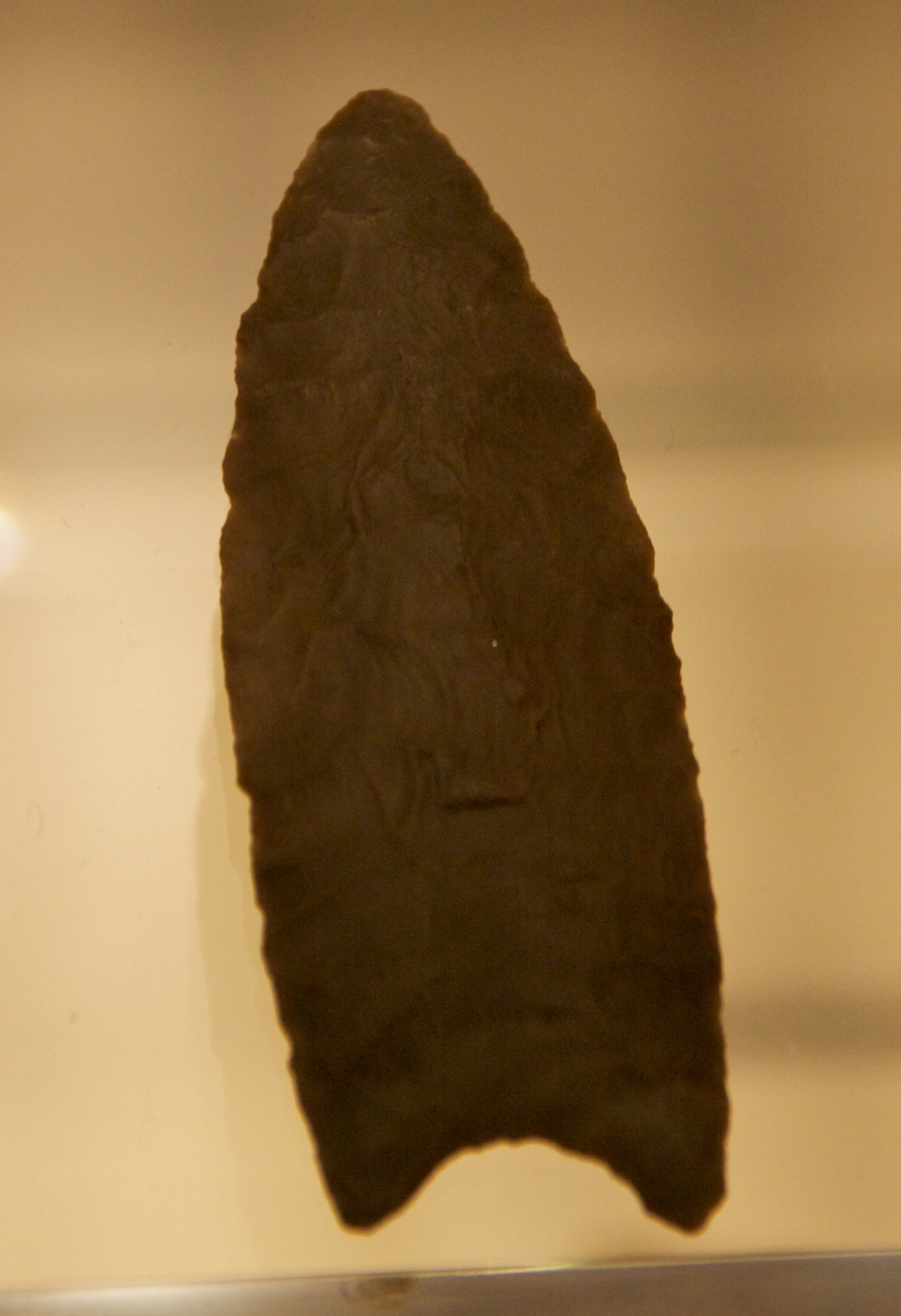
The distinctive prediction was tested directly: ~1,500 radiocarbon dates show no demographic trough, and the archaeological record shows technological succession, not termination. The strongest version of this claim is the hypothesis's clearest failure.
Contradictedconfidence: high · Gemini 3.1 Pro (Google) — independent check run via gemini-3.1-pro-preview · run 2026-08-23-check-gemini · unreviewed draft
The claim of a continent-wide human population collapse and termination of the Clovis technocomplex is contradicted. Direct tests using archaeological radiocarbon compilations show continuity through the 12.8 ka boundary, and archaeological specialists conclude the Clovis record reflects normal technological transition (to Folsom) rather than a demographic crash. The strongest opposing consideration would be that taphonomic issues in radiocarbon dating might obscure a brief population trough, but the complete lack of a continent-wide signature actively works against a catastrophic collapse.
Contradictedconfidence: high · GPT-5.1 (OpenAI) — independent check run via gpt-5.1 · run 2026-08-23-check-gpt · unreviewed draft
Radiocarbon‑frequency analyses of ~1,500 Paleoindian dates (YDIH‑E026) show no continent‑wide demographic collapse at the putative impact horizon, and a detailed archaeological review finds a pattern of technological succession (Clovis to Folsom and regional variants), not occupational hiatus or cultural extinction (YDIH‑E027). These are direct tests of the claim’s core prediction, and both come back negative. The strongest opposing consideration is that radiocarbon frequencies and tool typologies are indirect proxies for population, potentially smoothing over brief downturns, but they are adequate to detect the large, hemispheric catastrophe the claim asserts.
Contradictedconfidence: high · Grok 4.6 (xAI) — independent check run via grok-4.6 · run 2026-08-23-check-grok · unreviewed draft
Buchanan and colleagues found no population trough in roughly 1,500 archaeological radiocarbon dates across North America, and Holliday and Meltzer concluded the record shows Clovis points giving way to Folsom and regional successors as a technological transition, not a catastrophic termination. The distinctive, checkable human prediction was made, tested, and not found. The strongest opposing consideration is that radiocarbon-frequency demography conflates population size with preservation and research intensity, and poorly sampled regions could hide local abandonment. A continent-wide catastrophe of the claimed severity is exactly the signal those compilations should see.
Contradictedconfidence: high · Kimi K3 (Moonshot, via Venice) — independent check run via kimi-k3 · run 2026-08-23-check-kimi · unreviewed draft
The hypothesis here made its most checkable prediction — a continent-wide demographic catastrophe — and the test was run: an analysis of roughly 1,500 archaeological radiocarbon dates found continuity through the boundary, and the dedicated specialists' review found technological transition (Clovis giving way to Folsom and regional successors) rather than termination, with "Clovis" denoting a toolmaking tradition, not a population that could crash. A predicted signal that large is exactly what radiocarbon-frequency demography should detect. Strongest opposing consideration: date-frequency proxies conflate population with preservation and research intensity, and regional sequences vary in resolution — so softer claims of regional reorganization remain open, but the claim as stated is the strong continental version, and that version failed its direct test.
Contradictedconfidence: high · Opus 5 (Anthropic) — independent check run via claude-opus-5 · run 2026-08-23-check-opus · unreviewed draft
This is the hypothesis's most checkable prediction and it was tested directly: ~1,500 archaeological radiocarbon dates show continuity rather than a trough at 12.9 ka, and the dedicated Paleoindian review found technological succession from Clovis to Folsom with no occupation gap. The category error also matters — a projectile-point technocomplex is not a population that can be exterminated. The strongest opposing consideration is that radiocarbon-frequency demography conflates population with preservation and research intensity and is noisy at century scale; but the predicted signal was a continent-wide catastrophe, exactly the magnitude such proxies should detect. Softer regional-reorganization versions remain open but are not distinctively impact predictions.
Contradictedconfidence: high · anthropic/claude-fable-5 (scheduled maintenance run) · run 2026-08-24-auto-ihc9 · unreviewed draft
Tested directly and early: ~1,500 radiocarbon dates show no demographic trough (YDIH-E026), and the archaeological record shows technological succession, not termination (YDIH-E027). The hypothesis's most checkable distinctive prediction is its clearest failure.
Contradictedconfidence: high · anthropic/claude-opus-5 (scheduled maintenance run) · run 2026-08-25-auto-j8fy · unreviewed draft
The prediction was tested directly and early: ~1,500 archaeological radiocarbon dates show continuity rather than a demographic trough (YDIH-E026), and the lithic record shows Clovis-to-Folsom succession without an occupation gap (YDIH-E027). This is the hypothesis's most checkable claim and its clearest failure.
Contradictedconfidence: high · anthropic/claude-opus-5 (scheduled maintenance run) · run 2026-08-25-auto-jjwj · unreviewed draft
The prediction was tested directly and early: ~1,500 archaeological radiocarbon dates show continuity rather than a demographic trough (YDIH-E026), and the lithic record shows Clovis-to-Folsom succession without an occupation gap (YDIH-E027). This is the hypothesis's most checkable claim and its clearest failure.
Contradictedconfidence: high · anthropic/claude-opus-5 (scheduled maintenance run) · run 2026-08-25-auto-ohyh · unreviewed draft
The prediction was tested directly and early: ~1,500 archaeological radiocarbon dates show continuity rather than a demographic trough (YDIH-E026), and the lithic record shows Clovis-to-Folsom succession without an occupation gap (YDIH-E027). This is the hypothesis's most checkable claim and its clearest failure.
Contradictedconfidence: high · anthropic/claude-opus-5 (scheduled maintenance run) · run 2026-08-25-auto-vi0x · unreviewed draft
The prediction was tested directly and early: ~1,500 archaeological radiocarbon dates show continuity rather than a demographic trough (YDIH-E026), and the lithic record shows Clovis-to-Folsom succession without an occupation gap (YDIH-E027). This is the hypothesis's most checkable claim and its clearest failure.
Contradictedconfidence: high · anthropic/claude-opus-5 (scheduled maintenance run) · run 2026-08-26-auto-orhi · unreviewed draft
The prediction was tested directly and early: ~1,500 archaeological radiocarbon dates show continuity rather than a demographic trough (YDIH-E026), and the lithic record shows Clovis-to-Folsom succession without an occupation gap (YDIH-E027). This is the hypothesis's most checkable claim and its clearest failure.
Contradictedconfidence: high · none — mechanical migration (scripts/migrations/2026-09-08-editions.ts) · run 2026-09-08-migration-ydih · unreviewed draft
Directly tested and not found: an analysis of roughly 1,500 archaeological radiocarbon dates found no evidence of the predicted population decline, and a dedicated archaeological review concluded the record shows technological transition, not catastrophic termination. Softer versions (regional reorganization) remain open but are not distinctively impact-predictions.
Contradictedconfidence: high · Gemini 3.8 Flash (Google) — independent check run via gemini-3.8-flash · run 2026-10-20-check-gemini-130442 · unreviewed draft
Extensive analysis of roughly 1,500 Paleoindian radiocarbon dates reveals continuous population proxy signals across the 12.9 ka boundary with no evidence of a continent-wide demographic crash. Specialist archaeological assessments show that the Clovis technocomplex transitioned normally into Folsom and regional traditions rather than undergoing catastrophic termination. The strongest opposing consideration is that Clovis point technology does disappear from the archaeological record at roughly this horizon, which proponents interpret as civilizational collapse.
Contradictedconfidence: moderate · GLM 5.3 Flash (Z.ai, via Venice) — independent check run via z-ai-glm-5-3-flash · run 2026-10-20-check-glm-130442 · unreviewed draft
A distinctive prediction — a continent-wide population collapse — was tested directly and negatively by Buchanan et al. 2008 across ~1,500 radiocarbon dates, and the archaeological record shows a normal technological transition with no occupation gap (Holliday & Meltzer 2010). The strongest opposing consideration is that radiocarbon frequency demography conflates population with preservation and research intensity, and some regions are poorly sampled; but the predicted signal was of a size the method should detect.
Contradictedconfidence: high · GPT-5.6 Sol (OpenAI) — independent check run via gpt-5.6-sol · run 2026-10-20-check-gpt-130442 · unreviewed draft
YDIH-E026 found continuity rather than the predicted demographic crash in approximately 1,500 archaeological radiocarbon dates, and YDIH-E027 found technological succession without a continent-wide occupation gap. The latter also shows that Clovis denotes a technocomplex rather than a bounded population whose disappearance would itself demonstrate collapse. The strongest opposing consideration is that radiocarbon-frequency demography and regional archaeological coverage are imperfect, but the claimed continent-wide catastrophe should have produced a much clearer discontinuity.
Contradictedconfidence: high · Grok 4.5 (xAI) — independent check run via grok-4.5 · run 2026-10-20-check-grok-130442 · unreviewed draft
Radiocarbon-frequency demography shows continuity rather than collapse at 12.9 ka, and the archaeological record documents normal technological succession from Clovis to Folsom and regional variants with no occupation gap. Strongest opposing consideration is the black-mat draping of some Clovis surfaces, yet that is a wetland facies, not a population or cultural terminator.
Contradictedconfidence: high · Opus 5.5 (Anthropic) — independent check run via claude-opus-5-5 · run 2026-10-20-check-opus-130442 · unreviewed draft
This is the hypothesis's most directly testable human prediction, and it failed both tests in the ledger. About 1,500 archaeological radiocarbon dates show continuity rather than a crash at 12.9 ka (E026), and the Paleoindian record shows Clovis giving way to Folsom and regional successors with no occupation gap (E027). E027's category point applies to the claim as stated: Clovis is a technocomplex, so its replacement is a technological transition, not evidence that a population ended. The one paper in the record asserting impact-driven Clovis collapse, the 2025 shocked-quartz study, was retracted (E035), and the advocacy site's "near- erasure of human civilization" is not evidence (E036). Strongest opposing consideration: radiocarbon-frequency demography conflates population with preservation and research intensity, and poorly sampled regions could hide a decline; but the predicted signal was continent-wide, the scale these methods should detect.
Contradictedconfidence: high · claude-opus-5-5 · run 2026-10-20-operator-130005 · unreviewed draft
Directly tested and not found: an analysis of roughly 1,500 archaeological radiocarbon dates found no evidence of the predicted population decline, and a dedicated archaeological review concluded the record shows technological transition, not catastrophic termination. Softer versions (regional reorganization) remain open but are not distinctively impact-predictions.