case file YDIH-001Quaternary geology · Impact physics · Paleoclimatology · Archaeologyupdated 20 October 2026
Fire From the Sky
Did one or more cosmic impacts or airbursts ~12,800 years ago trigger the Younger Dryas cooling, drive the megafaunal extinctions, and disrupt the Clovis world?
Weakly supportedImpact triggered the Younger Dryas cooling
ContradictedClovis termination / population collapse
why this research priority
Cheap tests would decide what two decades of argument have not. Osmium isotopes on the platinum samples, platinum in a second Greenland core, and a criteria-locked multi-laboratory blind test are each affordable and none has been run.
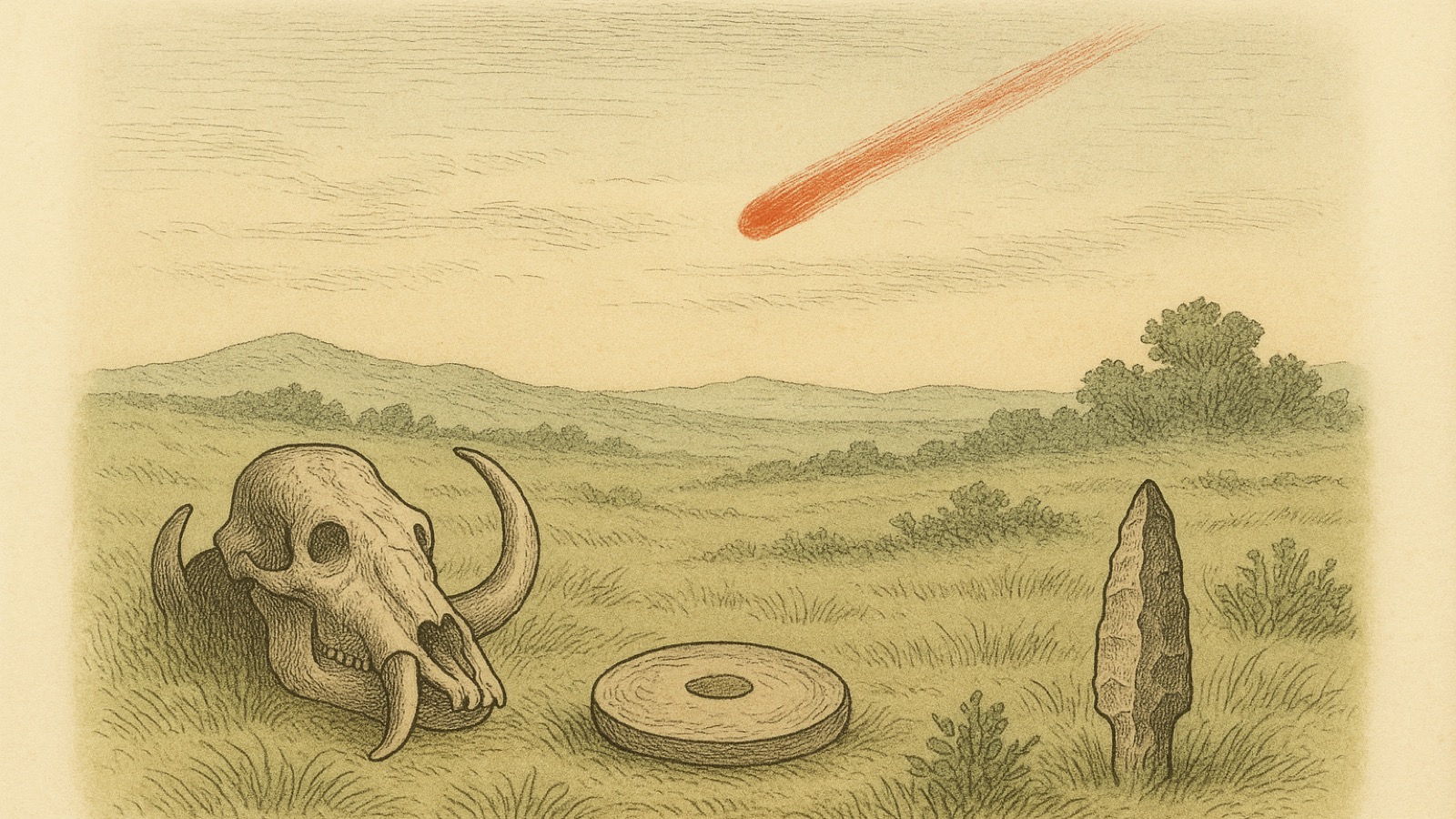
AI-generated editorial artwork
What is claimed
Around 12,800 years ago, airbursts or impacts from one or more extraterrestrial fragments — in modern versions, debris of a disintegrating giant comet — struck the Northern Hemisphere.
▸ read the rest▾ less
They are said to have left a synchronous layer of exotic materials on several continents, lit widespread fires, triggered the Younger Dryas cooling, helped drive the North American megafaunal extinctions and disrupted the Clovis tradition.
Where the disagreement lives
The dispute is over the boundary layer, not over the cooling, the extinctions or the Greenland platinum, which all sides accept. Are the claimed spherules, nanodiamonds and melt products what proponents say they are?
▸ read the rest▾ less
Are they extraordinary against background, synchronous across sites, and diagnostic of a cosmic source rather than volcanism, wetlands or fire? Independent laboratories have repeatedly failed to reproduce the key peaks; proponents answer that the replicators used the wrong methods. A newer point is timing: the Greenland platinum arrives decades after the cooling began.
What would settle it
A blinded, preregistered test of the strongest surviving sites, designed by proponent and critic laboratories together, would settle the boundary layer.
▸ read the rest▾ less
It needs continuous sampling well above and below the target horizon, split samples, identification criteria fixed in advance, and the event window dated before anyone counts particles. Osmium isotopes measured on the same samples as the platinum, and platinum measured in a second Greenland core, would settle what the platinum is and when it fell.
an AI-generated assessment · not reviewed by a human
The ladder still breaks at the mechanism rung, and this revision moves one more support off the trigger. Several observations remain solid: the Greenland platinum anomaly (YDIH-C001) is a measurement by a laboratory outside the dispute in a premier archive; the black mats (YDIH-C006) are a well-documented wetland facies; the extinctions (YDIH-C008) are secure at roughly two-millennium resolution.
▸ the full reasoning▾ less
What the hypothesis (YDIH-C020) needs is different in kind: one isochronous layer (YDIH-C010) and an assemblage that discriminates impact from terrestrial processes (YDIH-C011). Neither has passed controlled independent testing. The chronology audit left 3 of 29 sites securely dated (YDIH-E019); the blind two-laboratory test found the boundary unremarkable (YDIH-E009); where source-discriminating isotopes were applied the answer was volcanic or unresolved (YDIH-E004, YDIH-E029), as the 2017 platinum paper's authors now concede (YDIH-E003). The 2026 retractions (YDIH-C031) removed the newest flagship evidence for the failure modes critics had named since 2009, documenting error, not fabrication. New to this revision is the platinum's timing: analyses of the same GISP2 series on the GICC05 timescale, the latest made without sight of the others, place it about 45 years after the cooling began (YDIH-C507; YDIH-E038, YDIH-E039). Whatever its source, the case's best-attested anomaly cannot be the trigger's fallout, so the trigger claim (YDIH-C021) has no correctly timed physical marker, while a cluster of large eruptions does sit at the onset in both hemispheres' ice (YDIH-C508, YDIH-E041). The attribution rung also carries the failed prediction of a continent-wide human collapse (YDIH-C023). Weakly supported rather than contradicted: nothing excludes an event, the platinum's source is still unknown, airburst versions need no crater, and no blinded, criteria-locked test of the proponents' best sites has ever been run.
the steelman — the strongest argument this judgment does not answer
The strongest case this assessment does not answer is the persistence of the anomalies. Spherule, platinum and melt-product peaks have been reported at dozens of sites on four continents over two decades, and the replication failures are concentrated in studies that used different size fractions and separation methods — a difference proponents documented in print.
▸ read the rest▾ less
A blind test has been run at one site only. If the protocol objection is right, the null results measure the replicators' methods rather than the sediment, and the honest summary is "untested under agreed methods", not "failed". On the platinum, the lag removes the Greenland spike as the trigger's marker but not as evidence of an exotic influx: a debris-stream encounter of the kind the Taurid scenario describes could deliver material over years, and the spike's chemistry matches no volcanic product well. The volcanic rival is itself unproven as a cause: no one has shown that the onset eruptions, whose size recurs through the glacial record, could tip the climate. Until the joint blind test, the second-core platinum and the osmium measurements are run, this verdict rests partly on the absence of tests rather than on their results.
5 AI models from different vendors each judged the evidence without seeing this judgment or one another. A model concurs when its verdict is within one step of the one above.
▸Gemini 3.8 Flash (Google)ContradictedconcursThe Younger Dryas Impact Hypothesis asserts that fragmented cometary impacts or airbursts approximately 12,800 years ago initiated abrupt hemispheric cooling, sparked continental wildfires, caused terminal Pleistocene megafaunal extinctions, and collapsed the Clovis archaeological culture.
The Younger Dryas Impact Hypothesis asserts that fragmented cometary impacts or airbursts approximately 12,800 years ago initiated abrupt hemispheric cooling, sparked continental wildfires, caused terminal Pleistocene megafaunal extinctions, and collapsed the Clovis archaeological culture. Proponents construct a compelling multi-proxy narrative linking magnetic spherules, nanodiamonds, high-temperature melt glass, and platinum-group anomalies across multiple continents, theoretically underwritten by encounters with Taurid Complex debris. Furthermore, certain primary empirical observations—notably the GISP2 Greenland platinum spike, North American sedimentary platinum anomalies, and widespread organic black mats—represent genuine physical features in the stratigraphic record that initially appeared consistent with an extraordinary event.
However, systematic examination across all evidential domains invalidates the joint causal chain required to sustain the hypothesis. Most decisively for climate causation, high-resolution synchronization on the GICC05 timescale demonstrates that the GISP2 platinum spike occurred roughly 45 years after Younger Dryas cooling had already commenced in Greenland, precluding the proposed impact as the initiating trigger. Concurrently, bipolar ice-core records identify a cluster of major volcanic eruptions immediately preceding the onset, and source-discriminating osmium-isotope analyses at Hall's Cave and Page-Ladson indicate distant volcanic emissions rather than extraterrestrial fallout. Independent replication efforts have repeatedly failed to reproduce claimed peaks of magnetic microspherules and nanodiamonds, with shock-diagnostic lonsdaleite demonstrated to be misidentified graphene aggregates and blinded tests failing to find boundary-specific enrichments. Chronological synchrony dissolves under scrutiny: audits reveal inadequate dating at 26 of 29 key sites, and the 2026 retractions of flagship 2025 papers for age-model manipulation and misidentification, alongside the formal withdrawal of extraterrestrial conclusions from the 2017 platinum study, remove crucial pillars. Finally, archaeological and demographic analyses show unbroken cultural transition rather than a Clovis population collapse. The hypothesis is structurally contradicted.
its steelman
The multi-year GISP2 Greenland platinum anomaly (~30 ppt over ~21 years) identified by an independent laboratory remains without a definitively identified carrier phase or confirmed local volcanic source.
run 2026-10-20-check-gemini-130442 · 2026-10-20 · Contradicted · an AI seat, blind to the judgment · not human reviewed · per-claim verdicts on each claim page
▸GPT-5.6 Sol (OpenAI)ContradictedconcursThe featured hypothesis is a conjunction: a cosmic event must have occurred at the relevant time, left an identifiable and sufficiently widespread signature, triggered the Younger Dryas, contributed substantially to megafaunal extinction, and disrupted Clovis society.
The featured hypothesis is a conjunction: a cosmic event must have occurred at the relevant time, left an identifiable and sufficiently widespread signature, triggered the Younger Dryas, contributed substantially to megafaunal extinction, and disrupted Clovis society. The evidence does establish several observations near the transition, but it does not establish that conjunction. The Greenland platinum anomaly is real; platinum enrichments have been reported at multiple North American sites; high-temperature materials and candidate microspherules have been reported; black mats are widespread; and North American megafaunal extinctions were concentrated in the terminal Pleistocene. Those local findings must not be promoted automatically into extraterrestrial attribution or causal consequences.
Steelmanning the positive case, the reports collectively describe an unusual-looking, geographically extensive assemblage, the Greenland platinum measurement came from outside the principal proponent network, a fragmented-comet model provides a physical route to dispersed airbursts without one large crater, and the extinction interval broadly overlaps the climatic transition. Protocol differences offer a concrete explanation for at least one failed microspherule replication, so the negative studies cannot simply be counted as votes. The source of the Greenland platinum remains unidentified, and the North American platinum measurements themselves were not withdrawn by the 2026 correction.
Steelmanning the negative case, the necessary links fail at multiple independent stages. A site-by-site audit found secure boundary dating at only 3 of 29 claimed sites, while the Bayesian response demonstrated consistency with synchrony rather than independently assigned synchrony. Independent microspherule work found no boundary peak, and the blinded test found little at the target horizon but a larger post-boundary peak, alongside an absence of standardized identification criteria. Specialist microscopy rejected the claimed lonsdaleite identification. Source-discriminating geochemistry at Hall's Cave and Page-Ladson favored volcanic sources, showing that the assemblage is not diagnostic of impact. Most importantly, two placements of the best attested platinum observation put it about 45 years after Greenland cooling began. The archaeological evidence directly contradicts a continent-wide population collapse or occupation break, and the extinction chronology is far too broad to attribute substantial causation to an instantaneous event. The volcanic eruption cluster is a timed alternative forcing, although the records do not demonstrate that it caused the cooling.
The 2026 retractions do not prove that no impact occurred, but they remove two recent flagship claims for defects that reproduce the case's longstanding chronology, sampling, and identification problems. The single record whose removal would most change this verdict is YDIH-E039, because it supplies the strongest explicit timing analysis separating the Greenland platinum peak from the cooling onset. The contradicted verdict survives without it: YDIH-E038 reports the same lag, and the independent failures in chronology, proxy diagnosticity, replication, and archaeology remain sufficient. The verdict therefore does not hang on one record or on a prior assumption that cosmic impacts are intrinsically implausible.
its steelman
The unresolved proponent case is the carrier and source of the real GISP2 platinum anomaly and the reported eleven-site continental platinum enrichments: no record supplies same-aliquot osmium-isotope and carrier-phase measurements across independently dated sites that determine whether a meteoritic influx occurred.
run 2026-10-20-check-gpt-130442 · 2026-10-20 · Contradicted · an AI seat, blind to the judgment · not human reviewed · per-claim verdicts on each claim page
▸Grok 4.5 (xAI)ContradictedconcursThe featured hypothesis requires a multi-link causal chain: an isochronous, multi-continental boundary layer of proxies that are both extraordinary against background and diagnostic of extraterrestrial impact or airburst; an astronomically viable dispersed-debris delivery without a crater; and energetic and temporal sufficiency to force AMOC reorganization, continental burning, megafaunal extinction, and Clovis disruption.
The featured hypothesis requires a multi-link causal chain: an isochronous, multi-continental boundary layer of proxies that are both extraordinary against background and diagnostic of extraterrestrial impact or airburst; an astronomically viable dispersed-debris delivery without a crater; and energetic and temporal sufficiency to force AMOC reorganization, continental burning, megafaunal extinction, and Clovis disruption. The evidence records show that several early-rung observations are real in isolation—the GISP2 platinum anomaly (YDIH-E001), black-mat stratigraphy (YDIH-E014), megafaunal last-appearance concentration within a multi-millennial window (YDIH-E025), and AMOC weakening as the proximate cooling mechanism (YDIH-E028)—yet every subsequent link fails under independent scrutiny. Microspherule abundance peaks fail blind and multi-site independent protocols (YDIH-E007, YDIH-E009) and lack standardized identification criteria (YDIH-C030); nanodiamond and lonsdaleite claims are rejected by specialist TEM re-examination (YDIH-E011); melt-glass temperature estimates remain unreplicated and non-diagnostic of heat source (YDIH-E012, YDIH-E013); sedimentary platinum enrichments, once corrected, no longer claim an extraterrestrial carrier (YDIH-E003); and the single best-attested platinum series arrives decades after Greenland cooling onset on the shared GICC05 scale (YDIH-E038, YDIH-E039). Chronological audits find secure dating at only a handful of the claimed boundary sites (YDIH-E019), while Bayesian synchrony models rest on contested date selection. Source-discriminating osmium isotopes at two localities favor volcanic gas over meteoritic input (YDIH-E004, YDIH-E029), and a pre-onset cluster of bipolar volcanic forcing already supplies a timed terrestrial candidate (YDIH-E041). Archaeological radiocarbon frequencies and lithic records show neither population crash nor technocomplex termination (YDIH-E026, YDIH-E027). The 2026 retractions of the two newest flagship papers for chronology, sampling, and misidentification defects, together with the formal withdrawal of the extraterrestrial-source conclusion from the 2017 platinum study (YDIH-E034, YDIH-E035, YDIH-E003), remove the most recent purported supports. Comprehensive independent reviews spanning physics, geochemistry, chronology, and archaeology find no self-consistent case (YDIH-E032). Conventional processes—meltwater or volcanic forcing of AMOC, climate-tracking fire regimes, human predation plus environmental stress on megafauna, and ordinary cultural succession—account for the established observations without requiring a cosmic catastrophe. The hypothesis therefore collapses at the diagnosticity, synchrony, replication, timing, and consequence links; residual anomalies remain interesting but do not reconstitute the chain. Sensitivity analysis shows the verdict is robust: even without the single strongest critical review the replication failures, platinum lag, isotopic discriminations, and editorial actions independently suffice.
its steelman
The still-unidentified carrier phase and ultimate source of the multi-decadal GISP2 platinum anomaly (average ~30 ppt, peak ~80 ppt), whose elemental ratios match neither standard meteoritic nor common volcanic end-members cleanly and which therefore leaves open an exotic, possibly cometary-dust influx whose timing, while post-dating onset, could still mark a related debris encounter within the broader Taurid Complex scenario.
run 2026-10-20-check-grok-130442 · 2026-10-20 · Contradicted · an AI seat, blind to the judgment · not human reviewed · per-claim verdicts on each claim page
▸GLM 5.3 Flash (Z.ai, via Venice)ContradictedconcursThe case separates cleanly into two halves.
The case separates cleanly into two halves. The observation rung contains real, well-attested findings: the GISP2 platinum anomaly (an independent laboratory, a premier archive, values reaffirmed by the 2026 correction), the black mats, the concentrated terminal-Pleistocene extinction, and the AMOC weakening that both camps accept as the cooling's proximate mechanism. The mechanism and attribution rungs fail, and they fail specifically at the links that would turn these observations into a comet. Diagnosticity is contradicted: the one source-discriminating isotope test (Hall's Cave) returned a volcanic answer, "impact markers" accumulate in ordinary wetlands without any event, and the Moore authors themselves withdrew the extraterrestrial-source conclusion in May 2026. Reproducibility is contradicted: two independent teams failed to find the spherule peaks, and the single best-designed test in the literature — the 2016 blind test — found the boundary unremarkable and reported that no standardized identification criteria exist. Synchrony is unsupported: the site-by-site audit found only 3 of 29 claimed localities securely dated. Consequences are directly tested and negative: no demographic crash in ~1,500 radiocarbon dates, and a technological transition with no occupation gap. The impactor has no crater — Hiawatha is 58 million years old by dual-method direct dating — and the Taurid scenario remains a possibility argument with no recovered material tie. Finally, the newest development cuts the hypothesis's best observation out of its causal role: two independent re-datings (Svensson 2020; Green 2025, done in parallel without sight of the others) place the platinum spike ~45 years after Greenland cooling began, and the two flagship 2025 papers were retracted in February 2026 for chronology, sampling, and identification defects. Sensitivity: the record whose removal would most change this verdict is YDIH-E039 (Green et al. 2025 timing). Without it, the trigger leg (YDIH-C021) would rest on absence-of-a-crater, failed proxies, and the volcanic rival rather than on a direct mistiming, and would soften toward weakly_supported; the overall case verdict of contradicted would likely still hold on the blind test, the replication failures, the negative consequence tests, the retractions, and the 2023 comprehensive refutation, but with reduced confidence on the trigger specifically. Steelman below: the platinum anomaly's source genuinely remains unexplained by anyone.
its steelman
The GISP2 platinum anomaly is a real, independently measured geochemical event whose source no one has identified. The sole discriminating test yet run (osmium isotopes, at Hall's Cave) never touched the ice; Green et al. 2025's volcanic reading rests on nearest-neighbor elemental ratios with no isotopic tracer, cannot rule out an unknown meteorite, and concedes that post-depositional diffusion could shape the spike's profile. If no mundane terrestrial process demonstrably produces this signature — and the decisive Os-isotope measurement on the ice itself has simply not been done — the case's best-attested observation remains an anomaly the mainstream account also cannot explain.
run 2026-10-20-check-glm-130442 · 2026-10-20 · Contradicted · an AI seat, blind to the judgment · not human reviewed · per-claim verdicts on each claim page
▸Opus 5.5 (Anthropic)ContradictedconcursThe featured claim is a conjunction.
The featured claim is a conjunction. It asserts one or more impacts or airbursts near 12.8 ka that triggered the Younger Dryas, contributed substantially to megafaunal extinction, and disrupted Clovis. It rests on two mechanism pillars: that the boundary proxies are diagnostic of an extraterrestrial source (C011), and that they form one isochronous layer (C010). It also needs an attribution link to the cooling (C021), which turns on the platinum timing (C507). I find it contradicted, with high confidence for the conjunction as stated, rather than merely unproven. Several of its distinctive predictions were tested directly and failed. The best-attested surviving anomaly neither discriminates an impact from terrestrial sources nor arrives in the right order. No record in the packet is marked provisional, so all were weighed.
Several observations are real: - an independently measured platinum anomaly in GISP2 (C001); - North American sediment platinum enrichments whose measurements nobody has challenged, though they come from one group (C002); - widespread black mats (C006); - a geologically concentrated extinction (C008); - AMOC weakening as the proximate mechanism of the cold (C013); - a cluster of large bipolar eruptions just before onset (C508).
The mechanism rung fails on four counts: - Both source-discriminating geochemical tests in the ledger, at Hall's Cave and Page-Ladson, returned volcanic answers. - The authors of the 2017 platinum paper withdrew its extraterrestrial conclusion. - The shock-diagnostic markers failed identification (lonsdaleite) or were retracted (shocked quartz). - The particle peaks reproduce only under proponent protocols. The independent seven-site test and the blinded two-laboratory test found the boundary unremarkable (C030). Isochrony rests on 3 of 29 adequately dated sites. Its other support is a Bayesian model whose date selection critics call circular.
At the attribution rung, the ledger's best-attested datum sets the trigger leg a dilemma. On the timescale that dates the cooling, the platinum arrives about 45 years after onset (C507). Work done without sight of the earlier analyses reproduced this. If the platinum is the event's fallout, the event came too late to start the cooling. If it is not, the event loses its one independently measured ice-core datum. The proponents' own sedimentary window (12,835–12,735 cal BP) then lies at or beyond the young edge of the independently dated onset (~12,870 ± 30). This second horn carries real cross-archive uncertainty (E021).
The human leg failed its first tests: there is no demographic crash and no occupation gap (C023). The specified killing mechanism, exceptional continental burning, is absent from the purpose-neutral charcoal synthesis (C007). Extinction timing at roughly two-millennium resolution cannot isolate the horizon (C022). Taken alone, the event leg is better described as undiagnosed than refuted: something unusual may have been deposited near 12.8 ka. The conjunction fails on its causal legs.
Steelman for the hypothesis: - The carrier of the Greenland platinum is unidentified. Its ratios sit near no reference group, and no osmium isotopes have been measured on the ice. - The North American platinum horizon stands as a measurement. - The melt products have never been independently re-examined. - The blind test covered essentially one site. - LeCompte's protocol diagnosis of the 2009 null result is concrete. - No rival trigger is demonstrated either: the volcanic cluster is a timed forcing, not a shown cause.
Steelman against the hypothesis: - On the ledger's own joint-inference chain (E037), no proxy clears every link. - The 2026 retractions repeat the chronology and sampling defects critics documented from 2009 onward. - The demographic prediction failed within a year of publication.
The verdict rests on measurements and tests, not on reviews. I gave the syntheses on both sides (E030–E033) little independent weight and the advocacy site none. Priors enter at four flagged points: the precision of depth transfer within Greenland, the ~35-genus count, crater inventories, and the model-dependence of giant-comet histories.
Three results would reopen the event and trigger legs: - a meteoritic osmium signature in the platinum-bearing ice or sediments (R003, R006); - boundary-confined peaks in a jointly designed blind test (R002); - a preregistered synchrony analysis placing a real layer at or before onset (R004). None of these would revive the human leg.
Sensitivity: the single most consequential record is E039, Green et al.'s independent timing analysis. Without it, the lag rests on a one-sentence aside in Svensson et al. 2020 that depends on a supplementary figure. C507 would fall to provisional, and the trigger leg would weaken toward weakly supported. The case verdict survives, because three other legs each contradict the conjunction independently: human consequences (E026, E027), diagnosticity (E004, E011, E015, E029), and fire (E016). It does not hang on one thread.
its steelman
This assessment discounts the very-high-temperature melt products; it does not explain them. Bunch et al. 2012 report boundary-age meltglass from the Carolinas, Pennsylvania and Venezuela. Moore et al. 2020 report meltglass from Abu Hureyra in Syria. Both read the phases as requiring roughly 1,730 to above 2,200 °C. No record in the ledger shows an independent laboratory re-examining those specimens. None demonstrates a fulgurite, settlement-fire or industrial origin, or shows the specimens out of stratigraphic place. Every terrestrial alternative weighed here addresses spherules, platinum or charcoal: wetland concentration, volcanic gas, climate-tracking fire. None addresses melting at those temperatures, which on general background exceed what biomass fires reach. A proponent can rightly say this: if the phase identifications and in-situ boundary context survive blind, independent petrography of the same specimens, then high-energy heating at the boundary horizon on three continents is an observation this verdict leaves standing. That test has not been run.
run 2026-10-20-check-opus-130442 · 2026-10-20 · Contradicted · an AI seat, blind to the judgment · not human reviewed · per-claim verdicts on each claim page
Claim by claim, against this judgment: 6 of 21 exact, 13 within one step, 2 split. Split — where review should start: YDIH-C010 · YDIH-C012.
contestedThe panel splits on a claim the case rests on (YDIH-C010). The disagreement is shown here, not resolved by hiding it.
the article · a marked sentence opens the exact claim behind it
about 9 minutes
Around 12,800 years ago, as the last ice age was loosening its grip, the warming abruptly reversed. Within decades the North Atlantic region fell back into near-glacial cold and stayed there for more than a millennium — the Younger Dryas, named for an arctic wildflower that reappeared in European lake beds where forests had been advancing. Near the same horizon, some thirty-five genera of North American megafauna — mammoths, mastodons, sabertooth cats, giant ground sloths — made their last appearancesC008, and the continent's first widespread archaeological tradition, the Clovis technocomplex, gave way to its successors.
▸ claims behind this paragraph (1)▾ claims behind this paragraph
It matters to be precise about what everyone already agrees on. The Younger Dryas happened, abruptly; its proximate mechanism — a major weakening of the Atlantic overturning circulation, the ocean's heat conveyor — is well supportedC013. The megafauna died. Clovis points stop being made. None of that is in dispute, and none of it, by itself, needs a comet: meltwater from the retreating ice sheet, sea-ice feedbacks, and other deglacial machinery can falter the circulation unassisted. The hypothesis's distinctive claim is about the trigger — and its distinctive evidence is a physical layer said to lie in the ground at the boundary: magnetic microspherules, nanodiamonds, platinum, melt glass. Everything turns on whether that layer is what proponents say it is.
▸ claims behind this paragraph (1)▾ claims behind this paragraph
Take the proxies one at a time, observation first, interpretation second.
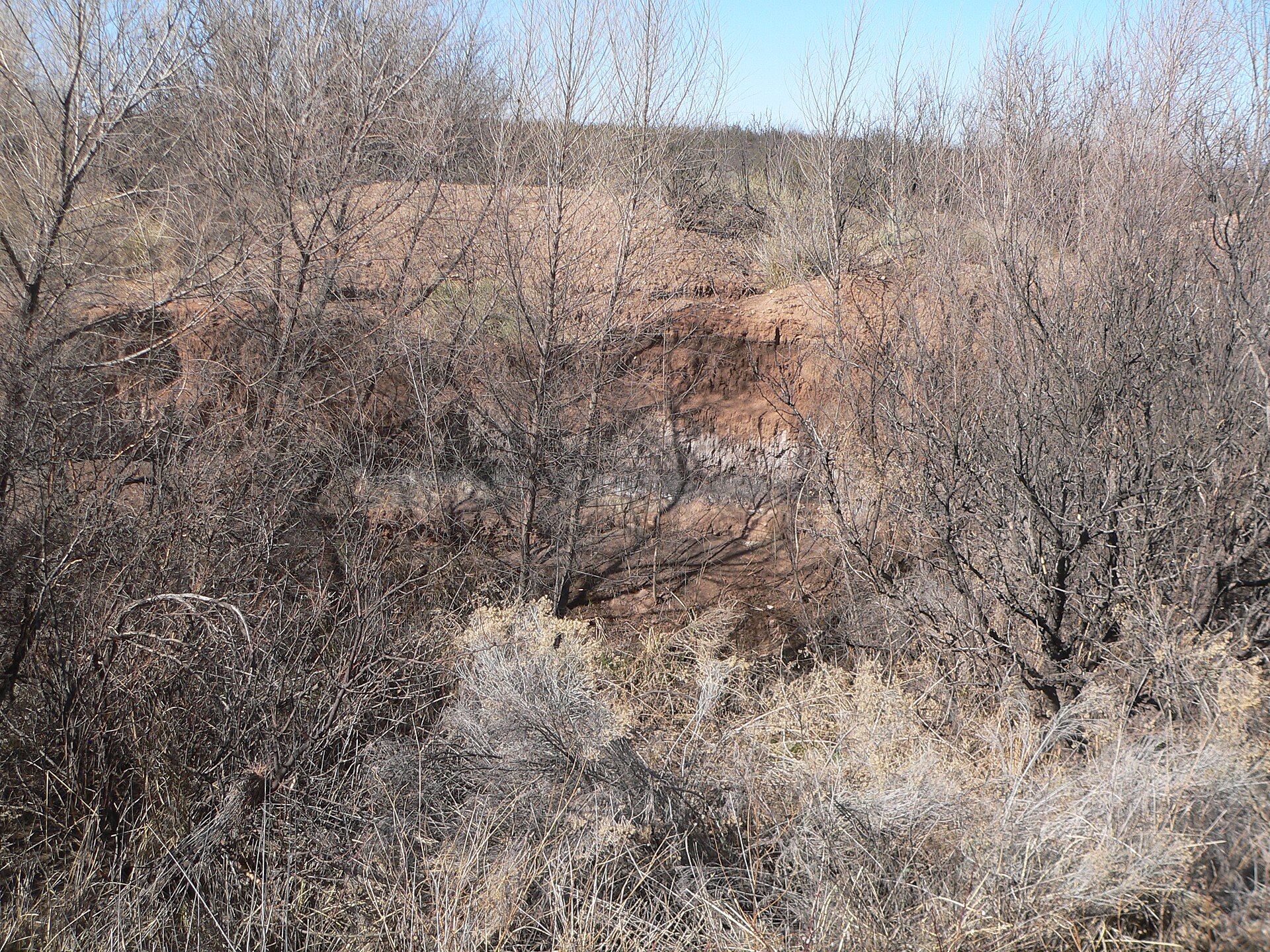
plate I · photograph — duotone applied in display; original unmodified
An exposure at the Murray Springs Clovis site in southeastern Arizona, one of the type localities where a dark organic-rich "black mat" horizon drapes the terminal-Pleistocene surface (YDIH-C006). The photograph documents the field setting of the stratigraphy; whether the mat marks an impact event or ordinary wet-ground conditions is exactly what the case contests.
The Greenland spike has since been dated more exactly than its discoverers could date it. Read on the same ice-core timescale as the cooling itself, it begins about forty-five years after Greenland started to coolC507. Ice-core chronologists noted the lag in 2020, and later analyses have confirmed it, the latest, in 2025, made without sight of the others. All of them re-date the same measurements from the same core, and no second core has been measured. But if the lag holds, whatever delivered the platinum arrived decades into the cold and cannot be what started it. The 2025 team went further, arguing that the spike's chemistry sits closest to volcanic gases and that its fourteen-year spread fits a long Icelandic fissure eruption better than a single blast. That argument is weaker than the dating, and its authors concede they cannot rule out an unusual meteorite. What their measurements did settle is narrower: the obvious volcanic suspect, Germany's Laacher See eruption, left pumice almost empty of platinum.
▸ claims behind this paragraph (1)▾ claims behind this paragraph
The signature proxies fare worse. Nanodiamond-rich layers were reported in Science in 2009C003, including the hexagonal form whose shock pedigree would matter — but independent electron microscopists re-examined such material and found no diamonds at all, concluding the "lonsdaleite" was misidentified stacks of graphene-like sheets. The microspherule peaksC004 have been fought over longest: an independent seven-site study in 2009 found nothing at the boundary; proponents answered that the replicators' protocol lost the spherules; and in 2016 the only blind test in this literature — identical sample splits, two laboratories, no one told where the boundary lay — found the boundary unremarkable and a bigger spherule peak in younger sediment. Melt glass said to record temperatures above 2,200 °CC005 awaits any blinded confirmation and carries its own corrections. And the famous black mats — dark bands that really do drape the last mammoths and Clovis floors at site after siteC006 — are, by the account of the geoarchaeologist who documented them, wetland deposits: risen water tables and algae as the climate turned, expected under every hypothesis on the table, fallout under none.
▸ claims behind this paragraph (4)▾ claims behind this paragraph
The pattern across the whole assemblage is the case's central fact: independent laboratories running their own protocols repeatedly fail to find the peaks, and no standardized identification criteria exist for the key markersC030. Proponents have a genuine methodological answer — the replications deviated from the original protocol in ways that could lose real spherules — but after nineteen years the situation remains that the layer reliably appears under proponent methods and reliably fails to appear under anyone else's. That is not what an established stratigraphic datum looks like. It is what a methods dispute looks like, and only one kind of experiment ends a methods dispute: both camps agreeing on criteria before anyone looks. It has been run once, at one site, and the boundary lost.
▸ claims behind this paragraph (1)▾ claims behind this paragraph
The hypothesis needs more than materials; it needs simultaneity. A layer deposited in one afternoon across four continents would be extraordinary evidence of an extraordinary cause — which is why the synchroneity claimC010 is the load-bearing wall of the whole structure. The dispute here is quietly statistical. Radiocarbon dates come with uncertainties of centuries; sediment samples integrate decades; and if investigators label whichever stratum overlaps 12.8 ka as "the boundary," the boundaries will agree with each other by construction. A 2014 audit found that of twenty-nine claimed boundary sites, only three had chronology solid enough to place their proxies at the right moment; the proponents' 2015 Bayesian model answered that the dates are consistent with a hundred-year synchronous window. Consistent-with is not demonstrated: the model inherits its date selections. Meanwhile the onset itself is now dated to about 12,870 ± 30 years before present — a target the proxy chronologies must actually hit, not merely approach.
▸ claims behind this paragraph (1)▾ claims behind this paragraph
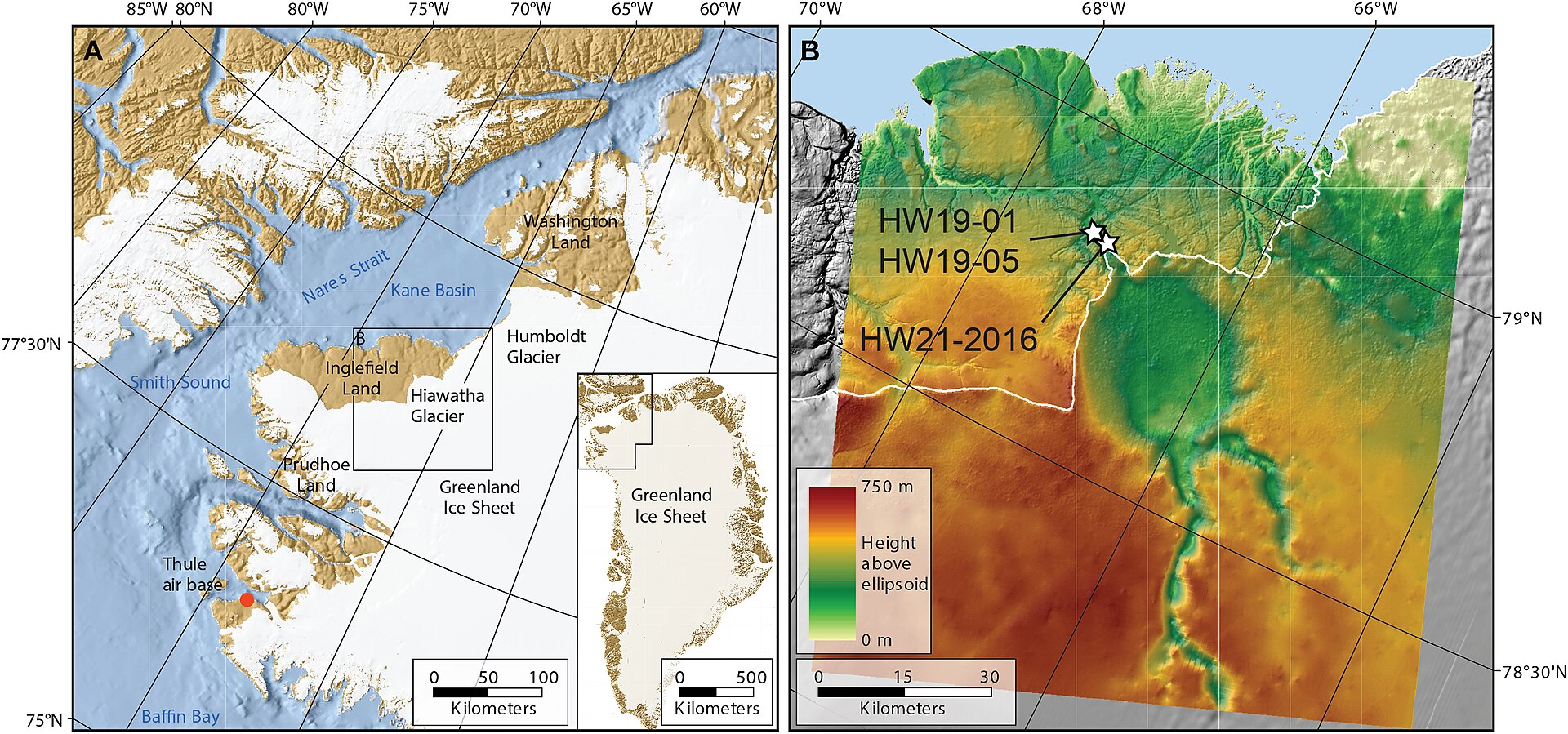
What, physically, hit us? The 2007 paper imagined something large and low-density exploding over the ice sheet. No crater turned up. When a 31-kilometer crater was discovered beneath Greenland's Hiawatha Glacier in 2018 with its age initially open, it was widely discussed as the smoking gun — until direct dating in 2022 returned fifty-eight million years, missing the Younger Dryas by a factor of four and a half thousandC009.
▸ claims behind this paragraph (1)▾ claims behind this paragraph
plate II · photograph — duotone applied in display; original unmodified
Figure 1 of Kenny et al. (2022): the location and subglacial topography of the Hiawatha impact structure in northwest Greenland, with the sample sites whose zircon and apatite dates placed the impact at ~58 million years ago — removing the structure as a candidate Younger Dryas crater (YDIH-C009).
Gavin G. Kenny et al. (CC BY figure from Science Advances) · 2022-01-28 · source · CC BY 4.0
The modern proponent position, following the astronomer William Napier, no longer needs the crater: Earth is proposed to have crossed the debris stream of a disintegrating giant comet — the Taurid Complex's parent — producing many dispersed airburstsC012. This is a real dynamical scenario from the peer-reviewed astronomical literature, and it is also a retreat with epistemic consequences: each reformulation has reduced the physical evidence the event should have left while retaining the hemispheric consequences claimed for it. A hypothesis that adjusts its impactor downward at every disconfirmation, without surrendering any of its effects, is drifting toward unfalsifiability — the airburst does for this theory what the untestable mechanism does for others.
▸ claims behind this paragraph (1)▾ claims behind this paragraph
The impact is supposed to have done three things. The cooling: an impact-initiated trigger for the circulation collapseC021 is physically conceivable but evidentially idle — known deglacial processes suffice, and nothing from an impact has been found at the moment the cooling began. What the ice does hold at that moment is a cluster of four large eruptions in the century before the onset, recorded in both Greenland and Antarctica, whose combined forcing exceeds the most volcanic stretches of the last two thousand yearsC508; in April 2026 a Science Advances study added source-discriminating geochemistry from Florida sediments pointing the same way. Volcanism is thus a rival trigger with a measured, correctly timed forcing behind it — though no one has yet shown it could tip the climate, and eruptions of that size recur through the glacial record. The extinctions: the impact's contributionC022 founders on resolution — the best chronology can confine the die-off only to a two-thousand-year window that also contains human expansion and violent climate swings. The people: here the hypothesis made its most checkable prediction, a continent-wide demographic catastrophe, and the archaeological record answers noC023: roughly fifteen hundred radiocarbon dates show no population trough, and the specialists' review found technological transition — Clovis points giving way to Folsom points — not termination. "Clovis" names a way of making tools, not a nation that could fall.
▸ claims behind this paragraph (4)▾ claims behind this paragraph
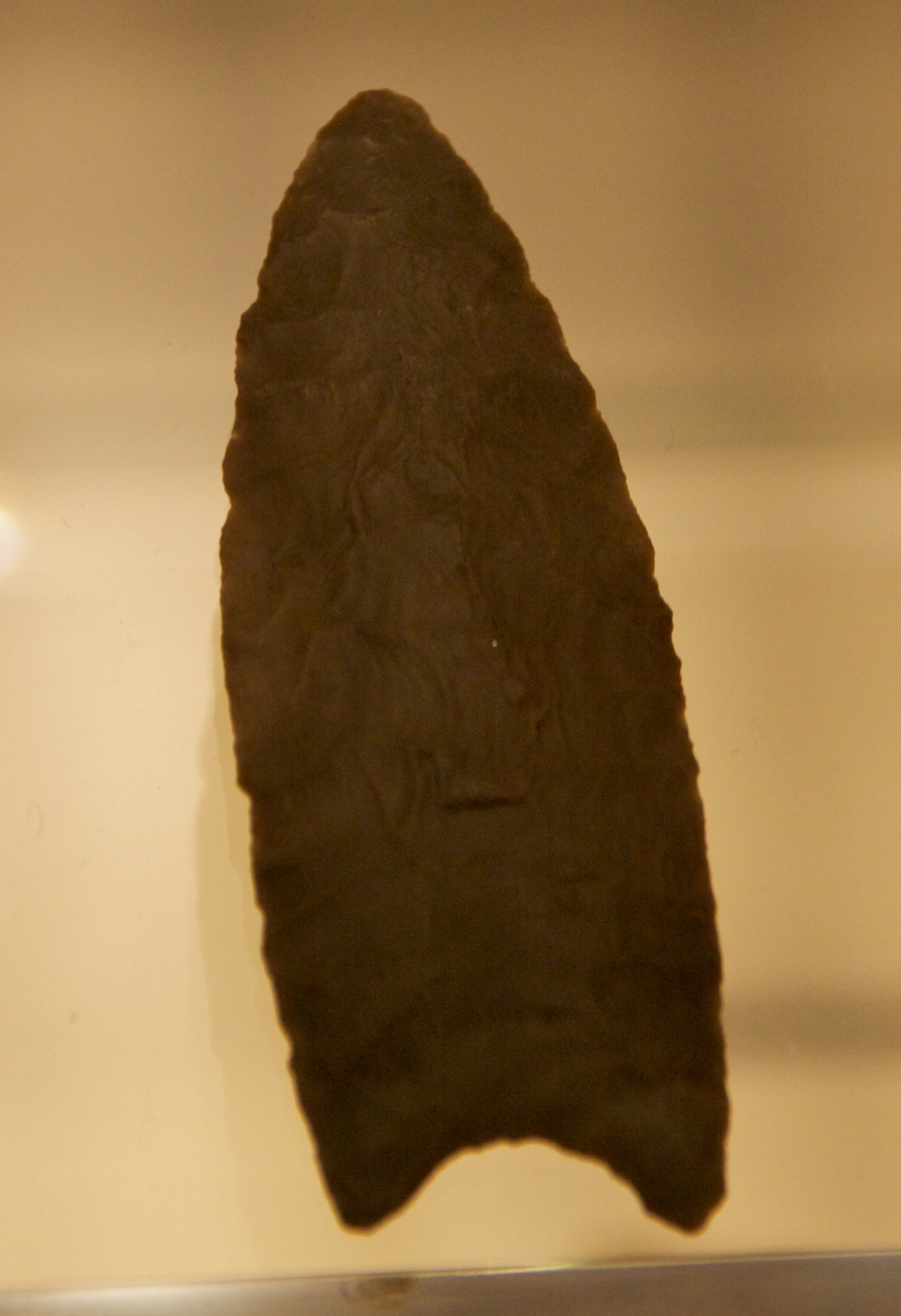
plate III · photograph — duotone applied in display; original unmodified
A Clovis spear point in the British Museum. The photograph shows the fluted-point technology that names the archaeological tradition at issue (YDIH-C023); it is not evidence of an impact, a population collapse, or any particular site.
And there is the fire. Proponent compilations report an extraordinary burning episode at the onset — nearly a tenth of the biosphere, by their estimateC007; the fire-history community's own continental charcoal synthesis, assembled for unrelated purposes, sees regional fire tracking climate and no continent-wide pulse at all. When the custodians of the database dispute the use made of their data, the honest label is: contested, with the independent baseline against it.
▸ claims behind this paragraph (1)▾ claims behind this paragraph
Then came the year the editorial record moved. In August and September 2025, PLOS ONE published the hypothesis's two most ambitious papers in years — cometary dust in Baffin Bay sediment cores, and shocked quartz offered as the long-missing impact-physics evidence. On 11 February 2026, both were retractedC031. The notices are worth reading in their own words, because they read like a syllabus of this case's methodological themes: radiocarbon calibration inappropriate to the site — which, done correctly, moves the "boundary layer" out of the Younger Dryas entirely; claimed cosmic spherule fragments that consulted experts identified as marine foraminifera; unsampled core sections that make it impossible to say whether the claimed spikes exceed background; citations that do not support their statements, raising concerns about undisclosed AI use in referencing. Three months later came the platinum correction described above. Two things must be said with equal firmness. The notices document error, misidentification, and methodological failure — they make no finding of fabrication, and several authors formally disagreed with both retractions. And retractions are evidence about papers, not about the Pleistocene: they subtract claimed confirmations; they do not prove a negative. Both halves of that sentence are load-bearing, because retractions in this literature cut both ways — against the newest proponent evidence, and against any skeptic tempted to treat editorial actions as if they were data.
▸ claims behind this paragraph (1)▾ claims behind this paragraph
The proponent organization itself, the Comet Research Group, currently tells the public the evidence is "undeniable" and that civilization was nearly erased. The peer-reviewed literature — including the proponents' own, twice retracted and once corrected this year — says no such thing. That gap between the fundraising voice and the published voice is itself a datum this case records.
Where this leaves the hypothesis
A 2023 thirteen-author review concluded the hypothesis fails across every domain it touches — physics, geochemistry, chronology, ecology, archaeology; proponents published a detailed rejection of the refutation in 2024; the reviewers rebutted. The exchange is formally open, and "debated in the literature" is true. It should not be mistaken for "evenly divided": no independent, blinded, criteria-locked test has ever confirmed the boundary layer, and every discriminating measurement so far has returned terrestrial or unresolved. But the residue is real too. The Greenland platinum anomaly exists and its carrier has never been identified — though it now dates to decades after the onset rather than to the onset itself. The genuinely decisive experiments — a jointly designed blind test of the strongest sites, osmium isotopes on the same aliquots as the platinum, platinum measured in a second Greenland core, a synchrony test with the circularity removed — are specified in the research agenda below, are not expensive, and have never been run in full. Anomalies can be real while their favored explanation is not established; failed evidence can weaken a hypothesis without proving no event occurred; and an unresolved trigger does not make every candidate trigger equally likely.
The mammoths are just as extinct either way. What is still falling, nineteen years on, is the question of what — if anything — fell.
the argument ladder
evidence for a lower rung does not automatically climb
Attribution
Was it actually done? The claims the thesis stands or falls on.
The strongest records on each side, structurally symmetric. Every record separates what the source states from what we infer. Browse the full ledger (41 records) →
strongest supporting
▲Supports· strongYDIH-E001
The GISP2 Greenland platinum anomaly
what the source states
High-resolution (2.5–4.6 year) ICP-MS time series of GISP2 ice identified a platinum anomaly near the Younger Dryas onset — per the 2026 corrected characterization: spanning ~21 years, average ~30 ppt, single-sample peak ~80 ppt — with rising Pt over ~14 years and a fall over ~7, which the authors interpreted as consistent with atmospheric deposition of Pt-rich dust from an unusual, Ir-deficient, possibly extraterrestrial source whose identity could not be established with certainty.
what we infer
The best-attested single observation in the case: an independent (non-CRG) laboratory, a premier archive, a real geochemical event. It is evidential grade one of four — an elemental anomaly with no identified carrier — and everything beyond that grade is interpretation.
limitations
The anomaly's source and carrier remain unidentified; a contemporaneous PNAS comment (Boslough 2013) proposed a non-cataclysmic meteorite entry as sufficient.
~30 ppt over ~21 years is a subtle influx, not by itself a catastrophe signature.
Haynes 2008: the black mats documented — as wetland deposits
what the source states
A survey of terminal-Pleistocene sites documented widespread dark, organic-rich "black mat" horizons overlying the Rancholabrean surface — frequently draping the last in-place megafaunal remains and Clovis occupations — attributing the mats to elevated water tables, spring discharge, and organic accumulation during the moist Younger Dryas interval.
what we infer
Supports the observation claim precisely because it is the careful version of it: the mats are real, striking, and stratigraphically associated with the transition — and their documenter's own account of what they are (wetland facies) is the strongest reason they cannot serve as an impact marker.
limitations
Black mats occur at many other times and places; the association with the YD onset is environmental, not event-diagnostic.
Hiawatha dated: 58 million years — excluded as a YDIH candidate
what the source states
40Ar/39Ar dating of impact-heated sand and U-Pb dating of zircon in impact-melt pebbles, sampled from glaciofluvial sediment draining the crater, converged on an impact age of 57.99 ± 0.54 million years (Late Paleocene).
what we infer
Clean, dual-method, direct dating that removes the only proposed crater from the case — supporting the no-crater claim and, in the process, demonstrating what decisive evidence in this field actually looks like. Retractions cut both ways and so do datings: proponents dropped Hiawatha; the hypothesis's airburst wing never needed it.
limitations
Dates the one candidate structure; cannot exclude undiscovered structures, though none with credible ~12.8-ka dating has been proposed.
Hall's Cave: osmium isotopes point to volcanism, not a cosmic source
what the source states
Highly-siderophile-element abundances and 187Os/188Os ratios in Hall's Cave (Texas) sediments spanning the Younger Dryas showed that the reported geochemical anomalies there are most consistent with distant volcanic gas emissions, not with an extraterrestrial impactor.
what we infer
The one time source-discriminating isotope geochemistry has been applied to a claimed YD platinum-group anomaly, it returned a terrestrial answer. This does not make every anomaly volcanic; it demonstrates that "platinum peak = impact" is not a valid inference rule — which is the diagnosticity claim's core problem.
limitations
One site; explicitly does not resolve the origin of the Greenland anomaly or other localities.
Surovell et al. 2009: seven-site independent replication failure
what the source states
An independent seven-site study — including two sites from the original Firestone sample — attempted to reproduce the reported boundary peaks in magnetic grains and magnetic microspherules and did not find spherule enrichment at the Younger Dryas boundary at any site.
what we infer
The first serious outside test of the founding observation, and it failed cleanly. The proponents' answer (LeCompte et al., carried below) is that the protocol differed in ways that lose spherules — a live methodological dispute rather than a settled verdict, but the burden it creates is real: the signature proxy appears only under proponent protocols.
limitations
LeCompte et al. 2012 documented concrete protocol deviations (size-fraction handling, magnetic separation) that could plausibly cause real spherules to be missed.
The 2016 blind test: little at the boundary, more above it
what the source states
Two laboratories analyzed identical splits from a stratigraphic sequence, blinded to the target layer: the study reported very low or absent Younger Dryas boundary microspherule and nanodiamond abundance, a substantially larger microspherule peak in a younger (post-YD) sample, and the absence of standardized criteria for identifying magnetic microspherules.
what we infer
The single best-designed test in the literature, and the pattern it found — boundary unremarkable, bigger peak elsewhere — is what background-plus-selective-emphasis looks like. One principal site limits its geographic reach; nothing limits its methodological lesson.
limitations
Essentially a single-site test; proponents dispute its sample handling and argue its sites were not their strongest.
steelmanned — the account the featured hypothesis must beat
The Younger Dryas needs no comet. Its proximate mechanism, a weakening of the Atlantic overturning circulation, is well supported, and known deglacial processes can start it: meltwater from the retreating ice sheet, sea-ice feedbacks and — a forcing now measured at the right moment in the ice of both hemispheres — a cluster of large volcanic eruptions in the century before the onset. The megafauna died over a window of about two millennia that also holds human expansion and violent climate swings. The Clovis "collapse" is a change in stone-tool technology, not a population crash. Each claimed impact marker has a terrestrial candidate: spherules from background dust, fire and industry; "nanodiamonds" that independent microscopy could not confirm; platinum that osmium isotopes tied to volcanism at one site; black mats that are wetland deposits. The residue is a Greenland platinum spike of unidentified source, which arrives decades after the cooling began, and site observations awaiting a controlled test.
What would change our mind
The case does not end in a verdict; it ends in the studies that would move it, in the order this edition judges they would move it most. A result in either direction counts.
YDIH-R001Publication prize · Desk
The auditable evidence matrix: every site, every proxy, every date
Reconstruct every site claimed in the major pro-YDIH syntheses into one auditable matrix at the site × proxy × chronology level: the actual dating uncertainty and stratigraphic thickness around each proxy horizon; whether the same specimens, laboratories, or authors appear across multiple publications (so replication independence can be measured rather than asserted); raw peak-to-background effect sizes recomputed from original data where available, replacing the word "anomaly" with numbers; and each finding paired with its strongest published replication or critique. Correction and retraction status tracked dynamically — the 2026 editorial actions demonstrate why publication status must be refreshed rather than stored at ingestion.
expected information gain
Converts a two-decade literature war into an inspectable dataset, exposes how much claimed replication is internal to one authorship network, and identifies the strongest surviving sites that the decisive experiments below should target.
The definitive blind test: multi-laboratory, criteria-locked, jointly designed
The 2016 blind test's design, scaled to decisiveness and armored against the objections both sides raised: proponent and critic laboratories jointly select the strongest surviving sites and agree on sampling and particle-identification criteria in advance; continuous stratigraphic sampling well above and below the target horizon; splits distributed blinded to the boundary position and to each other's results; pre-registered analysis including background rates and multiple-comparison handling. Preregistered prediction (proponent): extraordinary microspherule/nanodiamond peaks confined to the boundary at the agreed sites. Falsification: boundary statistically unremarkable against background, or peaks of equal magnitude at non-boundary depths.
expected information gain
Ends the protocol war by construction — both camps sign the methods before anyone sees results. Either outcome is decisive for the boundary-layer observation claims, and with them most of the ladder.
What carried the platinum? Source-discriminating geochemistry on the same aliquots
Move the platinum debate from "is Pt elevated?" to "what carried it?": retest well-dated Younger Dryas boundary material for Pt/Ir/Pd/Rh abundances plus 187Os/188Os and complementary isotopic source tracers measured in the same aliquots, alongside volcanic, meteoritic, and local-crustal reference materials — the Hall's Cave design applied to the strongest remaining localities, ideally including ice-core archives where the Greenland anomaly's carrier phase could be directly sought.
expected information gain
Directly discriminates the three live readings of the case's most solid observation — meteoritic, volcanic, unresolved — and would upgrade or retire the platinum line in one campaign. The 2026 correction makes this the proponents' own open question.
Is the Greenland platinum spike one of a kind? A second core, a longer record, and known eruptions
Every placement of the Greenland platinum spike rests on one series from one core. Measure platinum (with iridium and aluminium) across the Bølling–Allerød/Younger Dryas transition in a second deep Greenland core on the same GICC05 timescale; extend the GISP2 series well above and below the spike to learn how often comparable spikes occur; and measure platinum across intervals of known Icelandic volcanic metal deposition (the 8th-century Hrafnkatla episode, for instance) to see whether volcanism produces the same signature. These are the tests the 2025 re-dating study itself recommends.
expected information gain
Settles whether the spike is a Greenland-wide deposition event or a single-core feature, whether its timing relative to the cooling holds in independent ice, and whether it is rare enough to need an exotic cause. A spike absent from the second core, or common through the record, retires the platinum line on both sides; a spike that replicates, is unique, and shows no volcanic analogue would restore it as an anomaly needing explanation — still decades after the cooling began.
▸ 2 more studies on the agenda▾ the rest of the agenda
YDIH-R004Prize or grant · Desk
Preregistered synchrony: date the layer without assuming the event
A chronology project that fixes the rules before seeing the proxies: pre-register what age interval counts as the hypothesized event; use archive-appropriate radiocarbon calibration and reservoir corrections (the Baffin Bay retraction shows the stakes); propagate layer-thickness and sedimentation-rate uncertainty through formal age-depth models; assign each site's boundary blind to its proxy content; and test synchrony probabilistically across sites rather than labeling every horizon whose uncertainty overlaps 12.8 ka as "the boundary."
expected information gain
Tests the hypothesis's load-bearing wall — the isochron — with the circularity removed. A surviving synchronous window would be the strongest result the hypothesis has ever had; a dissolving one ends the single-event formulation.
Map the authorship, funding, laboratory, and specimen-sharing networks across the full YDIH literature, coding each claimed replication as internal, partially independent, or fully independent — the taxonomy the research report proposes and the two 2025 papers' disclosed Comet Research Group relationships make feasible. Publish the network with the evidence matrix (YDIH-R001) so that "confirmed at N sites" claims carry their independence structure on their face.
expected information gain
Cheap, decisive scholarship for a case whose central dispute is whether anything has ever been independently confirmed: it would let readers — and reviewers — distinguish forty papers from one team writing forty papers.
Trust comes partly from showing changed minds. Each entry is an edition that changed a verdict, with the word before and the word after — a reversal included.
No verdict has moved between this case's editions.
The change log
Aletheia records every change to a case: what changed, why, and who made it — including the AI's role. The latest:
New edition edition-2026-10-20-130005, adopting a new draft assessment 2026-10-20-operator-130005 (its standing waits for the blind panel).
Ledger: three sources read in full and admitted (Svensson et al. 2020, Climate of the Past; Abbott et al. 2021, Quaternary Science Reviews; Green et al. 2025, PLOS ONE); two claims…
Fifth independent judge added to the cross-model check: Kimi K3 (Moonshot's open-weights model, served via Venice) re-assessed the case blind under the same protocol as the four frontier…