Cases / Homo floresiensis ("the Hobbit")
Vindicated
Homo floresiensis ("the Hobbit")
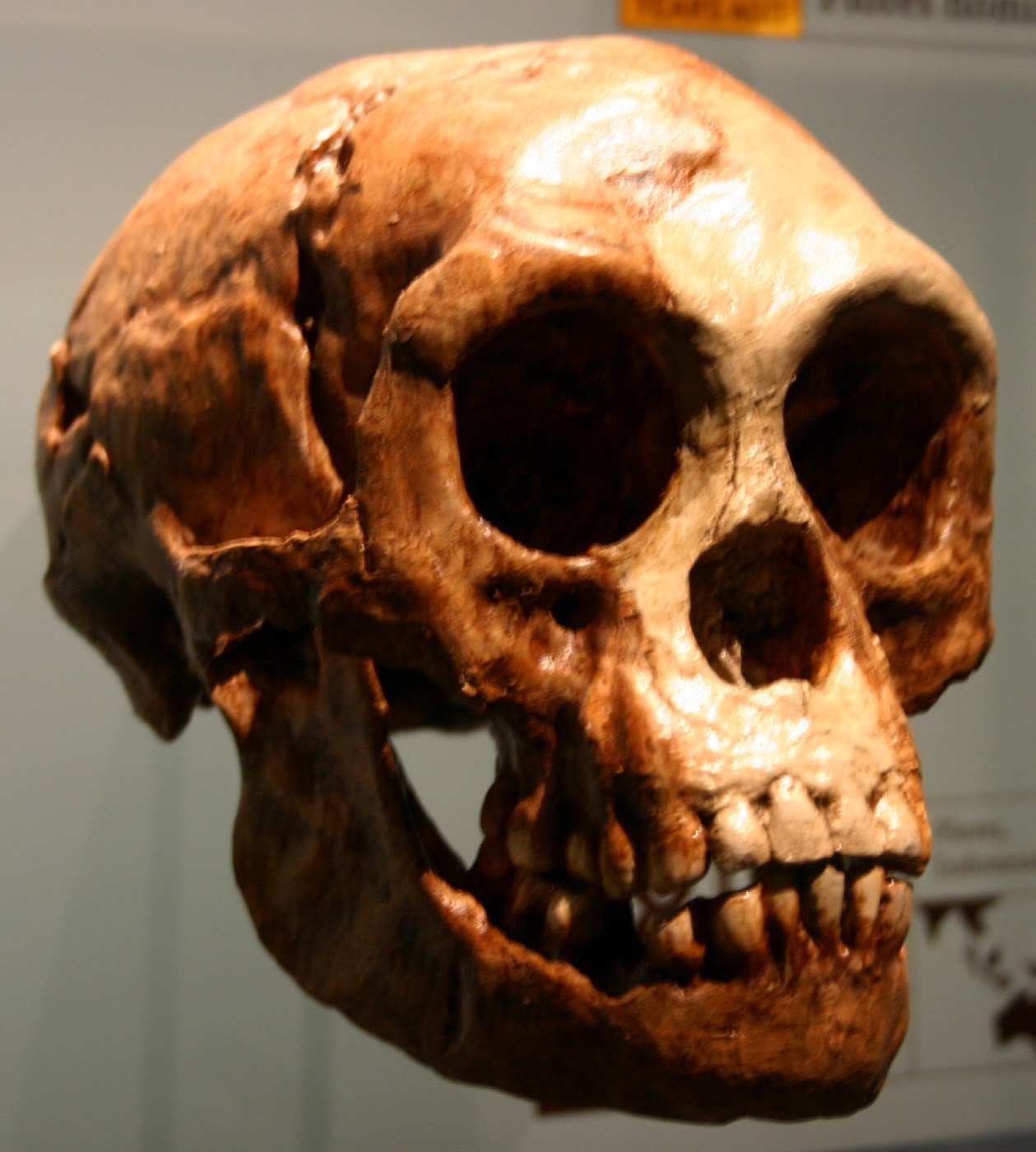
Skeletal remains from Liang Bua cave on Flores belong to a new, very small-bodied and small-brained hominin species, Homo floresiensis, that made stone tools and survived far later than any other archaic hominin known in Asia.

Claimed age
Present from before ~38,000 to at least ~18,000 years ago26k yrs
Claimed
2004Michael J. Morwood, Peter Brown
Verdict
Vindicated · 201612 years after the claim
Leap
—not a dating claim
Evidence then
7 / 8
Sources
2019 opened and checked
Record
High confidenceReviewed
What happened
- 2003A joint Indonesian-Australian team excavates the LB1 skeleton at Liang Bua cave, Flores.
- 2004Brown et al. and Morwood et al. name Homo floresiensis in Nature, dating LB1 to ~18,000 years within a ~95,000-12,000 year sequence.
- 2004Teuku Jacob takes the type specimen to his own laboratory for about three months, restricting the describing team's access.
- 2005Falk et al. publish a virtual endocast study finding LB1's brain shape is not microcephalic or pygmy.
- 2006Jacob et al. argue in PNAS that the remains are a small-bodied modern human population, with LB1 individually microcephalic.
- 2007Tocheri et al. report LB1's wrist bones retain a primitive, pre-modern-human form.
- 2007Hershkovitz et al. propose LB1 represents Laron syndrome in a local inbred population.
- 2014Henneberg, Eckhardt and colleagues argue in PNAS that LB1 shows the skeletal signature of Down syndrome.
- 2016Sutikna et al. revise the Liang Bua chronology: skeletal remains ~100,000-60,000 years old, stone tools to ~50,000 years.
- 2016Baab, Brown, Falk and Richtsmeier publish a critical evaluation rejecting the Down-syndrome diagnosis for LB1.
- 2016Van den Bergh et al. report ~700,000-year-old small-bodied hominin fossils at Mata Menge, resembling early Asian H. erectus.
- 2024Kaifu et al. describe an even smaller humerus and teeth from Mata Menge, confirming a diminutive lineage since at least ~700,000 years ago.
Objections 5 of 5 proved wrong
- LB1 is not a new species but comes from a small-bodied ('pygmy') Australomelanesian modern human population; LB1 itself also shows microcephaly and other developmental abnormalities.Proved wrong — First reported by Balter (2004); formalised in Jacob et al. 2006. Falk (2005) and Baab (2013) group LB1 with archaic Homo, not microcephalics; Martin (2006) and Vannucci (2011) argued microcephaly remained plausible.
- LB1's ~400 cc cranial capacity is smaller than any known hominin under 3.5 million years old, too small to result from ordinary insular dwarfing of Homo erectus.Proved wrong — Weston & Lister (2009) found insular dwarf hippos had brains up to 30% smaller than scaling from a mainland ancestor predicts, so disproportionate reduction is biologically plausible; deep ancestry remains debated.
- Liang Bua stone tools used a prepared-core technique and bladelets otherwise associated exclusively with Homo sapiens, implying modern humans made them, not H. floresiensis.Proved wrong — Brumm et al. (2006) showed technological continuity between Liang Bua tools and 840,000-700,000-year-old Mata Menge artefacts, long predating any Homo sapiens presence on Flores.
- The small stature and small head are explained by Laron syndrome, a growth-hormone-insensitivity disorder documented in modern human populations of the region.Proved wrong — A 2013 geometric-morphometric comparison found LB1's cranial shape clearly distinct from Laron-syndrome and healthy modern humans alike, grouping instead with fossil Homo, closest to H. erectus.
- LB1's brain size and limb proportions match Down syndrome in a small-bodied modern human population, not diagnostic traits of a new species.Proved wrong — A 2016 re-evaluation, co-authored by original describer Peter Brown and endocast specialist Dean Falk, compared LB1 to clinical Down-syndrome samples and found it does not match the Down-syndrome pattern.
Evidence at the time within ~5 years of the claim
- Unambiguous evidencePartly — The bones are unambiguously a small-bodied hominin skeleton; whether they represent a new species rather than a pathological modern human was disputed from the outset.
- Documented contextYes — Excavated in situ over controlled seasons by the joint Indonesian-Australian team under permit; the dated deposits were later found misassociated with the skeletal levels (S11).
- Independent dating methodsYes — The original 2004 chronology combined radiocarbon, luminescence, uranium-series and ESR dating of the same sequence.
- More than one labYes — Co-author affiliations include University of New England (Morwood) and University of Wollongong (Roberts, a luminescence specialist), among others.
- Professional recoveryYes — Excavated by the joint Indonesian Centre for Archaeology / University of New England team under Indonesian government permit (2003 season).
- Peer-reviewed reportYes — Two companion papers in Nature, October 2004, describing the skeleton and its archaeological and dating context.
- Open to criticsPartly — For about three months beginning in late 2004, the type specimen was held and studied by a rival Indonesian researcher rather than the describing team, before being returned.
- Independent teamsYes — Within five years, groups distinct from the excavators (Jacob et al. 2006; Hershkovitz et al. 2007) published independent pathology-based reinterpretations.
- Outside stakeNo — An academic Indonesian-Australian excavation project; no commercial, religious or nationalist motive documented for the describing team.
What would settle it for a field partner
- Attempt ancient-DNA or palaeoproteomic extraction from Liang Bua or Mata Menge skeletal material using current tropical-preservation protocols.Medium costWould show: Direct genetic or protein-based placement of H. floresiensis relative to H. erectus and other hominins, and whether it falls within modern human variation.
- Compare LB1's skeleton and endocast to enlarged clinical reference samples of Down syndrome and Laron syndrome using the same geometric-morphometric protocol used in 2013-2016.Low costWould show: Whether the pathology diagnoses hold up against a larger comparative clinical sample than previously available.
What settled it Morphology, New excavation
Comparative morphology (2005-2016) distinguished the skeletons from microcephalic, Laron- and Down-syndrome humans and grouped them with archaic Homo; ~700 ka small-bodied fossils from Mata Menge (2016) showed a long Flores lineage, leaving pathology readings a minority view.
What would change this record
Ancient DNA or proteomics placing the Liang Bua skeletons within normal Homo sapiens variation, or a larger clinical comparison showing LB1 falls within the Down-syndrome or Laron-syndrome range rather than with archaic Homo, would overturn the new-species interpretation.
Notes
- Status. Core claim vindicated: a new small-bodied, small-brained Homo species is widely accepted (endocast, primitive wrist, ~9 individuals, ~700 ka Mata Menge kin). The ~18 ka survival age was revised to ~100-60 ka; Henneberg's group dissents.
- Accepted view then. Pleistocene Asia was accepted to hold one hominin genus, Homo erectus and H. sapiens, both larger-brained and taller than Pliocene Australopithecus.
- Now understood. ~100,000-60,000 years (skeleton); tools to ~50,000 years
- Dating basis. Radiocarbon, luminescence, uranium-series and ESR dating of the Liang Bua sequence (Morwood et al. 2004); the wider H. floresiensis-bearing deposits were bracketed at about 95,000-12,000 years.
- Refined since. Age revised by the excavators: skeletons ~100,000-60,000 years old, stone tools to ~50,000 years (Sutikna et al. 2016, 2018), not before ~38,000 to ~18,000 years as in 2004; a long overlap with modern humans fell away.
- Refined since. The lineage is far older than first known: small-bodied Mata Menge fossils date to ~700,000 years (van den Bergh et al. 2016), with an even smaller humerus reported in 2024 (Kaifu et al.).
- Refined since. Ancestry is still debated: dwarfed H. erectus (endocast shape, Falk et al. 2005) or an earlier small-brained lineage (primitive wrist, Tocheri et al. 2007); either way the new-species claim stands.
- Refined since. At least nine individuals are now attributed to the species, not LB1 alone, which weakens readings of it as one diseased modern human.
- Correction. Starter notes give the original age simply as '~18,000 years'. Morwood et al. (2004) claimed H. floresiensis existed from before ~38,000 to at least ~18,000 years ago, within deposits bracketed at ~95,000-12,000 years.
- Correction. The 2016 revision is not one number: Sutikna et al. (2016, 2018) date the skeletal remains to ~100,000-60,000 years, while stone-tool evidence for the taxon persists to ~50,000 years, in a sequence spanning ~190,000 years.
- Correction. The pathology hypotheses were not all from separate groups: Henneberg, Eckhardt and Hsu co-authored both the 2006 microcephaly critique (with Jacob) and the 2014 Down-syndrome critique; Laron syndrome (2007) came from a separate group.
- No ancient DNA or protein sequence from H. floresiensis is published as of 2026; a rib taken during the 2004-05 custody dispute yielded no reported results. 'Hobbit' is a press nickname, not a formal designation. At least nine individuals are now attributed to the species, one reason single-individual pathology readings are now a minority view. Mundane checks: excavation was by a credentialed team under permit; stratigraphic complexity, not fraud, explains the age mismatch. Ancestry (H. erectus vs. an earlier small-brained lineage) remains debated (van den Bergh 2016). Henneberg and Eckhardt's group is understood to defend Down syndrome; treated here as unresolved dissent, not disproof.
People and evidence
- Proponents. Michael J. Morwood, Peter Brown, R.P. Soejono, Thomas Sutikna, Matthew Tocheri, Dean Falk
- Critics. Teuku Jacob, Maciej Henneberg, Robert B. Eckhardt, Israel Hershkovitz, Robert D. Martin
- Evidence types. radiocarbon, tl, osl, u series, esr, ar ar, stratigraphy, lithics, fauna, human remains, morphology · 4 independent lines
- Record confidence. high — Nearly every objection and rebuttal is grounded in a directly read abstract or excerpt, including newly added S16-S20. S1 (Brown 2004) is now upgraded to checked, read in full via nature.com.
Sources · 20 · 19 opened and checked · DOIs matched against Crossref
- S1Brown, P., Sutikna, T., Morwood, M.J., Soejono, R.P. et al. (2004). A new small-bodied hominin from the Late Pleistocene of Flores, Indonesia. Nature 431(7012): 1055-1061.Full text read via nature.com: confirms only H. erectus and H. sapiens were accepted in Pleistocene Asia; LB1 ~1 m stature, 380 cm3, assigned to new species via dwarfed H. erectus.
- S2Morwood, M.J., Soejono, R.P., Roberts, R.G., Sutikna, T. et al. (2004). Archaeology and age of a new hominin from Flores in eastern Indonesia. Nature 431(7012): 1087-1091.Abstract read via page fetch: 4 dating methods (14C, luminescence, U-series, ESR); species dated before ~38 to at least ~18 kyr; H. erectus-origin hypothesis; multi-institution author list.
- S3Falk, D., Hildebolt, C., Smith, K., Morwood, M.J. et al. (2005). The Brain of LB1, Homo floresiensis. Science 308(5719): 242-245.Full abstract read: LB1 is not a microcephalic or pygmy; brain/body ratio scales like an australopithecine but endocast shape resembles H. erectus.
- S4Culotta, E. (2005). Battle Erupts Over the 'Hobbit' Bones. Science 307(5713): 1179.Teaser text read: for three months a rival researcher held the skeleton, invited other researchers to examine it, and removed a rib sample for DNA analysis.
- S5Jacob, T., Indriati, E., Soejono, R.P., Hsu, K. et al. (2006). Pygmoid Australomelanesian Homo sapiens skeletal remains from Liang Bua, Flores: Population affinities and pathological abnormalities. Proceedings of the National Academy of Sciences 103(36): 13421-13426.Full abstract read: proposes LB1 from an earlier pygmy H. sapiens population with individual microcephaly; other remains share small body size but not microcephaly.
- S6Argue, D., Donlon, D., Groves, C., Wright, R. (2006). Homo floresiensis: Microcephalic, pygmoid, Australopithecus, or Homo?. Journal of Human Evolution 51(4): 360-374.Crossref metadata confirmed; publisher page returned no readable text (paywalled). Widely cited as an early rebuttal of the pygmy/microcephaly hypotheses; not used alone to support a key field.
- S7Tocheri, M.W., Orr, C.M., Larson, S.G., Sutikna, T. et al. (2007). The Primitive Wrist of Homo floresiensis and Its Implications for Hominin Evolution. Science 317(5845): 1743-1745.Full abstract read: LB1 wrist bones retain morphology primitive for the African ape-human clade, unlike derived Neandertal/modern-human wrists; argues against an undiagnosed-pathology explanation.
- S8Hershkovitz, I., Kornreich, L., Laron, Z. (2007). Comparative skeletal features between Homo floresiensis and patients with primary growth hormone insensitivity (Laron syndrome). American Journal of Physical Anthropology 134(2): 198-208.Full abstract read: proposes the Flores remains are a local, highly inbred H. sapiens population with a growth-hormone-receptor mutation (Laron syndrome), not a new species.
- S9Baab, K.L., McNulty, K.P., Harvati, K. (2013). Homo floresiensis Contextualized: A Geometric Morphometric Comparative Analysis of Fossil and Pathological Human Samples. PLoS ONE 8(7): e69119.Full abstract read: geometric morphometrics show LB1 distinct from healthy, hypothyroid and Laron-syndrome modern humans; LB1 groups with archaic Homo, closest to H. erectus.
- S10Henneberg, M., Eckhardt, R.B., Chavanaves, S., Hsu, K.J. (2014). Evolved developmental homeostasis disturbed in LB1 from Flores, Indonesia, denotes Down syndrome and not diagnostic traits of the invalid species Homo floresiensis. Proceedings of the National Academy of Sciences 111(33): 11967-11972.Full abstract read: LB1's endocranial volume and femur/foot proportions argued to fall in the range predicted for Down syndrome in a normal small-bodied regional population.
- S11Sutikna, T., Tocheri, M.W., Morwood, M.J., Saptomo, E.W. et al. (2016). Revised stratigraphy and chronology for Homo floresiensis at Liang Bua in Indonesia. Nature 532(7599): 366-369.Abstract and Nature editor summary read via page fetch: skeleton-bearing strata older than first thought; the previous ~18 kyr age for LB1 and ~95-12 kyr deposit range are not supported.
- S12Baab, K.L., Brown, P., Falk, D., Richtsmeier, J.T. et al. (2016). A Critical Evaluation of the Down Syndrome Diagnosis for LB1, Type Specimen of Homo floresiensis. PLOS ONE 11(6): e0155731.Full abstract read: re-evaluated Down-syndrome features against clinical Down-syndrome and euploid samples via morphometrics; co-authored by describer P. Brown and endocast expert D. Falk.
- S13van den Bergh, G.D., Kaifu, Y., Kurniawan, I., Kono, R.T. et al. (2016). Homo floresiensis-like fossils from the early Middle Pleistocene of Flores. Nature 534(7606): 245-248.Nature editor summary read via page fetch: Mata Menge mandible/teeth, as small as or smaller than Liang Bua H. floresiensis, dated ~700,000 years; morphology supports derivation from Asian H. erectus.
- S14Sutikna, T., Tocheri, M.W., Faith, J.T., Jatmiko et al. (2018). The spatio-temporal distribution of archaeological and faunal finds at Liang Bua (Flores, Indonesia) in light of the revised chronology for Homo floresiensis. Journal of Human Evolution 124: 52-74.Full abstract read: skeletal remains ~100-60 ka; cultural (stone-tool) evidence to ~50 ka; H. floresiensis, Stegodon, marabou stork and vulture likely extinct by ~50 ka; sequence spans ~190 ka.
- S15Kaifu, Y., Kurniawan, I., Mizushima, S., Sawada, J. et al. (2024). Early evolution of small body size in Homo floresiensis. Nature Communications 15(1).Full abstract read: Mata Menge adult humerus 9-16% shorter/thinner than the Liang Bua type specimen; diminutive body size on Flores since at least ~700,000 years, likely from early Asian H. erectus.
- S16Martin, R.D., MacLarnon, A.M., Phillips, J.L., Dobyns, W.B. (2006). Flores hominid: New species or microcephalic dwarf?. The Anatomical Record Part A 288A(11): 1123-1145.Full abstract read: LB1's ~400 cc brain called too small for normal H. erectus dwarfing; associated prepared-core tools and bladelets called otherwise exclusive to H. sapiens.
- S17Weston, E.M., Lister, A.M. (2009). Insular dwarfism in hippos and a model for brain size reduction in Homo floresiensis. Nature 459(7243): 85-88.Full text read via PMC: extinct Madagascar dwarf hippos had endocranial capacity up to 30% smaller than a mainland ancestor scaled to equal body mass, beyond standard scaling models.
- S18Brumm, A., Aziz, F., van den Bergh, G.D., Morwood, M.J. et al. (2006). Early stone technology on Flores and its implications for Homo floresiensis. Nature 441(7093): 624-628.Text and editor summary read: 840,000-year-old Mata Menge artefacts show technological continuity with Liang Bua tools, indicating toolmakers were present long before Homo sapiens reached the region.
- S19Vannucci, R.C., Barron, T.F., Holloway, R.L. (2011). Craniometric ratios of microcephaly and LB1, Homo floresiensis, using MRI and endocasts. Proceedings of the National Academy of Sciences 108(34): 14043-14048.Full abstract read: LB1 endocast cerebral/cerebellar ratios fall largely outside modern-human and H. erectus range, within the microcephalic range; authors call this supportive, not proof.
- S20Balter, M. (2004). Skeptics Question Whether Flores Hominid Is a New Species. Science 306(5699): 1116.Full text read: within a month of the October 2004 announcement, a small group of scientists (Jacob among them) argued LB1 was a microcephalic modern human; the original team disagreed.
Drafted researcher agent (claude-sonnet-5) · 2026-09-23Skeptic revise · 2026-09-23Stage revisedOpen issues Did not add an independent rebuttal (Westaway et al. 2015) or a source for Henneberg/Eckhardt's continuing dissent (e.g. Eckhardt & Henneberg 2021); sources array is at the schema's 20-item cap after required additions.; Did not add a fourth pathology hypothesis (myxoedematous cretinism, Obendorf et al. 2008) as a new objection; the 20-source cap is already reached.; Left corrections[0] and corrections[1] as detail-adding entries rather than moving them to notes; they add detail but do not correct an error, so this is low priority.; Did not re-source features_at_claim.independent_teams/multiple_labs notes (Jacob et al. 2006 co-author Soejono undercuts 'independent'); would need to read paywalled S6 or S2's supplementary methods.; independent_methods_count (4) is left as the four dating methods already described in features_at_claim.multiple_dating_methods; did not add a separate morphological-evidence count.; Did not add Falk et al. 2009 as a direct rebuttal source for the Laron-syndrome objection; S9 already supports 'wrong' and the source cap is reached.; D19 re-rating 2026-09-23: partial → vindicated — the new-species claim is accepted; the ~18 ka survival age, redated to ~100-60 ka by the excavators, is treated as a date refinement (orthodoxy_at_claim concerns species, not survival).Raw record · Suggest a correction