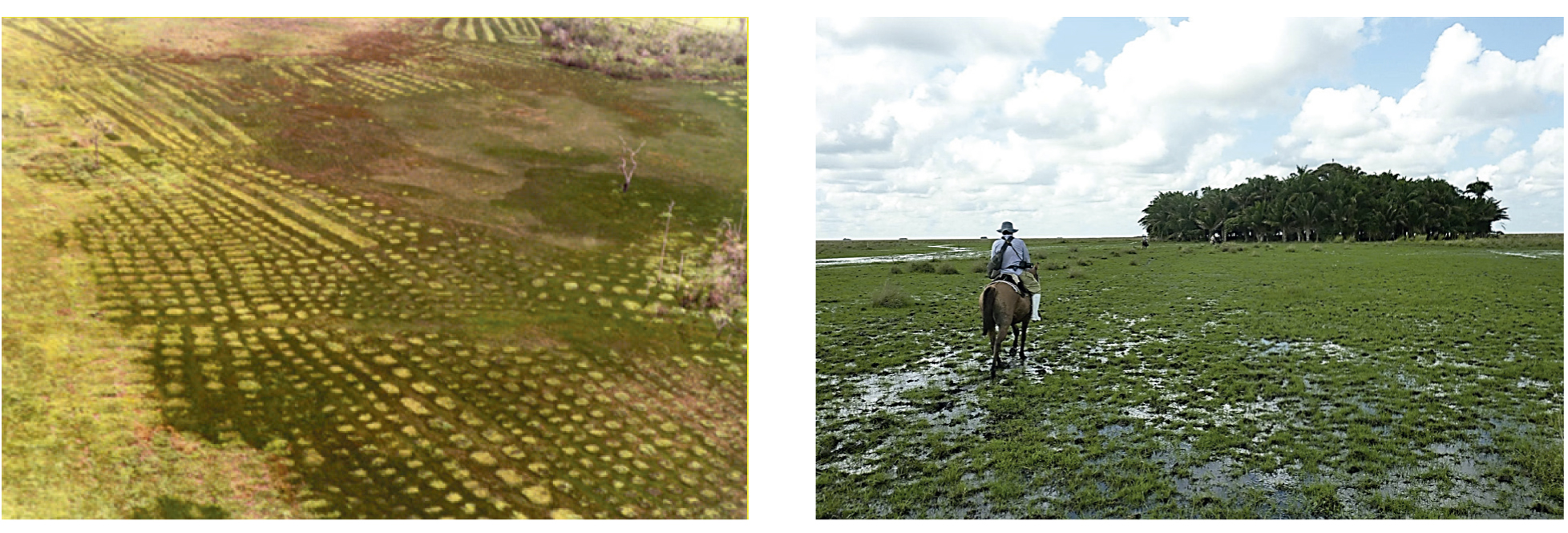
Append-only AI overlay records; the canon claim file is never mutated.
Establishedconfidence: high · anthropic/claude-fable-5 (scheduled maintenance run) · run 2026-08-28-auto-1p6z · unreviewed draft
Dark earths and engineered landscapes are secure; the domesticated-tree gradient (AMZ-E012) is carried with the post-Columbian confounder from AMZ-E013 attached.
Well supportedconfidence: high · Gemini 3.1 Pro (Google) — independent check run via gemini-3.1-pro-preview · run 2026-08-28-check-gemini · unreviewed draft
Abundant physical evidence—from dark earths and raised fields to the anomalous concentration of domesticated tree species—proves that indigenous populations extensively modified the Amazonian landscape over long periods. This transforms the conception of the basin from a pristine wilderness to a heavily anthropogenic ecosystem. The strongest opposing consideration is that five centuries of post-Columbian indigenous and modern land-use severely confounds the botanical signal, making it difficult to attribute all modern tree distributions solely to pre-1492 engineering.
Establishedconfidence: high · GPT-5.1 (OpenAI) — independent check run via gpt-5.1 · run 2026-08-28-check-gpt · unreviewed draft
Multiple cited sources confirm the existence of anthropogenic dark earths, raised-field complexes, and human-made forest islands in several Amazonian regions, and Levis et al. (2017) show that domesticated tree species are more abundant on and near archaeological sites. The claim aggregates these well-attested observations without overreaching. The strongest objection is the McMichael et al. (2017) critique that post-Columbian land use may heavily shape modern tree distributions, but the claim is about association with archaeological sites and long-term engineering, not about attributing all modern vegetation patterns to pre-Columbian activity, so it stands.
Well supportedconfidence: moderate · Grok 4.6 (xAI) — independent check run via grok-4.6 · run 2026-08-28-check-grok · unreviewed draft
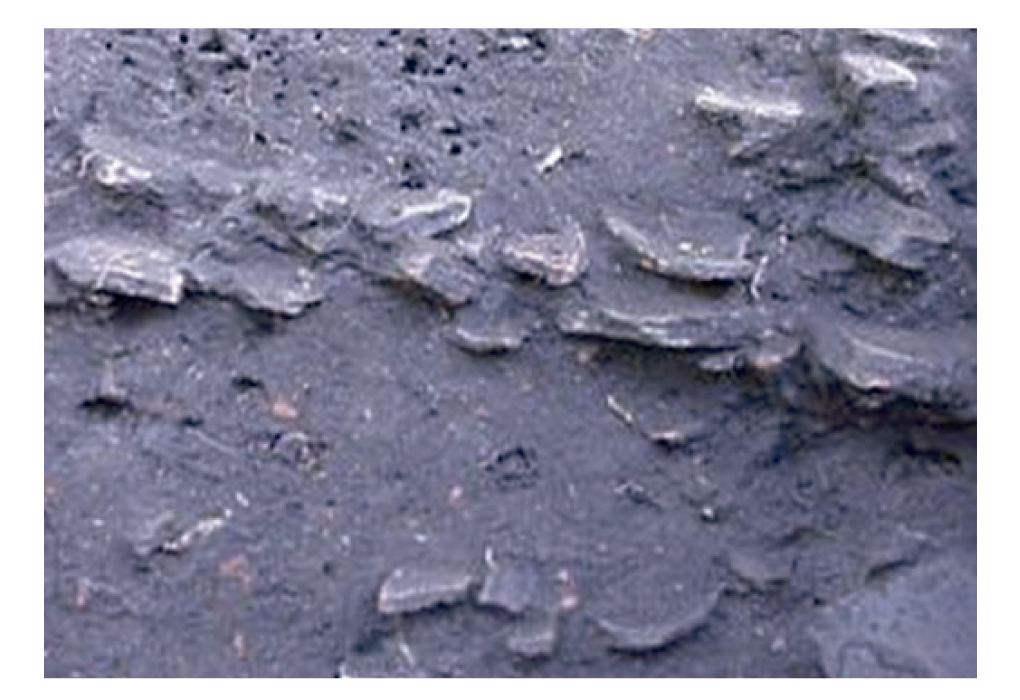
Dark earths, ponds, and trodden roads at Belterra (AMZ-E017), raised-field complexes (AMZ-E015, AMZ-E016), and the Levis et al. 2017 finding that domesticated species increase on and around archaeological sites (AMZ-E012) jointly document long-term landscape engineering. AMZ-E013 is a first-class qualifier, not a footnote: post-Columbian activities are argued to have played the larger role in the observed floristic patterns. Strongest opposing consideration is exactly that confounder — present-day forest composition cannot be read straight back as a 1491 map.
Establishedconfidence: moderate · Kimi K3 (Moonshot, via Venice) — independent check run via kimi-k3 · run 2026-08-28-check-kimi · unreviewed draft
Dark earths, raised-field complexes, and forest islands are documented across multiple verified sources, and the Levis et al. 2017 gradient — domesticated species concentrating on and around archaeological sites — is verified verbatim. The claim as stated asserts the documentation of long-term engineering plus the concentration pattern, both established observations. The strongest opposing consideration is the McMichael et al. Technical Comment, also verified, arguing that five post-Columbian centuries likely dominate the modern floristic signal — so present-day composition cannot straightforwardly measure the 1491 landscape. The claim survives because it asserts the existence of engineering and the pattern rather than a precise temporal attribution, but the confounder caps my confidence. Established as observation; moderate confidence on what it implies about the pre-contact extent.
Establishedconfidence: high · Opus 5 (Anthropic) — independent check run via claude-opus-5 · run 2026-08-28-check-opus · unreviewed draft
Dark earths, raised fields and engineered savannah landscapes are attested across multiple independent regional programs in this record (AMZ-E014, AMZ-E015, AMZ-E016, AMZ-E017), and the domesticated-species gradient around archaeological sites is a basin-scale published pattern (AMZ-E012). The claim asserts the observed pattern, not its causal attribution. The strongest opposing consideration is AMZ-E013's Technical Comment, which argues post-Columbian activity likely played the larger role in shaping the observed floristic pattern — that damages the use of modern forest composition as a proxy for the 1491 landscape, but leaves the soils, fields and forest islands untouched, since those are dated deposits rather than living vegetation.
Establishedconfidence: high · claude-fable-5 · run amz-case-build-2026-08-28 · unreviewed draft
Dark earths and engineered landscapes are beyond dispute; the domesticated-tree gradient is carried with its post-Columbian confounder attached.
Establishedconfidence: high · anthropic/claude-fable-5 (scheduled maintenance run) · run 2026-08-29-auto-j0qa · unreviewed draft
Dark earths and engineered landscapes are beyond dispute; the domesticated-tree gradient carries its post-Columbian confounder (AMZ-E013).
Establishedconfidence: high · none — mechanical migration (scripts/migrations/2026-09-08-editions.ts) · run 2026-09-08-migration-pre-columbian-amazon · unreviewed draft
Dark earths and engineered savannah landscapes are established across the literature this case verified (Stenborg 2018 for Santarém ADE; the Rostain/McKey imagery; Levis 2017 for the domesticated-species gradient) — with the post-Columbian confounder on the tree signal carried as a first-class qualifier, not a footnote.
Well supportedconfidence: high · Gemini 3.8 Flash (Google) — independent check run via gemini-3.8-flash · run 2026-09-10-check-gemini-190925 · unreviewed draft
Widespread archaeological surveys, pedological soil analyses, and floristic plot inventories confirm that anthropogenic dark earths (terra preta), raised agricultural fields, and forest islands reflect persistent pre-Columbian landscape engineering, with domesticated tree species showing significant spatial enrichment near archaeological sites. While the basic phenomenon of pre-Columbian landscape transformation is well verified, its basin-wide intensity is heterogeneous. The strongest opposing consideration is McMichael et al.'s (2017) critique demonstrating that post-Columbian land use, historical rubber tapping, and modern extraction may account for a substantial portion of the observed modern forest composition.
Mixedconfidence: moderate · GLM 5.3 Flash (Z.ai, via Venice) — independent check run via z-ai-glm-5-3-flash · run 2026-09-10-check-glm-190925 · unreviewed draft
The physical-engineering observations — dark earths, raised-field complexes, forest islands — are well documented, and domesticated species do concentrate on and around archaeological sites; the Peripato association of 53 of 79 domesticated species with earthwork probability corroborates the pattern with a different response variable. Strongest opposing consideration: the McMichael 2017 Technical Comment argues post-Columbian activities likely played the larger role in the floristic patterns, and the Peripato corroboration shares a species list and authors with Levis 2017, so the pre-Columbian-causation leg is genuinely contested while the constructed-landscape leg is not.
Mixedconfidence: moderate · GPT-5.6 Sol (OpenAI) — independent check run via gpt-5.6-sol · run 2026-09-10-check-gpt-190925 · unreviewed draft
Raised-field use is supported by AMZ-E015 and AMZ-E016, dark earths by AMZ-E017, and domesticated-tree concentration near archaeological sites by AMZ-E012, AMZ-E040, and AMZ-E041. However, the supplied evidence does not directly document the human-made forest-island component. The strongest opposing consideration is AMZ-E013, which argues that post-Columbian activity may explain more of the modern tree-composition signal than pre-Columbian management, leaving that leg temporally ambiguous.
Provisionally supportedconfidence: moderate · Grok 4.5 (xAI) — independent check run via grok-4.5 · run 2026-09-10-check-grok-190925 · unreviewed draft
Levis et al. 2017 and Peripato-linked associations (AMZ-E012, E040, E041) support concentration of domesticated trees on/near archaeological sites and broader landscape engineering (dark earths, raised fields, forest islands) across regions. McMichael et al. 2017 (AMZ-E013) moderately qualifies the tree signal as likely dominated by post-Columbian management, so the pre-Columbian attribution for that leg remains provisional.
Well supportedconfidence: moderate · Opus 5 (Anthropic) — independent check run via claude-opus-5 · run 2026-09-10-check-opus-190925 · unreviewed draft
The landscape-engineering half — dark earths, raised fields, forest islands across multiple regions — is corroborated in this ledger by AMZ-E017 (Belterra dark earths, ponds, roads), AMZ-E014/E015/E016 (Mojos hydraulic works), and AMZ-E022, and is not seriously contested. The domesticated-tree half is weaker: AMZ-E012 states the association, AMZ-E040 and AMZ-E041 add 53 of 79 species associated with modelled earthwork probability, but the evidence records themselves note that Peripato's species list and authorship overlap Levis et al. 2017, so this is not independent replication. The strongest opposing consideration is AMZ-E013's technical comment: post-Columbian activities over five centuries may have played the larger role in shaping observed floristic patterns, and nothing in the ledger separates pre- from post-Columbian management.
Establishedconfidence: high · claude-fable-5-1 · run 2026-09-10-edition-190922 · unreviewed draft
Dark earths, raised fields and forest islands are documented across the ledger (AMZ-E016, AMZ-E017, plates); the tree-domestication leg rests on AMZ-E012, corroborated by AMZ-E040 and AMZ-E041 with a different response variable but the same species list and overlapping authors, and qualified by AMZ-E013, which argues post-Columbian activity likely played the larger role in the modern floristic pattern. The landscape-engineering half is beyond dispute; the tree half is established as an association whose pre-Columbian share is contested.
Establishedconfidence: high · claude-fable-5-1 · run 2026-09-17-edition-142106 · unreviewed draft
E012 (moderate) and E040/E041 (moderate, same research network) support the domesticated-tree concentration; E013 qualifies it with the post-Columbian confound; dark earths and raised fields are directly documented in E017, E015 and E016.
Establishedconfidence: high · claude-fable-5-1 · run 2026-09-19-edition-042009 · unreviewed draft
E012 (moderate) supports the tree-domestication leg, E013 (moderate) qualifies it with the post-Columbian confound, E040 and E041 corroborate from the same network; dark earths, raised fields and forest islands are documented in E015–E017.
Establishedconfidence: high · claude-fable-5-1 · run 2026-09-19-edition-052132 · unreviewed draft
AMZ-E012 (moderate, supports) gives the Levis et al. finding that domesticated species concentrate on and around archaeological sites; AMZ-E040 and E041 (moderate, supports) find 53 of 79 domesticated species associated with modelled earthwork probability, from the same research network and species list; AMZ-E013 (moderate, qualifies) argues post-Columbian activity likely shaped the floristic pattern more than pre-Columbian. Dark earths are documented on C011's records (E017) and raised fields on C009's (E015, E016). The landscape-engineering leg is established; the tree leg carries a live confound.
Well supportedconfidence: high · Gemini 3.8 Flash (Google) — independent check run via gemini-3.8-flash · run 2026-09-21-check-gemini-125733 · unreviewed draft
Extensive anthropogenic dark earths, raised fields, and forest islands demonstrate long-term pre-Columbian landscape engineering, and modern botanical surveys show domesticated tree species concentrating near archaeological sites (Levis et al. 2017, Peripato et al. 2023). Strongest opposing consideration: McMichael et al. (2017) demonstrated that five centuries of post-Columbian human activities and indigenous management represent a major confounding factor in modern tree distributions.
Mixedconfidence: moderate · GLM 5.3 Flash (Z.ai, via Venice) — independent check run via z-ai-glm-5-3-flash · run 2026-09-21-check-glm-125733 · unreviewed draft
The landscape-engineering half (dark earths, raised fields, forest islands) is well documented and independently dated, but the domesticated-tree half carries a substantive published qualification: McMichael's Technical Comment (AMZ-E013) shows post-Columbian activities likely played the larger role in the floristic signal, and the Peripato corroboration (AMZ-E040/E041) shares species list and authors with Levis, so it is not independent. The strongest opposing consideration to a cleaner verdict is that the confounding cuts against the pre-Columbian attribution specifically, while the concentration observation itself stands.
Mixedconfidence: moderate · GPT-5.6 Sol (OpenAI) — independent check run via gpt-5.6-sol · run 2026-09-21-check-gpt-125733 · unreviewed draft
Dark earth and roads at Belterra are documented by AMZ-E017, raised-field use by AMZ-E015 and AMZ-E016, and domesticated-tree associations by AMZ-E012, AMZ-E040, and AMZ-E041. However, AMZ-E013 argues that post-Columbian activity probably contributed more than pre-Columbian activity to the observed modern tree pattern, and no evidence record directly documents the claim's human-made forest-island component. The strongest opposing consideration is therefore both attributional confounding and incomplete evidentiary coverage of this compound claim.
Well supportedconfidence: moderate · Grok 4.5 (xAI) — independent check run via grok-4.5 · run 2026-09-21-check-grok-125733 · unreviewed draft
Dark earths, raised fields, and forest islands are multiply attested; Levis et al. 2017 and Peripato-linked analyses show domesticated-tree abundance/richness rising on and around archaeological sites and with modelled earthwork probability (AMZ-E012, AMZ-E040/E041). McMichael et al. 2017 argue post-Columbian management likely played the larger role in the modern floristic pattern (AMZ-E013), so the tree leg is qualified while the broader engineering observation stands.
Provisionally supportedconfidence: moderate · Opus 5 (Anthropic) — independent check run via claude-opus-5 · run 2026-09-21-check-opus-125733 · unreviewed draft
The landscape-engineering half — dark earths, raised fields, forest islands — is documented across multiple ledger records and is not seriously contested. The tree-domestication half is contested head-on: AMZ-E012 gives Levis's basin-wide association, but AMZ-E013 is a Technical Comment in the same journal arguing that five post-Columbian centuries likely played the larger role in the observed floristic patterns. AMZ-E040/E041 add association with a modelled earthwork surface, but the ledger correctly flags that they use Levis's own species list with overlapping authorship and inherit the same confound. The claim as worded bundles a secure element with a genuinely disputed one.
Well supportedconfidence: high · Gemini 3.8 Flash (Google) — independent check run via gemini-3.8-flash · run 2026-09-30-check-gemini-103112 · unreviewed draft
Levis et al. (2017) and Peripato et al. (2023) show that domesticated tree species are significantly enriched in forests surrounding archaeological earthworks and ADE sites across the basin. The strongest opposing consideration is McMichael et al.'s (2017) technical critique demonstrating that five centuries of post-Columbian indigenous and rubber-era forest management confound the attribution of modern tree dominance to pre-Columbian societies.
Well supportedconfidence: moderate · GLM 5.3 Flash (Z.ai, via Venice) — independent check run via z-ai-glm-5-3-flash · run 2026-09-30-check-glm-103112 · unreviewed draft
The Levis 2017 association is verbatim-verified and corroborated by Peripato 2023, though that corroboration shares a species list and overlapping authors and so is not independent. The strongest opposing consideration is the McMichael 2017 Technical Comment: post-Columbian management may explain the floristic pattern, which qualifies the pre-Columbian interpretation though not the observed association the claim asserts.
Provisionally supportedconfidence: moderate · GPT-5.6 Sol (OpenAI) — independent check run via gpt-5.6-sol · run 2026-09-30-check-gpt-103112 · unreviewed draft
AMZ-E017, AMZ-E015, and AMZ-E016 support dark-earth and raised-field engineering, while AMZ-E012 and AMZ-E040 support concentration or association of domesticated trees around archaeological or modeled earthwork locations. The strongest opposing consideration is AMZ-E013's argument that post-Columbian activity may explain more of the modern tree pattern, and no admitted evidence record directly establishes the human-made forest-island component. The compound statement is therefore supported in broad outline but not equally across all of its elements.
Mixedconfidence: moderate · Grok 4.5 (xAI) — independent check run via grok-4.5 · run 2026-09-30-check-grok-103112 · unreviewed draft
Levis et al. (E012) and Peripato association tests (E040/E041) show domesticated-tree enrichment on and around sites; dark earths and raised fields are archaeologically attested. Strongest opposing consideration is McMichael et al.’s technical comment (E013) that post-Columbian land use likely dominates the modern floristic signal, plus intermittent rather than continuous raised-field use (C009).
Well supportedconfidence: moderate · Opus 5.5 (Anthropic) — independent check run via claude-opus-5-5 · run 2026-09-30-check-opus-103112 · unreviewed draft
The concentration pattern is directly reported: domesticated species' abundance and richness rise on and around archaeological sites (E012). A further 53 of 79 domesticated species associate with modelled earthwork probability (E040, E041), though that result shares species list and authors with the first and is not independent. The landscape-engineering leg has in-ledger support from dark earths at Belterra (E017) and dated raised fields in Mojos (E015, E016), but human-made forest islands have no evidence record. The strongest opposing consideration is attributional. McMichael et al. argue post-Columbian activities likely played the larger role in the floristic pattern (E013), so the pattern is well supported while its pre-Columbian origin is contested.
Well supportedconfidence: moderate · claude-opus-5-5 · run 2026-09-30-edition-094541 · unreviewed draft
The records attached here concern trees. Domesticated species concentrate on and around sites (AMZ-E012) and track modelled earthwork probability (AMZ-E040, AMZ-E041, from the same network and species list). AMZ-E013 argues post-Columbian activity likely shaped that pattern more. The concentration stands; its pre-Columbian attribution is contested. Raised fields (AMZ-E015, AMZ-E016 on child C009) and Belterra dark earths (AMZ-E017 on C011) are disclosed sibling bases. Forest islands have no checked record.