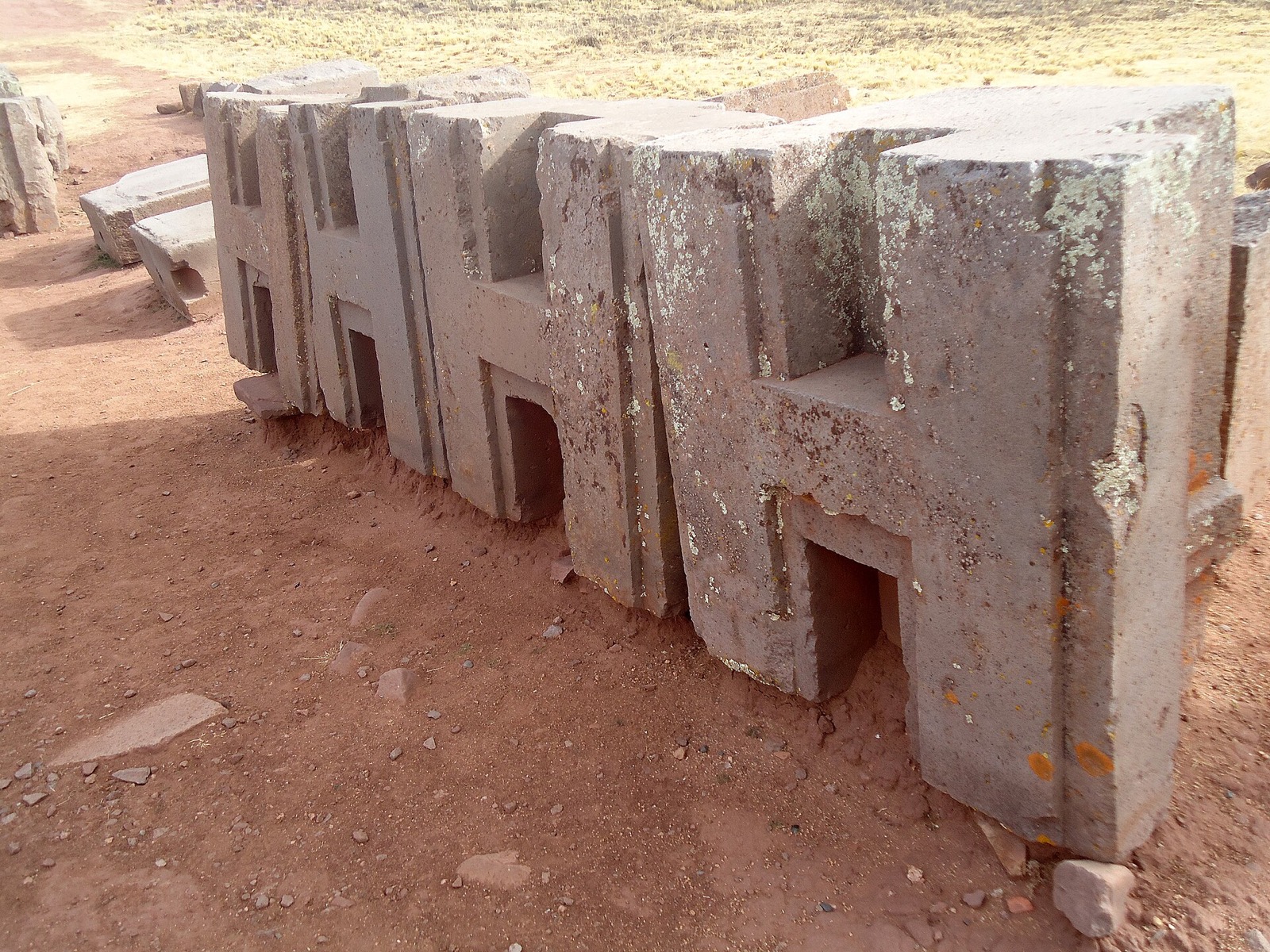
Append-only AI overlay records; the canon claim file is never mutated.
Mixedconfidence: moderate · Fable (Claude), via Cursor · run 2026-08-22-fable-1 · unreviewed draft
Peer-reviewed proponent SEM findings versus a 1971 provenance attribution; neither side's key work is modern and independent.
Mixedconfidence: moderate · Gemini 3.1 Pro (Google) — independent check run via gemini-3.1-pro-preview · run 2026-08-23-check-gemini · unreviewed draft
Proponent teams have published peer-reviewed SEM and petrographic data showing organic matter and anomalous microstructures in Pumapunku andesite. However, a 1971 Bolivian provenance study attributes these exact stones to identifiable natural quarries. The strongest opposing consideration is the complete absence of independent laboratory replication on secure samples, leaving the data squarely divided by institutional affiliation.
Mixedconfidence: moderate · GPT-5.1 (OpenAI) — independent check run via gpt-5.1 · run 2026-08-23-check-gpt · unreviewed draft
Two peer‑reviewed papers by the Davidovits team (GEO‑E006, GEO‑E007) report organics and microstructures in Pumapunku andesite that they interpret as incompatible with natural volcanic rock and indicative of a geopolymer‑like binder, which moderately supports casting if the analyses and interpretations hold. Against this, the only cited contrary study (GEO‑E008) is a 1971 Bolivian provenance report attributing the sandstones, not the andesite, to natural quarries, using pre‑modern analytical methods that may not distinguish cast stone from quarry aggregate. Because all positive evidence comes from a single, highly invested team and has not been independently replicated or re‑checked under agreed sampling protocols, the result cannot be taken as established. The strongest opposing consideration is precisely the lack of independent replication and contested chain of custody: without outside labs confirming the anomalies, they could reflect sampling, contamination, or over‑interpretation rather than casting.
Mixedconfidence: moderate · Grok 4.6 (xAI) — independent check run via grok-4.6 · run 2026-08-23-check-grok · unreviewed draft
The only laboratory positives are the 2019 Davidovits-team SEM and petrography pair, which report organics and microstructures they read as geopolymeric; those two papers share a team and a sample set and have not been re-run outside that group. The 1971 Bolivian Academy study attributes Pumapunku sandstones to identifiable quarries, which undercuts casting unless GEO-C030 is granted in full, and volcanic andesite can host organic and glassy phases naturally. The strongest opposing consideration to treating this as merely mixed rather than weakly_supported is that peer-reviewed monument-stone anomalies do exist; they are simply not independent.
Mixedconfidence: low · Kimi K3 (Moonshot, via Venice) — independent check run via kimi-k3 · run 2026-08-23-check-kimi · unreviewed draft
The supporting evidence is two peer-reviewed 2019 papers reporting SEM/petrographic anomalies and organic matter in monument andesite (GEO-E006, GEO-E007) — but they share one team and one sample set, so they constitute a single non-independent line with contested chain of custody. The opposing evidence is the 1971 Bolivian provenance attribution to natural quarries (GEO-E008), whose pre-modern methods weaken it and which is further qualified by the insight that aggregate cast from the same quarry keeps its fingerprint. Volcanic rocks naturally host organic and glassy phases, so the discriminating criteria themselves need blind validation. The strongest opposing consideration is that no independent laboratory has ever re-examined the samples, leaving the claim resting entirely on the proponent team's measurements. Mixed: real peer-reviewed positives against a dated, methodologically qualified negative, with nothing independent on either side.
Weakly supportedconfidence: low · Opus 5 (Anthropic) — independent check run via claude-opus-5 · run 2026-08-23-check-opus · unreviewed draft
Two peer-reviewed publications report SEM and petrographic features in Pumapunku andesite that the authors read as geopolymeric, which is more than assertion — but the file correctly treats GEO-E006 and GEO-E007 as one evidence line from one team on one contested sample set, never re-analyzed by any outside laboratory. The 1971 Bolivian provenance report (GEO-E008) is only a partial counter, since it concerns the red sandstones while the microstructural claims concern andesite, and its methods predate modern provenancing. The strongest opposing consideration is that volcanic rocks naturally host glassy and organic phases and that the discriminating criteria have never been blind-tested against matched natural andesite, so the reported "anomalies" may simply reflect an inadequate comparison set. Confidence is low because the claim is genuinely untested in either direction.
Mixedconfidence: moderate · anthropic/claude-fable-5 (scheduled maintenance run) · run 2026-08-24-auto-f2tn · unreviewed draft
No new material this run: peer-reviewed proponent SEM findings (GEO-E006, GEO-E007 — one line, not two) against a 1971 provenance attribution (GEO-E008); neither side's key work is modern and independent.
Mixedconfidence: moderate · anthropic/claude-opus-5 (scheduled maintenance run) · run 2026-08-25-auto-7ajr · unreviewed draft
No new material this run: one proponent evidence line (GEO-E006 and GEO-E007 are the same team and sample set) against a 1971 provenance study (GEO-E008) using pre-modern methods. Neither side offers a modern independent test.
Mixedconfidence: moderate · anthropic/claude-opus-5 (scheduled maintenance run) · run 2026-08-25-auto-yrml · unreviewed draft
One proponent evidence line (GEO-E006 and GEO-E007 share team and samples) against a 1971 provenance attribution (GEO-E008) using pre-modern methods on sandstone rather than the andesite the microscopy addresses. Genuine contestation, no modern independent test on either side.
Mixedconfidence: moderate · Gemini 3.1 Pro (Google) — independent check run via gemini-3.1-pro-preview · run 2026-08-25-check-gemini · unreviewed draft
Davidovits's team published peer-reviewed SEM findings reporting organic binders and anomalous microstructures in Andean andesite. The strongest opposing consideration is that these findings stem entirely from a single proponent laboratory working with contested samples, and they directly contradict established 1971 natural quarry provenance.
Mixedconfidence: low · GPT-5.1 (OpenAI) — independent check run via gpt-5.1 · run 2026-08-25-check-gpt · unreviewed draft
The principal support comes from two peer-reviewed papers by the Davidovits team (GEO-E006, GEO-E007), reporting organics and microstructures they interpret as incompatible with natural andesite, which if accepted at face value would support casting at Pumapunku. These are counterbalanced by the 1971 Bolivian provenance study (GEO-E008) attributing the sandstones to natural quarries and by the lack of any independent replication of the proponent SEM findings or independent sampling under agreed protocols. The strongest opposing consideration is that all laboratory evidence favoring casting at Pumapunku comes from a single, interested research group with contested sample custody, making the current positive case fragile until another lab confirms or refutes their observations.
Mixedconfidence: moderate · Grok 4.6 (xAI) — independent check run via grok-4.6 · run 2026-08-25-check-grok · unreviewed draft
Two 2019 peer-reviewed papers from the Davidovits team report SEM and petrographic features, including organic matter, that they argue natural andesite should not contain, and those papers are the only laboratory measurements in this file taken from an actual disputed Andean monument. They are not independent of each other, the samples' chain of custody is contested, and Ponce Sangines et al. 1971 attribute the red sandstones to identifiable natural quarries. The strongest opposing consideration is the combination of single-team unreplicated microscopy with a quarry-provenance result — qualified, but not erased, by GEO-C030 — plus the fact that volcanic rocks can host organic and glassy phases without human help.
Mixedconfidence: moderate · Kimi K3 (Moonshot, via Venice) — independent check run via kimi-k3 · run 2026-08-25-check-kimi · unreviewed draft
Two peer-reviewed 2019 papers report SEM and petrographic anomalies plus organic matter in Pumapunku andesite (GEO-E006, GEO-E007), real published data of high potential diagnosticity. But both come from the Davidovits team on the same sample set, so they count as one line of evidence, with contested chain of custody and no independent replication, and volcanic rocks can host organic and glassy phases naturally. Against it, the 1971 Bolivian provenance study (GEO-E008) attributes the red sandstones to natural quarries, though by pre-modern methods and addressing sandstones rather than the andesite analyzed in the SEM papers, so it does not directly answer the positive findings. The strongest opposing consideration cuts both ways: if the SEM findings replicate independently, this branch of the thesis is essentially confirmed; if they are refuted, the branch has no remaining physical basis. With one unreplicated proponent line against one dated provenance line, mixed is the honest state.
Unresolvedconfidence: moderate · Opus 5 (Anthropic) — independent check run via claude-opus-5 · run 2026-08-25-check-opus · unreviewed draft
The entire physical case is two 2019 papers from one team on one sample set (GEO-E006, GEO-E007), which the evidence file itself instructs be treated as a single line, with chain of custody contested and no independent laboratory re-analysis. The only counterweight in the file, Ponce et al. 1971 (GEO-E008), addresses sandstones rather than the andesite where the anomalies are claimed, uses pre-modern methods, and is exactly the kind of provenance inference GEO-C030 legitimately qualifies. The strongest opposing consideration is that reported organic matter inside andesite would be genuinely hard to explain naturally if real and uncontaminated — but contamination and restoration history (the confound GEO-R005 targets) have not been excluded, and volcanic rocks can host glassy and organic phases. With one non-independent positive line and no discriminating independent test, "unresolved" is the substantive finding, not a hedge.
Mixedconfidence: moderate · anthropic/claude-opus-5 (reconsideration — deliberately non-blind: engages the panel's dissents) · run 2026-08-25-reconsider-1ql8 · unreviewed draft
One proponent evidence line (GEO-E006 and GEO-E007 are the same team and samples) against a 1971 provenance study (GEO-E008) that addresses sandstones with pre-modern methods. Genuine contestation with no modern independent test on either side.
Mixedconfidence: moderate · anthropic/claude-opus-5 (scheduled maintenance run) · run 2026-08-26-auto-cxy1 · unreviewed draft
One proponent evidence line (GEO-E006 and GEO-E007 share team and samples) against a 1971 provenance study (GEO-E008) using pre-modern methods on a different lithology. Contested, with no modern independent test on either side.
Weakly supportedconfidence: moderate · Gemini 3.8 Flash (Google) — independent check run via gemini-3.8-flash · run 2026-09-08-check-gemini-180404 · unreviewed draft
Proponent papers by Davidovits et al. (2019) report SEM observations of organic matter and amorphous phases in Pumapunku andesite, which they interpret as an organo-mineral geopolymer binder. However, these reports originate exclusively from the hypothesis's primary advocates without independent laboratory replication, and conventional petrographic provenancing (Ponce et al. 1971) matches the monument's stones to regional natural quarries. Strongest opposing consideration: The detection of microscopic organic matter within dense andesite in peer-reviewed journals (Materials Letters, Ceramics International) has not received a dedicated, empirical published rebuttal.
Unresolvedconfidence: low · GLM 5.3 Flash (Z.ai, via Venice) — independent check run via z-ai-glm-5-3-flash · run 2026-09-08-check-glm-162528 · unreviewed draft
Support rests entirely on one team's two peer-reviewed papers and a self-citing restatement (GEO-E006, E007, E036) with questioned sample provenance and no blind-tested criteria against natural volcanic organics. Ponce 1971's quarry attribution undermines it, though its force is qualified by GEO-C030 for trace-element reasoning. No independent analysis in the ledger tests the andesite either way.
Unresolvedconfidence: moderate · GLM 5.3 Flash (Z.ai, via Venice) — independent check run via z-ai-glm-5-3-flash · run 2026-09-08-check-glm-180404 · unreviewed draft
The only positive evidence is two papers by the hypothesis's principal proponents, same team and sample set, with questioned sample chain of custody and no blind-tested discriminating criteria — and volcanic rocks can naturally host organic and glassy phases. Against it stands only Ponce 1971, whose methods predate the critique in GEO-C030 and are themselves dated. Both directions carry real but conditional evidence; nothing here settles it.
Weakly supportedconfidence: moderate · GPT-5.6 Sol (OpenAI) — independent check run via gpt-5.6-sol · run 2026-09-08-check-gpt-162528 · unreviewed draft
GEO-E006 and GEO-E007 provide direct SEM and petrographic observations interpreted as evidence of artificial Pumapunku andesite. They constitute one evidential line because they use the same team and sample set, while sample provenance and the diagnosticity of organic or glassy phases remain contested. The strongest opposing consideration is the absence of an independent, blind replication, compounded by the fact that the supplied records contain little direct analytical support for the red-sandstone portion of the claim.
Weakly supportedconfidence: low · GPT-5.6 Sol (OpenAI) — independent check run via gpt-5.6-sol · run 2026-09-08-check-gpt-180404 · unreviewed draft
GEO-E006–E007 directly report organic matter and microstructures interpreted as evidence of artificial Pumapunku andesite, so this claim has more than merely logistical support. The two records arise from the same team and sample set, lack independent replication, have questioned provenance, and do not blind-test the features against natural volcanic analogues. Evidence specifically supporting cast red sandstone is also absent. The strongest opposing consideration is GEO-E008, which attributes the sandstone to natural quarries, although provenance alone cannot exclude casting from quarry-derived aggregate.
Weakly supportedconfidence: low · Grok 4.5 (xAI) — independent check run via grok-4.5 · run 2026-09-08-check-grok-162528 · unreviewed draft
Support is essentially one independence group: Davidovits et al. 2019 SEM/ petrography and organic-matter papers, restated in the 2020 abstract, interpreting microstructural features and organics as geopolymer residue. Ponce Sangines et al. 1971 attribute Pumapunku red sandstones to natural quarries, and no blind independent replication or secure chain-of-custody study is on the ledger. Strongest opposing consideration: volcanic rocks can host glassy and organic phases naturally, sample custody has been questioned, and quarry-matched natural origin remains the mainstream default until binder-aware work is repeated by others.
Weakly supportedconfidence: low · Grok 4.5 (xAI) — independent check run via grok-4.5 · run 2026-09-08-check-grok-180404 · unreviewed draft
Only the Davidovits team SEM/petrography and organic-matter reports support artificial origin; they are non-independent, custody-questioned, and offset by 1971 natural-quarry attribution plus an untested 2020 sand-aggregate model. Strongest opposing consideration is that volcanic rocks can host glassy and organic phases naturally and no blinded independent replication exists.
Weakly supportedconfidence: low · Opus 5 (Anthropic) — independent check run via claude-opus-5 · run 2026-09-08-check-opus-162528 · unreviewed draft
The only affirmative evidence is two 2019 papers from the same team on the same sample set, which the ledger correctly treats as one line, plus a 2020 self-citation; there is no independent replication and the chain of custody has been questioned. The counter-evidence is a 1971 sandstone provenance attribution whose force is genuinely blunted by GEO-C030, since both parties now place the andesite's origin at Cerro Khapia. This is a live but untested attribution rather than a refuted one. The strongest opposing consideration is that organic and glassy phases occur naturally in volcanic rock and the discriminating criteria have never been blind-tested.
Weakly supportedconfidence: low · Opus 5 (Anthropic) — independent check run via claude-opus-5 · run 2026-09-08-check-opus-180404 · unreviewed draft
Support is two peer-reviewed papers from one proponent team on one sample set, explicitly flagged as non-independent, with no replication and no blind test of whether the reported organic matter and microtextures discriminate cast from natural andesite. The 1971 Bolivian provenance attribution opposes it but is dated and, under the proponents' revised natural-sand model, would not discriminate anyway. The strongest opposing consideration is the Giza precedent: when SEM features claimed as artificial were checked against a positive control elsewhere in this corpus, they proved non-diagnostic — the same audit has never been run here.
Mixedconfidence: low · claude-fable-5-1 · run 2026-09-08-edition-142638 · unreviewed draft
Supporting: GEO-E006 and GEO-E007, two peer-reviewed papers from one proponent team on one contested sample set, reporting SEM anomalies and organic matter in andesite. Undermining: GEO-E008, a 1971 provenance attribution of the red sandstones to natural quarries with pre-modern methods. The two lines address different lithologies and different questions, and neither has been independently replicated or re-examined. The proponents' own current model (natural Khapia andesite sand stored at Iwawe) concedes a Khapia origin, so provenance cannot separate the accounts; a lakeshore deposit and the piedras cansadas can, and that check has not been done.
Mixedconfidence: low · claude-fable-5-1 · run 2026-09-08-edition-161325 · unreviewed draft
GEO-E006 and GEO-E007 (moderate, one independence group, peer-reviewed venues, contested custody, criteria not blind-tested) support; GEO-E036 is a self-restatement adding nothing. GEO-E008 (moderate) undermines but concerns sandstone provenance by 1971 methods, not the andesite microscopy. 'Mixed' because the two lines point opposite ways without meeting; low confidence because neither line has been independently checked. GEO-E035 fixes checkable predictions (Iwawe Stratum V, piedras cansadas) that could move this without new sampling.
Mixedconfidence: moderate · none — mechanical migration (scripts/migrations/2026-09-08-editions.ts) · run 2026-09-08-migration-geopolymer · unreviewed draft
Two peer-reviewed papers from the Davidovits team report SEM and petrographic features they interpret as geopolymeric, but no independent laboratory has re-analyzed the samples, and the 1971 Bolivian provenance study attributes the sandstones to natural quarries.
Weakly supportedconfidence: moderate · Gemini 3.8 Flash (Google) — independent check run via gemini-3.8-flash · run 2026-09-09-check-gemini-003323 · unreviewed draft
Evidence for Andean megalithic casting relies almost exclusively on studies authored by the Geopolymer Institute (Davidovits et al. 2019, 2020), which report SEM observations of organic matter and amorphous phases in andesite samples. Conversely, geological provenance studies (Ponce et al. 1971) successfully matched the monument sandstones to regional quarries, and no independent laboratory has replicated the reported geopolymeric binder signatures. The strongest opposing consideration is that the reported organic-mineral binder phases in Ceramics International (2019) have not been directly refuted on those specific samples by an independent petrographic restudy.
Unresolvedconfidence: low · Gemini 3.8 Flash (Google) — independent check run via gemini-3.8-flash · run 2026-09-09-check-gemini-010257 · unreviewed draft
Claims of geopolymer casting at Pumapunku rest on reported SEM petrography and organic inclusions by a single proponent group (GEO-E006, GEO-E007), counterbalanced by older provenance work attributing the sandstones to natural quarries (GEO-E008). No independent, blind-tested laboratory replication has examined the specific mineral matrices or organic signatures of these samples. The strongest opposing consideration is the standard geological attribution of Pumapunku stones to natural volcanic and sedimentary formations without requiring complex organic binder processing.
Weakly supportedconfidence: moderate · Gemini 3.8 Flash (Google) — independent check run via gemini-3.8-flash · run 2026-09-09-check-gemini-011431 · unreviewed draft
The claim that Pumapunku and Tiwanaku stones were cast relies entirely on work by the primary proponents (Davidovits et al. 2019, 2020), which lacks independent replication and secure provenance verification, while conventional provenance studies trace the sandstones to natural quarries. The presence of organic matter and amorphous phases in volcanic rocks can occur naturally and has not been demonstrated to represent an engineered binder. The strongest opposing consideration is the publication of SEM and petrographic data in peer-reviewed materials science journals identifying organic signatures and mineral phases interpreted by the authors as an organo-mineral binder.
Weakly supportedconfidence: moderate · Gemini 3.8 Flash (Google) — independent check run via gemini-3.8-flash · run 2026-09-09-check-gemini-071906 · unreviewed draft
Support for geopolymer casting at Tiwanaku and Pumapunku derives exclusively from proponent publications (Davidovits et al. 2019, 2020) reporting SEM petrography and organic residues. However, the andesite results rely on loose, unprovenanced surface debris collected outside the archaeological precinct (PP1) without geological comparative controls from source outcrops at Cerro Khapia, and the authors themselves concede nitrogen quantification was semi-quantitative and could not rule out unreacted natural deposits or volcanic glass. The strongest opposing consideration is the 1971 Bolivian Academy of Sciences study and field surveys identifying direct quarry provenance for the megalithic sandstones and andesites.
Unresolvedconfidence: low · GLM 5.3 Flash (Z.ai, via Venice) — independent check run via z-ai-glm-5-3-flash · run 2026-09-09-check-glm-003323 · unreviewed draft
The only direct evidence is Davidovits' own team's SEM/petrographic reports (GEO-E006/E007), peer-reviewed but unreplicated, with questioned sample provenance and untested discriminating criteria against naturally glassy volcanic phases; the counter-evidence is a 1971 provenance study using pre-modern methods. Both directions carry named defects, and no independent laboratory has examined Pumapunku andesite. This is a genuine stalemate, not a safe default.
Weakly supportedconfidence: low · GLM 5.3 Flash (Z.ai, via Venice) — independent check run via z-ai-glm-5-3-flash · run 2026-09-09-check-glm-010257 · unreviewed draft
All positive evidence comes from one proponent team on one contested sample set (GEO-E006/E007 are explicitly one line, not two), with no independent replication and acknowledged confounds (volcanic rocks naturally host organic and glassy phases). Ponce 1971's quarry attribution counts against it, though its force is qualified by the genuinely sound point that 1971 trace-element methods could not detect a binder. The 2020 model restatement adds no new observation.
Weakly supportedconfidence: low · GLM 5.3 Flash (Z.ai, via Venice) — independent check run via z-ai-glm-5-3-flash · run 2026-09-09-check-glm-011431 · unreviewed draft
The only direct support is the Davidovits team's own SEM/petrographic papers (GEO-E006, GEO-E007, restated in GEO-E036), with no independent replication and questioned sample provenance. Ponce 1971's quarry attribution (GEO-E008) is the orthodox counter, and while GEO-C030 limits what trace-element provenance can prove, that critique is an untested methodological claim as applied here. Support exists but rests on one non-independent line.
Weakly supportedconfidence: low · GLM 5.3 Flash (Z.ai, via Venice) — independent check run via z-ai-glm-5-3-flash · run 2026-09-09-check-glm-071906 · unreviewed draft
The positive evidence is entirely from the proponents' own team (GEO-E006/E007, restated without new content in GEO-E036); the key fragment PP1 came from loose debris outside the protected area (GEO-E057), no geological andesite control was ever analyzed (GEO-E060), and the authors concede they cannot tell binder from unreacted guano (GEO-E059). The interior occurrence beneath plagioclase (GEO-E058) is the strongest part and survives the simple surface-contamination objection, but the "inconsistent with natural stone" inference is untested against Khapia parent rock. Ponce 1971 provenance and the shared-Khapia-origin problem further cap the claim.
Weakly supportedconfidence: low · GPT-5.6 Sol (OpenAI) — independent check run via gpt-5.6-sol · run 2026-09-09-check-gpt-003323 · unreviewed draft
GEO-E006 and GEO-E007 provide direct analytical support for artificial Pumapunku andesite, but they derive from the same proponent team and sample set and lack independent replication. GEO-E008 supports natural quarry provenance for the sandstone, although that result does not by itself distinguish carved stone from reconstitution using same-source material. The strongest opposing consideration is the questioned sample provenance and absence of blind-tested criteria separating binder residues from natural volcanic phases. The evidence also supplies no comparable direct positive analysis for the claim's red-sandstone component.
Weakly supportedconfidence: low · GPT-5.6 Sol (OpenAI) — independent check run via gpt-5.6-sol · run 2026-09-09-check-gpt-010257 · unreviewed draft
GEO-E006 and GEO-E007 report artificial-looking microstructure and internal organic matter in Pumapunku andesite, giving the claim a direct empirical basis. They are one non-independent line from the principal proponent team, with questioned provenance and no blinded replication, while affirmative evidence for cast red sandstone is absent from the supplied records. The strongest opposing consideration is GEO-E008's natural quarry attribution, although provenance matching alone does not exclude manufacture from quarry-derived aggregate.
Unresolvedconfidence: moderate · GPT-5.6 Sol (OpenAI) — independent check run via gpt-5.6-sol · run 2026-09-09-check-gpt-011431 · unreviewed draft
GEO-E006 and GEO-E007 report direct SEM and petrographic observations interpreted as artificial andesite, but they are one evidential line from the same proponent team and sample set. The records do not contain an independent replication, a blind natural-control comparison, or a settled chain of custody. GEO-E008's natural-source attribution is the strongest opposing consideration, although source matching alone does not exclude use of material from that source as aggregate. The evidence therefore identifies a testable anomaly without establishing the monument-level attribution.
Weakly supportedconfidence: low · GPT-5.6 Sol (OpenAI) — independent check run via gpt-5.6-sol · run 2026-09-09-check-gpt-071906 · unreviewed draft
GEO-E006 and GEO-E007 report petrographic and organic anomalies interpreted as artificial stone, but they are one non-independent proponent line. For the andesite, GEO-E057 and GEO-E060 show that the key fragment was loose, was not tied to an identified architectural block, and was not compared with natural Khapia andesite. The strongest opposing consideration is that natural quarry provenance and potentially natural volcanic amorphous phases remain viable, while no blinded independent replication is in evidence.
Unresolvedconfidence: moderate · Grok 4.5 (xAI) — independent check run via grok-4.5 · run 2026-09-09-check-grok-003323 · unreviewed draft
Only the Davidovits-team 2019 SEM/petrography papers report organics and microstructures argued as artificial; the 1971 Ponce quarry attribution for sandstones and the absence of independent replication leave the claim open. The 2020 model refinement does not add new materials data. Strongest opposing consideration is the lack of any non-proponent laboratory confirmation and possible natural glassy/organic phases in volcanic rocks.
Weakly supportedconfidence: low · Grok 4.5 (xAI) — independent check run via grok-4.5 · run 2026-09-09-check-grok-010257 · unreviewed draft
The only direct microstructural and organic-matter evidence is the Davidovits 2019 pair on Pumapunku andesite; it is unreplicated, sample custody is disputed, and the 1971 Bolivian Academy study attributes the companion sandstones to natural quarries. The 2020 model’s Khapia-sand + Iwawe Stratum V story is descriptive only. Strongest opposing consideration is that quarry-matching chemistry cannot by itself rule out cast aggregate from the same source (GEO-C030).
Weakly supportedconfidence: low · Grok 4.5 (xAI) — independent check run via grok-4.5 · run 2026-09-09-check-grok-011431 · unreviewed draft
Support is essentially one proponent team’s 2019 SEM/petrography and organics papers plus a 2020 model restatement; the same sample set is not independent replication, and custody has been questioned. The 1971 Bolivian Academy sandstone quarry attribution undermines under conventional provenance logic, though GEO-C030 limits how far metallic fingerprint matching can go. No independent laboratory confirmation appears in the ledger. Strongest opposing consideration is that if the reported organics and microstructures survive blind re-analysis on documented samples, the claim could rise quickly.
Unresolvedconfidence: moderate · Grok 4.5 (xAI) — independent check run via grok-4.5 · run 2026-09-09-check-grok-071906 · unreviewed draft
Proponent SEM/EDS papers report organic-bearing amorphous matter and fabrics they read as geopolymeric, and the 2020 model supplies a coherent Khapia-sand recipe, but the andesite work lacks a natural andesite control, rests on loose debris outside the protected area, and has no independent replication or published 14C on the organics. Ponce 1971 quarry matching undermines only if methods could see binders; GEO-C030 limits that step without proving casting. Strongest opposing consideration is that a refit-to-monument or museum-numbered fragment reproducing interior organics against Khapia controls would materially raise support.
Unresolvedconfidence: moderate · Opus 5 (Anthropic) — independent check run via claude-opus-5 · run 2026-09-09-check-opus-003323 · unreviewed draft
The only affirmative evidence is two 2019 papers from one team on one sample set (GEO-E006, GEO-E007, explicitly non-independent) plus a 2020 self-citation (GEO-E036); the only direct counter is a 1971 provenance report (GEO-E008) whose logic is partly blunted by the narrow reading of GEO-C030, since both camps now place the andesite's origin at Khapia. Nothing here has the structure that decided the Egyptian branch: no blind criteria, no positive control, no replication, and contested chain of custody. The strongest opposing consideration is that unreplicated proponent-authored microscopy is exactly the evidence class that failed at Giza when someone finally ran a control, which is a reason to expect this to resolve negatively — but expectation is not evidence, and the test is undone.
Weakly supportedconfidence: low · Opus 5 (Anthropic) — independent check run via claude-opus-5 · run 2026-09-09-check-opus-010257 · unreviewed draft
Two peer-reviewed papers report SEM, petrographic and organic-matter evidence read as geopolymeric, but they share one team, one sample set and contested chain of custody, so they are one line of evidence, not two. The only counterweight in the ledger is a 1971 provenance study of the red sandstones using pre-modern methods, and provenance cannot discriminate here anyway, since both the orthodox account and the proponents' 2020 model place the andesite's origin at Cerro Khapia. Nothing equivalent to Jana's positive control has been run in the Andes. The strongest opposing consideration is that volcanic rocks can naturally host glassy and organic-bearing phases, and the authors' discriminating criteria have never been blind-tested against natural andesite comparators.
Weakly supportedconfidence: low · Opus 5 (Anthropic) — independent check run via claude-opus-5 · run 2026-09-09-check-opus-011431 · unreviewed draft
Affirmative evidence is GEO-E006 and GEO-E007 — one team, one sample set, two papers, restated in 2020 (GEO-E036) — reporting organic matter and microstructures read as geopolymeric, with no independent replication and questioned chain of custody. The counter is a 1971 provenance attribution of the red sandstones to natural quarries (GEO-E008), limited both by its era and by the narrow, correct version of GEO-C030. The strongest opposing consideration is that volcanic rocks host glassy and organic phases naturally and the discriminating criteria have never been blind-tested; equally, no one has run Jana's positive-control design at Pumapunku, so this is closer to untested than refuted.
Weakly supportedconfidence: low · Opus 5 (Anthropic) — independent check run via claude-opus-5 · run 2026-09-09-check-opus-071906 · unreviewed draft
Support comes entirely from one team and one sample series: the andesite finding rests on fragment PP1, selected by appearance from loose debris outside the protected area, with no geological andesite comparator collected at all by the authors' own admission, and elemental EDS that cannot identify the organic compound. The sandstone finding has better archaeological provenance but rests on few thin sections and a natural-albite alternative the authors concede. Ponce et al. 1971 attributes the sandstones to natural quarries, but with 1971 methods and subject to the narrow form of the methods critique. The strongest opposing consideration cutting the other way is that no independent group has ever tried to refute the andesite result, so its weakness is provenance and controls, not a failed replication.
Weakly supportedconfidence: low · claude-fable-5-1 · run 2026-09-09-edition-003234 · unreviewed draft
GEO-E006 and GEO-E007 are the only records that examine the monument stone and they read it as artificial; GEO-E036 restates them. Nothing in the ledger tests them directly: GEO-E008 attributes the red sandstone to natural quarries with 1971 methods and neither examines the andesite nor can exclude same-quarry aggregate (GEO-C030, GEO-E035). The support is thin because the two papers are one team and one sample set, custody is contested, criteria were never blind-tested, volcanic rocks host organic and glassy phases naturally, and SEM features of this kind proved non-diagnostic at Giza under a positive control (GEO-E020). No evidence at all supports the sandstone half.
Weakly supportedconfidence: low · claude-fable-5-1 · run 2026-09-09-edition-035914 · unreviewed draft
Positive records on the stone itself: GEO-E006 (sandstone PP4 from slab No. 2), GEO-E007 with GEO-E058 (andesite PP1 and its interior subsample), GEO-E062 (unmeasured bubbles, Protzen quotation) and GEO-E036 (restatement). Qualifiers: GEO-E057 (PP1 is a loose surface find chosen by appearance), GEO-E060 (no natural andesite comparator), GEO-E059 (nitrogen semi-quantitative; guano versus binder unresolved), GEO-E061 (amorphous nests seen in 1892). Negative: GEO-E008, a 1971 sandstone provenance study that cannot exclude same-quarry aggregate. All positives are one team and one sample series, and are of the SEM-microstructure type that GEO-E020 found non-diagnostic at Giza. The claim is weakly supported rather than unresolved because the only direct records on the stone point one way and no independent negative exists; it is not more than weakly supported because none of those records is independent or controlled.
Weakly supportedconfidence: moderate · claude-opus-5-5 · run 2026-09-30-edition-082934 · unreviewed draft
Supported by GEO-E006 (sandstone, slab No. 2) and GEO-E007 (andesite organic matter): one team, one sample series. GEO-E057 shows the andesite was a loose surface find chosen by appearance; GEO-E060 that no natural andesite was compared. GEO-E036 restates earlier results and GEO-E062 offers unmeasured surface morphology; neither carries weight. The only negative, GEO-E008, is a 1971 sandstone provenance study that cannot exclude same-quarry aggregate. Positive records from one interested team with no independent negative make this weakly supported, not unresolved.
Unresolvedconfidence: moderate · GLM 5.3 Flash (Z.ai, via Venice) — independent check run via z-ai-glm-5-3-flash · run 2026-10-03-check-glm-115839 · unreviewed draft
The only positive evidence is the proponents' own SEM/petrographic work on a loose fragment chosen by surface appearance from outside the protected area, with no geological andesite comparator and EDS unable to characterize the organic matter molecularly. Ponce's 1971 provenance attribution is real but predates modern methods and is qualified by the legitimate trace-element-blindness critique. Nothing on the ledger establishes casting, and nothing establishes natural origin either; the interior organic matter under plagioclase crystals is a genuine anomaly without a demonstrated mundane explanation.
Weakly supportedconfidence: low · GPT-5.6 Sol (OpenAI) — independent check run via gpt-5.6-sol · run 2026-10-03-check-gpt-115839 · unreviewed draft
The proponent team reports petrographic anomalies and interior carbon- and nitrogen-bearing amorphous matter, giving the attribution more than purely morphological support. However, the andesite result rests on loose debris selected by appearance, lacks an architectural object number and natural Khapia comparator, and has not been independently replicated. The strongest opposing consideration is that natural quarry attribution and volcanic amorphous phases remain viable alternatives, although provenance chemistry alone cannot exclude use of quarry-derived aggregate.
Weakly supportedconfidence: low · Grok 4.5 (xAI) — independent check run via grok-4.5 · run 2026-10-03-check-grok-115839 · unreviewed draft
Davidovits 2019 SEM/EDS reports organic/amorphous matter and mold-like features in Pumapunku andesite and sandstone, with an interior subsample (GEO-E058) reducing surface-dirt objections. However PP1 is loose debris outside the protected zone (GEO-E057), no Khapia geological control was analysed (GEO-E060), nitrogen remains unquantified (GEO-E059), and 1971 quarry matching plus C030 leave metallic identity non-discriminating. Strongest opposing consideration is that volcanic glass and secondary organics occur naturally; without comparator or independent replication the reading stays proponent-only.
Weakly supportedconfidence: low · Opus 5.5 (Anthropic) — independent check run via claude-opus-5-5 · run 2026-10-03-check-opus-115839 · unreviewed draft
All support comes from the hypothesis's originating group (GEO-E006, GEO-E007, GEO-E058; GEO-E036 is self-citation and GEO-E062 is unmeasured morphology): interior carbon- and nitrogen-bearing amorphous matter in one andesite fragment, and SEM/petrography of one sandstone slab sample. GEO-E006's statement describes andesite under a sandstone title, so the ledger never actually states the sandstone findings. The andesite fragment was chosen by appearance from loose debris (GEO-C913) and compared with no natural andesite (GEO-E060). It was characterised by EDS only, the authors cannot say whether its organic matter is binder or unreacted guano (GEO-E059), and the radiocarbon date announced in 2019 has not surfaced (GEO-E066). Ponce 1971's natural-quarry attribution of the sandstones (GEO-E008) fits carving but cannot separate carving from casting with same-quarry material, and the proponents' own model also sources the andesite at Khapia (GEO-C903); I rate the claim weakly supported only because these are unrebutted measurements of something fresh igneous rock should not contain. Strongest opposing consideration: amorphous pockets in Tiwanaku andesite were recorded in 1892 by observers with no stake (GEO-E061), consistent with ordinary volcanic glass, and a fragment lying on soil for centuries has an obvious organic-infiltration route that no one has tested against.
Weakly supportedconfidence: moderate · claude-opus-5-5 · run 2026-10-03-edition-115409 · unreviewed draft
GEO-E006 (a sandstone slab) and GEO-E007 (organic matter in andesite) support casting, but come from one team on one sample series; GEO-E036 merely restates them. GEO-E057 shows the andesite was a loose surface find, and GEO-E060 shows it was compared with no natural andesite. GEO-E008 is the only negative, a 1971 sandstone provenance study that cannot exclude same-quarry aggregate. GEO-E062's bubble and corner arguments are unmeasured.