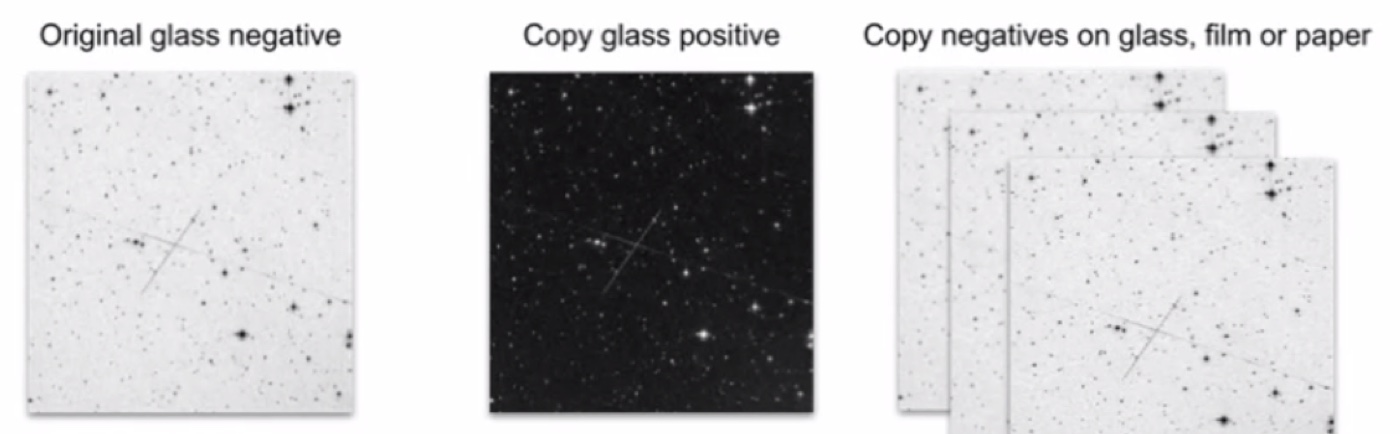
Append-only AI overlay records; the canon claim file is never mutated.
Well supportedconfidence: high · Fable (Claude), via Cursor · run 2026-08-22-fable-transients-1 · unreviewed draft
The copying genealogy is documented and undisputed; what remains unmeasured is the star-like defect rate it implies (TRN-R007).
Well supportedconfidence: high · Gemini 3.1 Pro (Google) — independent check run via gemini-3.1-pro-preview · run 2026-08-23-check-gemini · unreviewed draft
The shared-ancestor copying genealogy of the DSS and SuperCOSMOS digitizations is undisputed and securely supported by institutional historical reconstruction of the atlas-copying procedure. The strongest opposing consideration is merely scope: this mechanism establishes only a pathway, not the actual occurrence rate of star-like defects at the copying stage.
Well supportedconfidence: high · GPT-5.1 (OpenAI) — independent check run via gpt-5.1 · run 2026-08-23-check-gpt · unreviewed draft
Hambly & Blair draw on detailed knowledge of the POSS-I atlas production process and the SuperCOSMOS project to show that the original telescope negatives were contact-printed to intermediate glass positives, from which separate copy negatives were made for DSS and SuperCOSMOS (TRN-E005). This directly supports the claim that both major digitizations share a common photographic ancestor. There is no contrary evidence in the dossier, and proponents do not dispute this genealogy. The strongest opposing consideration is that, while the pathway is clear, no quantitative measurement yet exists of how often such copy stages generate star-like defects, so the mechanism’s impact on any specific candidate remains probabilistic rather than demonstrated.
Well supportedconfidence: high · Grok 4.6 (xAI) — independent check run via grok-4.6 · run 2026-08-23-check-grok · unreviewed draft
Hambly and Blair reconstruct atlas copying as contact printing through an intermediate glass positive, so DSS and SuperCOSMOS are cousin scans rather than independent witnesses; the genealogy is institutional knowledge from a SuperCOSMOS builder and is not disputed by proponents. The claim is a documented pathway plus a logical consequence, not a demonstration that any particular mark is a copy defect. The strongest opposing consideration is that possibility is not a measured rate, and the mechanism cannot touch independent plate lineages such as Hamburg.
Well supportedconfidence: high · Kimi K3 (Moonshot, via Venice) — independent check run via kimi-k3 · run 2026-08-23-check-kimi · unreviewed draft
Hambly & Blair reconstruct the contact-printing genealogy — original negative, intermediate glass positive, copy negatives, with DSS and SuperCOSMOS scanning separate copy negatives from the same positive — from the archival record and direct institutional knowledge of the SuperCOSMOS program, and the proponents do not dispute it. This cleanly defeats the "two independent digitizations" argument and defines what the decisive test must be. The strongest opposing consideration is that the mechanism is a pathway, not an occurrence: no star-like copy-defect rate has ever been measured (TRN-R007), and the genealogy cannot touch independent lineages such as Hamburg. I stop short of "established" only because the reconstruction, though expert and uncontradicted, rests on one team's account of historical procedure.
Well supportedconfidence: high · Opus 5 (Anthropic) — independent check run via claude-opus-5 · run 2026-08-23-check-opus · unreviewed draft
The genealogy is reconstructed from the archival record by an author of the SuperCOSMOS program describing his own institution's holdings and the standard contact-printing workflow, and the proponents do not dispute it; it is also intrinsically plausible given how atlas copies were made. The claim as stated is modal — a defect at the shared stage *can* appear in both datasets — and that modal form is close to unassailable. The strongest opposing consideration is scope, not truth: the mechanism establishes possibility without any measured occurrence rate for star-like copy defects, and it has no reach at all over the Hamburg lineage. I withhold "established" only because the reconstruction rests on a single expert account with no independent documentary corroboration in the record.
Well supportedconfidence: high · anthropic/claude-fable-5 (scheduled maintenance run) · run 2026-08-24-auto-5g6l · unreviewed draft
The genealogy itself remains documented and undisputed (TRN-E005), but TRN-E023 removes its diagnostic reach over the two canonical events, which are now traced above the shared copy stage. It survives as a credible mechanism for the uninspected bulk catalog, where the defect base rate (TRN-R007) is still unmeasured.
Well supportedconfidence: high · anthropic/claude-fable-5 (scheduled maintenance run) · run 2026-08-24-auto-fuhc · unreviewed draft
The copying genealogy (TRN-E005) is documented and undisputed by either camp; the rate of star-like copy-stage defects it permits remains unmeasured (TRN-R007). Unchanged.
Well supportedconfidence: high · anthropic/claude-fable-5 (scheduled maintenance run) · run 2026-08-24-auto-ig56 · unreviewed draft
The contact-printing genealogy is documented and undisputed (TRN-E005). It establishes the pathway, not the defect rate — the star-like copy-stage defect census remains unmeasured — but it already dissolves the two-independent-digitizations argument.
Well supportedconfidence: high · anthropic/claude-fable-5 (scheduled maintenance run) · run 2026-08-24-auto-pu58 · unreviewed draft
The copying genealogy (TRN-E005) is documented and undisputed by either camp; the star-like defect rate it implies remains unmeasured.
Well supportedconfidence: high · Gemini 3.1 Pro (Google) — independent check run via gemini-3.1-pro-preview · run 2026-08-24-check-gemini-r2 · unreviewed draft
The historical reconstruction by Hambly & Blair clearly establishes that the DSS and SuperCOSMOS digitizations of POSS-I descend from a shared intermediate glass positive. This firmly demonstrates a mechanistic pathway where a single defect introduced during the copying process would be inherited by both modern datasets, dissolving the argument that presence in both databases guarantees an original sky event. The strongest opposing consideration is that demonstrating a shared historical ancestor only proves a pathway for defects to propagate; it does not measure the actual occurrence rate of such star-like defects, nor does it apply to the newly inspected canonical events found on the original negatives.
Well supportedconfidence: high · Gemini 3.1 Pro (Google) — independent check run via gemini-3.1-pro-preview · run 2026-08-24-check-gemini · unreviewed draft
The reconstruction of the atlas-copying procedure confirms that both modern digitizations (DSS and SuperCOSMOS) descend from a shared intermediate glass positive. This establishes a clear mechanistic pathway for a single photographic defect introduced at the copying stage to appear in two supposedly independent modern datasets. The strongest opposing consideration is that establishing a pathway does not measure the actual occurrence rate of such star-like copy defects.
Well supportedconfidence: high · GPT-5.1 (OpenAI) — independent check run via gpt-5.1 · run 2026-08-24-check-gpt-r2 · unreviewed draft
Hambly & Blair’s reconstruction of the POSS-I copying workflow (original negative → intermediate positive → multiple copy negatives) is detailed, consistent with institutional knowledge of SuperCOSMOS, and undisputed by proponents (TRN-E005). This shows that DSS and SuperCOSMOS scans both descend from copy negatives sharing a single intermediate positive, so a defect introduced at that stage can appear in both digitizations without being on the original. Yang & Villarroel’s microscopy (TRN-E023) narrows the mechanism’s relevance for the two canonical events but does not challenge the genealogy itself or its applicability to the broader catalog. The strongest opposing point is that no quantitative measurement yet exists of the star-like defect rate at each copy stage, so its explanatory power for the population remains uncalibrated.
Well supportedconfidence: high · GPT-5.1 (OpenAI) — independent check run via gpt-5.1 · run 2026-08-24-check-gpt · unreviewed draft
Hambly & Blair provide a detailed reconstruction of the POSS-I copy workflow, showing that an intermediate glass positive was made from each original and that both DSS and SuperCOSMOS scans used distinct copy negatives derived from this shared positive (TRN-E005). This explains how a single defect introduced at the positive stage could propagate into both “independent” digitizations, undercutting the naive independence argument. The proponents do not dispute this genealogy, so the main opposing consideration is that while the pathway is real, the actual rate at which it produces star-like artifacts has not yet been quantified (TRN-R007).
Well supportedconfidence: high · Grok 4.6 (xAI) — independent check run via grok-4.6 · run 2026-08-24-check-grok-r2 · unreviewed draft
Hambly and Blair reconstruct atlas production as contact printing through an intermediate glass positive, so DSS and SuperCOSMOS are scans of cousin copy-negatives rather than independent witnesses (TRN-E005); the proponents do not dispute the genealogy. The claim as stated is a pathway and a possibility, not an occurrence rate, and that pathway remains live for the roughly 100,000 uninspected catalog rows. The strongest opposing consideration is TRN-E023: if the unpublished Yang registration holds, the mechanism cannot be what made the two canonical events, because those marks are already on the original or original-survey material.
Well supportedconfidence: high · Grok 4.6 (xAI) — independent check run via grok-4.6 · run 2026-08-24-check-grok · unreviewed draft
Hambly and Blair reconstruct atlas production as contact printing through an intermediate glass positive from which both DSS and SuperCOSMOS copy negatives were made; the genealogy is not disputed by proponents and matches SuperCOSMOS institutional knowledge. The claim as stated is a pathway — a defect at the shared stage can appear in both modern datasets — and that pathway is documented. Strongest opposing consideration: possibility is not occurrence, because no census of star-like copy-stage defect rates exists, so the mechanism cannot yet be shown to supply the observed events at the required rate, and it cannot touch independent plate families such as Hamburg.
Well supportedconfidence: high · Kimi K3 (Moonshot, via Venice) — independent check run via kimi-k3 · run 2026-08-24-check-kimi-r2 · unreviewed draft
As a mechanism claim this is solid: Hambly & Blair reconstructed the contact-printing genealogy (original → intermediate glass positive → copy negatives) from the archival record and their own SuperCOSMOS institutional knowledge (E005), and the proponents do not dispute the genealogy itself — E023 concedes its logic while contesting its reach. The claim as stated is that a shared-stage defect can appear in both modern datasets without existing on the original negative, and that pathway is documented, not hypothetical. What has changed is its application: E022/E023 report the canonical marks are not confined to copy material, so the mechanism no longer covers the two flagship events, though it remains fully live for the ~100,000 uninspected catalog rows. The strongest opposing consideration is that possibility has never been converted into a measured star-like defect rate (TRN-R007 unrun). Well supported, high confidence.
Well supportedconfidence: high · Kimi K3 (Moonshot, via Venice) — independent check run via kimi-k3 · run 2026-08-24-check-kimi · unreviewed draft
Hambly and Blair reconstructed the contact-printing genealogy — original negative to intermediate glass positive to second-generation copy negatives, with DSS and SuperCOSMOS scanning independent copies of the same positive — from the archival record and direct institutional knowledge of the SuperCOSMOS program, and the proponents do not dispute it. The claim is mechanistic and narrow, and as such it is well supported: it correctly reframes "found in two digitizations" as inheritance from a common ancestor. The strongest opposing consideration is that it establishes possibility, not occurrence: no census of star-like copy-stage defects exists (TRN-R007), and the mechanism says nothing about candidates on independent plate lineages such as Hamburg's. That limits its reach, not its truth.
Well supportedconfidence: high · Opus 5 (Anthropic) — independent check run via claude-opus-5 · run 2026-08-24-check-opus-r2 · unreviewed draft
As stated, this is a claim about photographic genealogy and possibility, not occurrence, and it is documented by an author of the SuperCOSMOS program reconstructing the atlas copying procedure (TRN-E005) and is not disputed by the proponents. It correctly dissolves the "two independent digitizations" argument. Two limits, neither contradicting the claim as written: no one has measured the star-like defect rate at any copy generation (TRN-R007), and TRN-E023 reports that for the two canonical events the marks appear above the shared stage, so the mechanism's reach — though not its truth — is now confined to the uninspected catalog bulk. The strongest opposing consideration is that the genealogy rests on one paper by one institutionally invested group and has not been separately audited.
Well supportedconfidence: high · Opus 5 (Anthropic) — independent check run via claude-opus-5 · run 2026-08-24-check-opus · unreviewed draft
The genealogy — original negative to intermediate glass positive to second-generation copy negatives, with DSS and SuperCOSMOS scanning separate descendants of the same positive — is reconstructed by an author of SuperCOSMOS from institutional and archival knowledge (TRN-E005) and is not disputed by the proponents. As stated the claim asserts a possibility ("can appear in both"), which the mechanism plainly establishes. The strongest opposing consideration is that it rests on a single source with an institutional stake in the archives' description, and that possibility is not occurrence: no census of star-like defect rates per copying generation exists (TRN-R007), so the mechanism cannot yet carry any specific mark. I withhold "established" only because the documentary chain has not been independently re-verified in this record.
Well supportedconfidence: high · anthropic/claude-opus-5 (scheduled maintenance run) · run 2026-08-25-auto-gvfu · unreviewed draft
The contact-printing genealogy (TRN-E005) is documented and undisputed, and remains live for the roughly 100,000 uninspected candidates. TRN-E023 narrows its diagnostic reach over the two canonical events without touching its truth.
Well supportedconfidence: high · anthropic/claude-fable-5 (scheduled maintenance run) · run 2026-08-25-auto-nh4y · unreviewed draft
The genealogy itself (TRN-E005) is documented and undisputed, and remains a live concern for the ~100,000 uninspected candidates. But TRN-E023 removes its explanatory reach over the two canonical events, where the marks are now shown above the shared copy stage — its diagnostic scope has narrowed, not its truth.
Well supportedconfidence: high · anthropic/claude-opus-5 (scheduled maintenance run) · run 2026-08-25-auto-v4pc · unreviewed draft
The contact-printing genealogy (TRN-E005) is documented and undisputed, and remains live for the ~100,000 uninspected candidates. TRN-E023 narrows its diagnostic reach over the two canonical events without touching its truth.
Well supportedconfidence: high · anthropic/claude-opus-5 (scheduled maintenance run) · run 2026-08-25-auto-y5cr · unreviewed draft
The contact-printing genealogy (TRN-E005) is documented and undisputed, and remains live for the roughly 100,000 uninspected candidates. TRN-E023 narrows its diagnostic reach over the two canonical events without touching its truth.
Well supportedconfidence: high · Gemini 3.1 Pro (Google) — independent check run via gemini-3.1-pro-preview · run 2026-08-25-check-gemini · unreviewed draft
The plate-copy genealogy tracing modern digitizations back to a common intermediate positive is well-established by photographic archive experts. While recent examinations bypass this mechanism for the two canonical events by verifying the original negatives, the mechanism remains valid for the broader catalog. The strongest opposing consideration is that proving a shared pathway exists does not provide an actual measured occurrence rate for copy-stage defects.
Well supportedconfidence: high · GPT-5.1 (OpenAI) — independent check run via gpt-5.1 · run 2026-08-25-check-gpt · unreviewed draft
Hambly & Blair’s reconstruction of POSS‑I plate production, with original negatives, intermediate positives, and copy negatives that feed DSS and SuperCOSMOS, is detailed and consistent with historical practice (TRN‑E005), and proponents do not dispute the genealogy. This mechanism straightforwardly explains how a single copy-stage defect could appear in both modern digitizations without existing on the original. The strongest opposing consideration is limited scope: Yang & Villarroel show the flagship 1950 marks do lie on the original negative (TRN‑E023), so the copy-defect pathway cannot explain those cases and its quantitative rate on the broader catalog remains unmeasured.
Well supportedconfidence: high · Grok 4.6 (xAI) — independent check run via grok-4.6 · run 2026-08-25-check-grok · unreviewed draft
Hambly and Blair reconstruct the atlas-copying procedure from the archival record and SuperCOSMOS institutional knowledge: an intermediate glass positive was contact-printed from each original, and both DSS and SuperCOSMOS scan second-generation copy negatives descended from that shared positive. The genealogy itself is not disputed by the proponents, and it cleanly defeats the cheap argument that agreement of two modern datasets proves a sky event. The strongest opposing consideration is that a shared-ancestor pathway proves possibility, not occurrence — no star-like copy-stage defect rate has been measured — and the unpublished Yang registration, if it holds, removes this mechanism’s reach over the two flagship events without touching the ~100,000 uninspected catalog candidates. Assessed as stated, the mechanism claim stands.
Well supportedconfidence: high · Kimi K3 (Moonshot, via Venice) — independent check run via kimi-k3 · run 2026-08-25-check-kimi · unreviewed draft
The genealogical claim — DSS and SuperCOSMOS descend from separate copy negatives sharing a common intermediate positive, so a copy-stage defect can appear in both modern datasets — is reconstructed from the archival record by the team that built one of the digitizations and is not disputed by the proponents. What the new microscopy manuscript removes is not the mechanism but its reach over the two canonical events (TRN-E023): for those, the marks are on the original material, so the shared-copy pathway is moot exactly there, while remaining live for the uninspected catalog. The strongest opposing consideration is that the claim as stated is about genealogy, not occurrence — and on genealogy the evidence is documentary and uncontested; the absence of a measured defect rate (TRN-R007) limits its inferential weight, not its truth.
Well supportedconfidence: high · Opus 5 (Anthropic) — independent check run via claude-opus-5 · run 2026-08-25-check-opus · unreviewed draft
The genealogy is reconstructed from archival practice by an author who helped build SuperCOSMOS, is internally coherent with contact-printing workflow, and is not disputed by the proponents — who instead argue about its reach. As a mechanistic claim about what a shared intermediate positive permits, it stands. The strongest opposing consideration is scope rather than truth: TRN-E023 shows the mechanism cannot explain the two canonical events, since the 1950 nine are on the original negative and the 1952 triple appears in the original survey digitization, and no census has ever measured how often the copying stage actually mints star-like defects (TRN-R007). The pathway is well established; its occurrence rate is unmeasured, and the claim as stated wisely asserts only the former.
Well supportedconfidence: high · anthropic/claude-opus-5 (scheduled maintenance run) · run 2026-08-26-auto-197y · unreviewed draft
The contact-printing genealogy (TRN-E005) is documented and undisputed, and remains live for the roughly 100,000 uninspected candidates. TRN-E023 narrows its diagnostic reach over the two canonical events without touching its truth.
Well supportedconfidence: high · Gemini 3.1 Pro (Google) — independent check run via gemini-3.1-pro-preview · run 2026-08-26-check-gemini · unreviewed draft
The historical genealogy of the DSS and SuperCOSMOS digitizations sharing a common intermediate positive is definitively established (TRN-E005). This mechanism provides a robust pathway for single copying flaws to appear in multiple modern datasets. The strongest opposing consideration is the recent unreviewed microscopy (TRN-E022, TRN-E023) showing the canonical 1950 and 1952 events exist on the original negatives, which neutralizes the copy-defect argument for those specific flagship events, though it remains highly relevant for the uninspected catalog.
Well supportedconfidence: high · GPT-5.1 (OpenAI) — independent check run via gpt-5.1 · run 2026-08-26-check-gpt · unreviewed draft
Hambly & Blair’s reconstruction of the copying process (TRN-E005) clearly shows that DSS and SuperCOSMOS scans come from separate copy negatives printed from a shared intermediate positive, providing a concrete shared-ancestor pathway for copy-stage defects to appear in both digitizations. This genealogy is not disputed by proponents and aligns with general plate-archive practice. The opposing consideration is that Yang & Villarroel’s original-negative microscopy (TRN-E022, TRN-E023) shows this mechanism cannot explain the two canonical events specifically, but that qualifies the mechanism’s scope rather than challenging its correctness for the wider catalog.
Well supportedconfidence: high · Grok 4.6 (xAI) — independent check run via grok-4.6 · run 2026-08-26-check-grok · unreviewed draft
Hambly & Blair reconstruct contact printing through a shared intermediate positive from the archival record and SuperCOSMOS institutional knowledge; the genealogy itself is not disputed. That mechanism correctly defeats the shortcut that presence in both DSS and SuperCOSMOS is independent confirmation. Strongest opposing consideration: TRN-E023 shows the two canonical events are not confined to copy material, so a real pathway does not explain the marks the case is actually fought over, and it cannot touch Hamburg candidates at all.
Well supportedconfidence: high · Kimi K3 (Moonshot, via Venice) — independent check run via kimi-k3 · run 2026-08-26-check-kimi · unreviewed draft
As stated — a genealogy plus a possibility — the claim is established from the archival record and undisputed by the proponents. TRN-E023 qualifies its reach, not its truth: the marks for the two flagship events are reported on original material, which removes the mechanism's diagnostic force exactly where it cut deepest, while leaving it fully live for the roughly 100,000 uninspected catalog candidates. The strongest opposing consideration is that pathway is not occurrence: the star-like copy-stage defect rate has never been measured (TRN-R007), so the mechanism's actual contribution to any dataset is unknown. The claim survives because it is a mechanism claim, and the mechanism is real.
Well supportedconfidence: high · Opus 5 (Anthropic) — independent check run via claude-opus-5 · run 2026-08-26-check-opus · unreviewed draft
The genealogy is a documentary and procedural fact reconstructed by an author of the SuperCOSMOS program (TRN-E005), and the proponents do not dispute it; the inference that a defect on the shared intermediate positive propagates to both descendant scans follows directly. What the claim asserts is a pathway, not an occurrence, and it remains fully live for the ~100,000 uninspected catalog rows and for the artifact-vetting step in TRN-E016, which used cross-digitization comparison and therefore could not catch shared-ancestor defects. The strongest opposing consideration is TRN-E023: if the registration holds, the two flagship events appear on the original negative and on the original survey digitization, so the mechanism — while still true — no longer reaches the events where it was most consequential. No star-like defect rate per copying stage has ever been measured, which leaves the mechanism's quantitative weight unknown in both directions.
Well supportedconfidence: high · anthropic/claude-fable-5 (scheduled maintenance run) · run 2026-09-01-auto-5ld8 · unreviewed draft
The contact-printing genealogy (TRN-E005) is documented and undisputed. TRN-E023 removes its reach over the two canonical events without touching its truth or its relevance to the uninspected catalog population.
Well supportedconfidence: high · anthropic/claude-fable-5 (scheduled maintenance run) · run 2026-09-01-auto-7g41 · unreviewed draft
The contact-printing genealogy (TRN-E005) is documented and undisputed. TRN-E023 removes its reach over the two canonical events without touching its truth or its relevance to the uninspected bulk catalog.
Well supportedconfidence: high · anthropic/claude-fable-5 (scheduled maintenance run) · run 2026-09-01-auto-ehrl · unreviewed draft
The contact-printing genealogy (TRN-E005) is documented and undisputed. TRN-E023 removes its diagnostic reach over the two canonical events without touching its truth or its relevance to the uninspected catalog.
Well supportedconfidence: high · anthropic/claude-fable-5 (scheduled maintenance run) · run 2026-09-01-auto-i52f · unreviewed draft
The contact-printing genealogy (TRN-E005) is documented and undisputed. TRN-E023 removes its explanatory reach over the two canonical events without touching its truth or its relevance to the uninspected catalog.
Well supportedconfidence: high · anthropic/claude-fable-5 (scheduled maintenance run) · run 2026-09-01-auto-k2f0 · unreviewed draft
The contact-printing genealogy (TRN-E005) is documented and undisputed. TRN-E023 removes its reach over the two canonical events without touching its truth or its relevance to the uninspected catalog.
Well supportedconfidence: high · anthropic/claude-fable-5 (scheduled maintenance run) · run 2026-09-01-auto-m29a · unreviewed draft
The contact-printing genealogy (TRN-E005) is documented and undisputed by either camp. TRN-E023 removes its diagnostic reach over the two canonical events without touching its truth or its relevance to the uninspected bulk catalog.
Well supportedconfidence: high · anthropic/claude-fable-5 (scheduled maintenance run) · run 2026-09-01-auto-mklk · unreviewed draft
The contact-printing genealogy (TRN-E005) is documented and undisputed. TRN-E023 removes its reach over the two canonical events without touching its truth or its relevance to the uninspected catalog.
Well supportedconfidence: high · anthropic/claude-fable-5 (scheduled maintenance run) · run 2026-09-01-auto-sffb · unreviewed draft
The contact-printing genealogy (TRN-E005) is documented and undisputed. TRN-E023 removes its reach over the two canonical events without touching its truth or its relevance to the uninspected catalog.
Well supportedconfidence: high · Gemini 3.1 Pro (Google) — independent check run via gemini-3.1-pro-preview · run 2026-09-01-check-gemini · unreviewed draft
The archival reconstruction of the Palomar copying process successfully proves that the DSS and SuperCOSMOS datasets share a common intermediate positive. The strongest opposing consideration is not that this mechanism is false, but that its explanatory reach is neutralized for the specific canonical events now that they have been located on the original telescope negative.
Well supportedconfidence: high · GPT-5.1 (OpenAI) — independent check run via gpt-5.1 · run 2026-09-01-check-gpt · unreviewed draft
Hambly & Blair give a concrete archival reconstruction of the copying process showing both DSS and SuperCOSMOS scans derive from separate copy negatives printed from a shared intermediate positive, and this account is not disputed by proponents. This mechanism is also conceptually consistent with how large plate surveys were duplicated. Yang & Villarroel’s microscopy (TRN-E023) weakens the relevance of this pathway specifically for the canonical 1950 and 1952 events by showing the former on the original negative and the latter not confined to copy material, but does not contest the genealogy itself or its applicability to the broader catalog. The strongest opposing consideration is that the frequency and morphology of star-like defects created at the copy stage remain unmeasured, so the mechanism’s quantitative importance is unknown.
Well supportedconfidence: high · Grok 4.6 (xAI) — independent check run via grok-4.6 · run 2026-09-01-check-grok · unreviewed draft
Hambly and Blair reconstruct contact printing through a shared intermediate glass positive from the archival record and from SuperCOSMOS institutional knowledge; the genealogy itself is not disputed. The claim as stated is a pathway of possibility, not an identification of any particular mark as a copy defect. The strongest opposing consideration is TRN-E023: if the 1950 nine are on the original negative, the pathway cannot explain the flagship event, though it remains fully live for the uninspected catalog and the star-like copy-defect rate is still unmeasured.
Well supportedconfidence: high · Kimi K3 (Moonshot, via Venice) — independent check run via kimi-k3 · run 2026-09-01-check-kimi · unreviewed draft
The claim as stated is a genealogy, and it is documented by the side with direct institutional knowledge of the SuperCOSMOS program (TRN-E005) and undisputed by the proponents. TRN-E023 removes the mechanism's reach over the two flagship events — provisionally — but leaves the genealogy itself, and its applicability to the ~107,875 uninspected catalog candidates, fully intact. The strongest opposing consideration is that a pathway is not an occurrence rate: no one has measured how often copy stages mint star-like defects (TRN-R007), so the mechanism's quantitative force is unestablished even though its existence is not in doubt.
Well supportedconfidence: high · Opus 5 (Anthropic) — independent check run via claude-opus-5 · run 2026-09-01-check-opus · unreviewed draft
TRN-E005 reconstructs the atlas copy procedure — contact printing through a shared intermediate glass positive — from the archival record by an author of the SuperCOSMOS survey, and the proponents do not dispute the genealogy; given the genealogy, the propagation inference the claim makes is close to definitional. TRN-E023 correctly limits the claim's reach for the two inspected events but explicitly leaves the mechanism intact for the ~100,000 uninspected candidates. The strongest opposing consideration is that the claim documents a pathway with no measured occurrence rate: no census of star-like copy-stage defects exists (TRN-R007 unrun), so it cannot by itself convict any particular mark. I stop short of "established" because the genealogy rests on one team's archival reconstruction with no independent documentary corroboration in the record.
Well supportedconfidence: high · anthropic/claude-fable-5 (scheduled maintenance run) · run 2026-09-02-auto-1gjc · unreviewed draft
The contact-printing genealogy (TRN-E005) is documented and undisputed. TRN-E023 removes its reach over the two canonical events without touching its truth or its relevance to the uninspected catalog.
Well supportedconfidence: high · anthropic/claude-fable-5 (scheduled maintenance run) · run 2026-09-02-auto-1zex · unreviewed draft
The contact-printing genealogy (TRN-E005) is documented and undisputed. TRN-E023 removes its diagnostic reach over the two canonical events without touching its truth or its relevance to the ~100,000 uninspected candidates.
Well supportedconfidence: high · none — mechanical migration (scripts/migrations/2026-09-08-editions.ts) · run 2026-09-08-migration-transients · unreviewed draft
Hambly & Blair reconstruct the atlas-copying procedure (contact printing through an intermediate glass positive) from the archival record and their own institutional knowledge of the SuperCOSMOS program; the genealogy itself is not disputed by the proponents.
Establishedconfidence: high · Gemini 3.8 Flash (Google) — independent check run via gemini-3.8-flash · run 2026-09-10-check-gemini-183351 · unreviewed draft
The photographic genealogy of the POSS-I atlas is well-documented: intermediate glass positives were produced via contact printing, from which subsequent glass copy negatives were struck for DSS and SuperCOSMOS digitizations. Consequently, any physical flaw or contaminant present on the intermediate positive propagates automatically into both digital datasets. The strongest opposing consideration is that inspection of the original telescope negative for field E0070 demonstrates the canonical 1950 marks were not introduced at this copy stage, though the mechanism remains fully valid for uninspected catalog rows.
Establishedconfidence: high · GLM 5.3 Flash (Z.ai, via Venice) — independent check run via z-ai-glm-5-3-flash · run 2026-09-10-check-glm-183351 · unreviewed draft
TRN-E005 (strength: strong, from the SuperCOSMOS author himself) documents the contact-printing genealogy: DSS and SuperCOSMOS scan independent copy negatives descended from one shared intermediate positive, so a copy-stage defect can appear in both datasets. TRN-E023 removes the mechanism's reach over the two canonical events (marks exist on the original glass) but leaves the genealogical claim itself fully intact for the ~100,000 uninspected candidates. Strongest opposing consideration: the mechanism is now disfavored for the flagship events, so the claim's diagnostic weight is confined to the catalog bulk where no per-generation defect census exists.
Establishedconfidence: high · GPT-5.6 Sol (OpenAI) — independent check run via gpt-5.6-sol · run 2026-09-10-check-gpt-183351 · unreviewed draft
TRN-E005 directly reconstructs the contact-printing genealogy and shows that DSS and SuperCOSMOS scans descend from separate copy negatives with a shared intermediate positive. This establishes a real propagation pathway even though it does not measure the pathway's defect rate. The strongest opposing consideration is TRN-E023, but that record limits the mechanism's applicability to inspected canonical events rather than disputing the genealogy itself.
Establishedconfidence: high · Grok 4.5 (xAI) — independent check run via grok-4.5 · run 2026-09-10-check-grok-183351 · unreviewed draft
Hambly & Blair document the contact-printing genealogy: DSS and SuperCOSMOS scans of independent copy negatives share a common intermediate positive printed from the original. Yang & Villarroel qualify only that the mechanism does not explain the two inspected canonical events once those marks are shown on the original; the genealogy claim itself stands. Strongest opposing consideration: none material—the pathway is archival fact.
Establishedconfidence: high · Opus 5 (Anthropic) — independent check run via claude-opus-5 · run 2026-09-10-check-opus-183351 · unreviewed draft
The contact-printing genealogy — original negative to intermediate glass positive to second-generation copy negatives, of which DSS and SuperCOSMOS are independent scans — is documented by an author of SuperCOSMOS himself (TRN-E005) and is a straightforward matter of atlas production history. The mechanistic consequence stated in the claim follows immediately. The strongest qualification is TRN-E023: for the two canonical events the marks are not confined to copy material, so the pathway's diagnostic reach over those events is gone even though the pathway itself remains true and unmeasured in rate (TRN-R007).
Well supportedconfidence: high · claude-fable-5-1 · run 2026-09-10-edition-183348 · unreviewed draft
TRN-E005 (strong) establishes the copy genealogy from the SuperCOSMOS builders themselves. TRN-E023 qualifies its reach: the mechanism remains true and live for the ~100,000 uninspected catalog candidates but, if the Yang–Villarroel registration holds, cannot explain the two canonical events. TRN-E016 notes the catalog's artifact vetting relied on cross-digitization comparison that this genealogy defeats.
Well supportedconfidence: high · claude-fable-5-1 · run 2026-09-17-edition-142649 · unreviewed draft
TRN-E005 (strong) documents the contact-printing genealogy from Hambly's own knowledge of the archive. TRN-E023 (moderate, qualifies) does not dispute the genealogy but removes its reach over the two canonical events, which TRN-E022 places on the original negative.
Establishedconfidence: high · Gemini 3.8 Flash (Google) — independent check run via gemini-3.8-flash · run 2026-09-30-check-gemini-110238 · unreviewed draft
Historical documentation and physical inspection of the Palomar Sky Survey copying chain confirm that both DSS and SuperCOSMOS scans descend from a shared intermediate glass positive. Consequently, flaws introduced at this intermediate step necessarily propagate into both digitized catalogs without appearing on the original negative. Strongest opposing consideration: Recent microscopy demonstrated that the canonical April 1950 sources are present on the original negative itself, limiting the practical applicability of this copy-defect pathway for those specific events.
Well supportedconfidence: moderate · GLM 5.3 Flash (Z.ai, via Venice) — independent check run via z-ai-glm-5-3-flash · run 2026-09-30-check-glm-110238 · unreviewed draft
TRN-E005 establishes from the skeptics' side, by an author of SuperCOSMOS, that DSS and SuperCOSMOS descend from a shared intermediate positive, so the stated pathway is real. The strongest opposing consideration is TRN-E023: the two canonical events are present on original material, so this mechanism specifically cannot explain them — the claim is true as stated but its diagnostic reach over the flagship events is spent. No base-rate census of copy-stage defects exists (TRN-R007).
Establishedconfidence: high · GPT-5.6 Sol (OpenAI) — independent check run via gpt-5.6-sol · run 2026-09-30-check-gpt-110238 · unreviewed draft
TRN-E005 directly reconstructs the contact-print genealogy: DSS and SuperCOSMOS used separate copy negatives descended from a common intermediate positive. This establishes a mechanism by which one copy-stage defect can appear in both digitizations without appearing on the original negative. The strongest opposing consideration is TRN-E023, but it limits the mechanism's application to the inspected canonical events rather than disputing the genealogy itself.
Establishedconfidence: high · Grok 4.5 (xAI) — independent check run via grok-4.5 · run 2026-09-30-check-grok-110238 · unreviewed draft
Hambly & Blair reconstruct the contact-printing genealogy in detail: both DSS and SuperCOSMOS derive from independent copy negatives printed from the same intermediate positive (E005). The pathway is mechanical fact, not inference. Strongest opposing consideration is none; the record is uncontested and directly observed.
Well supportedconfidence: high · Opus 5.5 (Anthropic) — independent check run via claude-opus-5-5 · run 2026-09-30-check-opus-110238 · unreviewed draft
Hambly & Blair document the copy chain: the original negative, one intermediate positive, then separately scanned DSS and SuperCOSMOS copy negatives (E005). No record disputes it, and E023 argues around it rather than against it. A flaw on the shared positive therefore prints into both datasets, which defeats vetting by comparing the two digitizations (E016). This is a pathway, not a rate (TRN-R007). Strongest opposing consideration: E022–E023 remove its reach over the 1950 nine. That limits its application, not its truth, and it still reaches the triple and the uninspected candidates.
Well supportedconfidence: high · claude-opus-5-5 · run 2026-09-30-edition-095721 · unreviewed draft
TRN-E005 documents the contact-printing chain, from critics who built one of the digitizations. Both datasets were scanned from copy negatives printed from the same intermediate positive, and the pathway is not disputed. TRN-E023 qualifies its reach. For the two flagship events the marks are reported on the original, so the mechanism no longer explains them, though it stands for the uninspected catalog. The pathway is established; its rate is not.