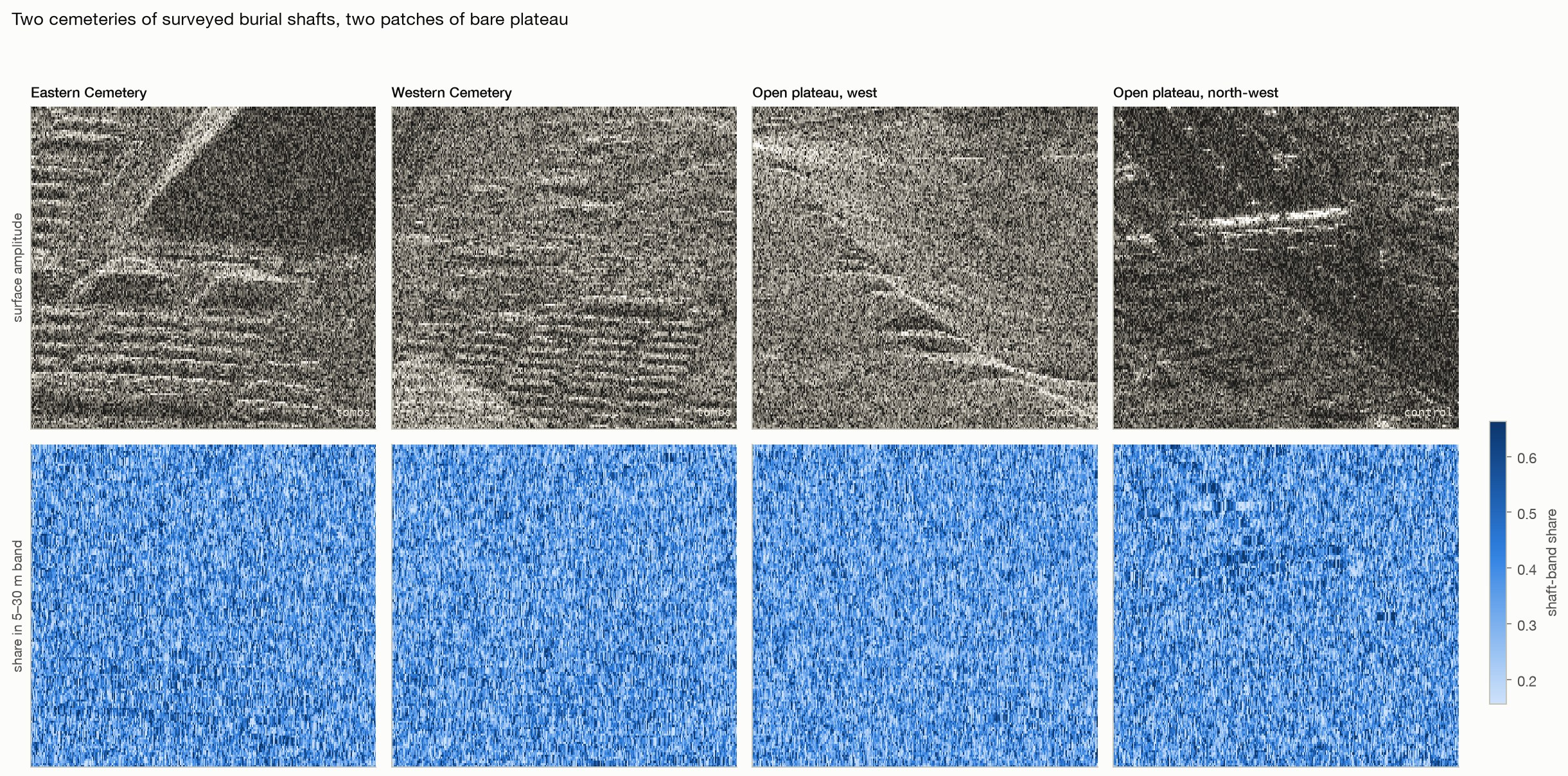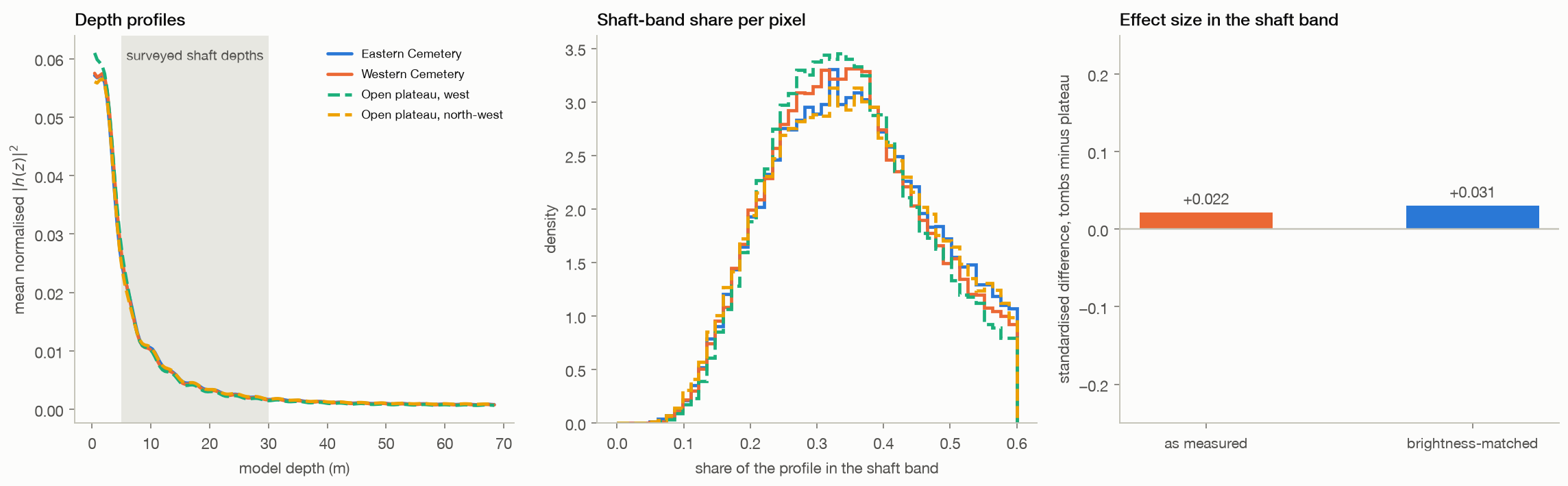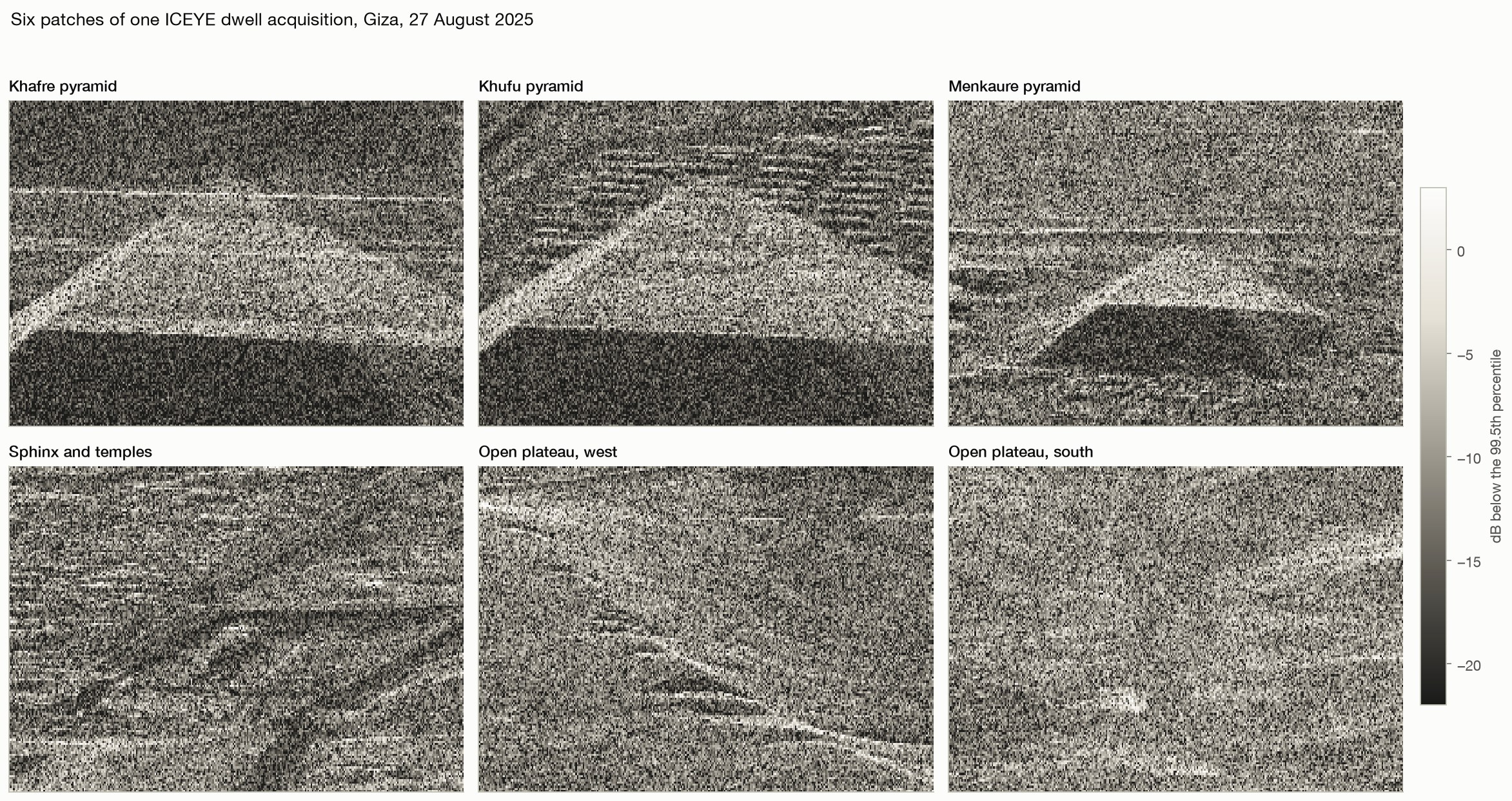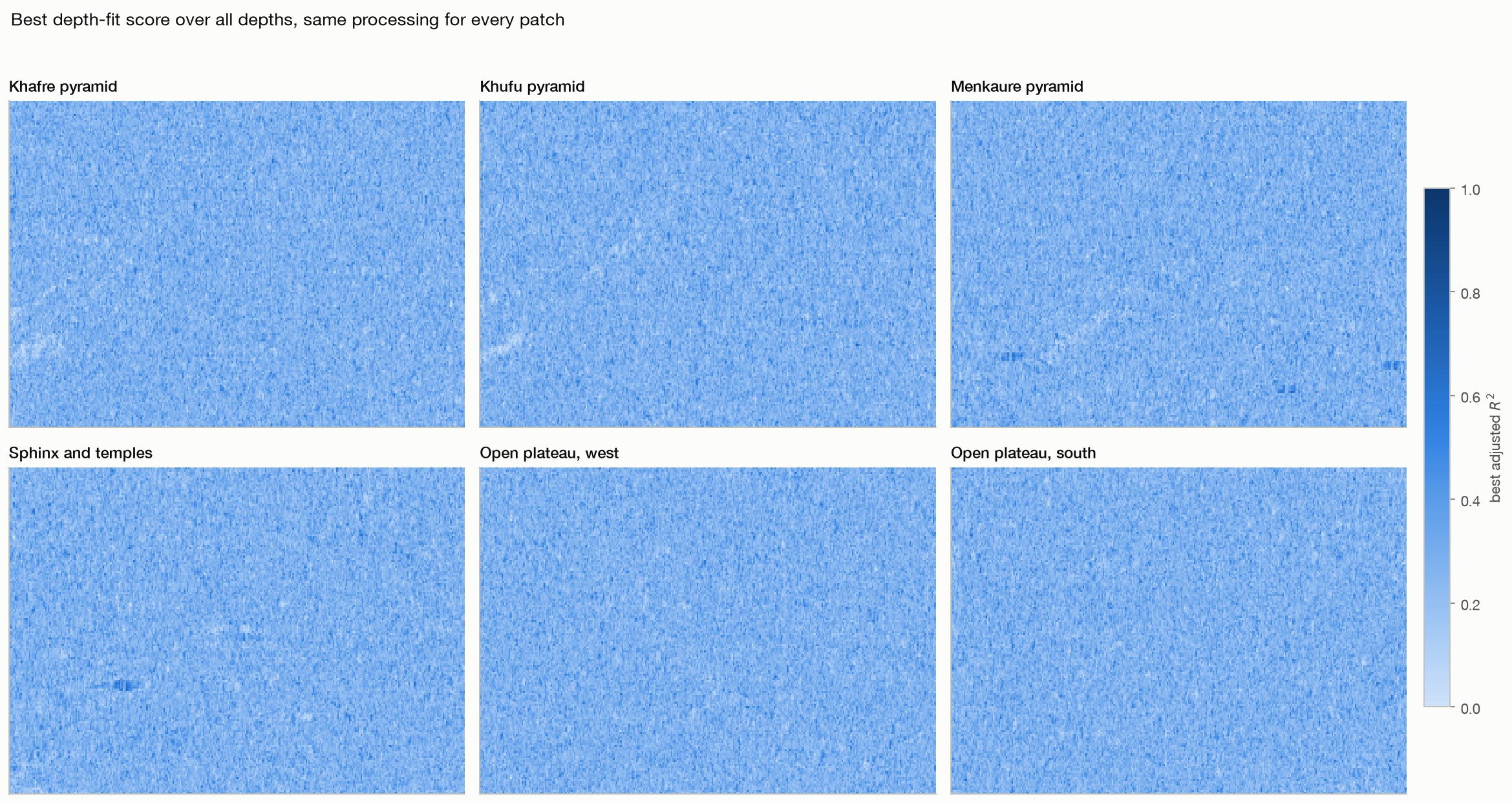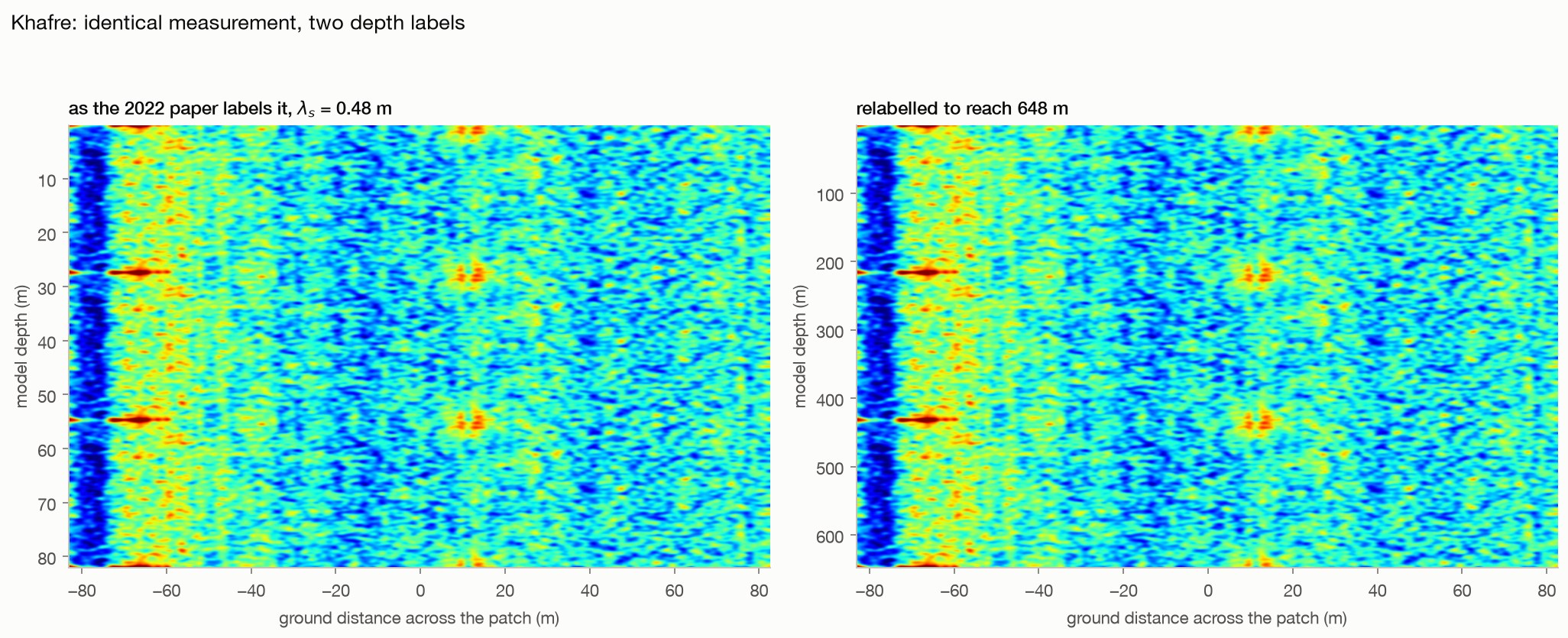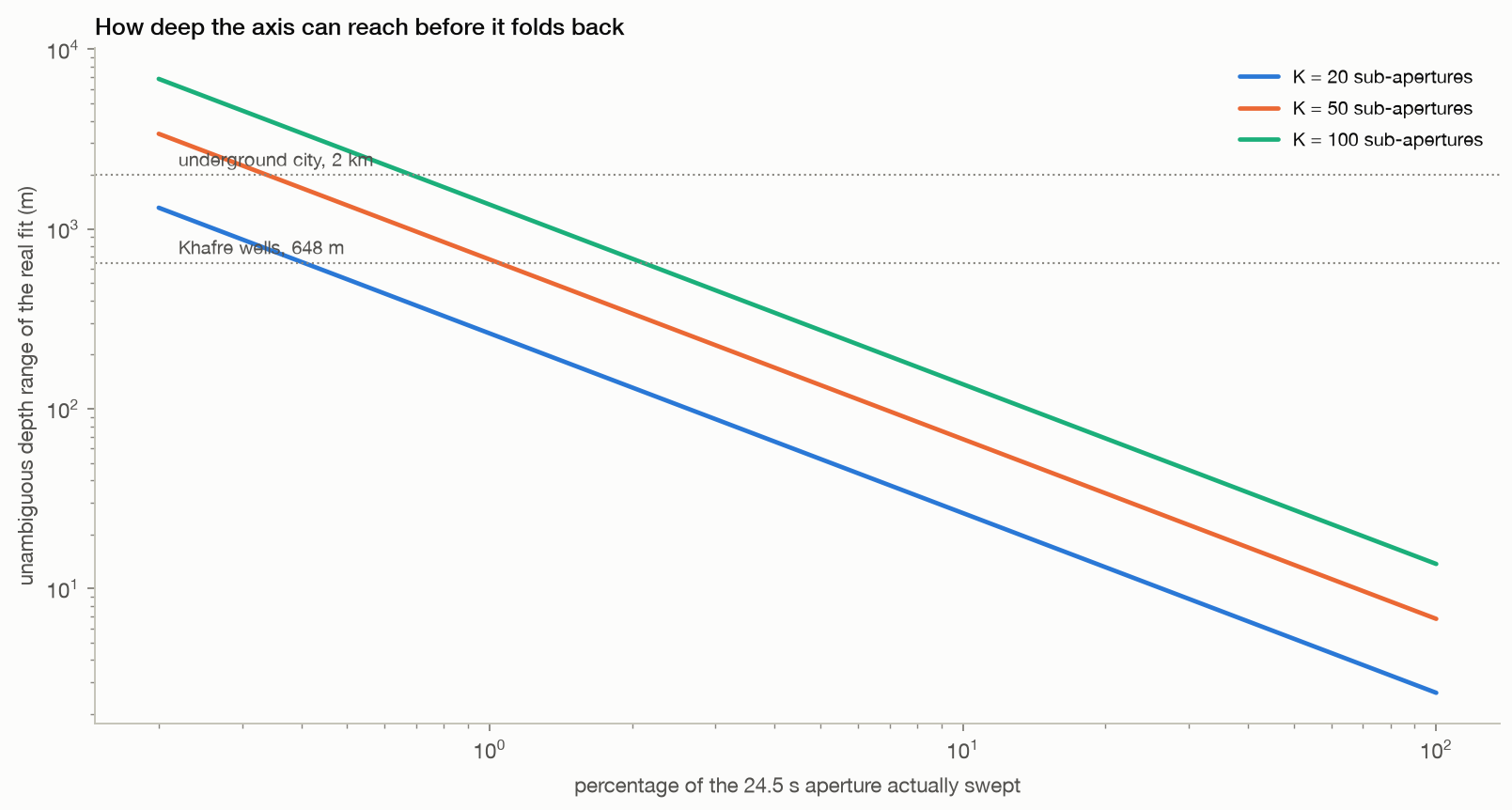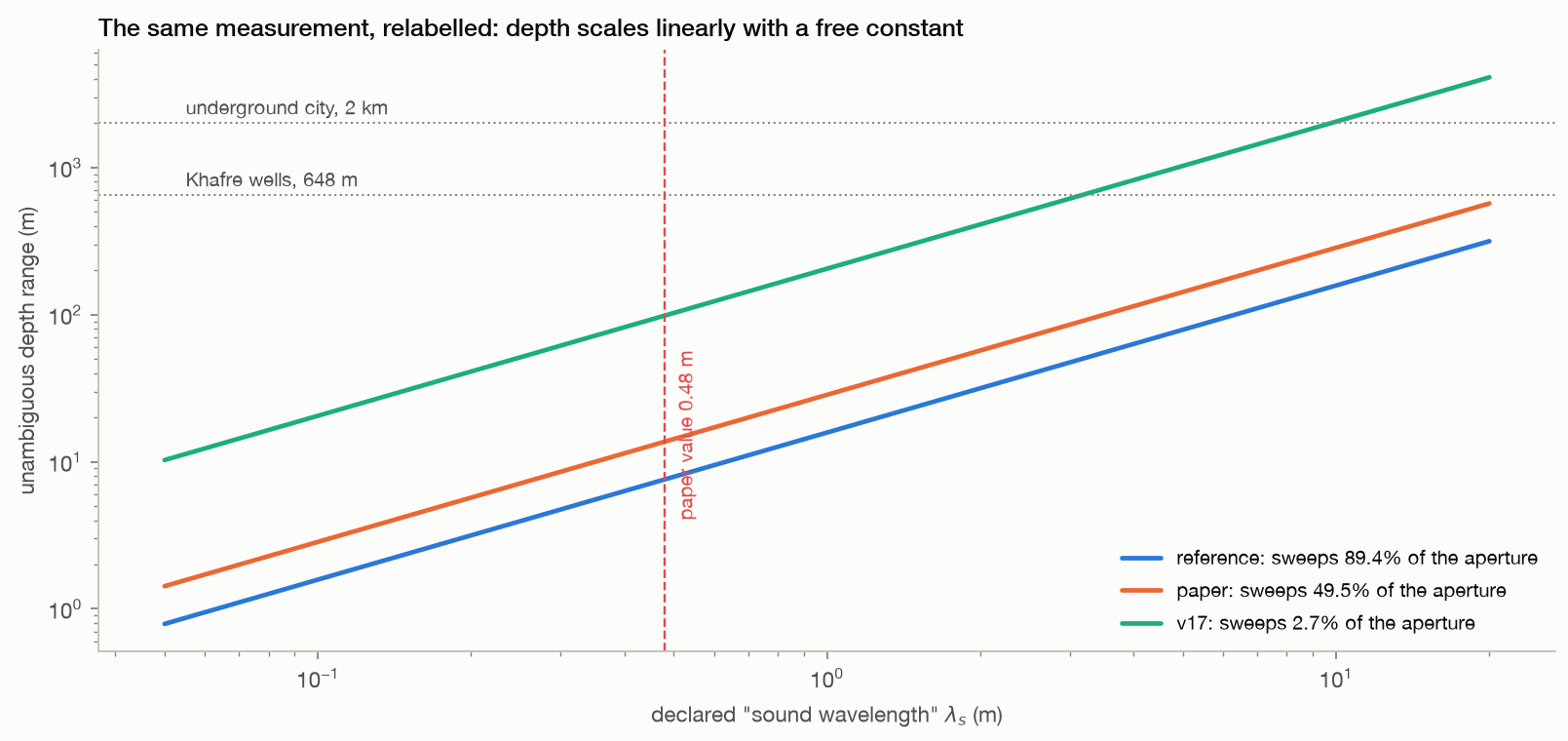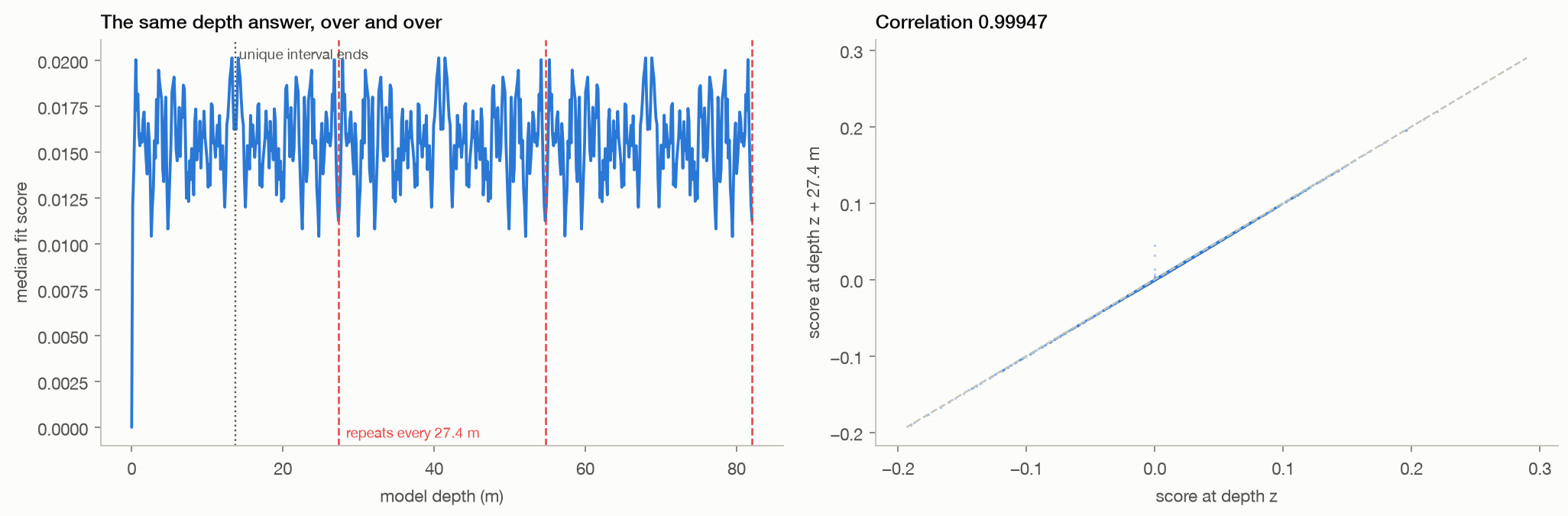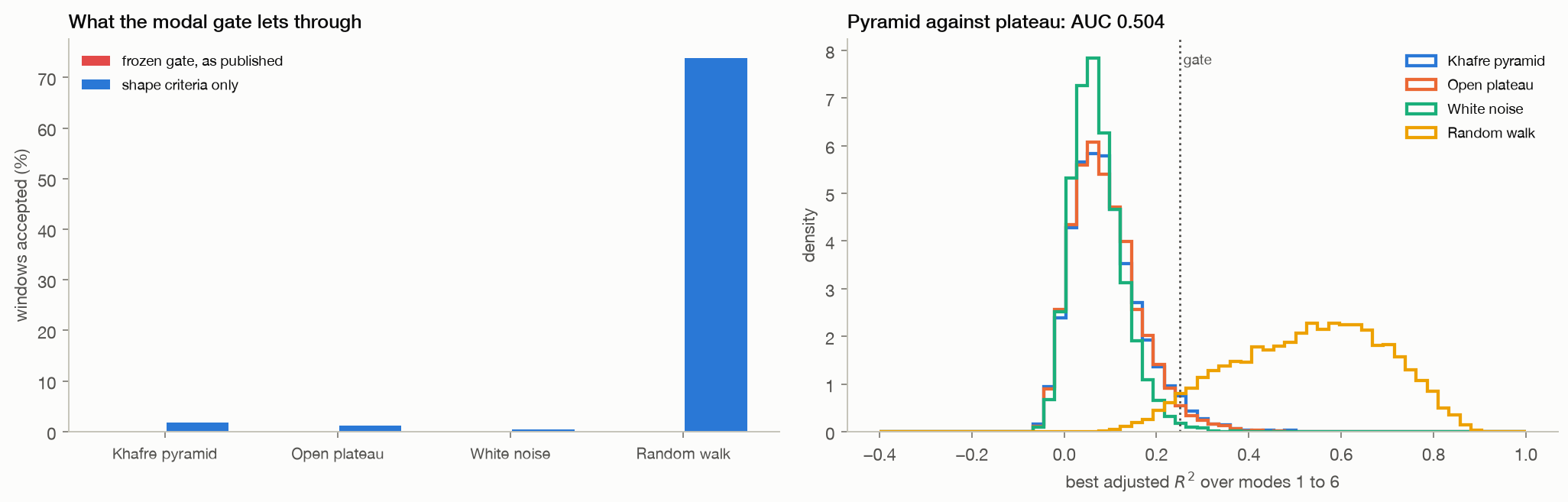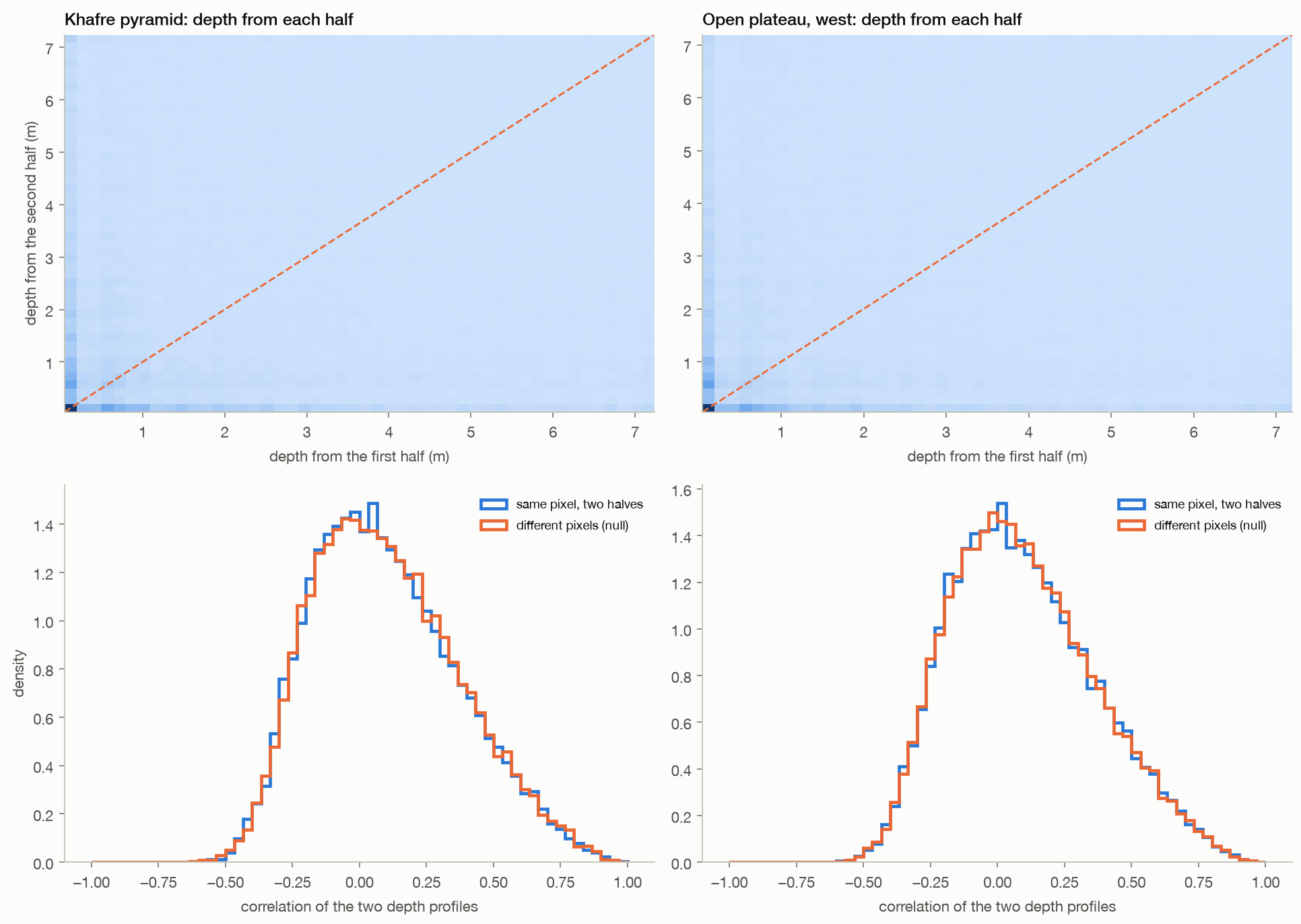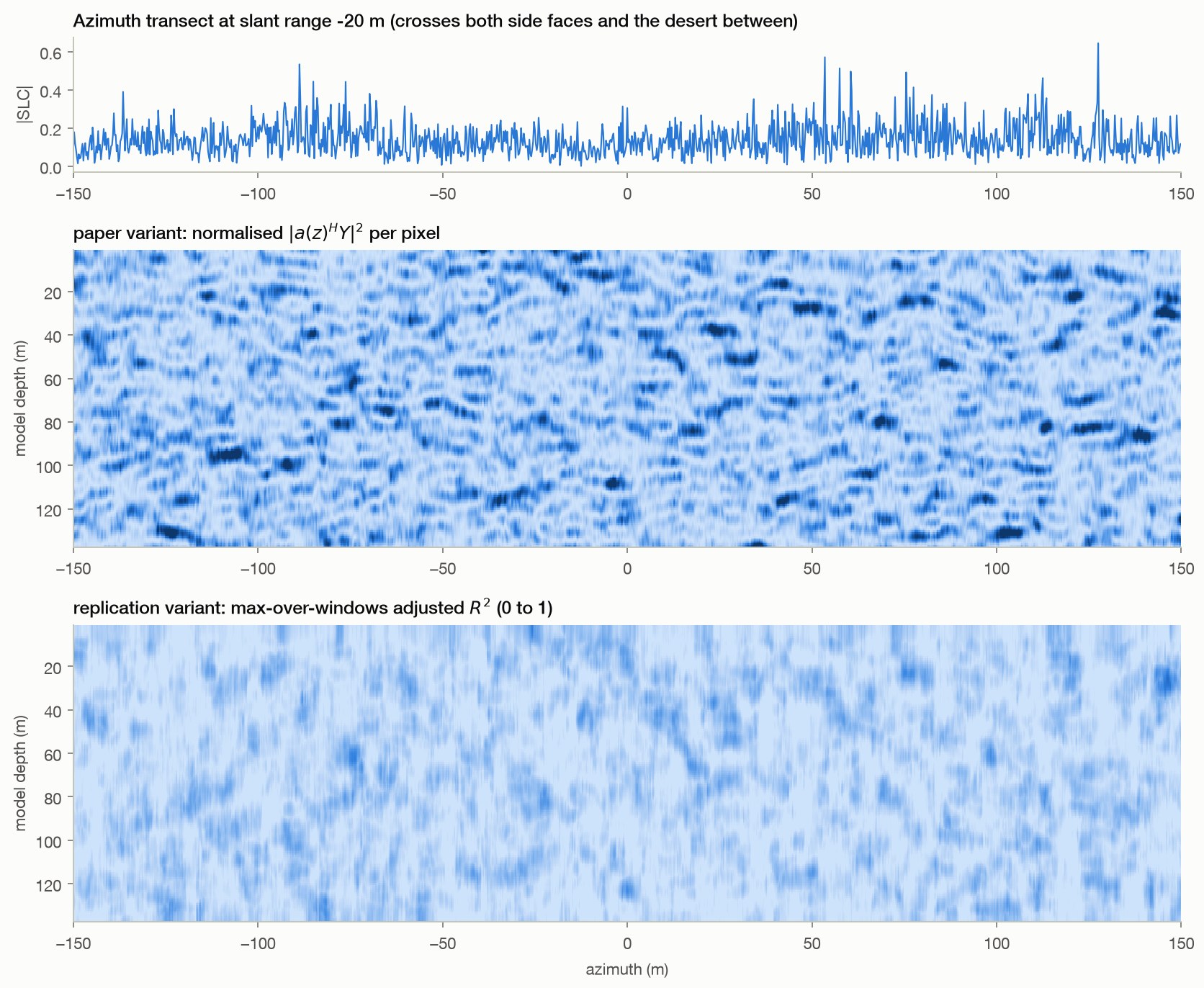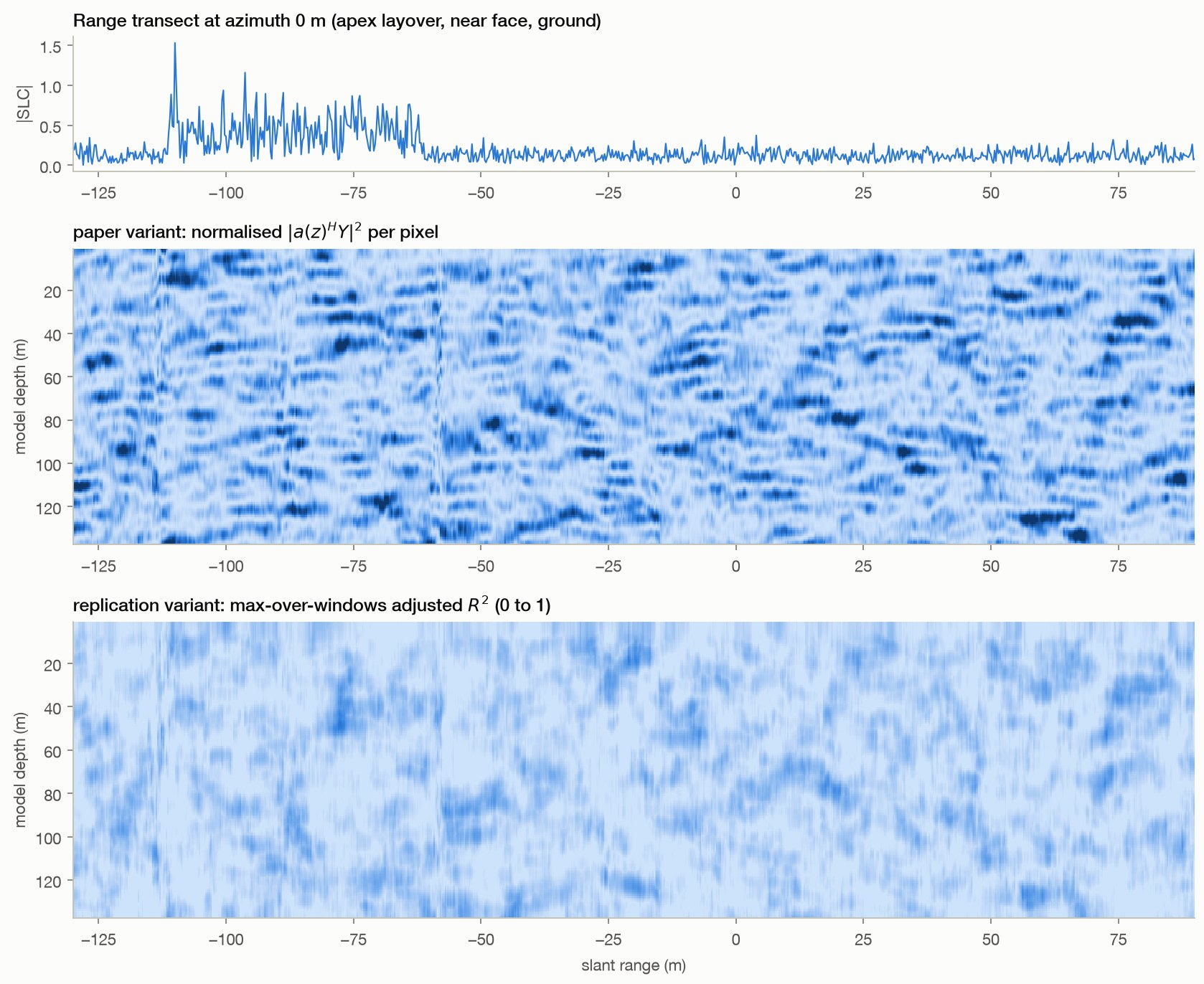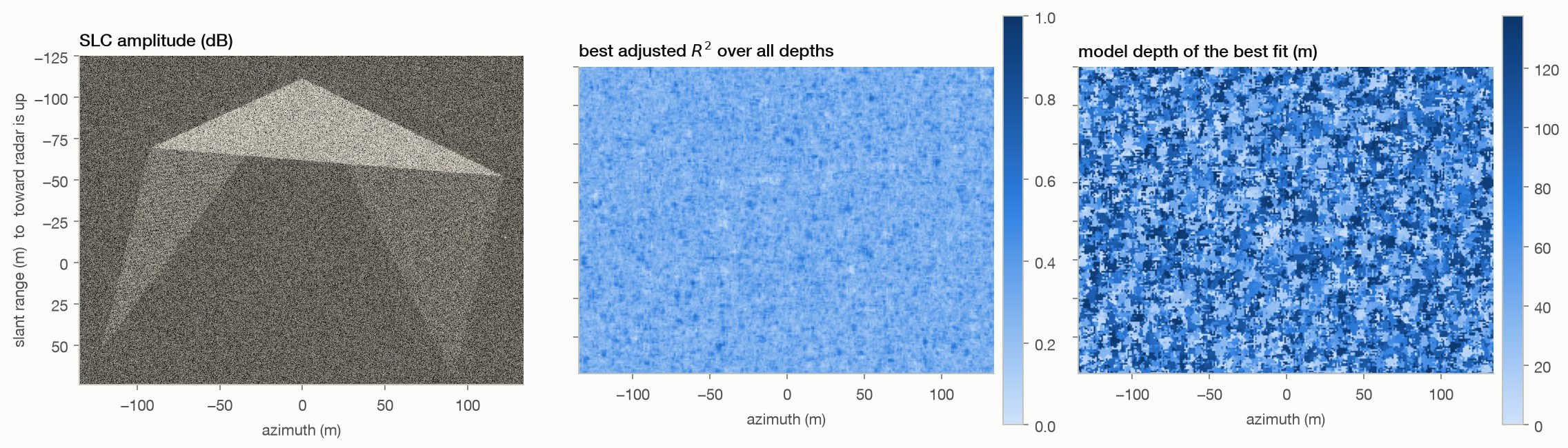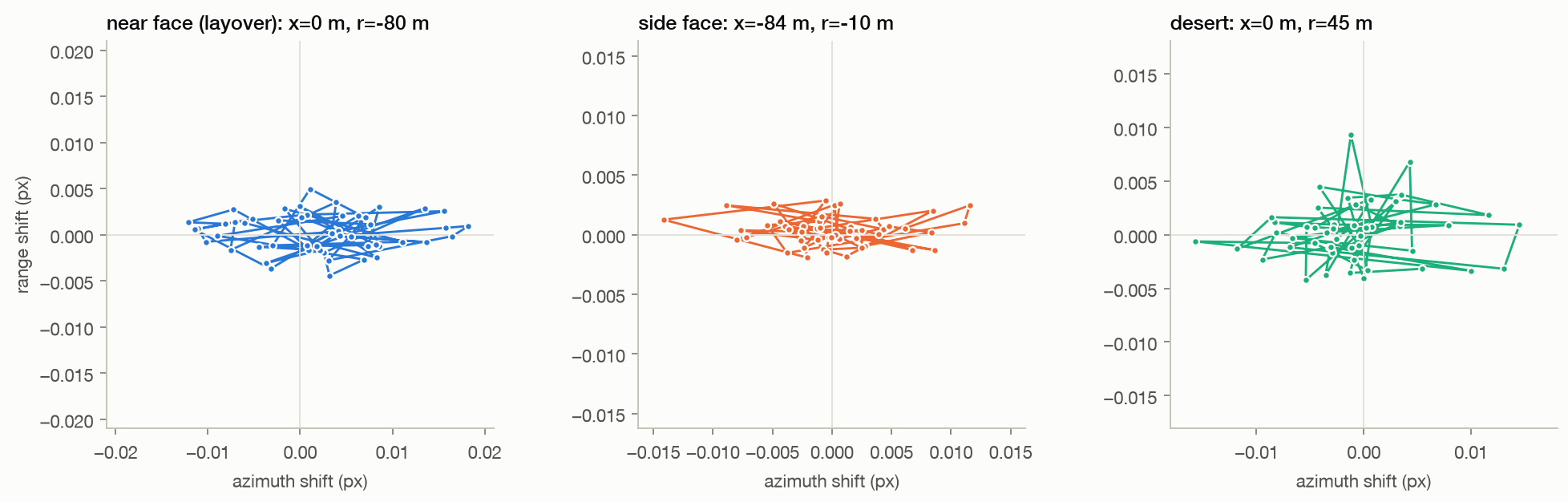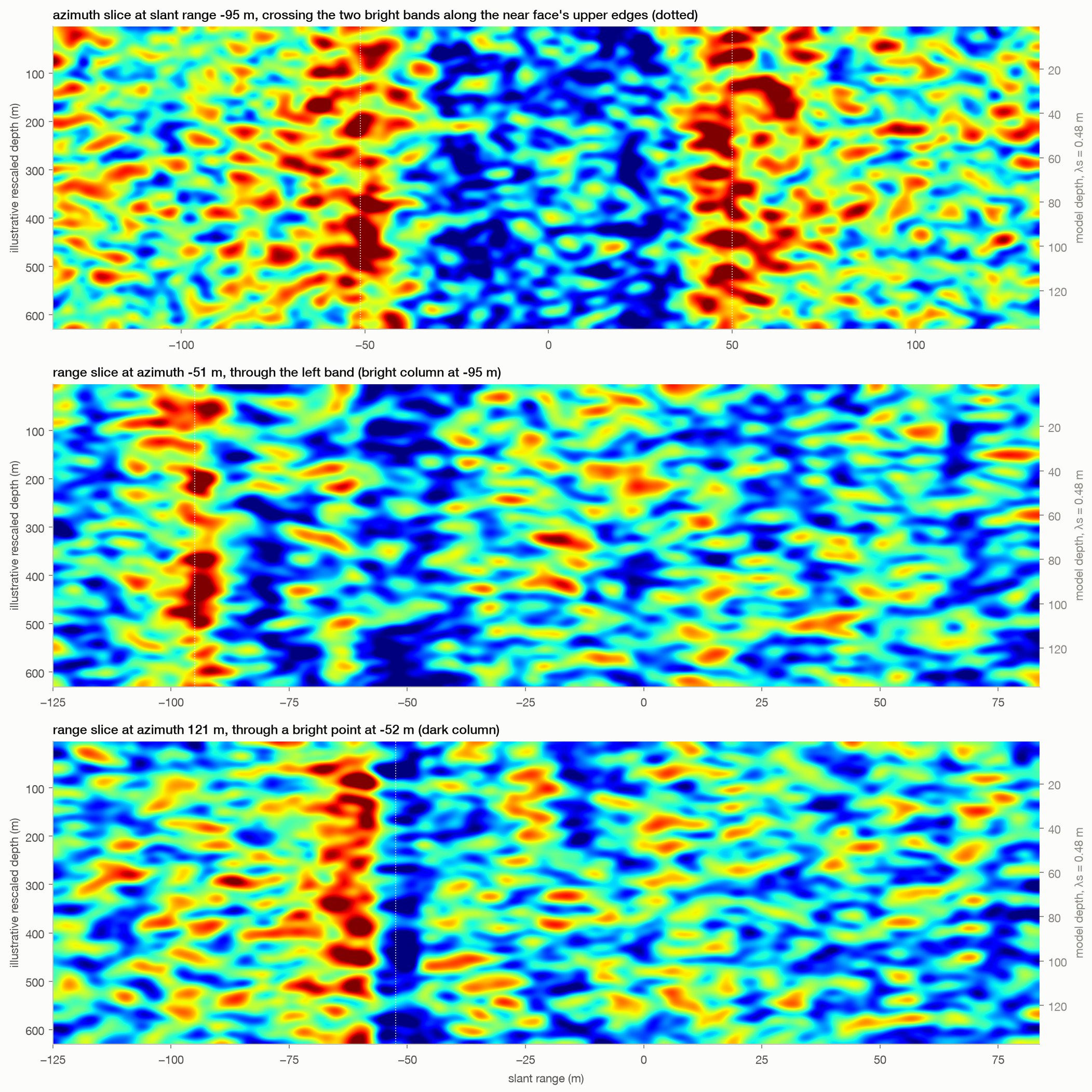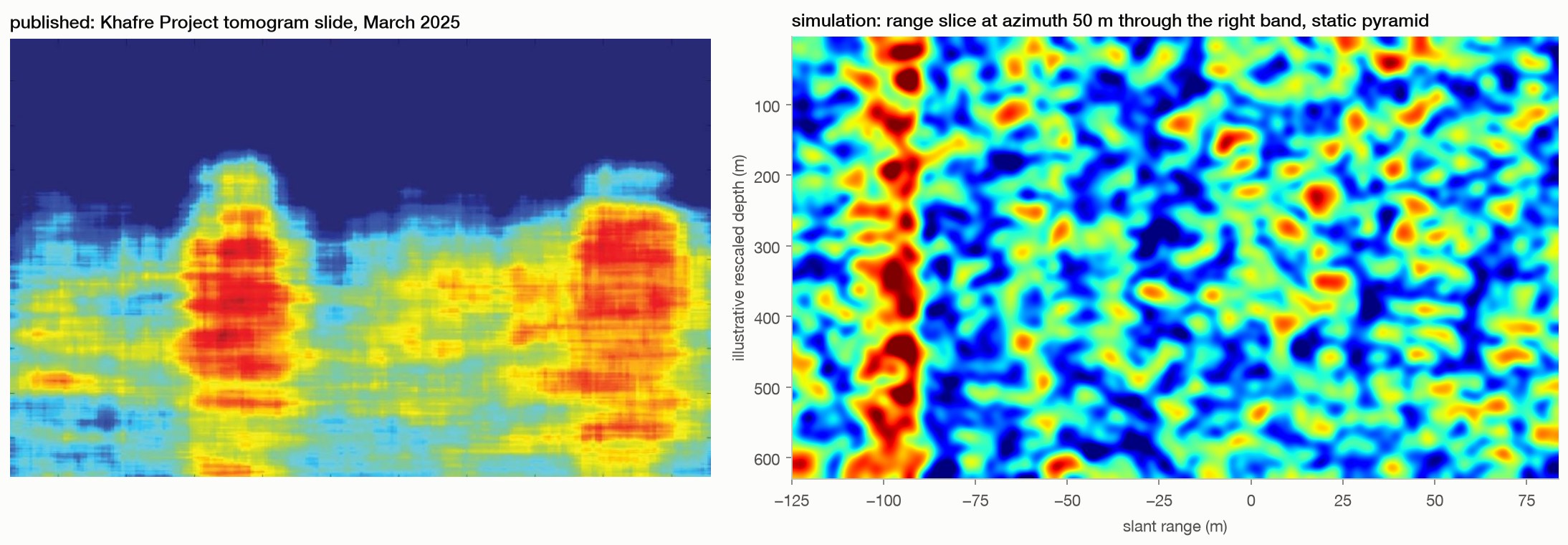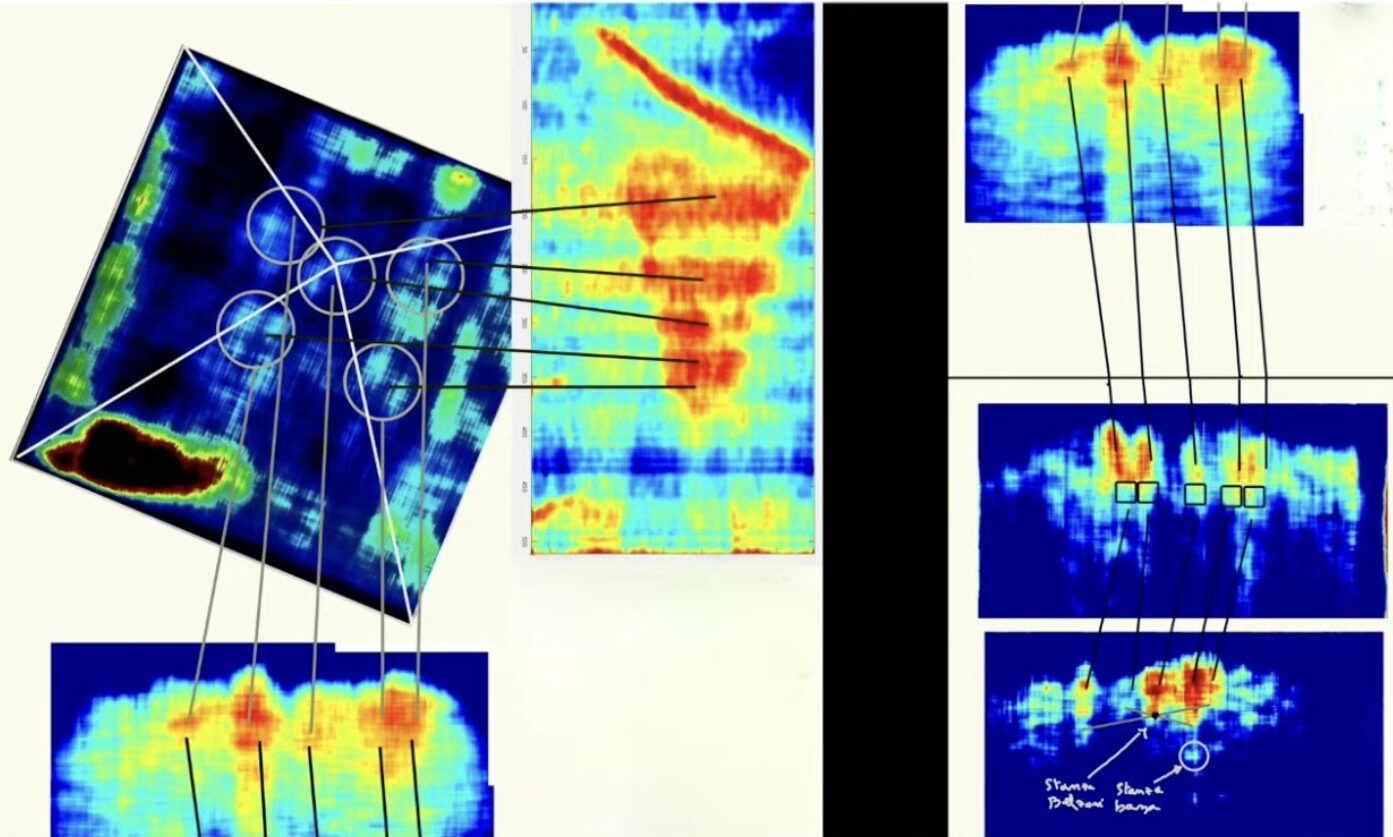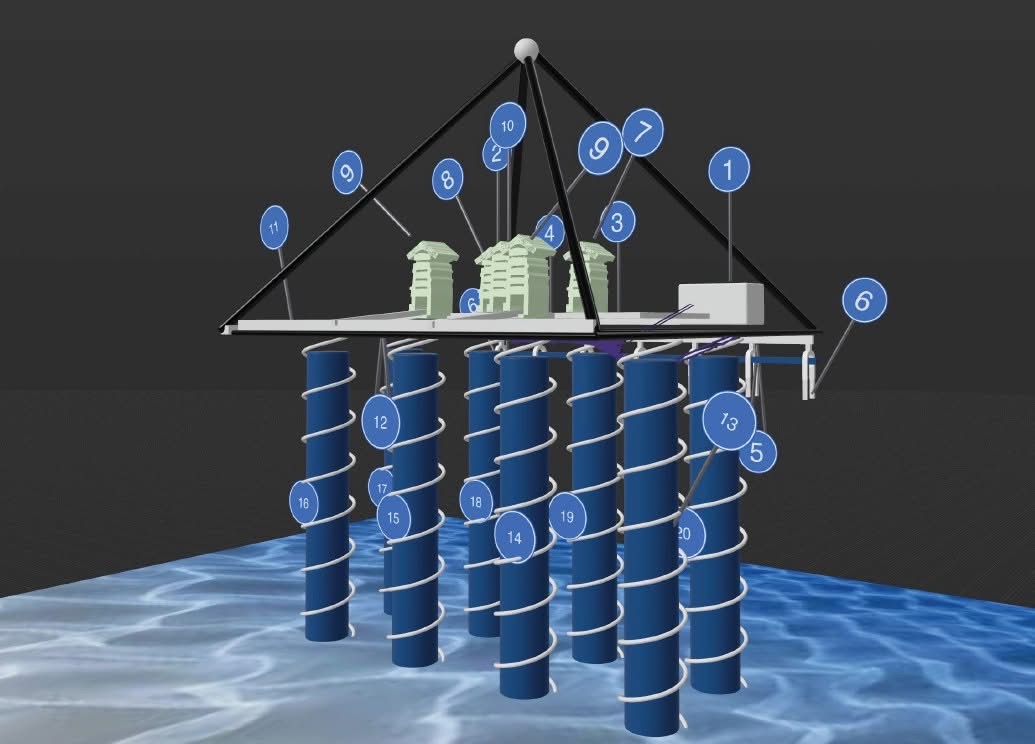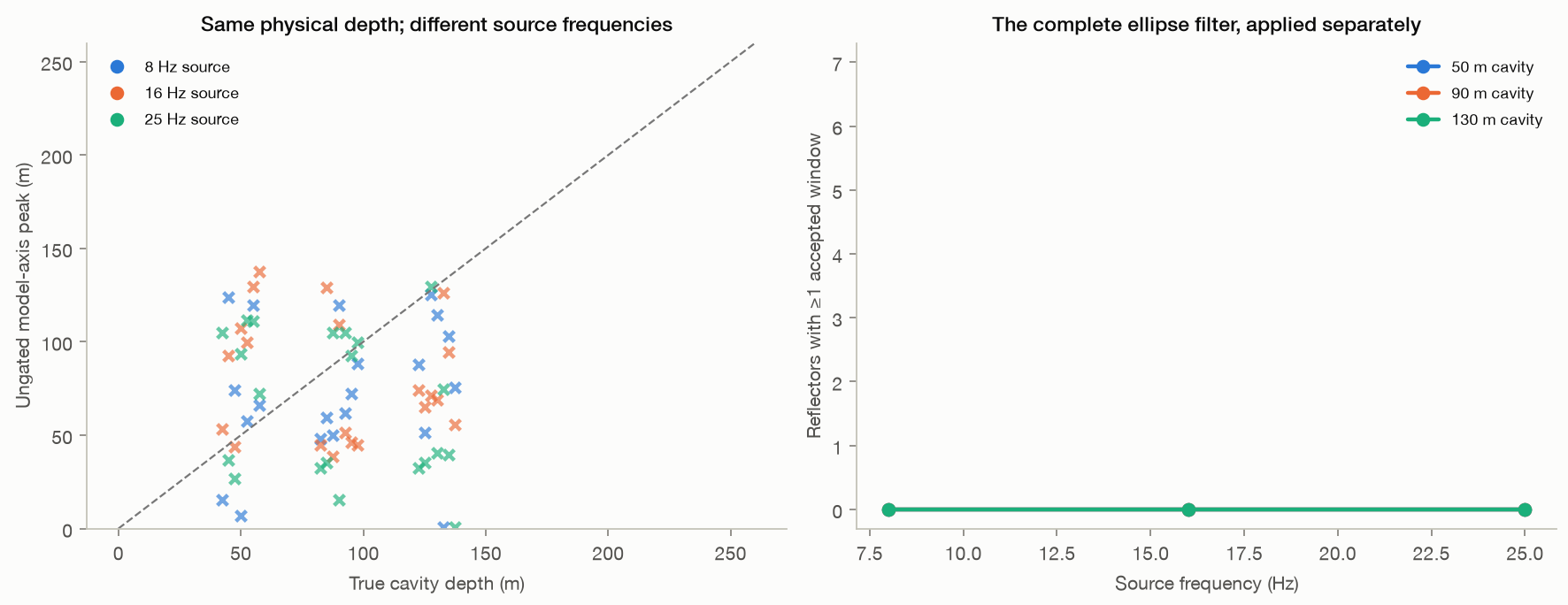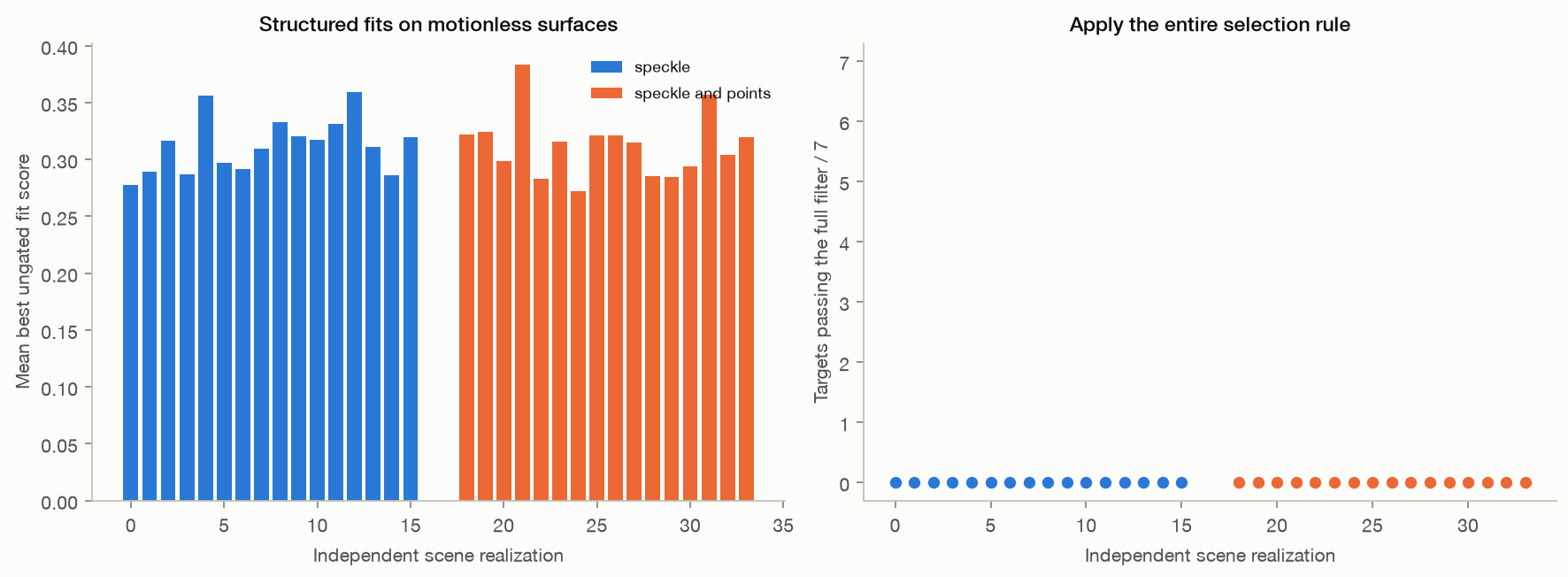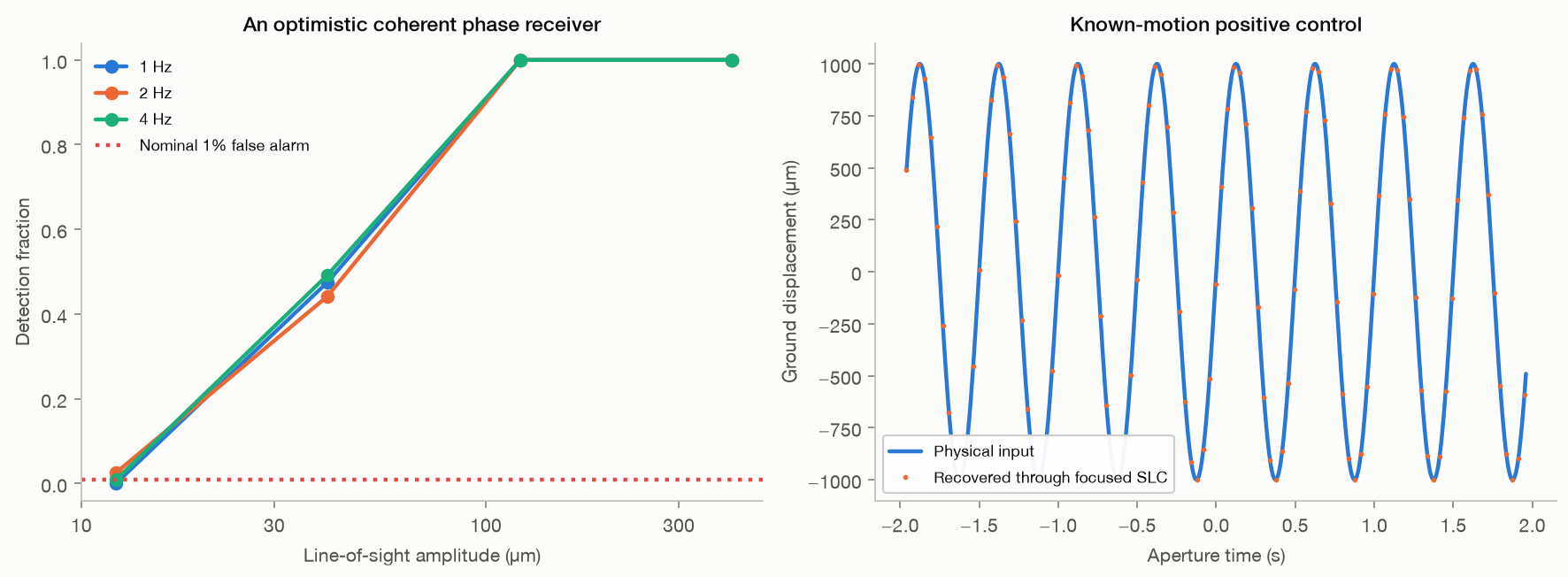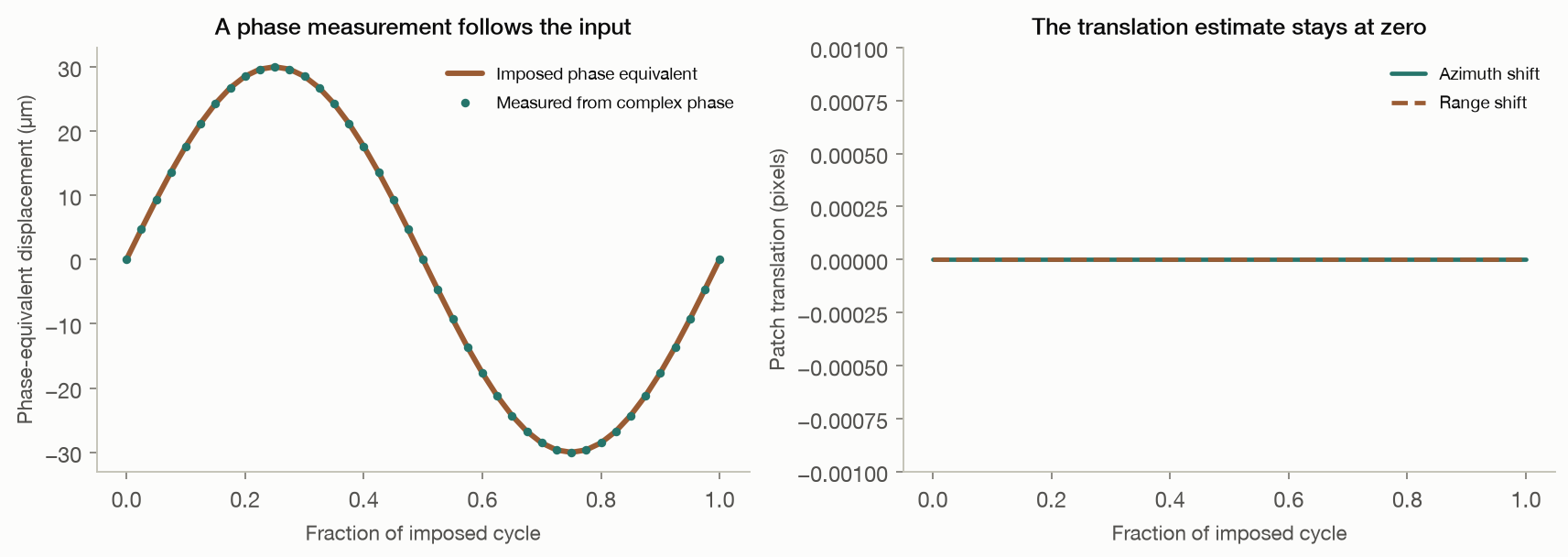
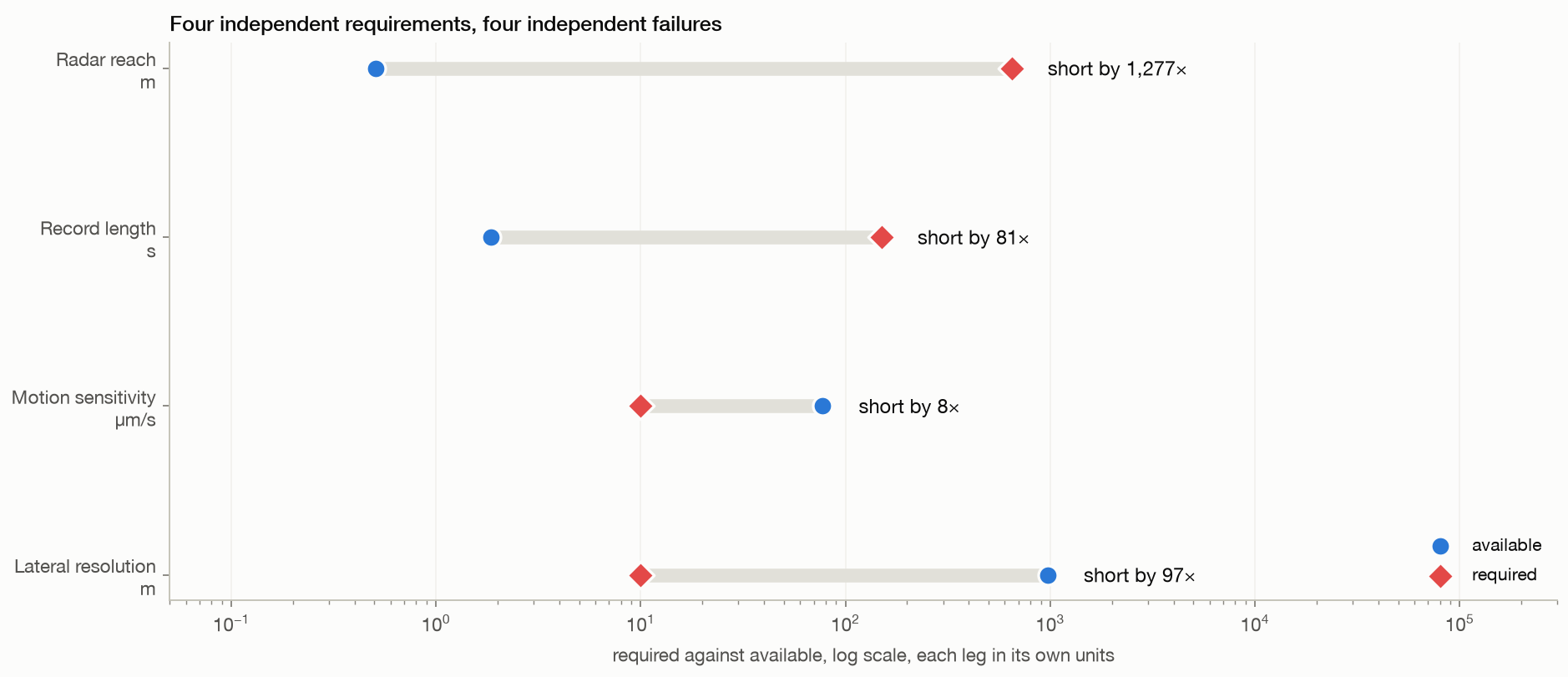
Four independent requirements, each missed by a wide margin
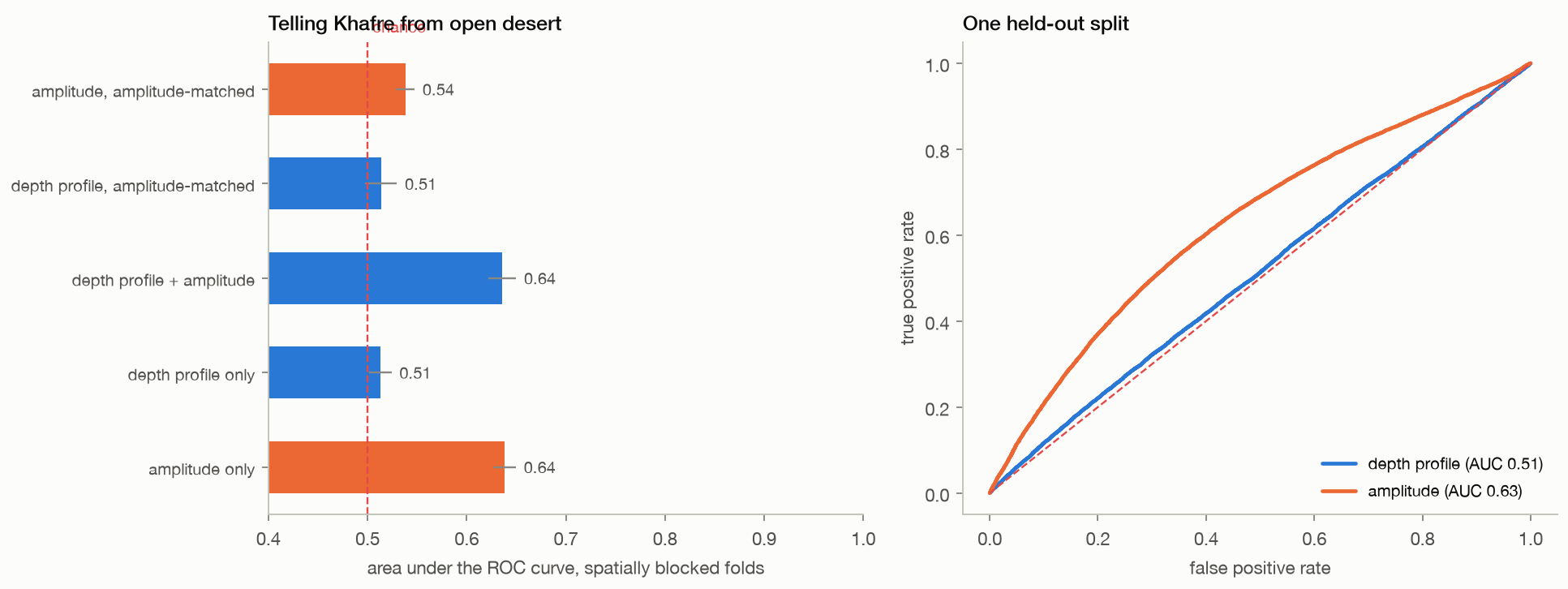
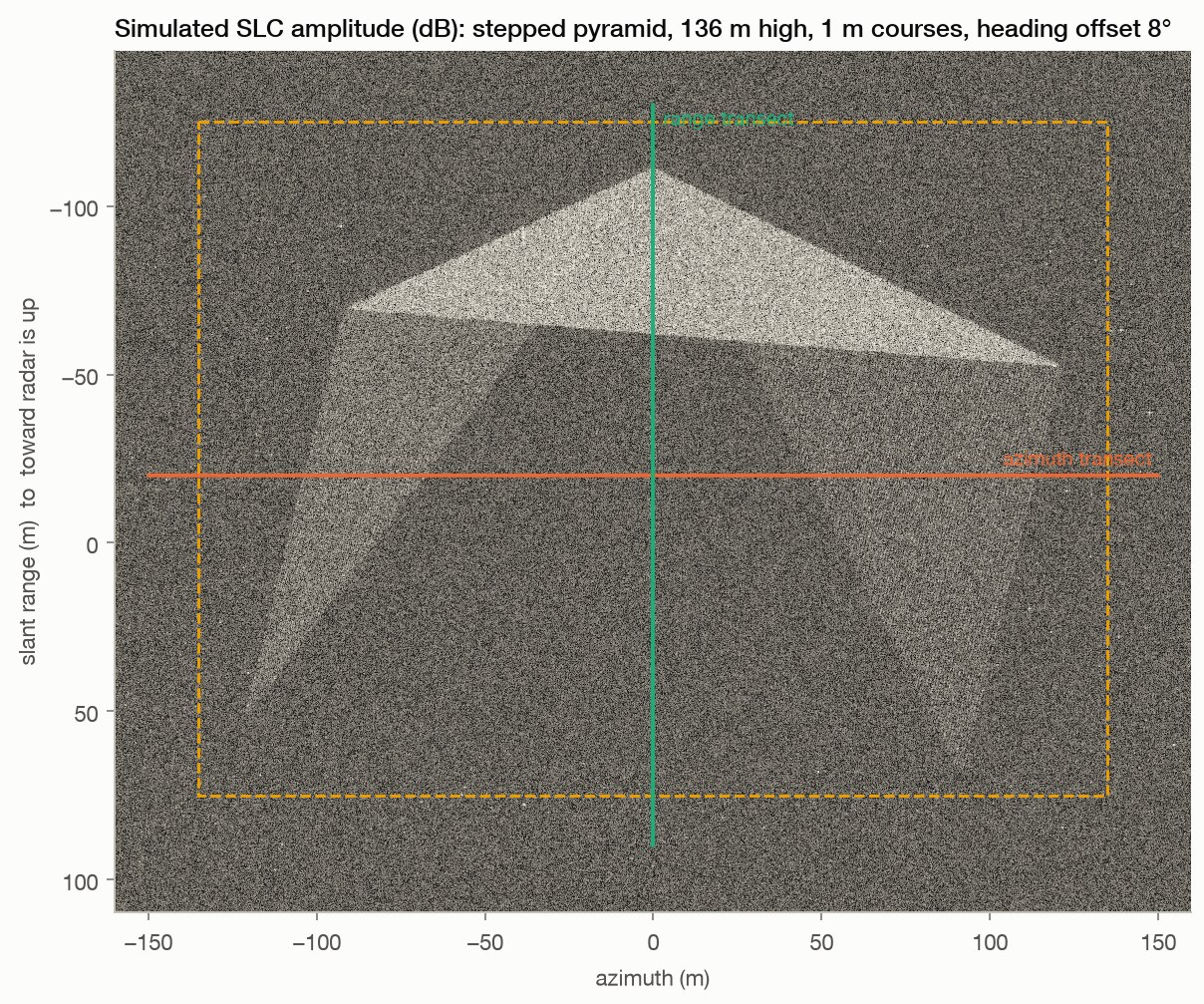
X-band penetrates 11 to 51 cm of dry limestone, so nothing below the surface is illuminated and every claim must rest on surface motion.
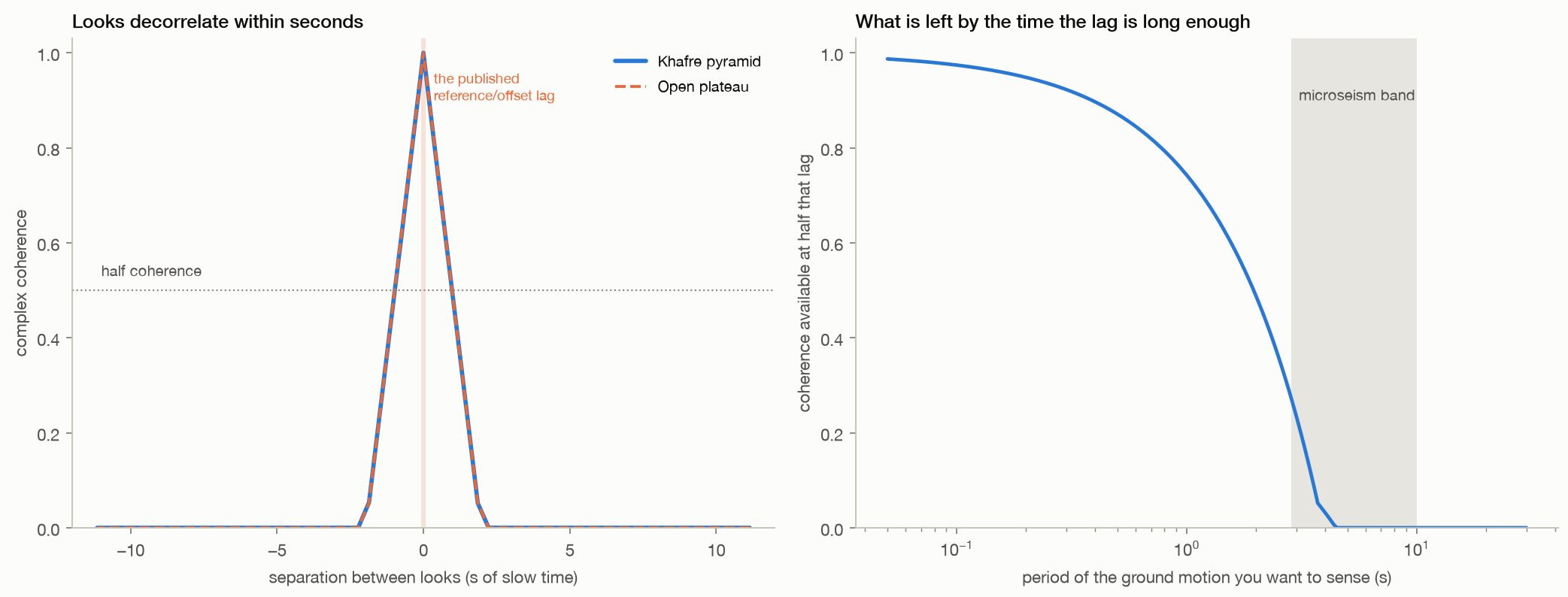
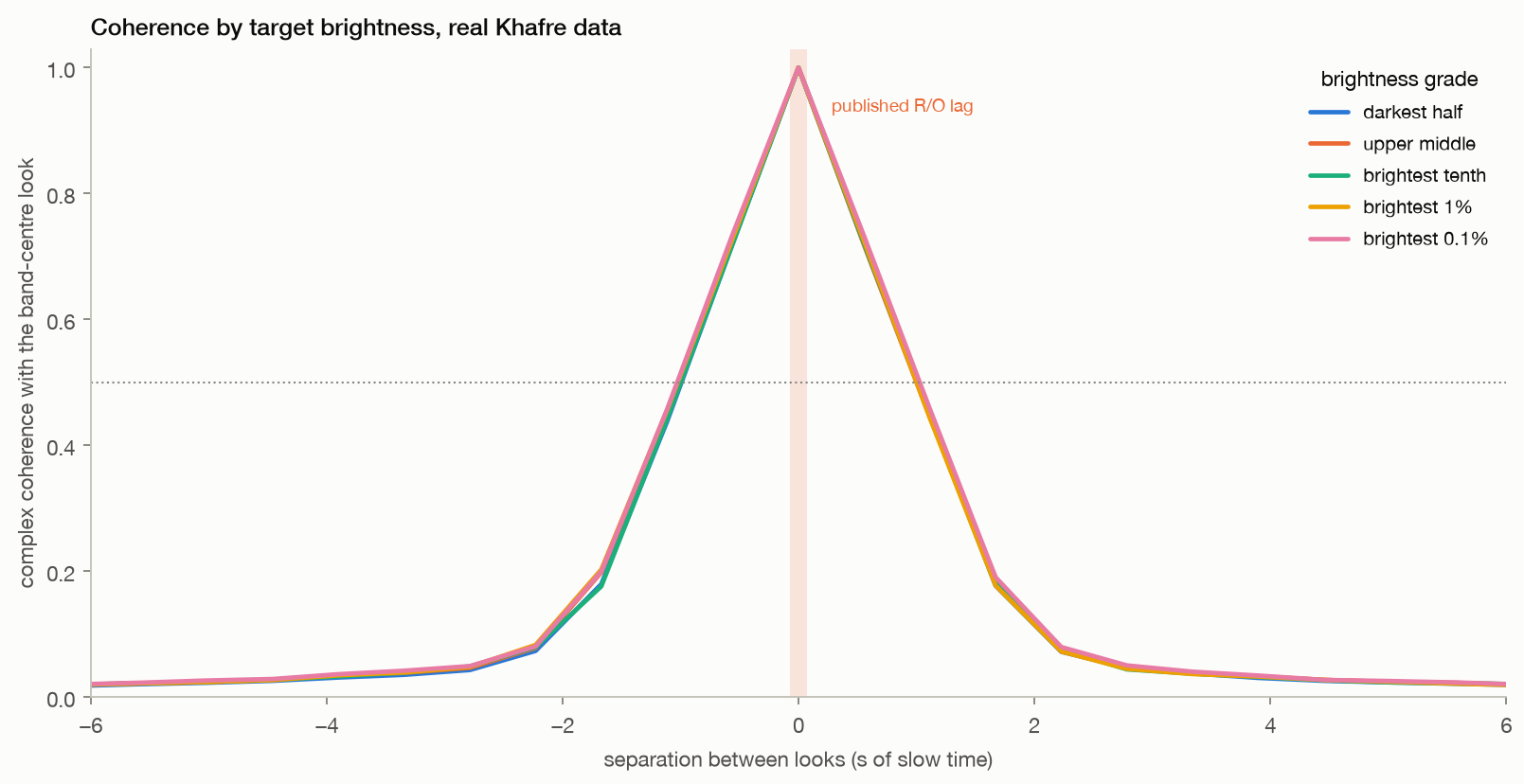
- Resolving the microseism band needs a record of order 150 s; the coherent window allows 1.86 s.
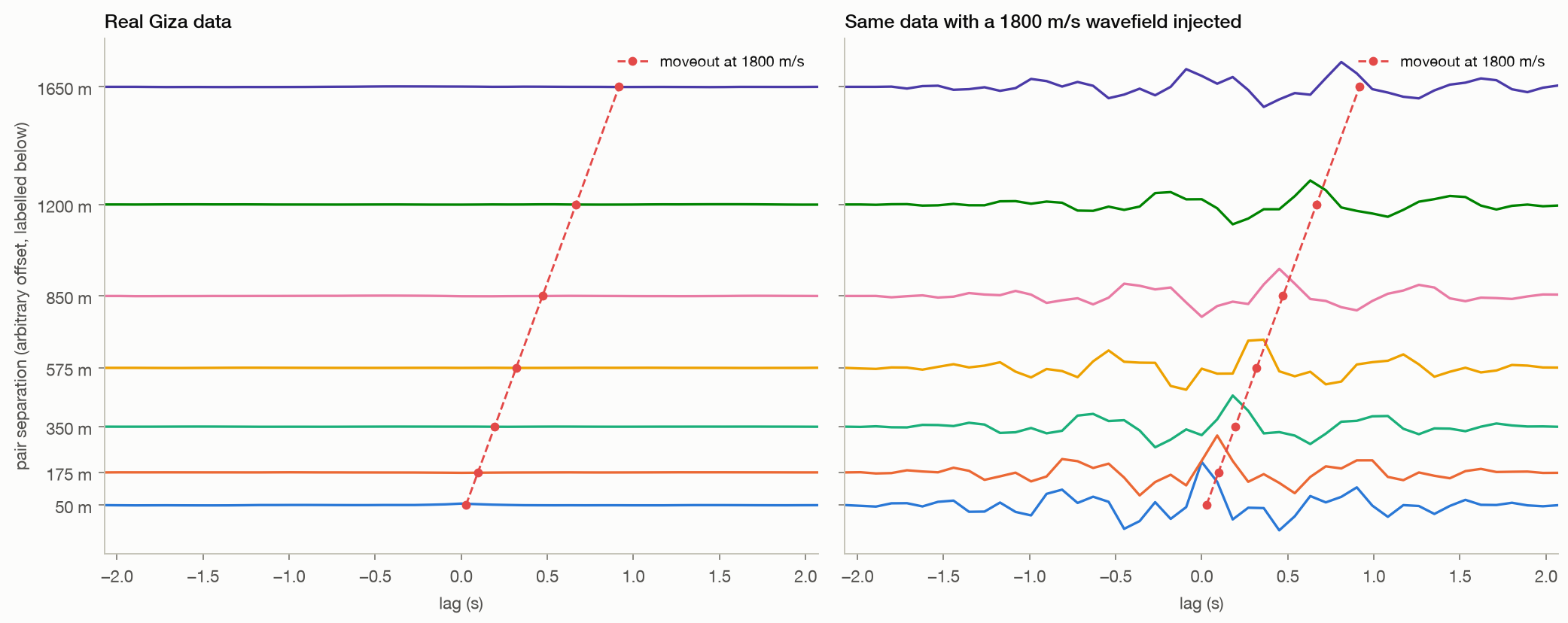
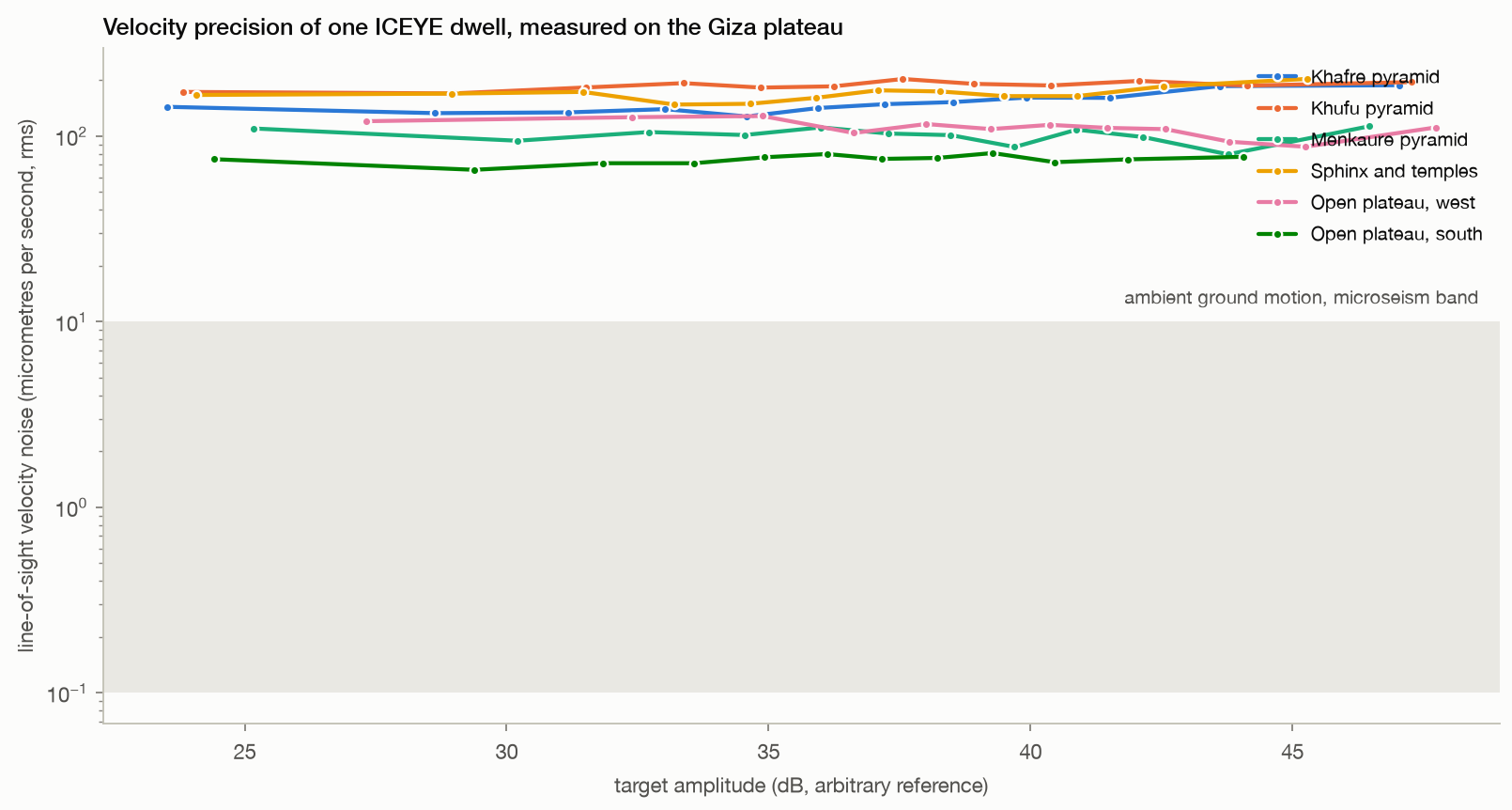
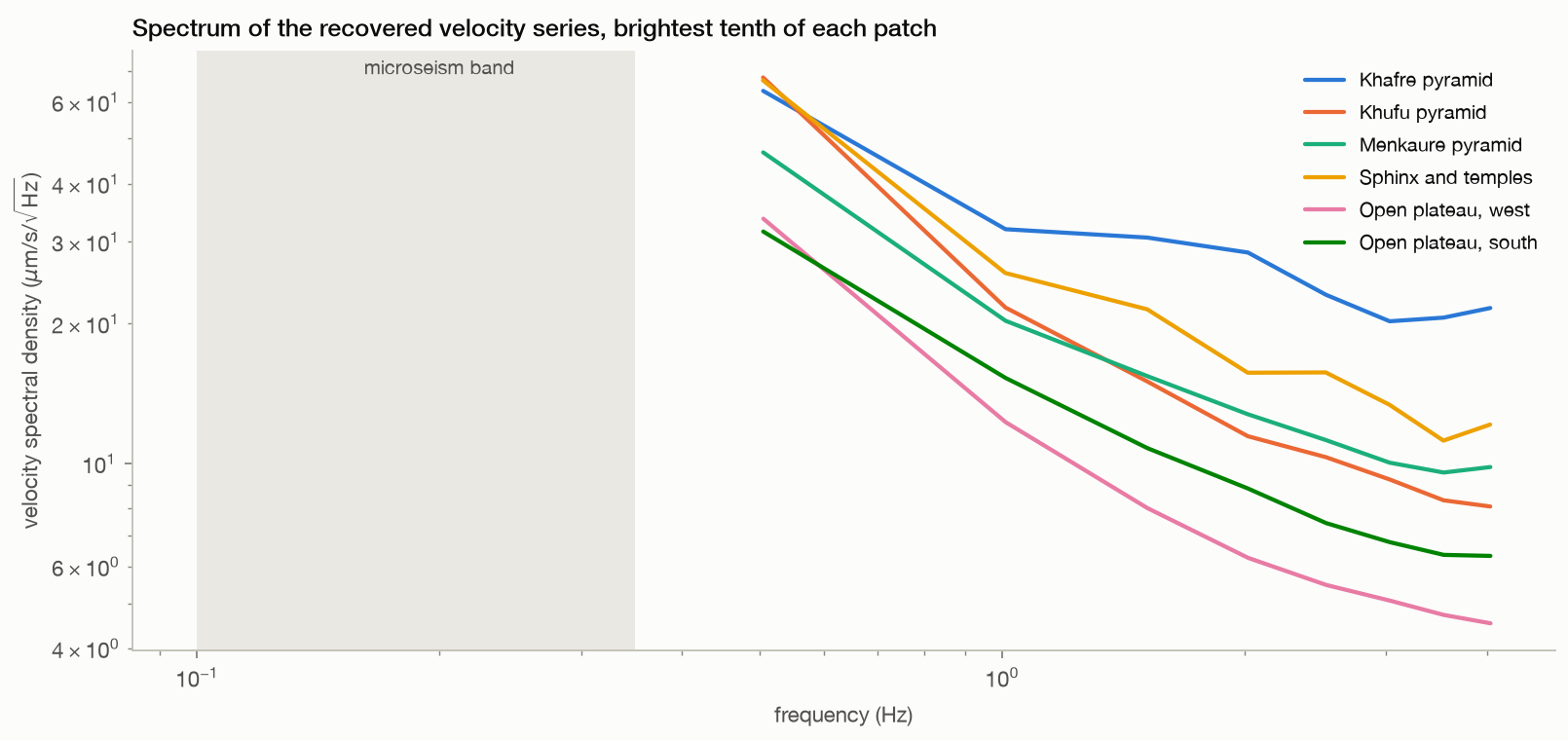
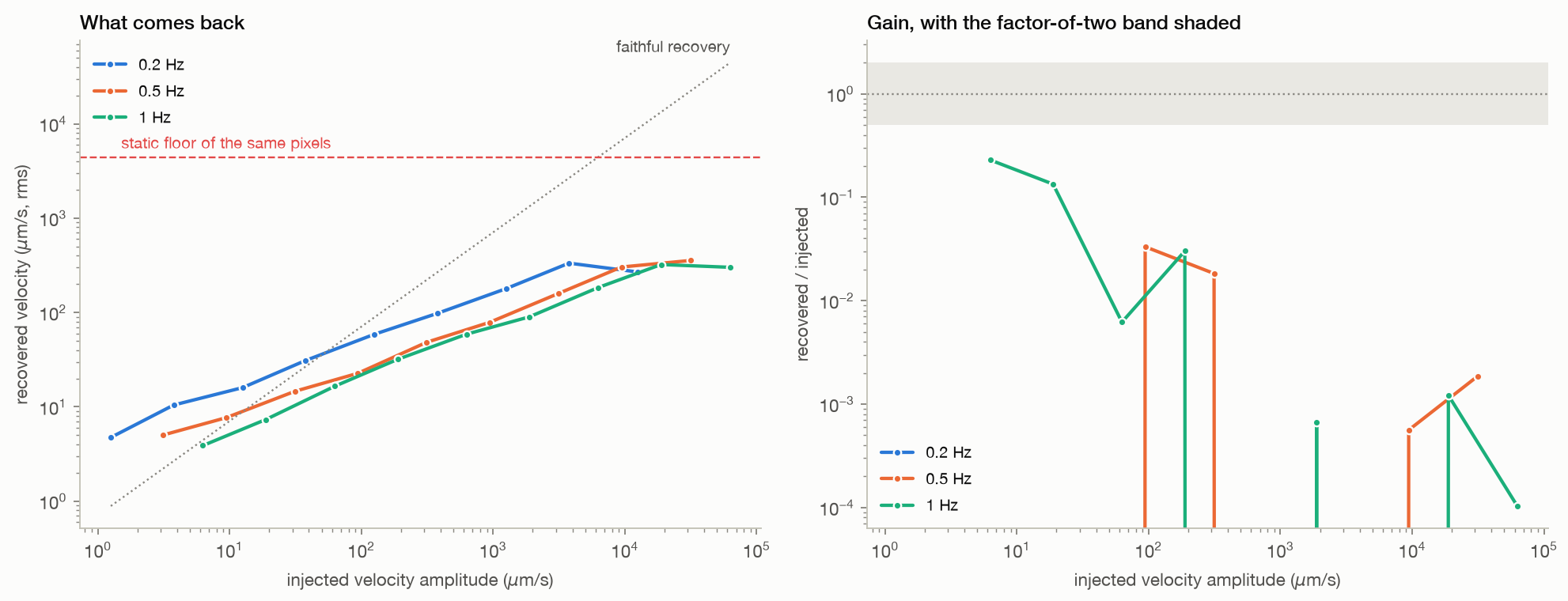
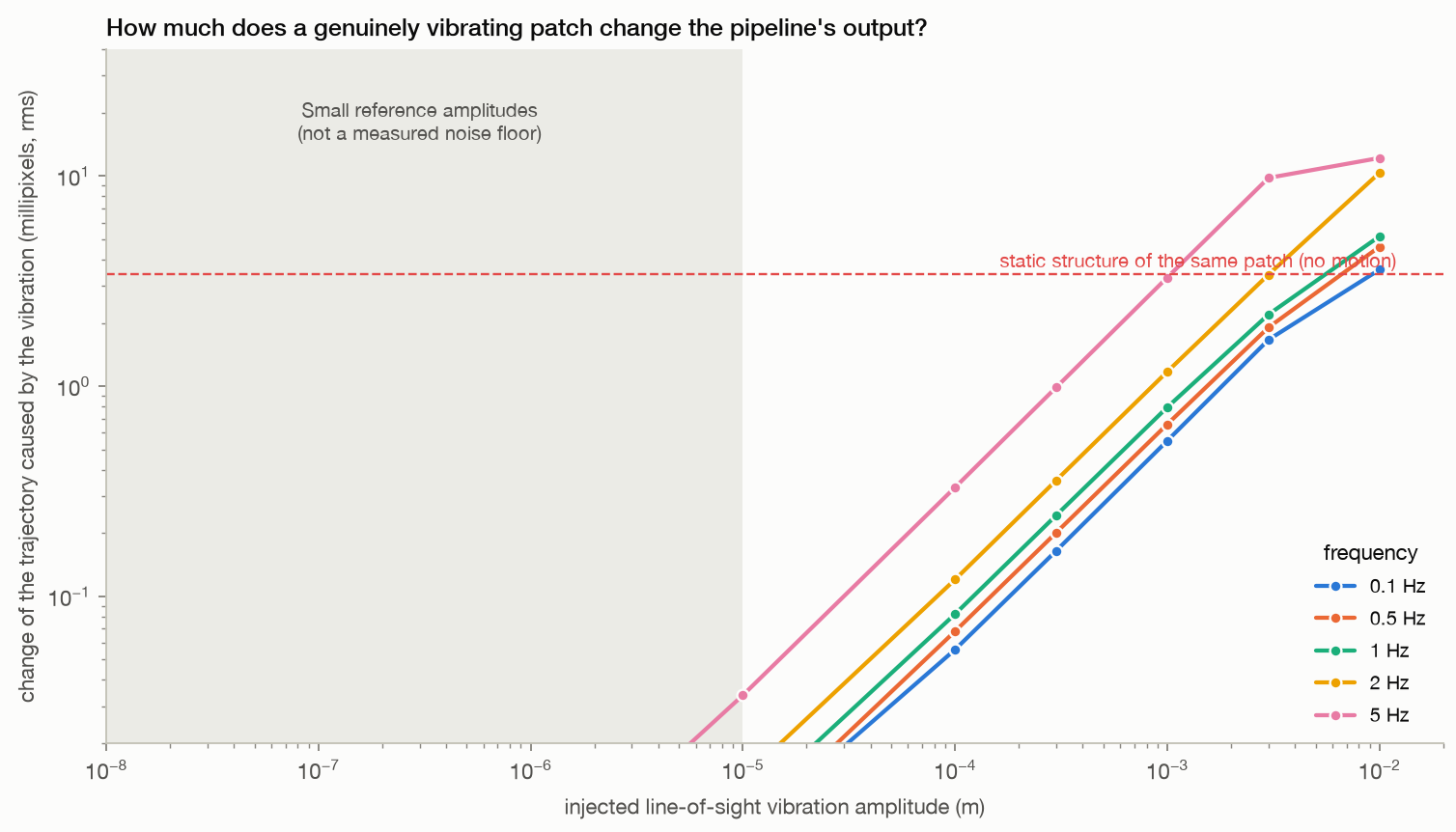
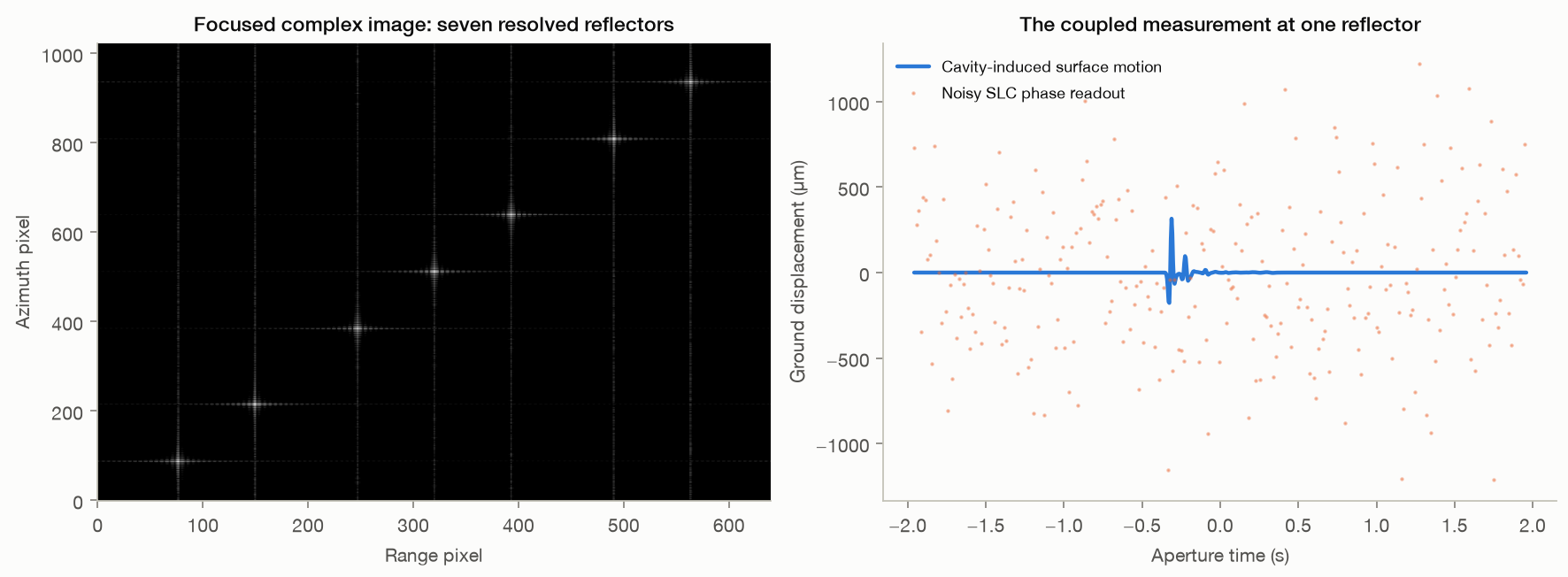
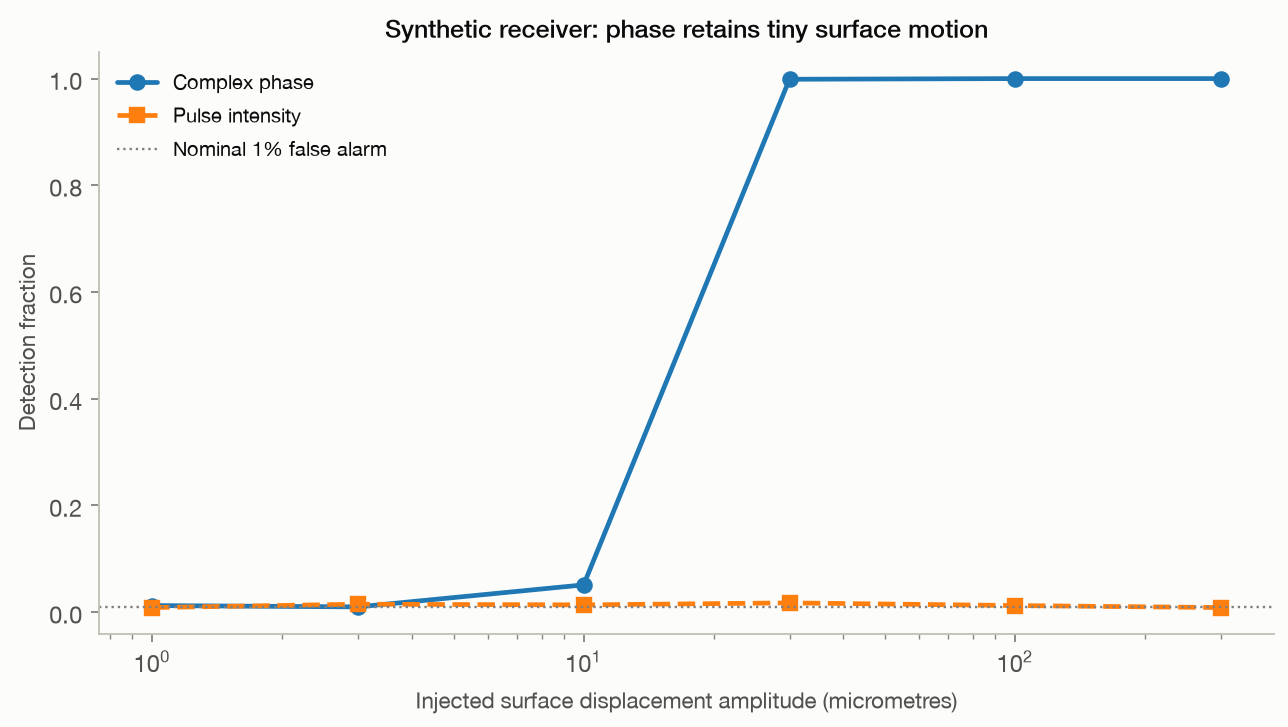
- Ambient ground motion is 0.1 to 10 µm/s; the measured floor is 77 µm/s.
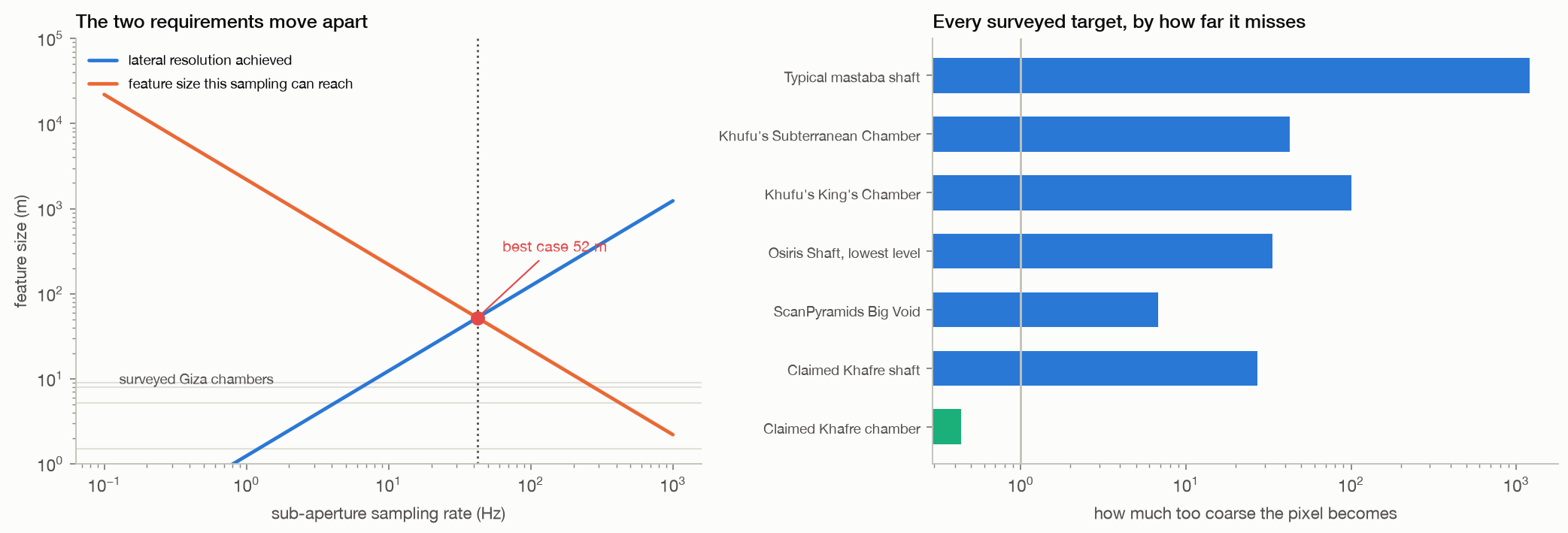
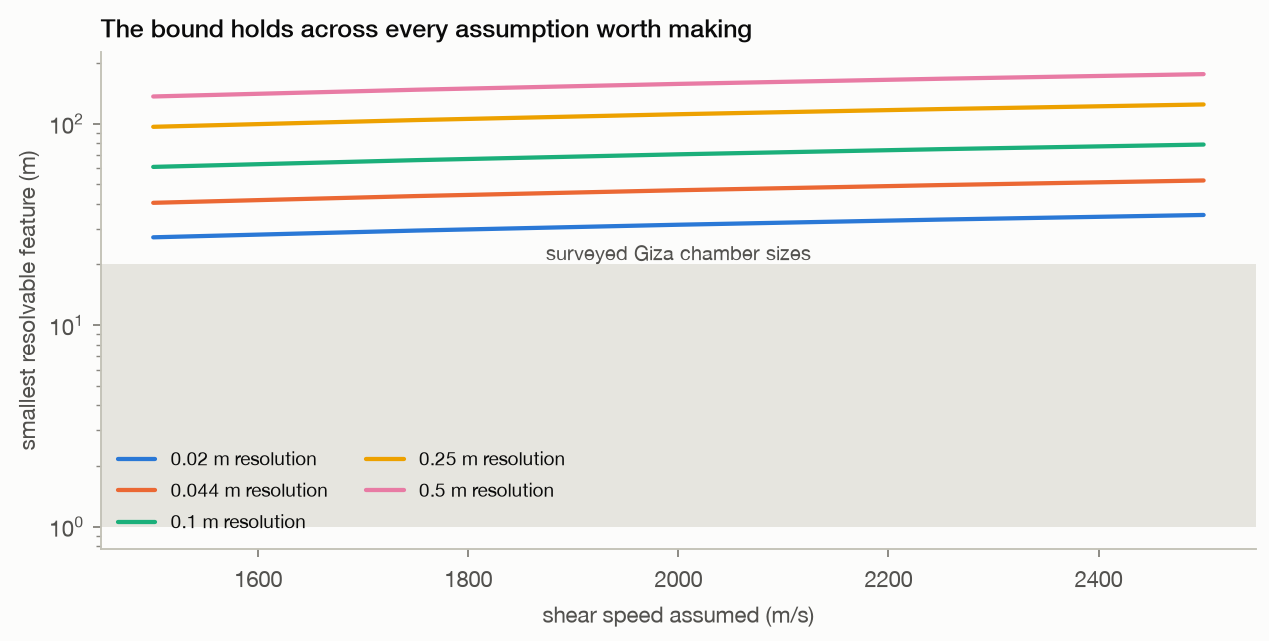
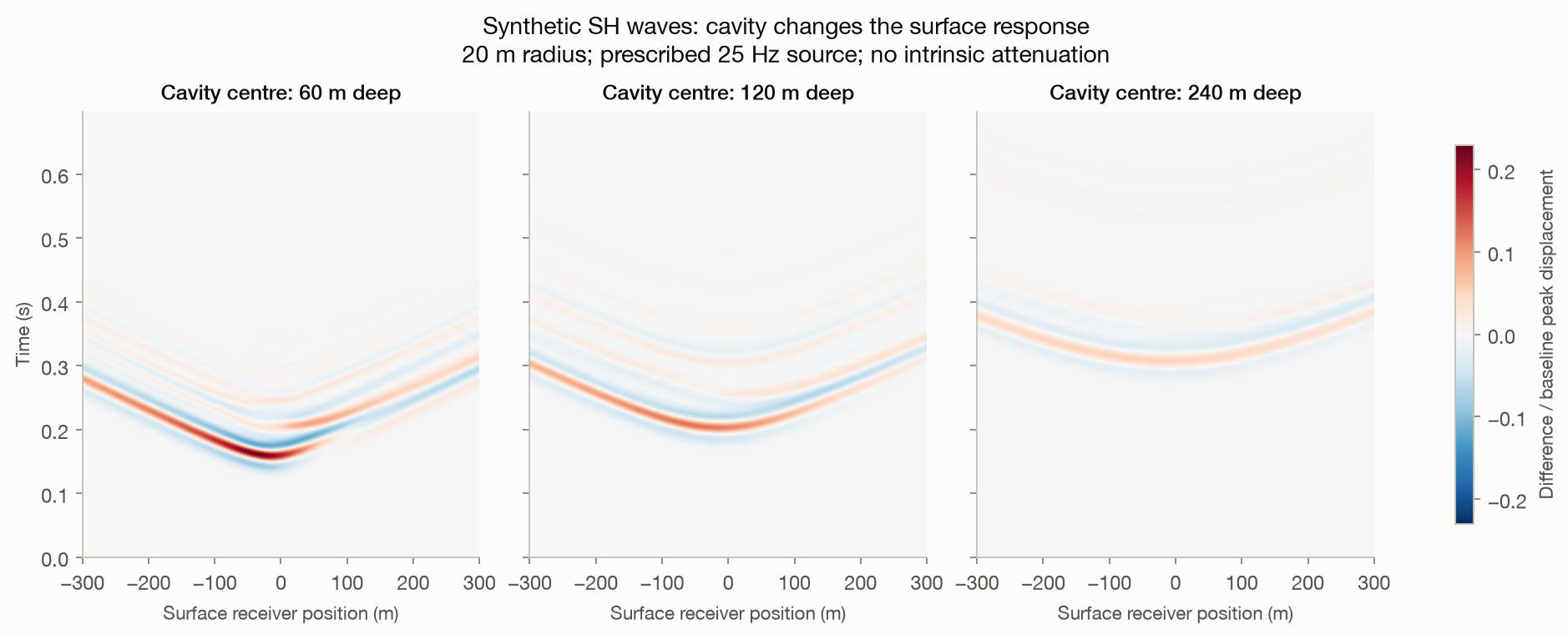
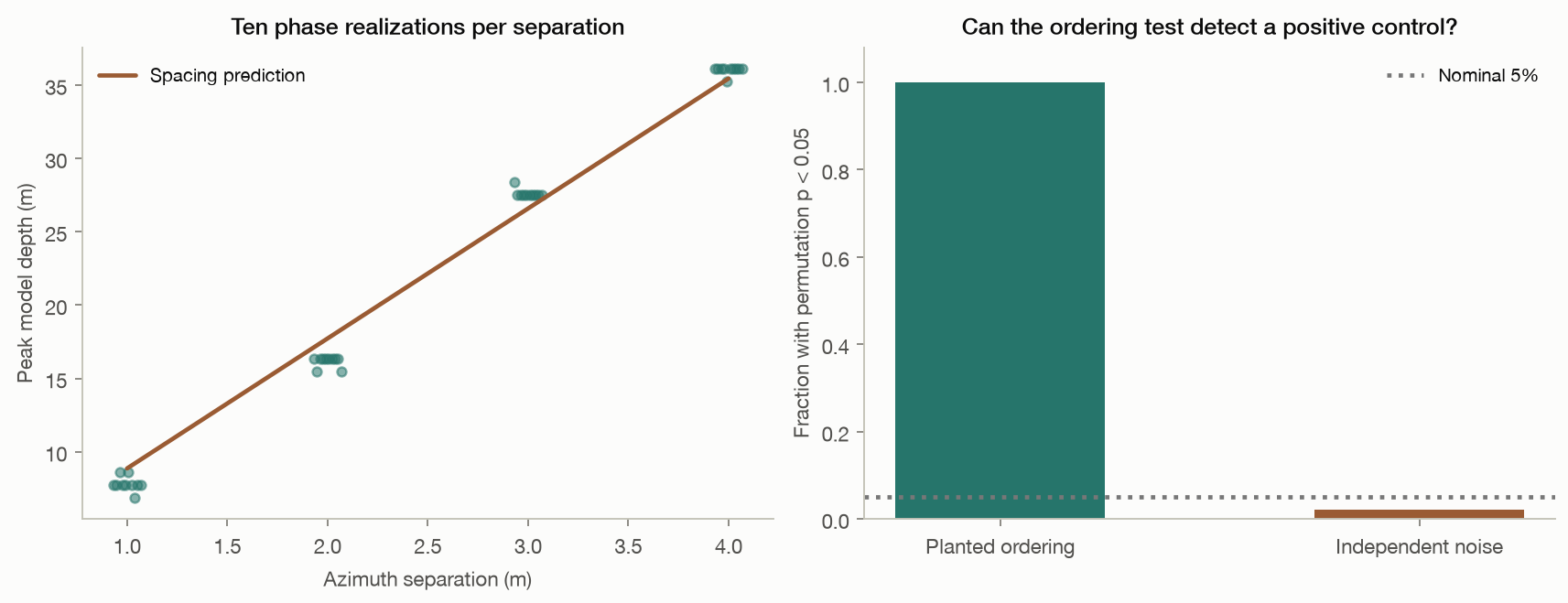
- Surface waves long enough to sample 648 m cannot resolve better than about 972 m laterally, against wells said to be 10 m across.
- Each leg fails alone, and they are independent.
Method, limits & data
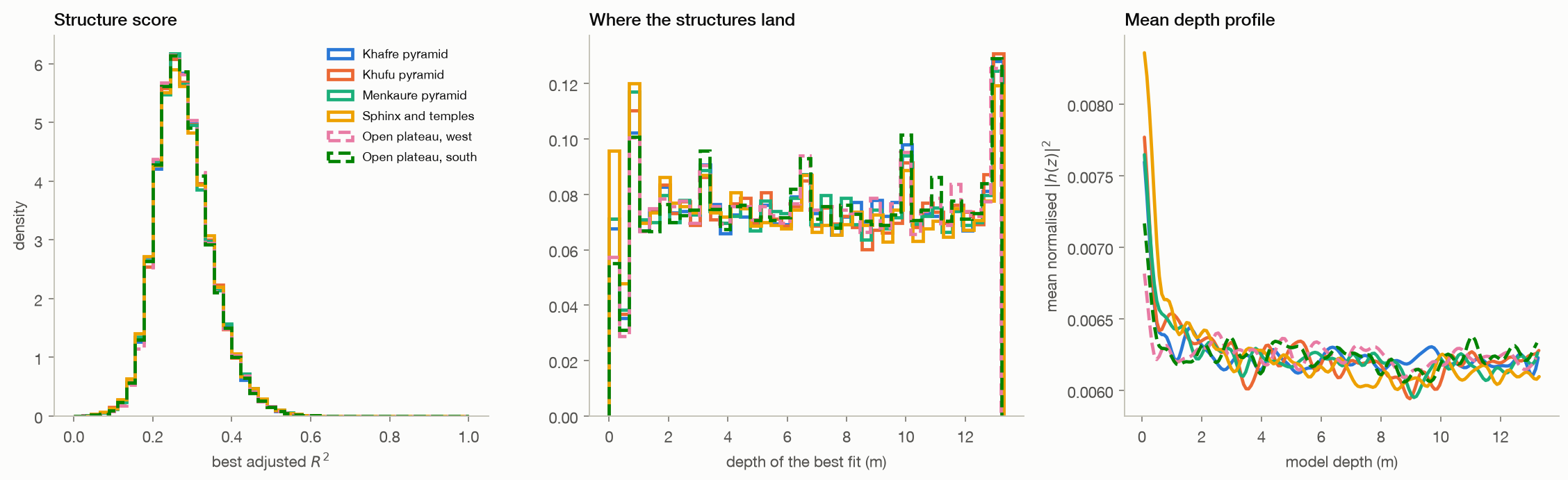
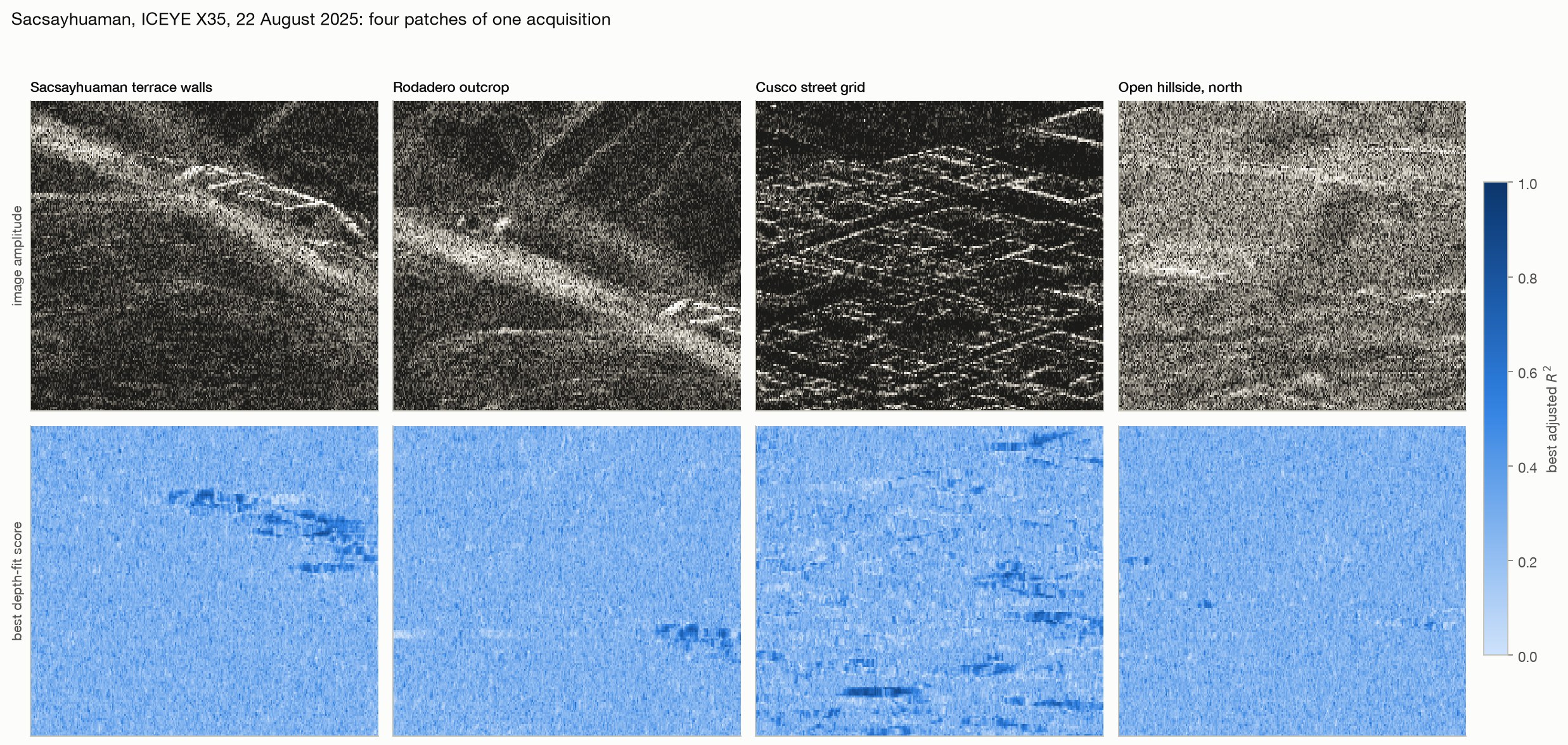
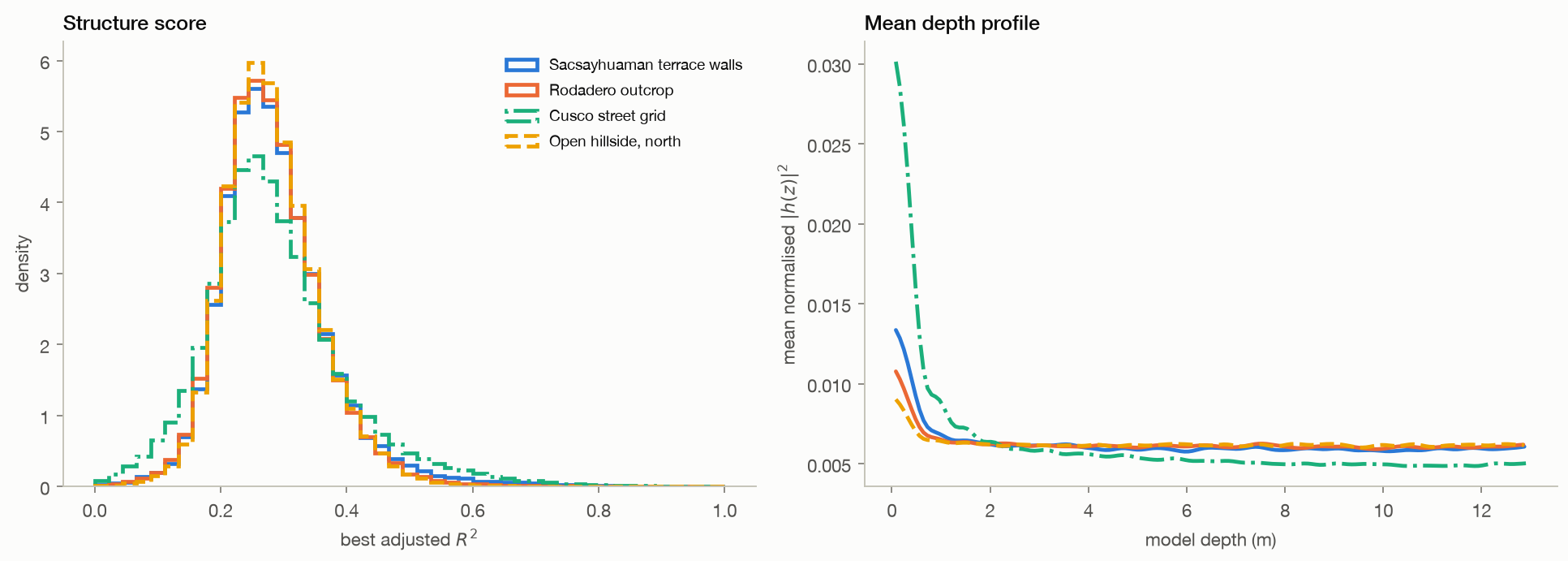
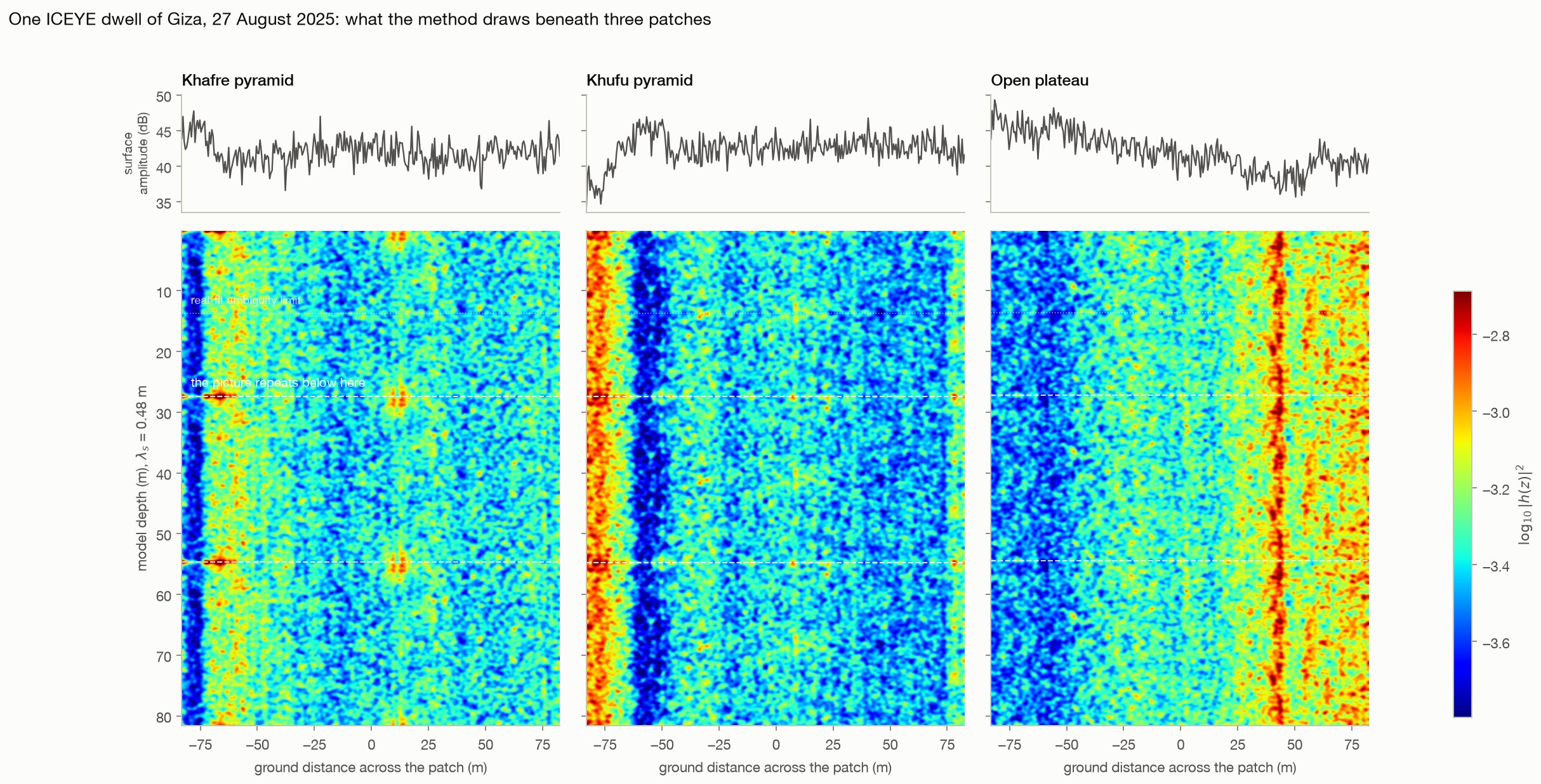
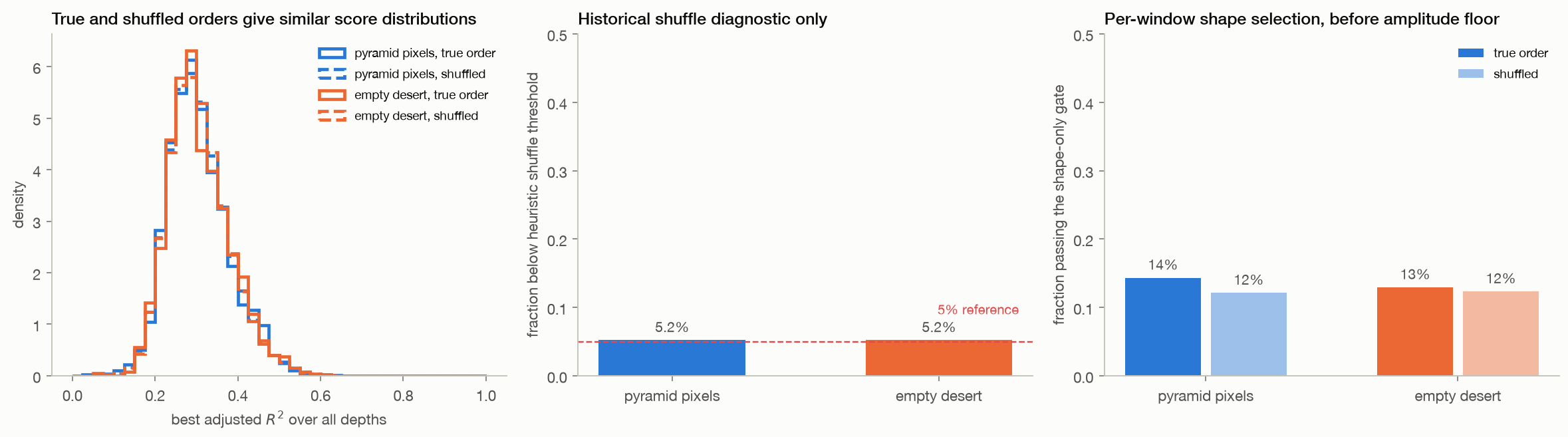
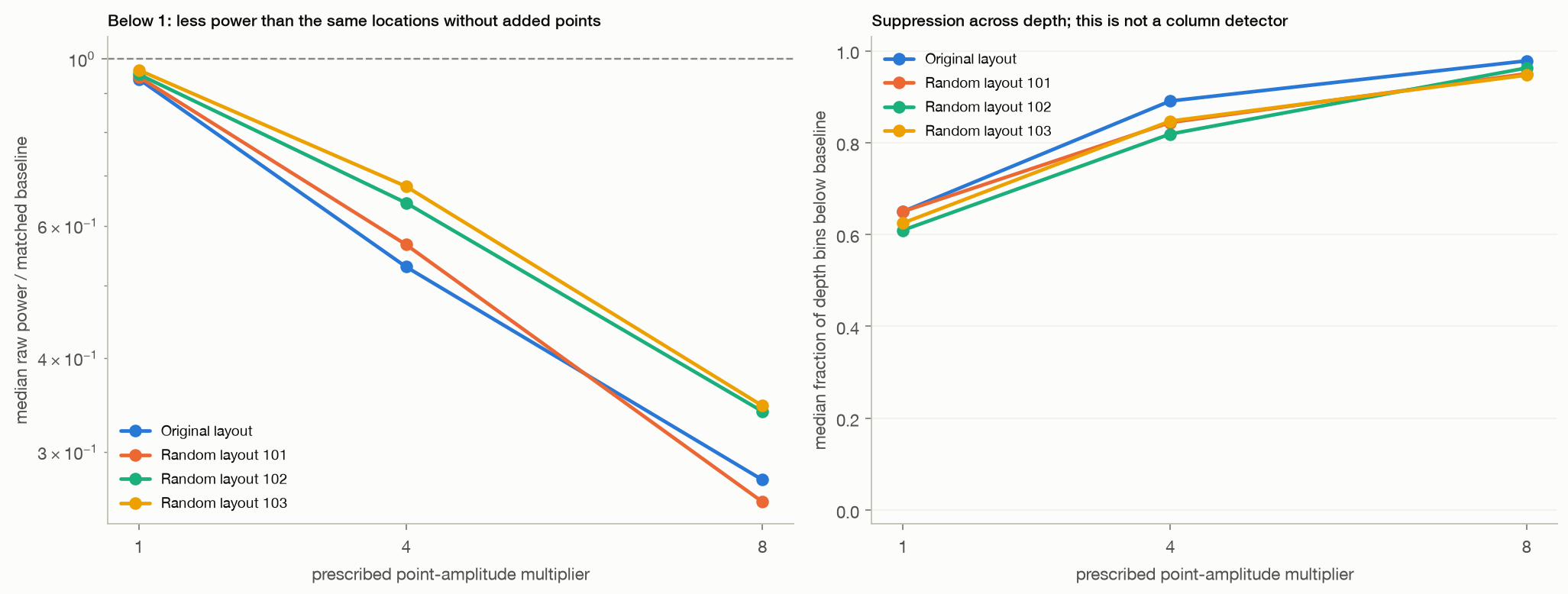
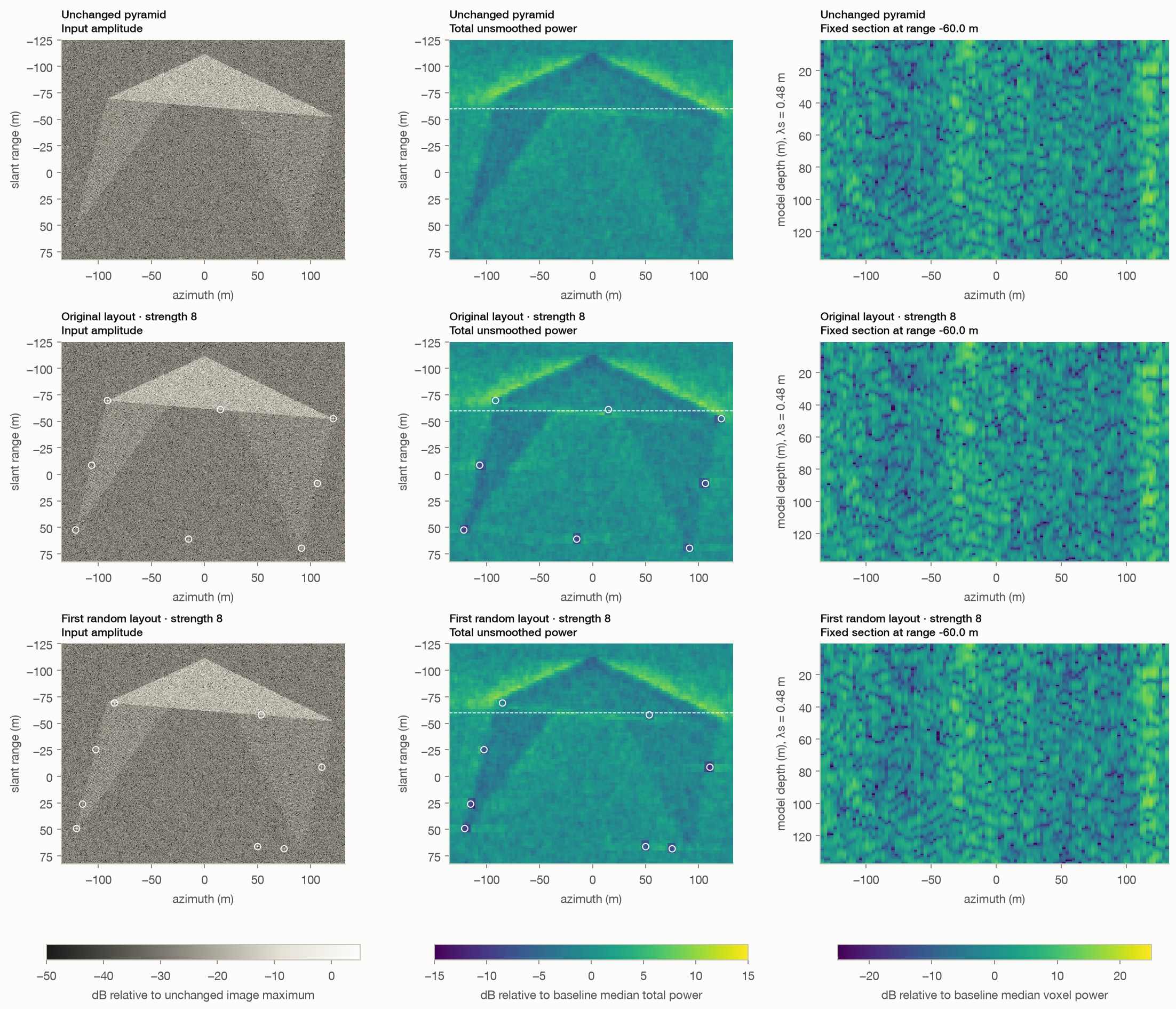
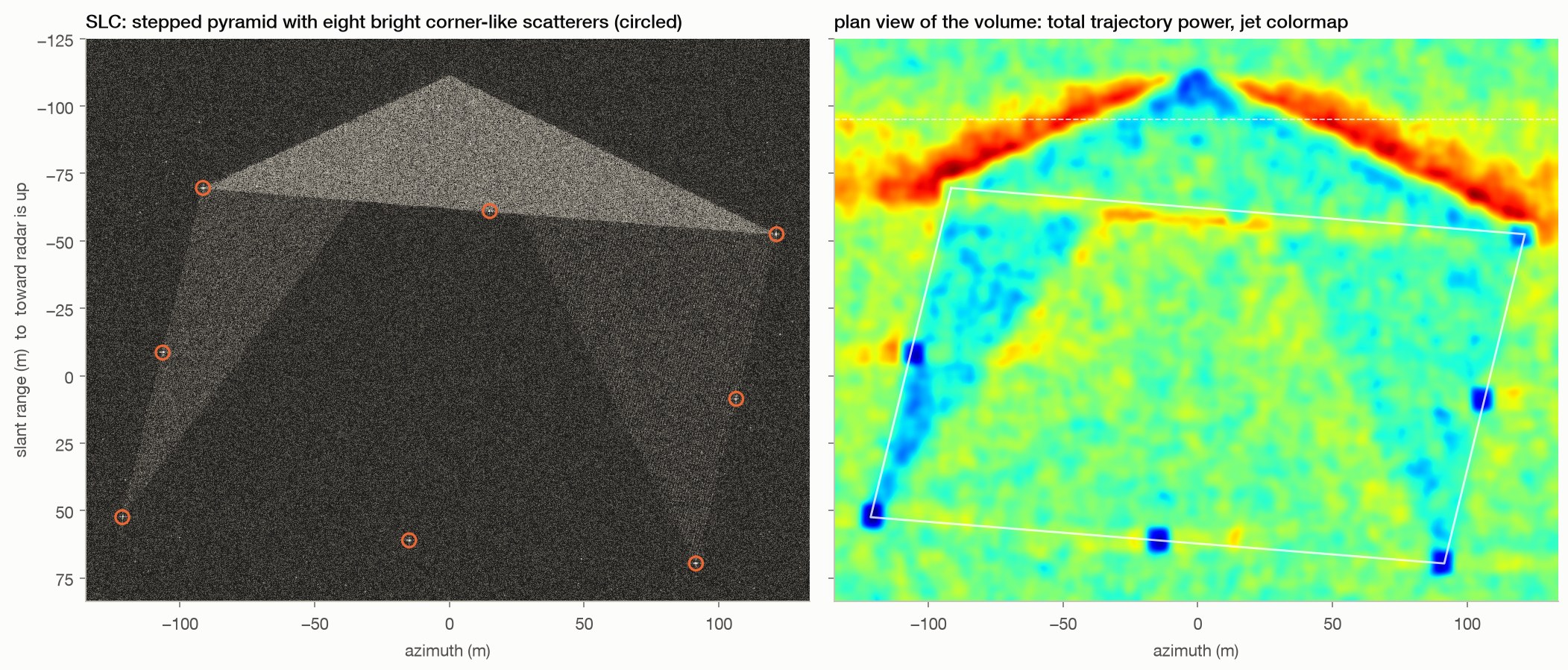
Method. Penetration from the low-loss attenuation constant at 9.6 GHz for dry limestone. Record length and motion sensitivity measured in R9 and R4 on the real acquisition. Lateral resolution from the standard surface-wave depth-sensitivity and half-wavelength resolution relations.
Leaves open. Dielectric constants for dry carbonate rock span a range and the penetration figure moves with them, but not by the three orders of magnitude the claim would need. The resolution leg assumes surface-wave sensing; a body-wave method at the frequencies needed to resolve ten metres cannot reach the depth at all, so that route is worse rather than better. The record and sensitivity legs are measured on one sensor and one scene type.