Do faint concentric circles and hot spots in the cosmic microwave background carry news from a universe before the Big Bang — or is that what any random sky looks like when you search it hard enough?
Weakly supportedErebons and the detector prediction
Well supportedThe standard inflationary model
why this research priority
Cheap desk tests on public data could close or reopen the case: a preregistered joint reanalysis, a fair ellipse test, and a ring-centre test against large-scale-matched skies. No live anomaly demands urgency.
AI-generated editorial artwork
What is claimed
Roger Penrose's Conformal Cyclic Cosmology holds that our Big Bang was the remote future of a previous universe, whose black-hole collisions and evaporations left marks on our microwave sky.
▸ read the rest▾ less
Proponents report concentric rings of unusually steady temperature (up to 6σ) and compact hot 'Hawking points' (99.98% confidence) in the WMAP and Planck maps, and read them as those marks.
Where the disagreement lives
The dispute is over what counts as chance: the features are real, but whether they are surprising depends on the comparison skies and on correcting for having searched. Proponents compared against plain random skies.
▸ read the rest▾ less
Five independent reanalyses, using skies simulated from the standard model, find the rings just as often. Correcting for the spot sizes tried cuts the Hawking-point confidence to about 87%. Still untested: the rings' reported preference for circles over ellipses, and the crowding of ring centres.
What would settle it
A protocol both camps agree and freeze before looking — statistic, comparison skies, artifact screen, search correction — applied once to the final Planck maps would settle the detection claims.
▸ read the rest▾ less
Two cheaper tests decide between accounts: do simulated skies show the same circle-over-ellipse preference, and do skies copying our sky's largest ripples reproduce the ring-centre crowding? A detection of primordial gravitational waves would count against CCC itself.
ratified by 5 of 5 independent models · 30 September 2026
an AI-generated assessment · not reviewed by a human · ratified by independent models, which is not human review
The features are real; the anomaly and the attribution fail.
Critics reproduce the low-variance rings on WMAP and Planck (CCC-E002, CCC-E008, for CCC-C001).
The circle anomaly (CCC-C002) is contradicted two ways:
- five independent reanalyses find chance abundance against standard-model skies (CCC-E002, CCC-E003, CCC-E004, CCC-E037, CCC-E008);
- a few-pixel mechanism manufactures concentric sets (CCC-E012).
▸ the full reasoning▾ less
The Hawking-point anomaly (CCC-C004) fails on three counts:
- it falls from 99.98% to 87% under size marginalization (CCC-E010);
- it draws a third of its residue from single points (CCC-E054);
- it is absent both in a detector validated on synthetic CCC spots (CCC-E011) and at full resolution (CCC-E012).
The proponents' own response documents the comparison-sky crux (CCC-E005, for CCC-C003).
With both anomalies gone, the attribution (CCC-C009) is contradicted. Bielewicz et al.'s inconsistency argument (CCC-E058, CCC-E059, CCC-E060) adds weight but rests on a disputed reading of CCC. The 2025 preprint (CCC-E022) elaborates an unrehabilitated signal.
The conventional account (CCC-C010) is strongly evidenced (CCC-E003, CCC-E010, CCC-E012, CCC-E056). It is graded provisional because 'every signature' outruns the record: the reported ellipse preference (CCC-C503, per CCC-E006) and the centre concentration (CCC-C504) have never met a fair null. Bielewicz et al. supply a low-multipole cause for large-radius deficits and regional clustering (CCC-E056, CCC-E057, for CCC-C523 and CCC-C524).
The erebon route adds nothing. Penrose's LIGO proposal is accurately reported (CCC-C505), but its premise fails on a maximum-likelihood analysis, and the memory background misses detectability by 35 orders (CCC-E067, CCC-E069). The direct background misses by 95 (CCC-E042, for CCC-C519).
No search on either side was preregistered (CCC-E023), which caps the critical case too.
Sensitivity: removing CCC-E012 would most change the verdict, as the only record reaching both signatures with a false-positive mechanism. Without it, CCC-E002, CCC-E003, CCC-E004, CCC-E008 and CCC-E037 on the circles, and CCC-E010, CCC-E011 and CCC-E054 on the Hawking points, still sustain 'contradicted'.
The mechanism grades (CCC-C005, CCC-C006) lean partly on priors about charge conservation and unitarity. The verdict concerns the detection claims, not CCC as a cosmology, which remains untested.
the steelman — the strongest argument this judgment does not answer
Two proponent observations have never met a fair test, and neither depends on the disputed comparison skies.
First, Gurzadyan and Penrose report that concentric low-variance sets become far rarer when the search looks for even slightly elliptical rings, and that ring radii stop near 15–20° (CCC-C503, recorded in CCC-E006).
▸ read the rest▾ less
Proponents read this as the signature of spherical wavefronts, which a generic search artifact has no evident reason to prefer.
Second, An et al. report that about 83% of 1134 ring-triple centres fall within three regions, each no more than about 3% of the searched sky (CCC-C504). Proponents read this as previous-aeon superclusters. The low-multipole account offered for such clustering (CCC-C524) was established on a different statistic and never tested on this one.
Three further points strengthen the case:
- the framework was published four years before any search (CCC-E014);
- the Hawking-point residue after correction is 87% rather than zero (CCC-E010);
- every null was aimed at a signal model the searchers had to invent (CCC-E023).
From these a proponent can argue that the searches have tested guesses about CCC, not CCC itself. None of this revives the anomaly claims; it is why the ellipse and centre-concentration tests lead the agenda.
5 AI models from different vendors each judged the evidence without seeing this judgment or one another. A model concurs when its verdict is within one step of the one above.
▸Gemini 3.8 Flash (Google)ContradictedconcursConformal Cyclic Cosmology (CCC) represents a mathematically ambitious and intellectually daring alternative to standard cosmic inflation, offering an elegant geometric resolution to the cosmic initial entropy puzzle via conformal rescaling across aeons.
Conformal Cyclic Cosmology (CCC) represents a mathematically ambitious and intellectually daring alternative to standard cosmic inflation, offering an elegant geometric resolution to the cosmic initial entropy puzzle via conformal rescaling across aeons. Uniquely among pre-Big-Bang cosmologies, CCC committed itself to empirical verification in existing cosmic microwave background (CMB) datasets, predicting concentric rings of depressed temperature variance from supermassive black hole collisions and localized hot spots from black hole evaporation. However, a rigorous evaluation of the complete evidentiary ledger demonstrates that these observational claims have failed replication and do not provide empirical support for the hypothesis. Independent analyses across more than a decade (Wehus & Eriksen 2011; Moss, Scott & Zibin 2011; Hajian 2011; Bielewicz et al. 2013; DeAbreu et al. 2015; Jow & Scott 2020; Bodnia et al. 2024) have conclusively shown that the reported concentric circles and Hawking points are typical features of a standard Gaussian sky governed by the ΛCDM angular power spectrum. The high statistical significances originally claimed by proponents (up to 6σ for circles, 99.98% for Hawking points) arose from methodological vulnerabilities: testing against inadequate null models (pure white noise devoid of CMB power), selecting angular scales and thresholds a posteriori, and failing to correct for look-elsewhere effects. When ring size is marginalized over, Hawking point significance collapses to 1σ (Jow & Scott 2020); when isolated few-pixel artifacts are removed, the circle and spot excesses vanish entirely (Bodnia et al. 2024). Furthermore, large-radius circle anomalies and spatial clustering of ring centers correlate directly with known low-multipole (ℓ ≤ 7) features of the CMB (Bielewicz et al. 2013). On the theoretical side, CCC faces profound unresolved challenges, including the absence of a particle-physics mechanism for asymptotic rest-mass fade-out and thermodynamic critiques demonstrating that black hole information loss increases rather than resets entropy (Eckstein 2023). In terms of sensitivity, the single evidence record whose removal would most alter this assessment is Bodnia et al. 2024 (CCC-E012), which provides the definitive, open-source demonstration that few-pixel spikes generate concentric low-variance circles and rules out the predicted Hawking point parameter space. Nevertheless, the case verdict survives comfortably without it: the independent reanalyses by Wehus & Eriksen, Moss et al., Hajian, DeAbreu et al., Bielewicz et al., and Jow & Scott establish the same negative verdict through entirely separate lines of evidence. Because CCC's observational claims dissolve under standard statistical scrutiny and its theoretical foundation remains burdened by unproven physical postulates, the case for CCC is contradicted by the existing evidence.
its steelman
The strongest argument for CCC that this assessment does not fully answer is the reported cross-satellite persistence of the five most prominent Hawking points across independent WMAP and Planck maps (An et al. 2020), combined with Gurzadyan and Penrose's (2013) sky-twist test demonstrating that concentric low-variance circles decline dramatically when deformed into ellipses—a geometric anisotropy test that critics have never audited or replicated against an appropriate masked ΛCDM simulation ensemble.
run 2026-09-30-check-gemini-103112 · 2026-09-30 · Contradicted · an AI seat, blind to the judgment · not human reviewed · per-claim verdicts on each claim page
▸GPT-5.6 Sol (OpenAI)ContradictedconcursThis verdict addresses the featured empirical hypothesis that the reported circles and Hawking points are observable imprints of a preceding aeon, not the bare mathematical possibility that some conformally cyclic cosmology could exist.
This verdict addresses the featured empirical hypothesis that the reported circles and Hawking points are observable imprints of a preceding aeon, not the bare mathematical possibility that some conformally cyclic cosmology could exist. The strongest case for that hypothesis is not frivolous. The general CCC framework predates the searches; multiple analyses recover low-variance rings or warm spots in the actual maps; the founding circle procedure was independently reproduced; Planck and WMAP share prominent Hawking-point locations; and the proponents report structural details such as circularity, radius cut-offs, and strongly concentrated ring centres. These facts rule out dismissing the program merely because of its origin or because the visible features are imaginary.
They do not, however, establish the required anomaly or attribution. For circles, several independent analyses reproduce the observed structures while finding comparable structures in simulations drawn from the full ΛCDM angular power spectrum. The evidence therefore separates feature existence, which is established, from incompatibility with ΛCDM, which is contradicted. Realistic anisotropic noise, the proponents' published search parameters, Planck data, and a broad radius range all lead to the same local result. Bodnia et al. further identify a concrete false-positive mechanism: a few extreme pixels can manufacture numerous low-variance and near-concentric rings under the published criterion.
The Hawking-point branch fares similarly. Its nominal 99.98% confidence falls to 87% when ring size is marginalized, much of the remaining statistic depends on very few points, an independently validated detector finds no significant population, and a maximum-resolution search reports null results for the modeled amplitude and profile range. Cross-instrument co-location establishes that strong locations belong to the shared sky rather than independent instrument noise; it does not distinguish a previous aeon from ordinary CMB structure or shared analysis artifacts.
The methodological record explains why striking nominal significances repeatedly disappear. No search used a blind or preregistered protocol, and the signal statistic, size window, thresholds, abundance, profile, and null ensemble were not quantitatively derived from CCC in advance. The 2025 mass-temperature relation is theoretical progress but does not rehabilitate the earlier detections. Meanwhile, mass fade-out remains without a supplied particle-physics mechanism, the original entropy reset faces a direct quantum-information objection, and the only quantitative calculation of the proposed erebon gravitational-wave signal places the modeled backgrounds far below detector sensitivity.
The conventional claim that ΛCDM and search effects “fully” explain every reported detail is itself too strong: the sky-twist circularity result and the specific 1134-centre concentration have not received matched, independent reruns. Those surviving gaps prevent treating the case as a proof that CCC in every possible form is false, but they do not rescue the present attribution claim. The single record whose removal would most change the case verdict is CCC-E012, because it supplies both a generative artifact mechanism and modern null searches for both signature classes. The contradicted verdict nevertheless survives without it: CCC-E002, CCC-E003, CCC-E004, CCC-E008, CCC-E010, CCC-E011, and CCC-E037 independently dissolve the headline significances under appropriate nulls and search corrections.
its steelman
The 2013 sky-twist observation—that concentric sets reportedly collapse when circles are made even slightly elliptical, with an apparent 15–20-degree radius cut-off—has never been independently repeated using a matched ellipse-specific ΛCDM null, frozen masks, and artifact screening. A proponent can rightly demand that direct test before the most distinctive structural circle argument is declared explained.
run 2026-09-30-check-gpt-103112 · 2026-09-30 · Contradicted · an AI seat, blind to the judgment · not human reviewed · per-claim verdicts on each claim page
▸Grok 4.5 (xAI)ContradictedconcursThe observational core of the case is settled by multiple independent reanalyses that all parties accept on the raw maps: concentric low-variance annular families and compact raised-temperature spots exist as outputs of the published search procedures (CCC-C001).
The observational core of the case is settled by multiple independent reanalyses that all parties accept on the raw maps: concentric low-variance annular families and compact raised-temperature spots exist as outputs of the published search procedures (CCC-C001). The anomaly claims that would make those features news from a previous aeon (CCC-C002, CCC-C004) do not survive once the null ensemble is constructed from the full ΛCDM angular power spectrum rather than pure Gaussian-plus-noise skies, and once look-elsewhere effects and few-pixel artifacts are accounted for. Wehus & Eriksen, Moss/Scott/Zibin, Hajian, DeAbreu et al., Jow & Scott, López et al., Bielewicz et al., and Bodnia et al. independently recover the same features at abundances and significances fully consistent with a standard inflationary sky; Bodnia et al. further diagnose the generating mechanism (anomalous few-pixel spots inflate local baseline variance and manufacture concentric sets under the original criteria). The methodological dispute (CCC-C003) is therefore decisive rather than peripheral: the headline 6σ and 99.98% figures live in the choice of null and the post-hoc size window, not in the data. Consequently the attribution claim that the features are imprints of previous-aeon black-hole encounters and evaporations (CCC-C009) is contradicted by the statistical record; the rival claim that standard ΛCDM plus a-posteriori search effects fully accounts for every reported signature (CCC-C010) is well supported. No search on either side was preregistered (CCC-C011), so residual 1σ excesses and untested sky-twist or anisotropy arguments cannot be promoted to evidence. On the mechanism rung, CCC requires an admittedly unconventional mass fade-out with no accepted particle-physics realization (CCC-C005), its entropy-reset accounting is challenged by published information-theoretic critique (CCC-C006), and its forward dark-matter prediction (erebons) yields a gravitational-wave background tens to ninety-five orders of magnitude below LIGO sensitivity under the only quantitative calculation available (CCC-C007, CCC-C519, CCC-C505). Planck’s precision fit to inflationary ΛCDM supplies the positive conventional baseline; the continued non- detection of primordial B-modes leaves one future discriminator open but does not rehabilitate the existing CMB claims. The single most load- bearing evidence thread is the suite of independent null reanalyses under realistic ensembles; remove them and the case collapses back to the proponents’ original significance figures. The verdict is therefore that the featured hypothesis—that the observed circles and Hawking points carry news from a prior aeon—is contradicted by the evidence records as they stand. A preregistered joint protocol or a quantitative CCC signal model could in principle reopen the question, but neither exists in the ledger.
its steelman
The sky-twist ellipticity test and the extreme anisotropy of concentric-triple centres (83% of 1134 centres inside three regions covering ~3% of searched sky) have never been independently re-run under artifact-screened, ellipse-specific nulls conditioned on the observed low-ℓ multipoles; if those structural preferences survive a fair null they would remain unexplained by the Gaussian ΛCDM accounts that dissolve the abundance claims.
run 2026-09-30-check-grok-103112 · 2026-09-30 · Contradicted · an AI seat, blind to the judgment · not human reviewed · per-claim verdicts on each claim page
▸GLM 5.3 Flash (Z.ai, via Venice)ContradictedconcursThe case separates cleanly into three rungs, and the verdict is carried by the attribution rung.
The case separates cleanly into three rungs, and the verdict is carried by the attribution rung. On the observation rung, the features themselves are real: the concentric low-variance circles are reproduced by at least four independent groups (Wehus & Eriksen, Moss/Scott/Zibin, Hajian, DeAbreu using the proponents' own parameters on Planck data), so CCC-C001 is established — but that is a statement about the search procedure's outputs, not about anomalies. Every claim of anomaly is contradicted: five-to-six independent reanalyses find the circles typical of properly simulated ΛCDM skies (CCC-C002), the 99.98% Hawking-point significance collapses to ~1σ under size marginalization with a third of the residual excess in a single point (CCC-C004), a purpose-built detector validated at 95% retrieval on synthetic CCC signals finds nothing significant, and Bodnia et al. supply a positive artifact mechanism — few-pixel spots manufacturing the signatures — plus a machine-learning null. On the mechanism rung, CCC's content is honestly documented (mass fade-out admitted unconventional; erebons stated; no inflation), but the theory carries unmet costs: no mass fade-out mechanism, a contested entropy reset (CCC-C006 mixed), and no derived perturbation spectrum. On the attribution rung, CCC-C009's declared evidential dependencies are exactly the contradicted claims, so it inherits their fate; the conventional account (CCC-C010) is well supported with positive mechanisms, not bare nulls. Steelmanning the other side: CCC was stated in 2006 before any search (CCC-E014), so it is not a just-so story; and the sky-twist ellipticity result plus the 83% ring-centre concentration remain genuinely unrebutted. Sensitivity: the single record whose removal would most change this verdict is CCC-E012 (Bodnia et al. 2024), the only record that explains the false positives rather than merely failing to confirm them — but the verdict survives without it, resting independently on CCC-E002, E003, E004, E008, E010, and E011. The verdict is therefore not single-threaded. What would move the case is exactly what the agenda targets: a preregistered, jointly endorsed search (CCC-R001) binding to a derived quantitative signal model (CCC-R005); until then, the burden the proponents must discharge is not more statistics but a prediction fixed before the data are looked at again.
its steelman
The Gurzadyan–Penrose 2013 sky-twist test: a simulation-free self-comparison showing the prevalence of concentric low-variance sets collapses under even slight ellipticity, with ring radii cutting off below 20° — the one proponent argument on the record that no independent group has ever re-run with an ellipse-specific ΛCDM null (CCC-R006). Combined with the reported concentration of 83% of 1134 ring-triple centres within ~3% of the searched sky (CCC-C504) and the Planck–WMAP co-location of the strongest Hawking points, a proponent can rightly say the critics have dissolved headline significances without explaining these structured, directional properties of the data; no record in this packet tests the sky-twist statistic or the 83% figure against conditioned simulations.
run 2026-09-30-check-glm-103112 · 2026-09-30 · Contradicted · an AI seat, blind to the judgment · not human reviewed · per-claim verdicts on each claim page
▸Opus 5.5 (Anthropic)ContradictedconcursThis verdict answers the case's question: do the reported CMB circles and Hawking points carry news of a previous aeon?
This verdict answers the case's question: do the reported CMB circles and Hawking points carry news of a previous aeon? It is built rung by rung.
Observation: the features exist. Independent groups reproduce the Gurzadyan–Penrose rings with the published procedure, one of them in Planck as well as WMAP (E002, E003, E008), so CCC-C001 is established. The 'undermines' label these joint-linked records carry against C001 reflects their bearing on the anomaly claim, not their content.
Anomaly: both signatures fail. The 6σ circle figure was computed against a pure-Gaussian-plus-noise null (CCC-C003, in the proponents' own words, E005). Six analyses from five groups independent of the proponents find the features at the abundance a ΛCDM sky produces. These include one that froze the proponents' own parameters (E008), one spanning radii 0–90° (E037), and one that identifies few-pixel spots as a generator of false concentric families (E012). I judge the ΛCDM-spectrum null the correct standard. That leans partly on background physics (a Gaussian CMB sky is characterized by its measured angular power spectrum), though the proponent-adjacent Warsaw group itself adopted a spectrum-preserving null (E007). The 99.98% Hawking-point figure becomes 87% once ring size is marginalized (E010). A third of the excess at the claimed scales comes from one point (E054), and two further independent searches find nothing significant (E011, E012). Cross-map co-location is non-diagnostic: with instrumental noise negligible at these scales (E028), any sky feature appears in both instruments.
Attribution: if the features were previous-aeon imprints added to an ordinary sky, they should exceed the ΛCDM expectation. At the claimed strengths they do not. The load-bearing claims are CCC-C002 and CCC-C004 (contradicted) and CCC-C003 and CCC-C010 (well supported); together they make the verdict 'contradicted'.
The steelman for the hypothesis is real. CCC was published in 2006, before any search (E014), so it is not a just-so story. The nulls were no more preregistered than the detections (CCC-C011). CCC's signal model is under-specified, so no null can be fatal to the theory itself. And three proponent results have never been re-tested in any primary record here: the sky-twist ellipticity collapse (CCC-C503), the concentration of triple centres (CCC-C504), and the Warsaw 99.7% (CCC-C501). Those, with the only provisionally supported conventional account of centre clustering (CCC-C524), are this verdict's weakest links.
The steelman for the rival is stronger. Every significance that has been re-tested dissolved, each by a different and specific mechanism: null choice, look-elsewhere, few-pixel artifacts, low-ℓ structure. The survivors are a-posteriori statistics introduced by the papers reporting them. The 2025 preprint (E022), per its abstract, attributes a factor-of-two excess in spot size to a newly introduced epoch and does not engage the critiques.
Two bounds apply. First, this is not a finding that no previous aeon existed; with present signal models that question is untestable. The theory also carries separate debts: mass fade-out without a mechanism (CCC-C005), an entropy accounting under unanswered published attack (CCC-C006), and no derived perturbation spectrum (CCC-C008). The erebon–detector route has lost its empirical premise (E067) and sits tens of orders of magnitude below detectability for modeled emission (E042, E069). Second, CCC-C504 as worded misreads its source: 3% is a per-region upper bound, so the three regions may together cover up to about 9% of the searched sky.
Sensitivity: the record whose removal would most change the verdict is CCC-E010, the only direct re-test of the flagship Hawking-point statistic (E023 restates its result but is derivative). Without it, the Hawking-point branch would rest on differently constructed nulls (E011, E012) plus E054, and would weaken toward mixed. The case verdict survives on the circle branch, which six independent analyses contradict and which hangs on no single record (E012 is the runner-up). Three things could reopen the case: a fair ellipse-specific null (CCC-R006), low-ℓ-conditioned tests of the centre concentration (CCC-R007), or a preregistered joint protocol (CCC-R001) bound to quantitative predictions (CCC-R005).
its steelman
Two proponent results do not depend on the pure-Gaussian null that the reanalyses discredit, and no independent group on this ledger has re-run either. First, Gurzadyan and Penrose's sky-twist test (CCC-C503) compares the real WMAP sky only with distorted versions of itself. It finds that concentric low-variance sets collapse as the rings are made even slightly elliptical. Once thresholds are calibrated to each shape's own expected variance, a statistically isotropic Gaussian sky has no reason to favour exact circles, whereas CCC's conformal geometry requires them. If that preference survived an ellipse-specific ΛCDM null (CCC-R006), it would be a structural signature, not a significance artifact. Second, Meissner, Nurowski and Ruszczycki found ring structures at 99.7% against maps of the same harmonic content (CCC-C501), a null that already concedes the critics' power-spectrum point. This assessment discounts both as post hoc and proponent-produced; it refutes neither. The circles branch is closed by the weight of nulls on other statistics, not by an answer to its best structural argument.
run 2026-09-30-check-opus-103112 · 2026-09-30 · Contradicted · an AI seat, blind to the judgment · not human reviewed · per-claim verdicts on each claim page
Claim by claim, against this judgment: 5 of 19 exact, 13 within one step, 1 split. Split — where review should start: CCC-C006.
4 accounts, side by side · the edition of 2026-09-30
1The circles and hot spots are imprints of supermassive black-hole encounters and evaporations in the aeon before our Big Bang, carried across the conformal crossover (CCC)
2The features are the ordinary texture of an inflationary ΛCDM sky, certified as anomalous only by an impoverished null ensemble and by statistics chosen after looking
3The large-radius variance deficits and the clustering of ring centres are manifestations of the known, unexplained low-order (ℓ ≤ 7) multipole anomalies of the CMB, which predate CCC
4The strongest recent signatures are manufactured by a handful of anomalous few-pixel spots that inflate the local variance baseline under the proponents' own search criterion
the article · a marked sentence opens the exact claim behind it
The rings and spots are really in the maps. So far, though, the evidence shows they are not unusual. Every independent group that has checked finds them just as often in simulated skies of the ordinary kind, and the headline significances fall away once the act of searching is accounted for. Two proponent observations have never been tested fairly: the rings' apparent preference for circles over ellipses, and the crowding of ring centres into a few patches of sky. The theory itself has not yet said precisely what it predicts.
A universe before ours
Penrose, whose singularity theorems helped make the Big Bang respectable, published the theory in 2006, four years before anyone searched for circles. It starts from a puzzle: gravitationally, the Big Bang was extremely ordered, with very low entropy.
Colliding supermassive black holes would send gravitational shock waves that arrive as circles. Evaporating ones would leave hot spots. Unusually for a story about what came before the Big Bang, CCC makes claims about data we already have.
Four accounts of one sky
CCC's. The rings are wavefronts from the previous aeon, and the hot spots are the last radiation of its biggest black holes. Expect true circles, spots of a set size, and a sky pattern that traces the previous aeon's clusters.
The few-pixel account. A handful of freak spots a few pixels wide inflate the local variance, so the rings around them look anomalously quiet. Expect the concentric families to vanish when those spots are removed.
The last three are conventional and can all be true at once.
The circles
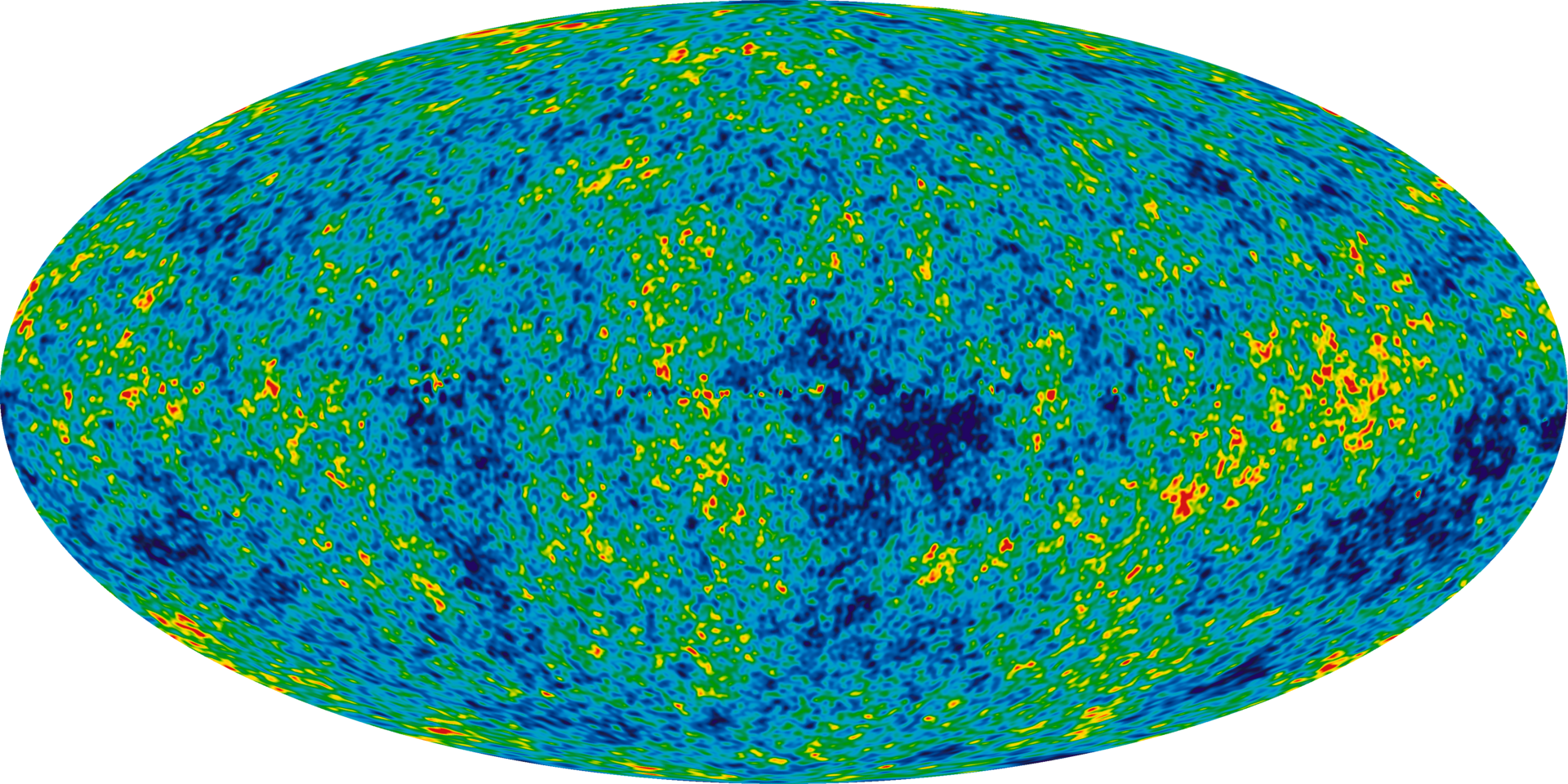
plate I · spacecraft data map — duotone applied in display; original unmodified
The nine-year WMAP internal linear combination map: the temperature anisotropies of the cosmic microwave background over the full sky, in Mollweide projection, with the ±200 microkelvin fluctuations color-coded. This is the dataset (in its final-release form) in which Gurzadyan and Penrose reported concentric low-variance circles (CCC-C001); whether such structure records a previous aeon or is the ordinary texture of a ΛCDM sky is exactly what the case contests.
NASA / WMAP Science Team · 2012-12-21 · source · Public domain
Significance measures how unlikely a result would be if nothing interesting were happening. Gurzadyan and Penrose measured it against simulated skies of pure random noise plus instrument noise.
Within weeks, three groups ran the same search on skies simulated from the standard model, whose fluctuations are correlated across the sky: Wehus and Eriksen; Moss, Scott and Zibin; and Hajian, who also modelled the satellite's uneven noise. The circles appeared in those skies as often as in the real one. In Moss, Scott and Zibin's words, Gurzadyan and Penrose had “simply re-discovered that the CMB contains structure.”
Two later checks closed the remaining exits. Bielewicz, Wandelt and Banday scanned ring sizes from 0° to 90° around the two showcase directions and found no significant excess against standard-model simulations. DeAbreu, Contreras and Scott froze the search to the proponents' own published settings and applied it to the newer Planck maps. They found the special directions “at the same level of abundance in simulated Gaussian CMB skies.” Five independent checks reached one verdict.
Bielewicz and colleagues also offered a cause. They trace the anomalous ring variances to the sky's odd lowest-order patterns, its few largest ripples (multipoles up to ℓ = 7). They report that the low variance of large rings around the main showcase direction disappears when simulations copy the real sky's values for those patternsC512; this site has not yet checked that passage against the paper. They judge the ring results “not consistent with the conformal cyclic cosmology scenario.” That judgment rests on reading CCC as predicting randomly placed centres, a reading proponents reject.
In 2024 Bodnia and colleagues, searching at full resolution, found the few-pixel trapdoor. Spots of “a few unusually bright … or dark … pixels, erroneously lead to regions with many low-variance circles.” Once those spots are removed, “no statistically significant low-variance circles can be found.” As the authors note, this explains false families around freak pixels, not necessarily every family reported earlier.
The second argument is the sky pattern. An, Meissner, Nurowski and Penrose report that about 83% of 1,134 ring-triple centres lie in three regionsC504, which they read as superclusters from the previous aeon. Their text says each region covers no more than about 3% of the searched sky. The three together may therefore cover up to roughly 9%, not the 3% sometimes quoted. The large-scale account expects crowding of this kind, but that account was built on a different statistic and has never been tested on this one.
▸ claims behind this paragraph (1)▾ claims behind this paragraph
Jow and Scott found that the 99.98% was quoted for the best-working spot size, chosen after looking. Once the sizes actually tried are accounted for — the look-elsewhere effect — the excess stands “at only an 87% confidence level (i.e., little more than 1σ).” About a third of what remains comes from the single strongest points. They also report that dropping the two strongest raises the chance probability above 10%C511, a figure not yet checked here. The proponents had suggested that clustering of the spots would be further evidence, but the thirty strongest are no more bunched than chance predictsC509.
▸ claims behind this paragraph (1)▾ claims behind this paragraph
López and colleagues built a detector that recovers 95% of synthetic spots made to CCC's description. It found “no significant ring-like structures” in four Planck maps, and they honestly report a small candidate excess at the 1% level. Bodnia and colleagues' machine-learning search also found nothing significant.
The matching positions in two instruments survive every critique, and they decide little. Jow and Scott found instrument noise negligible at these scales. Any strong real feature of the sky, ordinary fluctuations included, must then appear in both maps. Co-location shows the spots are on the sky; it cannot say which universe put them there.
A 2025 preprint by Meissner and Penrose, not yet peer reviewed, elaborates the signal rather than defending it. It proposes a “gravitational wave epoch” at the crossover, and a relation between each spot's temperature and the mass of its source cluster, which the authors say matches the largest clusters seen today. A signal's properties cannot count as evidence while its existence is in doubt. Still, this is the first quantitative prediction the theory has produced.
First, Nielsen and colleagues subtracted the best-fitting waveform instead of the illustrative template the original noise study used. They find “no statistically significant correlations between the residuals.” Second, Bruce Allen calculates the gravitational-wave background from such decays at about 95 orders of magnitude below LIGO's limitC519. Even the larger “memory” contribution misses “by 35 orders of magnitude.”
▸ claims behind this paragraph (1)▾ claims behind this paragraph
Allen assumed a smooth cosmic population. Galaxies are denser, but by factors like a hundred, not 10³⁵. The result leaves erebons as dark matter untouched. What it shows is that the detector prediction needs a decay mechanism that could actually produce a signal.
The rival fits the sky with great precision. Planck's 2018 analysis matches the inflationary model to temperature, polarization and lensing data. Its one missing signature is primordial gravitational waves imprinted on the microwave background's polarization, and current limits leave many inflation models alive. A detection would point to inflation in our own aeon, which CCC abolished. That is the one place where the theory faces data it has not already survived.
Jow and Scott write that their conclusion could have been avoided only if CCC's predictions had been “made much more precise” in advance. The proponents answer that the critiques show “a more sophisticated analysis is needed.” The quarrel over whether CCC predicts scattered or clustered ring centres is the same gap seen from inside: a theory this loosely specified can be read either way.
The failing is not symmetric. A null result under the claimant's own frozen settings, which is what DeAbreu and colleagues obtained, outweighs a positive result that dissolves whenever a free choice is varied. But nobody preregistered anything, and that limits confidence on both sides.
What would change our mind
The decisive project is desk work on public data. Both camps would endorse a protocol before anyone looks — statistic, simulated skies, mask, few-pixel screen, look-elsewhere correction, all frozen — and it would be applied once to the final Planck maps. Either outcome would settle the existing claims. Narrower tests decide among the accounts:
A fair ellipse test. Run simulated ordinary skies through the sky-twist search. If the real sky prefers circles and the simulations do not, the proponents' best argument stands. If the simulations show the same drop-off, it falls.
Ring centres against matched skies. Repeat the ring-centre count on standard simulations and on simulations that copy our sky's largest ripples. If the matched skies routinely crowd about 80% of centres into three regions, the large-scale account wins. If neither kind comes close, the crowding becomes the strongest surviving proponent observation.
Quantitative predictions. How many circles, how faint, what shape; how many spots, how bright, where. Until the theory says, positive claims cannot be credited and null results cannot be fatal.
Beyond the microwave maps:
A detection of primordial gravitational waves would count against CCC.
An erebon decay mechanism that yields a computable signal at a detector would reopen the LIGO route; a proof that none can would close it.
A working mass fade-out, or a proof that one is impossible, would reshape the theory whatever the sky shows.
The universe before this one is not a foolish idea. It is a serious idea whose observational case has so far failed review, stuck at an impasse that is methodological rather than cosmic. The sky is not going anywhere. What the case waits for is a protocol, and a theory precise enough to be bound by one.
the argument ladder
evidence for a lower rung does not automatically climb
Attribution
Was it actually done? The claims the thesis stands or falls on.
The strongest records on each side, structurally symmetric. Every record separates what the source states from what we infer. Browse the full ledger (48 records) →
strongest supporting
▲Supports· strongCCC-E005
Gurzadyan & Penrose's response: the dispute is over what the null sky is
what the source states
"Two groups have confirmed the results of our paper concerning the actual existence of low variance circles in the cosmic microwave background (CMB) sky... We point out two discrepancies between their treatment and ours, however, one technical, the other having to do with the very understanding of what constitutes a Gaussian random signal. Both groups simulate maps using the CMB power spectrum for LCDM, while we simulate a pure Gaussian sky plus the WMAP's noise... we particularly emphasize that the low variance circles occur in concentric families, and this key fact cannot be explained as a purely random effect."
what we infer
The clearest primary-source statement that both sides agree on the data and disagree on the null ensemble — this record evidences what the disagreement is, not who is right. Note the position taken: ΛCDM-spectrum simulations are held to be the wrong standard of "chance" because, on the proponents' view, most of the CMB signal is not random.
limitations
A three-page unrefereed response note.
The claim that concentric families 'cannot be explained as a purely random effect' is asserted, not quantified against the ΛCDM ensemble.
Penrose 2018: mass fade-out required and admittedly unconventional
what the source states
"There will, however, be a residue of a relatively small number of massive particles, and for the strict requirements of the theory one must apparently assume that there is a mechanism whereby in the hugely long-term future, mass eventually fades away, asymptotically — which I shall refer to as 'mass fade-out' — an admittedly unconventional hypothesis, but not contradicted by current observation, and not implausible on the basis of a particle physics which is extended from current ideas by the presence of a positive Λ."
what we infer
The theory's own author states the requirement and concedes the mechanism is unconventional — this record supports CCC-C005 (which is a claim about the theory's costs) directly from the primary source, with the mitigation (de Sitter group, mass not a Casimir operator) recorded in the same breath.
limitations
A theory paper: this evidences what CCC requires, not whether nature obliges.
Penrose 2018: erebons — the dark-matter prediction in full
what the source states
Erebons are introduced as gravitation-only particles: "their mass would have to be something of the order of a Planck mass (10−5 g) or thereabouts, perhaps with some factor such as 8π involved... erebons should be able to decay, with a lifetime of perhaps something like 10^11 years." Their decay replaces inflation as the source of CMB fluctuations: "there is no inflation in CCC." On detection: "There is an intriguing issue concerning whether such erebon decays in our own aeon might be detectable by gravitational wave detectors such as LIGO."
what we infer
Supports CCC-C007 and CCC-C008 as statements of what the theory predicts — the record establishes that CCC has a forward-looking, laboratory-adjacent commitment, which most pre-Big-Bang proposals lack. The vagueness of the parameters ("perhaps," "or thereabouts") is the claim's own recorded objection.
limitations
Order-of-magnitude proposal without a computed decay spectrum or event rate.
An independent search employing both χ² statistics and matched filters: "We do reproduce the claimed ring structures observed in the WMAP data as presented by Gurzadyan and Penrose, thereby verifying their computational procedures. However, the results from our simulations do not agree with those presented by Gurzadyan and Penrose. On the contrary we obtain a substantially larger variance in our simulations, to the extent that the observed WMAP sky maps are fully consistent with the LCDM model as measured by these statistics."
what we infer
Read against CCC-C001 this is a confirmation (the features are real outputs of the procedure); read against CCC-C002 it is a direct contradiction, and it localizes the disagreement precisely where CCC-C003 says it lives — in the simulated null, not in the data.
limitations
Uses ΛCDM-spectrum simulations, which the proponents dispute as the appropriate null (CCC-C003) — the force of this record depends on that methodological question.
Moss, Scott & Zibin 2011: the variations are entirely expected in a structured sky
what the source states
"We can indeed confirm that such variations do exist in the temperature variance for annuli around points in the data. However, we find that this variation is entirely expected in a sky which contains the usual CMB anisotropies. In other words, properly simulated Gaussian CMB data contain just the sorts of variations claimed. Gurzadyan & Penrose have not found evidence for pre-Big Bang phenomena, but have simply re-discovered that the CMB contains structure."
what we infer
Undermines the anomaly claim (CCC-C002) and supplies the rival thesis's slogan (CCC-C010). The direction here is logged against CCC-C002; the same record's confirmation of the features' existence is carried by CCC-E002's parallel finding rather than double-counted.
limitations
Same ensemble-choice dependence as all critical reanalyses (CCC-C003).
The paper also notes the low-variance circles are dominated by low-multipole structure, an explanatory detail not separately imported.
Hajian 2011: with realistic anisotropic noise, all three circle families are unremarkable
what the source states
"We reassess the statistical significance of those circles by comparing with Monte Carlo simulations of the CMB sky with realistic modeling of the anisotropic noise in WMAP data. We find that the circles are not anomalous and that all three groups are consistent at 3sigma level with a Gaussian CMB sky as predicted by inflationary cosmology model."
what we infer
Closes the loophole that the earlier critiques might have mismodeled WMAP's spatially varying noise — the one technical objection the proponents' first response raised that a better simulation could answer. Three independent groups now reach the same verdict by different routes.
limitations
Tests the three specific circle families of the founding paper, not every later variant of the claim.
steelmanned — the account the featured hypothesis must beat
The microwave sky is a random field whose fluctuations are correlated as the standard inflationary model (ΛCDM) predicts. Such a field is full of structure, including quiet rings and warm spots at the abundance the reanalyses find.
The high significances came from three sources:
- comparing the sky with plain random skies that lack those correlations;
- choosing statistics and sizes after looking;
- a few freak pixels that generate concentric quiet rings around themselves.
The large-radius shortfall and the regional clustering of ring centres reflect the sky's known, unexplained oddities at its largest scales, which predate CCC. The Planck–WMAP co-location of the strongest spots is expected for any real sky feature once instrument noise is negligible.
Two items are not yet explained so much as untested: the reported circle-over-ellipse preference and the specific ring-centre concentration.
What would change our mind
The case does not end in a verdict; it ends in the studies that would move it, in the order this edition judges they would move it most. A result in either direction counts.
CCC-R001Publication prize · Desk
Adversarial, preregistered reanalysis of the circles and Hawking points
A joint protocol, frozen and deposited before unblinding, agreed by CCC proponents and their critics: the statistic (including the sky-twist ellipticity test the critics have never run), the simulation ensemble, the mask, the artifact-screening step for few-pixel spots, and the look-elsewhere correction, all fixed in advance — then applied once to the final Planck maps. Desk work on public data with open-source tooling (Bodnia et al.'s HawkingNet is already published). Either outcome is decisive for the existing record: a surviving excess would be extraordinary; a null under the proponents' own endorsed protocol would close the current detection claims.
expected information gain
The single most decisive project available: it converts a fourteen-year methodological stalemate into one preregistered measurement.
Quantitative CCC signature predictions for preregistration
The gap Bodnia et al. name explicitly: CCC's circle and Hawking-point predictions are qualitative, so every search has had to invent the signal model itself. Proponents (or anyone) should derive from CCC the expected abundance, amplitude distribution, angular profile, and sky distribution of both signatures — including what the anisotropic clumping of circle centers (CCC-C504) should look like if it reflects previous-aeon superclusters — in a form a preregistered search (CCC-R001) can bind to. The 2025 Meissner–Penrose preprint supplies a first fragment — a mass–temperature relation for the Hawking spots, unreviewed and so far unchecked outside the program — but the expected abundance, profile, and sky-distribution predictions remain missing; until the full model exists, positive claims cannot be credited and null results cannot be fatal.
expected information gain
The prerequisite that makes every other project's outcome interpretable; highest leverage per page of theory in the case.
Compute, from ΛCDM simulations masked as the data, the expected annular variance as a function of the full ellipse parameter space (eccentricity, orientation, radius, masked fraction), then re-run the GP13 concentric low-variance search on WMAP9 and Planck 2018 maps for circles and for ellipses of increasing eccentricity, with the low-variance threshold defined relative to that ellipse-specific expectation rather than a per-direction average. The measurement is the abundance of concentric low-variance sets versus eccentricity, for the data and for each simulated sky. If the data show a circularity preference that the simulated skies do not, CCC-C503 is rehabilitated and the DeAbreu, Contreras and Scott (2015) sky-rotation objection answered; if the data's eccentricity dependence tracks the simulations, CCC-C503 falls and CCC-C010 gains its one missing piece.
expected information gain
This is the only proponent argument on the record that has been examined but never independently re-run with an appropriate null; the outcome would either close or reopen the circles branch of the case.
Test the ring-centre concentration against low-ℓ-conditioned ΛCDM skies
Reproduce the An–Meissner–Nurowski–Penrose 2020 concentric-triple search that yields the 83%-of-1134-centres-in-3%-of-sky figure, then run it on two simulation ensembles: standard ΛCDM Gaussian skies, and ΛCDM skies whose ℓ ≤ 7 multipoles are replaced by the observed values (the Bielewicz conditioning). The measurement is the fraction of triple centres falling in the three densest regions for each ensemble. If conditioned skies routinely reach ~80% concentration, the anisotropy is a low-ℓ effect and the deficit-of-variance reading (proposed at intake and not admitted) is confirmed against CCC-C504's proponent reading; if neither ensemble approaches it, CCC-C504 becomes the strongest surviving proponent observation.
expected information gain
Directly discriminates the two competing accounts of the one proponent anisotropy claim that has not been specifically re-tested.
▸ 4 more studies on the agenda▾ the rest of the agenda
CCC-R003Publication prize · Desk
Primordial tensor B-modes as the framework discriminator
Track and interpret the coming generation of B-mode measurements (BICEP Array, Simons Observatory, LiteBIRD, CMB-S4) as a CCC-relevant test with the asymmetry stated in advance: a confirmed detection of primordial tensor modes would evidence an inflationary era in our own aeon that CCC — which deletes inflation and sources fluctuations in the previous aeon's erebon decay — has no mechanism for; continued nulls tighten inflationary parameter space without confirming CCC. The desk task is a published statement, endorsed by proponents, of what r-value CCC can and cannot survive.
expected information gain
Converts the inflation-versus-CCC contrast from rhetoric into a number that upcoming instruments will actually deliver.
Specify an erebon-decay emission mechanism that survives the isotropy objection
A theory task: state the decay channel and radiation geometry of a Planck-mass erebon precisely enough to compute the far-field strain at a LIGO-class detector, addressing Allen's result that an isotropic impulsive shell has no O(1/r) strain and that both direct and memory-effect backgrounds fall tens of orders below detectability. The deliverable is either a non-spherical decay model with a computed single-event strain and rate for galactic dark-matter densities (which would give CCC-R002 a target amplitude), or a demonstration that no gravitationally coupled Planck-mass decay can reach detectability, which would settle CCC-C505 negatively as a matter of theory.
expected information gain
Determines whether the erebon–detector prediction is a live test or a closed route; without it CCC-R002 cannot be preregistered with an expected signal.
Make mass fade-out precise — or prove it impossible
The theory side of Tod's question list: a concrete field-theoretic implementation of asymptotic rest-mass decay consistent with current bounds (electron mass stability, charge conservation), engaging Penrose's de Sitter-group observation that mass is not a Casimir operator when Λ > 0 — or a no-go theorem showing conformal crossover is incompatible with charged massive relics. Also in scope: deriving the CMB perturbation spectrum from erebon decay (the debt recorded at CCC-C008), which would give the observational program its first quantitative prediction.
expected information gain
Either outcome restructures the case: a mechanism would answer the standing theoretical objection; a no-go would retire the theory regardless of the sky statistics.
A dedicated erebon-decay search in gravitational-wave detector data
Turn the erebon conjecture into a search: specify the expected waveform class (impulsive, Planck-frequency events appearing as coincident broadband transients), rate assumptions for a galactic dark-matter halo of ~10⁻⁵ g particles with ~10¹¹-year lifetimes, and run it against public LIGO/Virgo/KAGRA noise data. Requires proponent input to pin the free parameters in advance — which is itself part of the test. A detection would transform the case; a well-characterized null would bound the erebon parameter space for the first time.
expected information gain
Tests CCC's only laboratory-adjacent forward prediction, on data that already exist, in a regime untouched by the CMB statistics dispute.
Trust comes partly from showing changed minds. Each entry is an edition that changed a verdict, with the word before and the word after — a reversal included.
Aletheia records every change to a case: what changed, why, and who made it — including the AI's role. The latest:
Corrections applied from PR #286 panel review (GPT-5.6 Sol seat: same-case shorthand ids escaped the check): CCC-E062.limitations — ["Uses the illustrative numerical-relativity template…
Corrections applied from review note #285 (GPT-5.6 Sol seat on #283): the dangling-id check must hold for every record: CCC-E057.limitations — ["The low-ℓ anomalies are themselves…
Corrections applied from review note #285 (GPT-5.6 Sol seat on #283): the dangling-id check must hold for every record: CCC-E057.limitations — ["The low-ℓ anomalies are themselves…