Explore the new collection → Browse these questions as cultural groups, with a map, timeline and source dossiers.
The pattern people see
Put the images side by side and it is easy to see why people stop and look. A bird-headed figure, a handled shape, hands resting across a stone body: distant objects can share a surprisingly familiar visual grammar.
A resemblance is a starting observation. Its historical meaning depends on the objects' dates, contexts, differences and possible connections. The investigations on this site explore pieces of that question with different methods. None is a verdict on the whole of ancient history. Read the experiments and their limitations.
Start with the pillar, moai and birdman boulder, then explore these other comparisons. Each has its own question of identity, date, context and meaning.
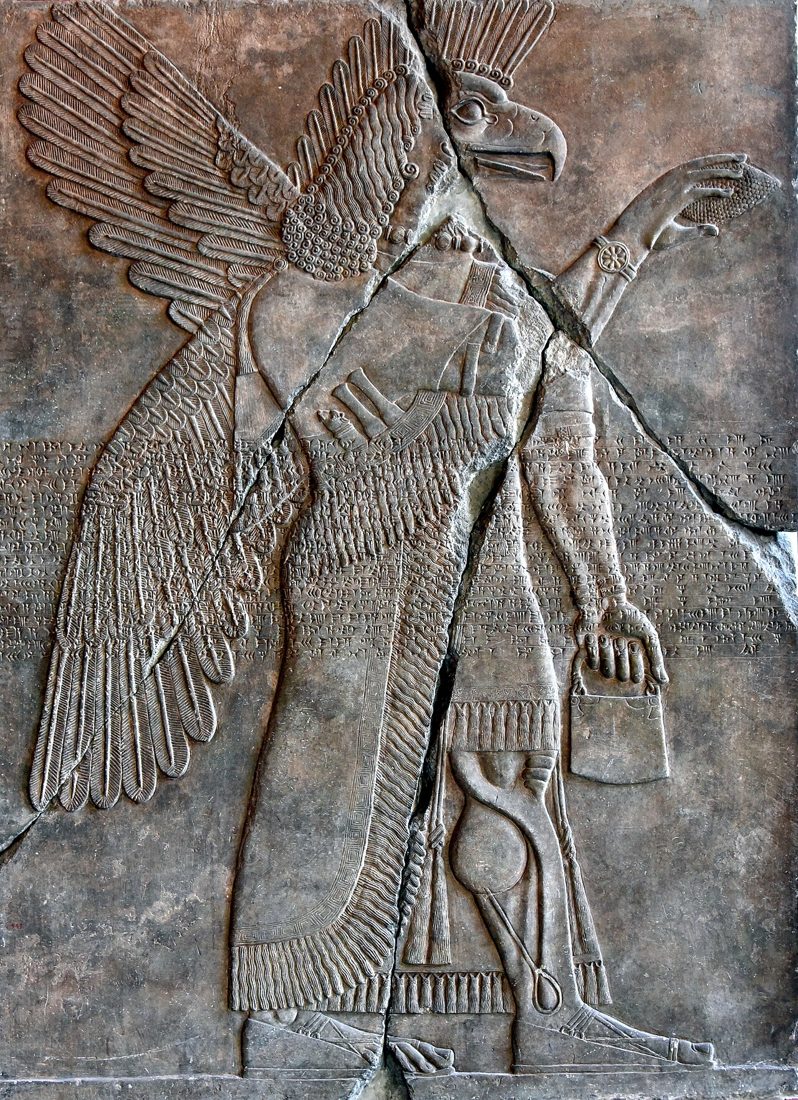
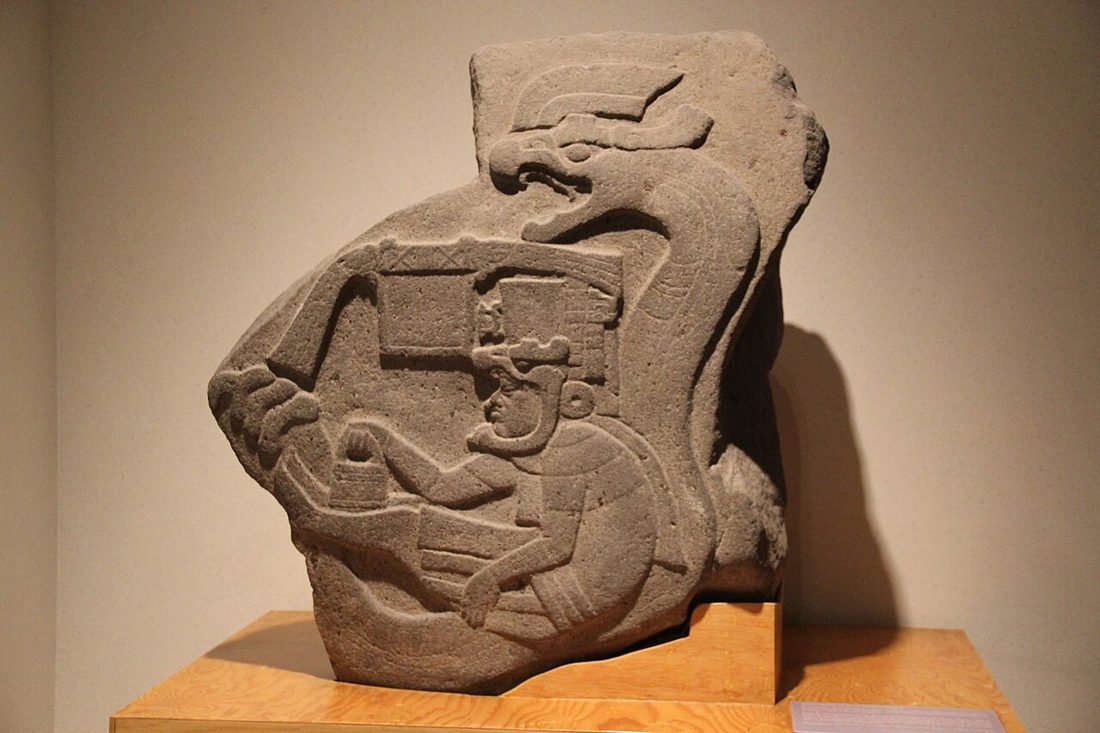
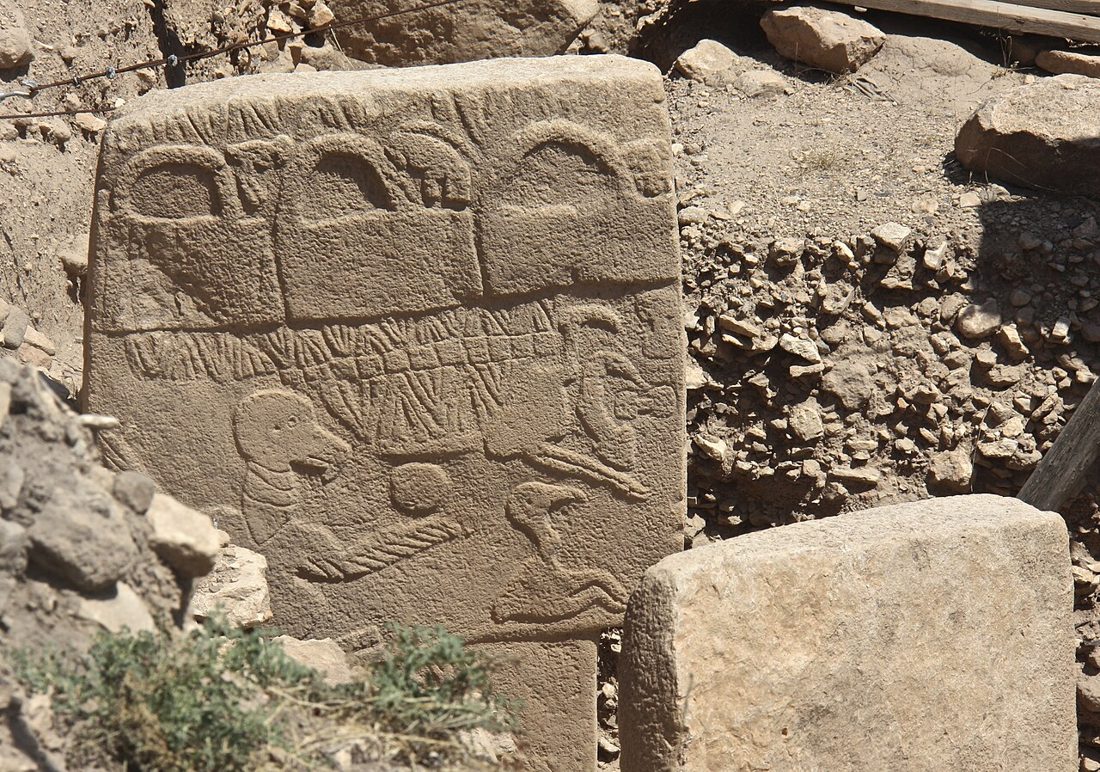
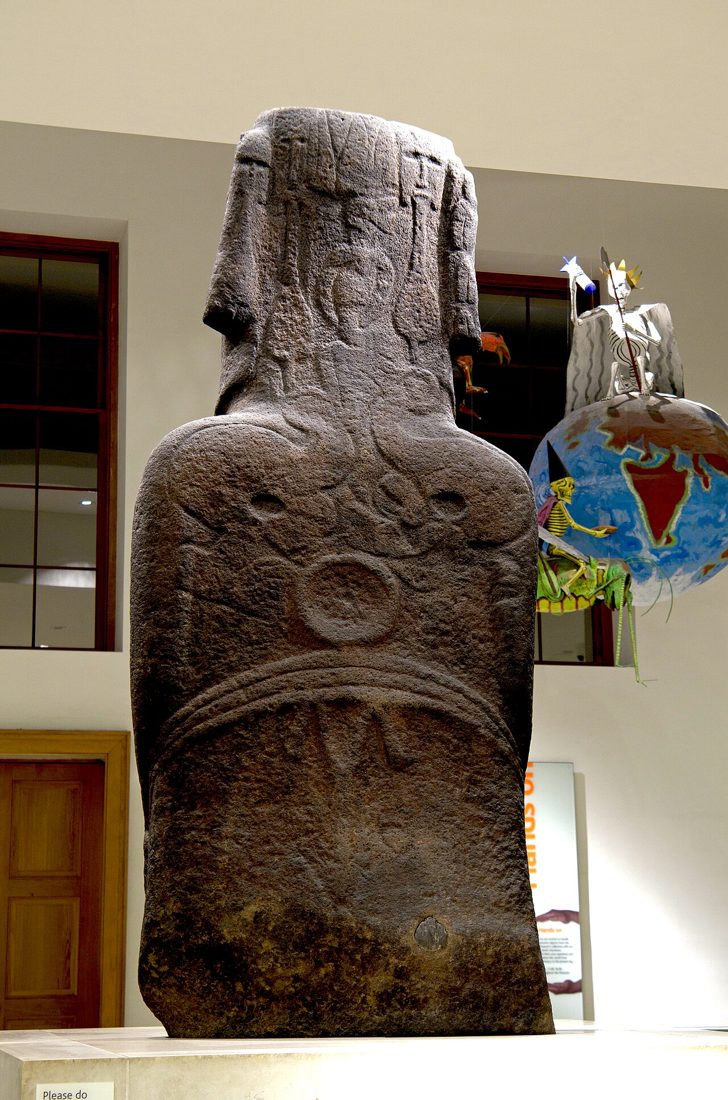
Bird-men
The examples below range from a bird-headed figure in the Lascaux shaft scene to Egyptian gods, Assyrian genii, the winged attendants of Tiwanaku's Gate of the Sun, costumed figures in the Americas and the birdman imagery of Rapa Nui. They invite comparison, but “bird-man” is a broad description: a deity with a bird's head, a person wearing feathers and a person transforming into a bird need not be the same idea.
The catalogue experiment finds its broad bird-person class in 55% of the 926 sampled traditions. That helps establish a baseline for that category; it does not tell us how often a particular pose, object and arrangement occur together. The image pilots tried to get closer to composition, while exposing how differently AI judges can see the same material.
See the new central dossier, or inspect the V-shaped boundary and bent limbs.
The bird, the bent limb and the circle
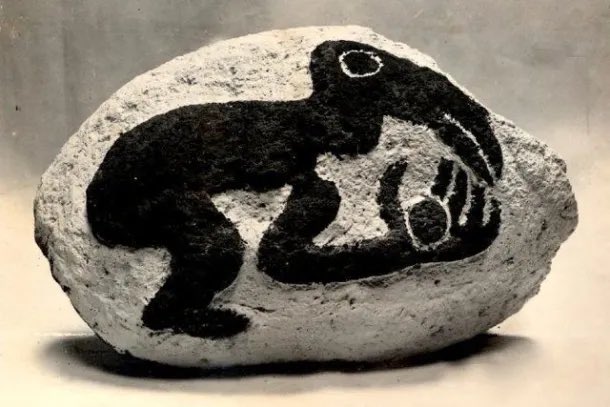
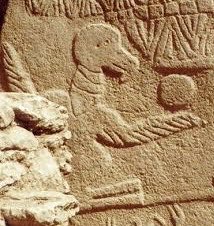
The interesting comparison is relational: a profile head, a bent or extended limb, and a rounded form nearby. That is more specific than simply finding a bird in both pictures. The shapes, contact points and surrounding scene should be checked against complete, securely identified objects.
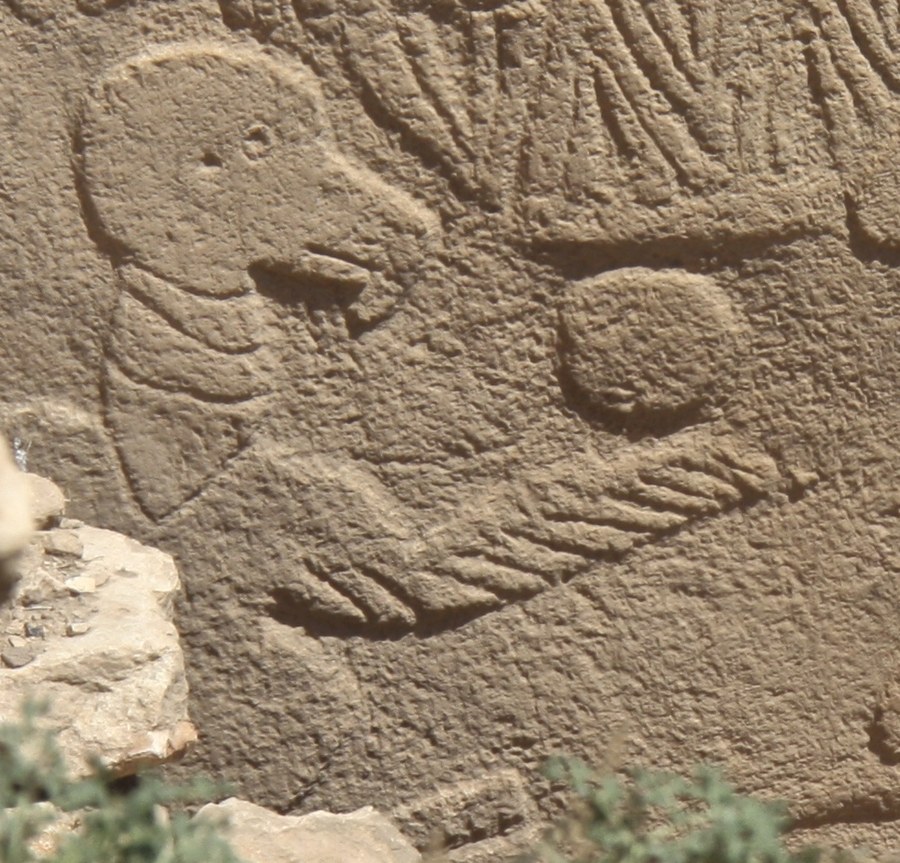
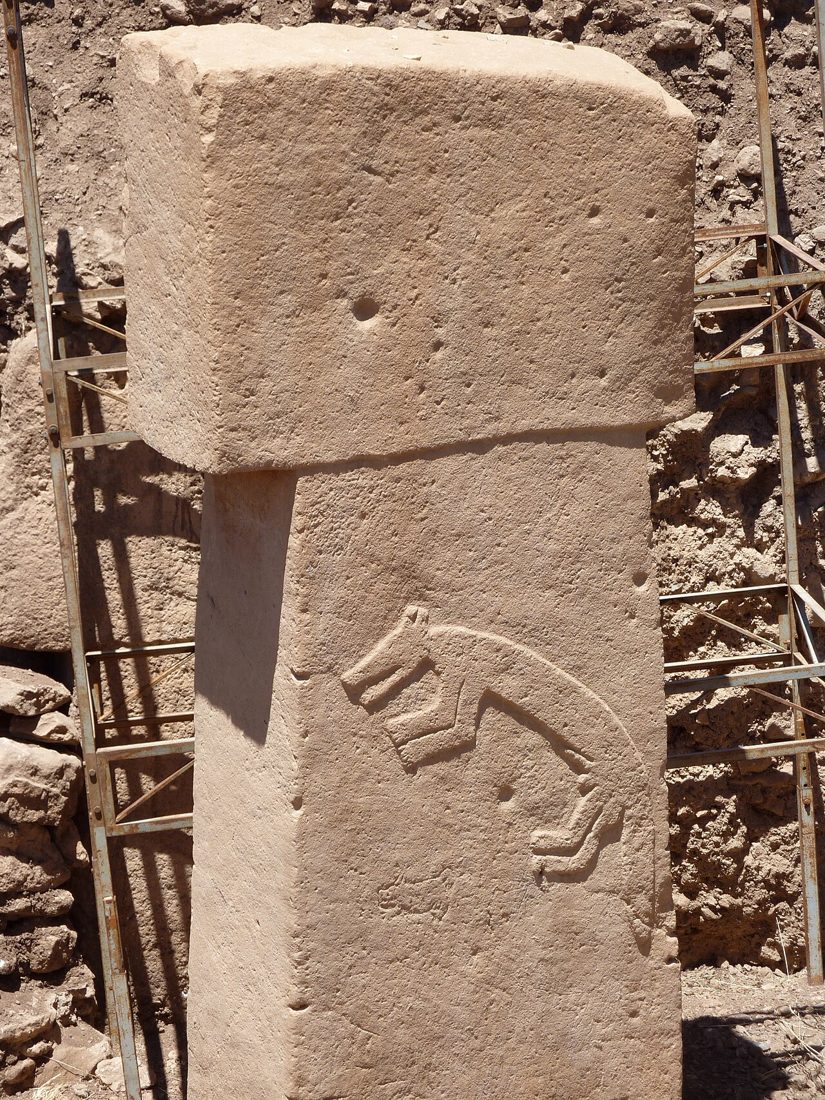
Bird, or bird-man? Two details on Pillar 43
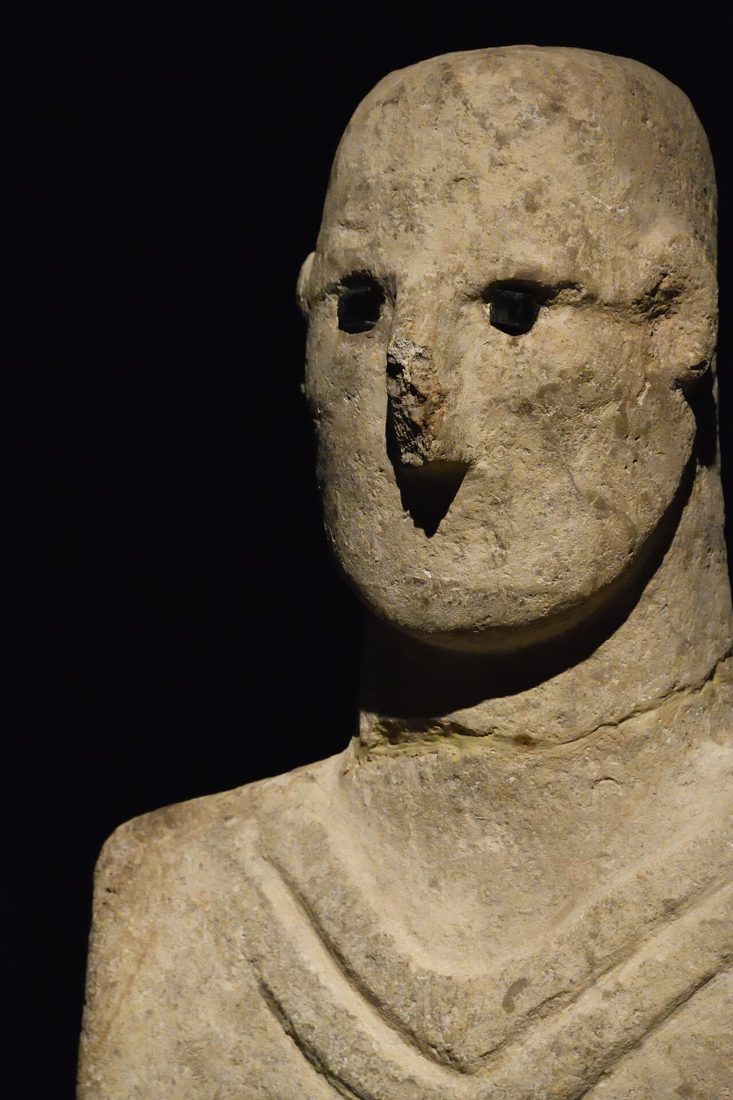
In September 2026 Bruce R. Fenton pointed to a second feature of the same bird: a V-shaped line at its throat, which he reads as the neckline of a garment and matches to the V-shaped double line carved on Urfa Man, the life-size statue from Şanlıurfa. A reply from the X account Archaic Lens interpreted the leg bend as humanlike. There is an anatomical trap here: birds’ knees also bend forward; the exposed backward-bending joint is their ankle. Anatomical reference. Those proposed readings require checking: a V-shaped boundary does not establish clothing, and stylised bent limbs cannot by themselves distinguish human from bird anatomy.
What the photographs show: two lines cross the base of the bird's neck. The excavation team's published description calls the figure a vulture lifting one wing towards the disc, and does not discuss the neck lines or the legs. On Urfa Man the V is usually described as a necklace or a collar; reading it as a garment is itself an interpretation. The bird's legs sit at the bottom of the register, where photographs are often in shadow or blocked by fallen stone, so the direction of the bend is hard to judge in them; the smaller bird carved to its right is shown with its legs folded beneath it. A check against the excavators' drawings, and against how the carvers drew birds' legs elsewhere at the site, would settle what the photographs cannot.
Bird-men across the gallery
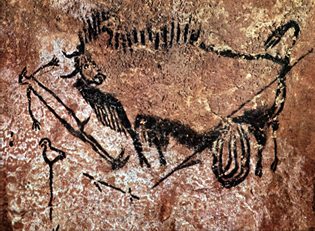
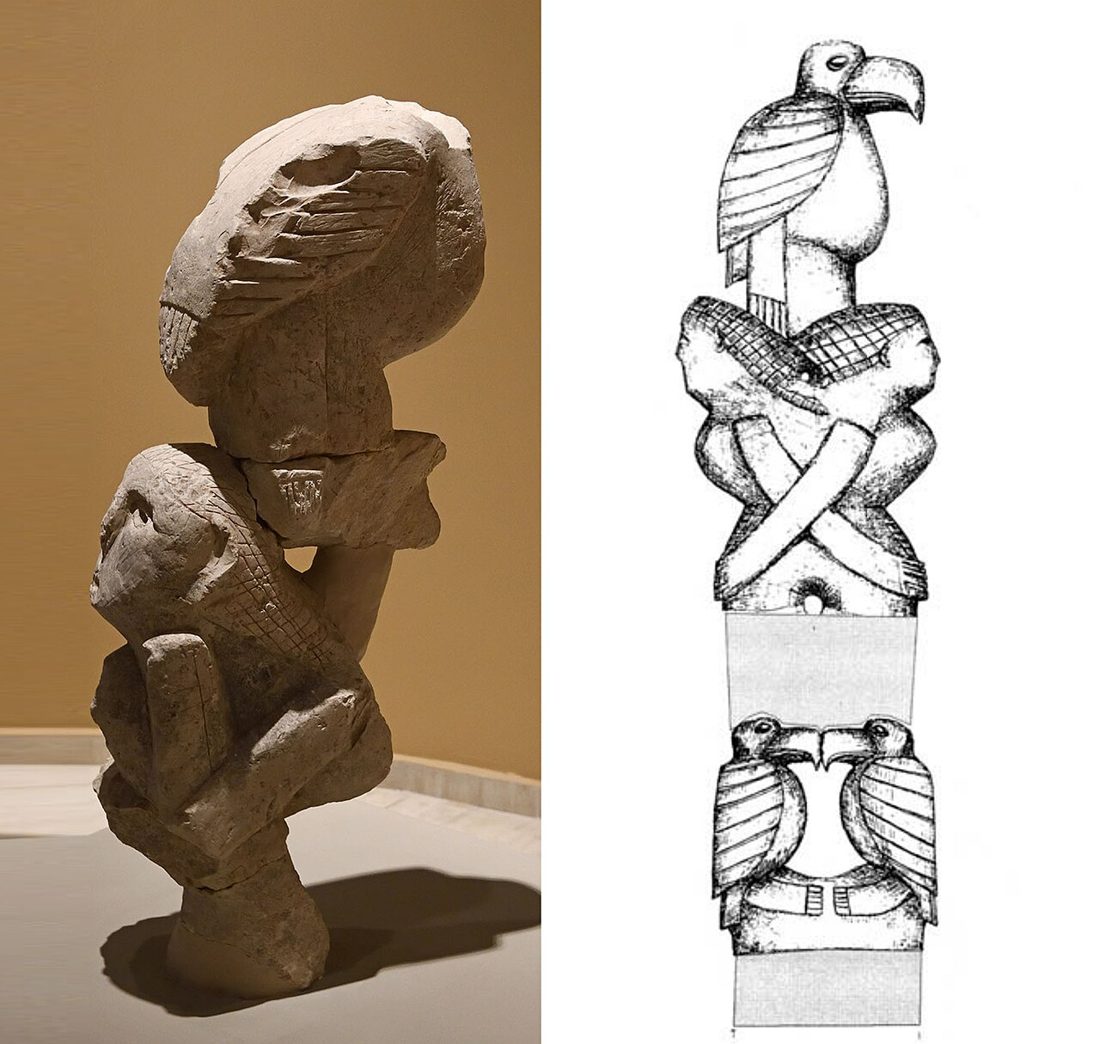
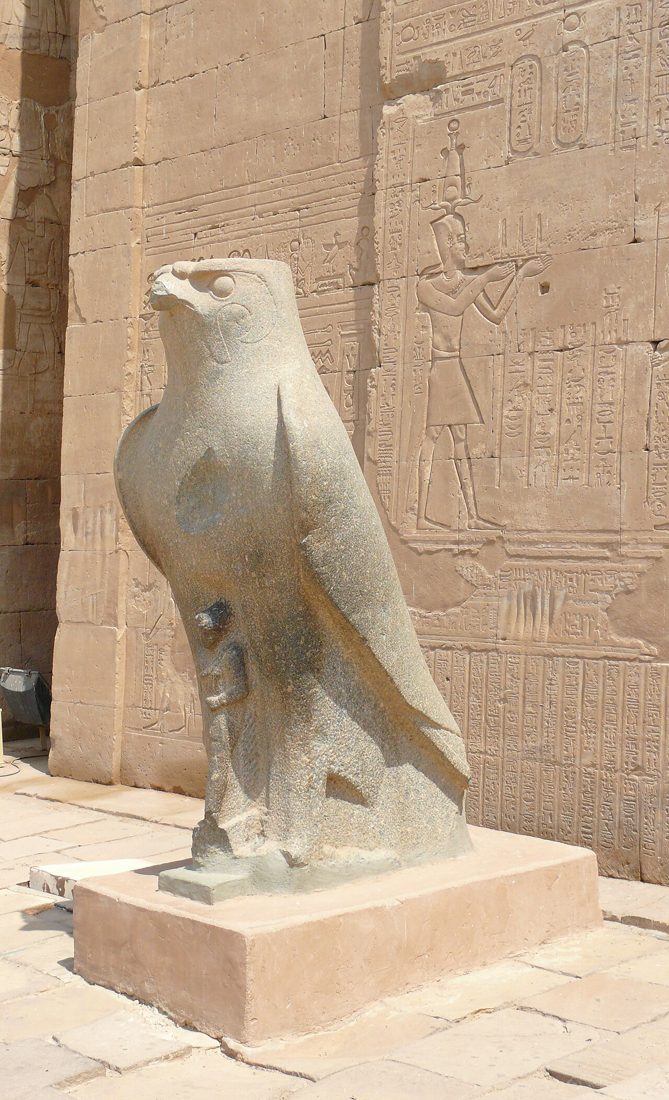
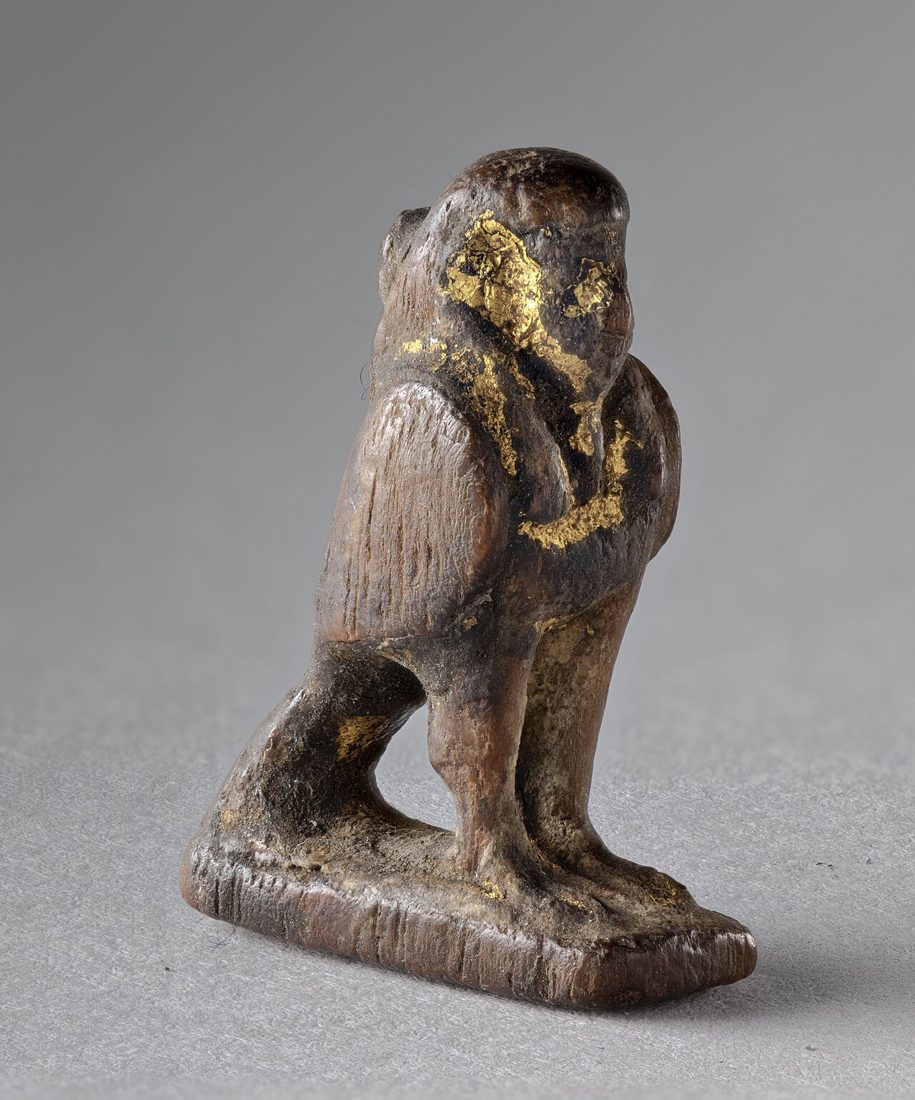
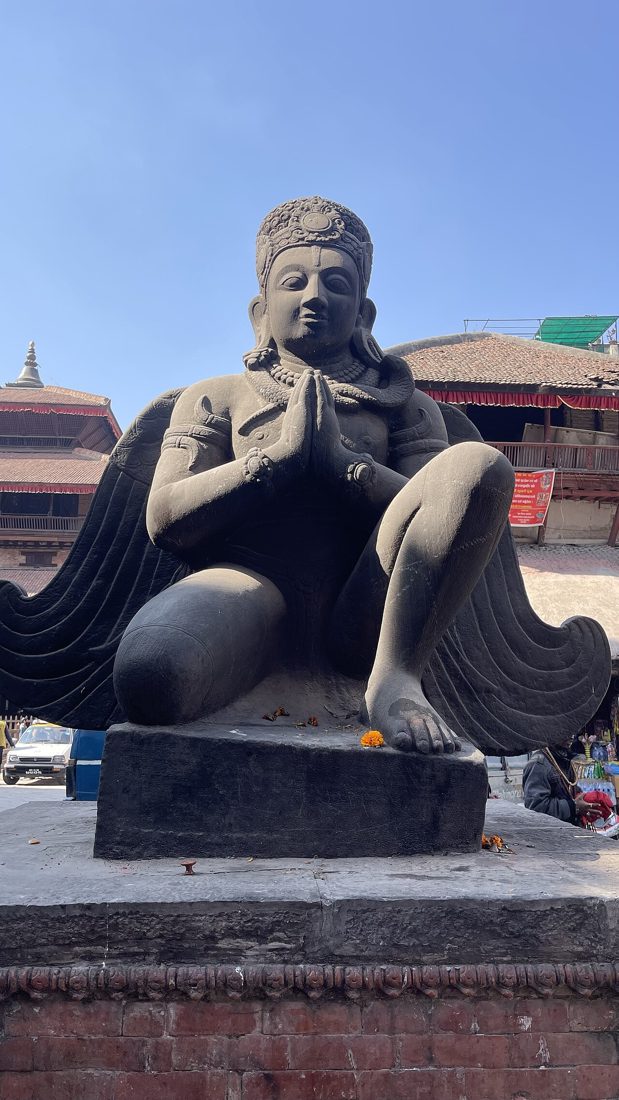
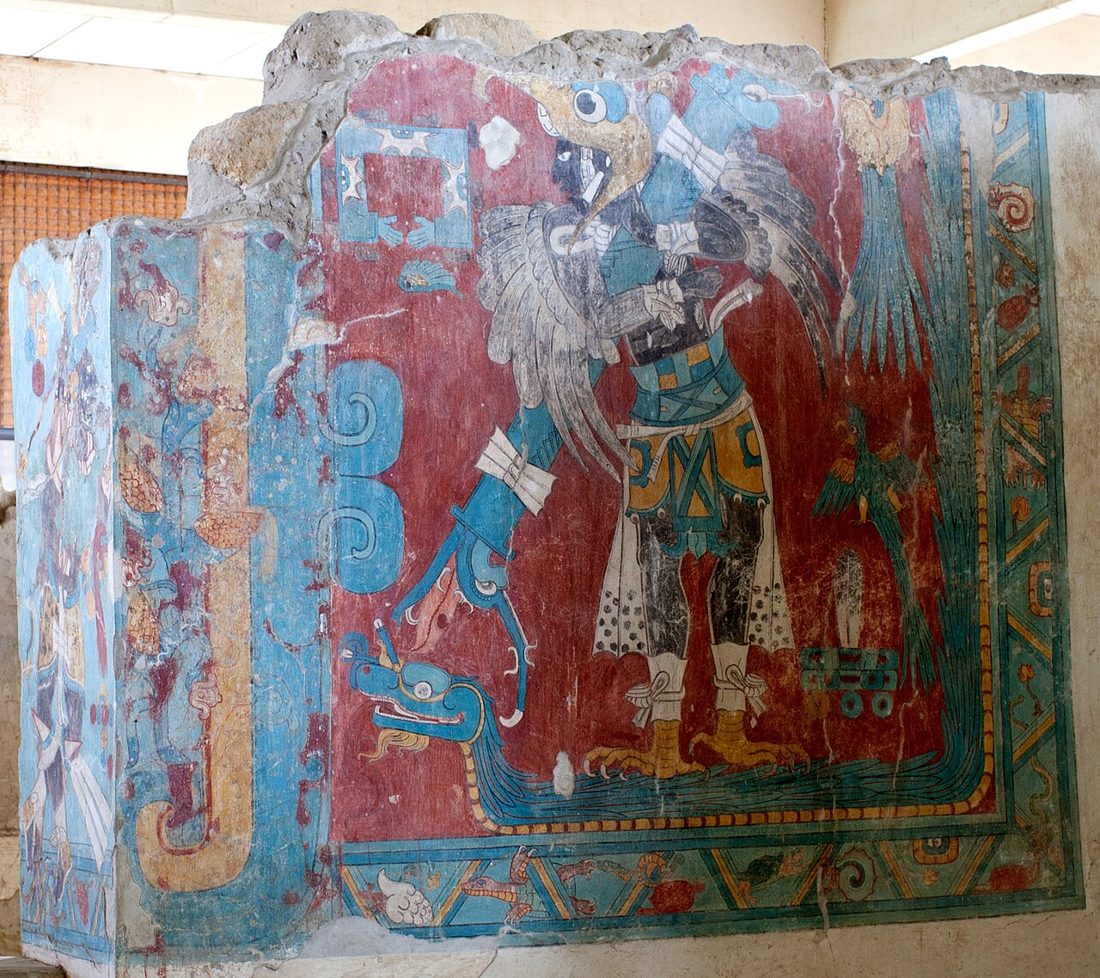
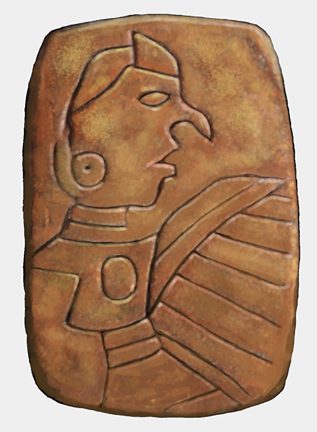
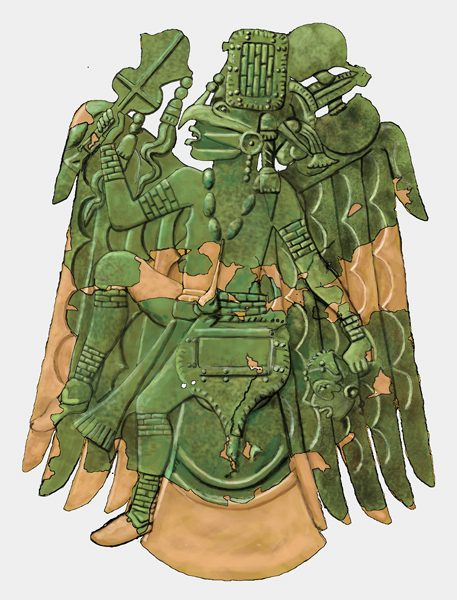
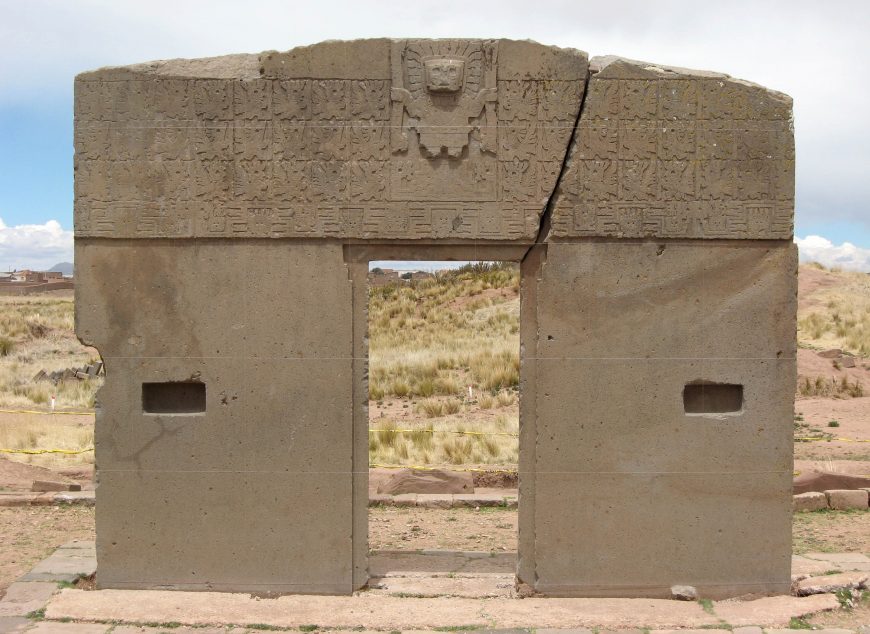
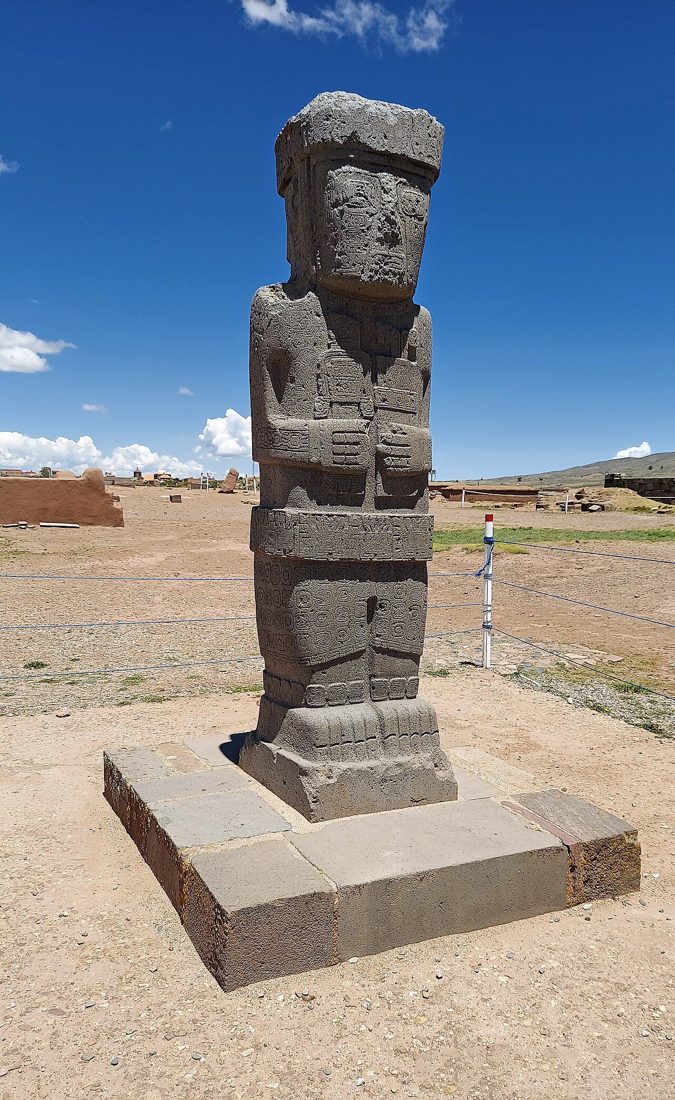
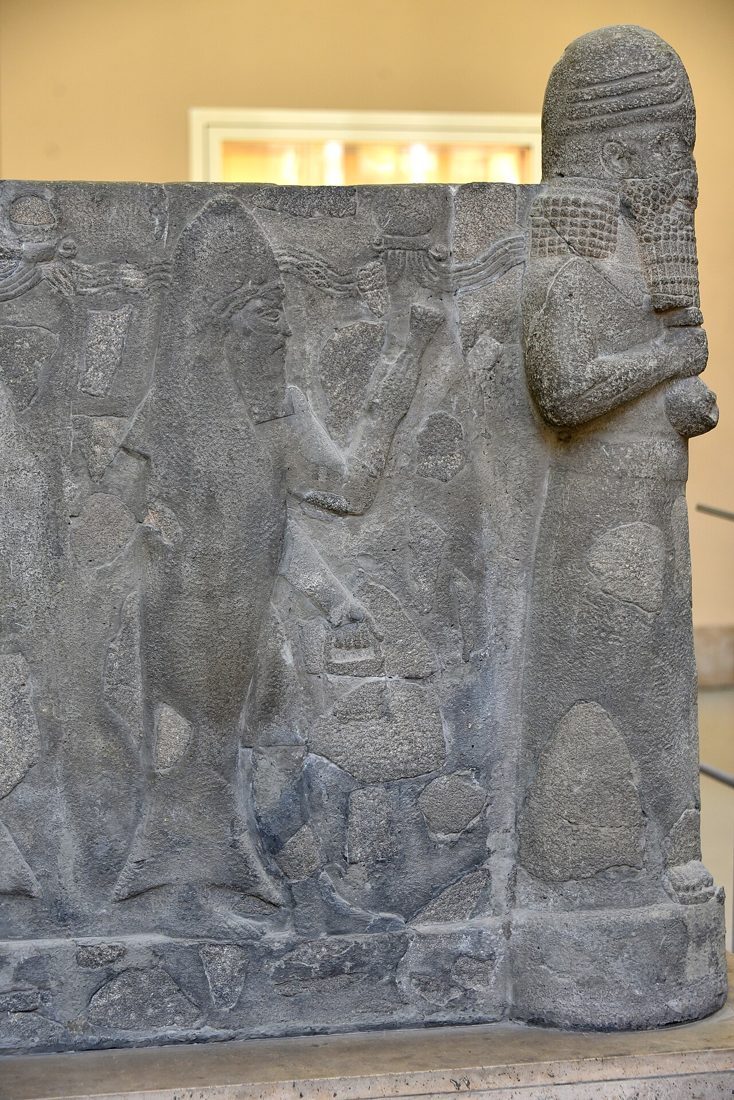
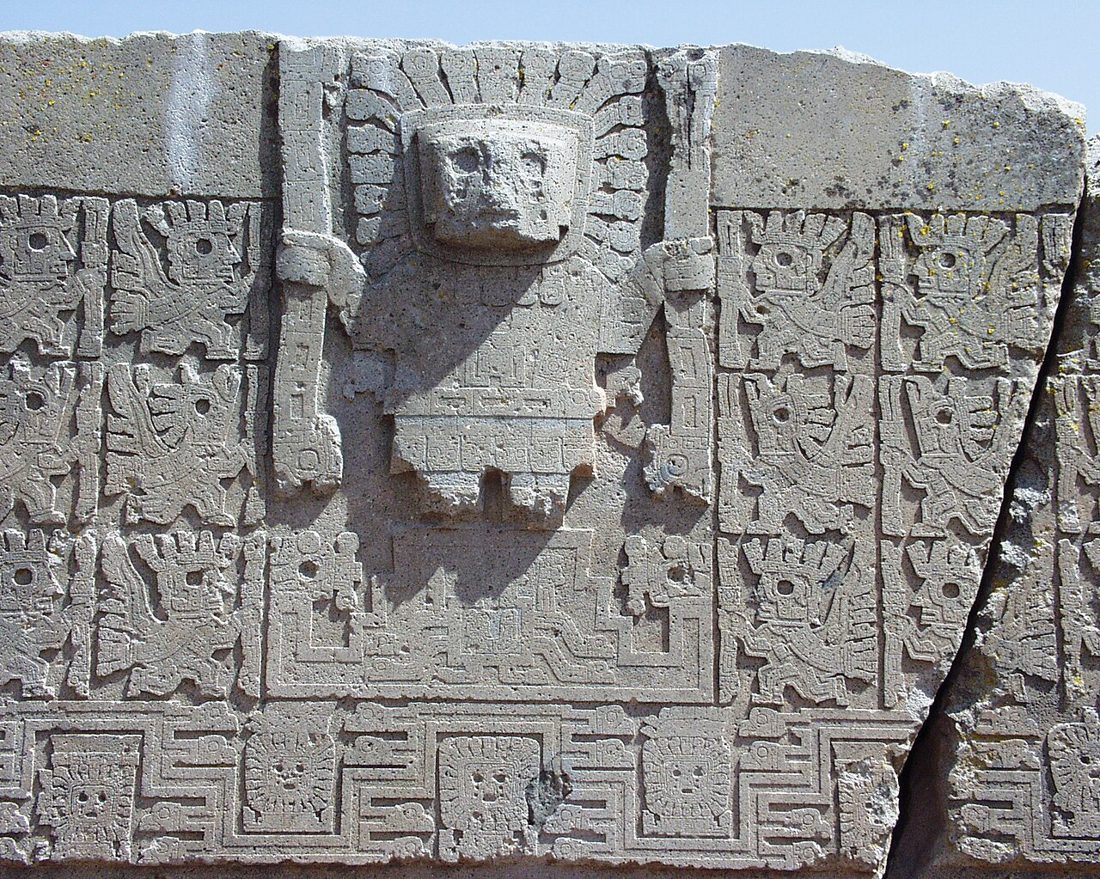
The Gate of the Sun makes the category's problem concrete. Forty-eight winged figures in profile run towards a frontal staff-bearer, and a third of them have bird heads: a bird-man in the strict sense, a human body with a bird's head, repeated as an attendant. Rows of bird-headed attendants either side of a central figure also recall the eagle-headed genii of the Assyrian palace reliefs at the top of this page, fifteen centuries earlier and an ocean away. The resemblance lies in the arrangement, and a central figure flanked by attendants is one of the commonest ways to compose a frieze; the specific comparison would be the head, the wings, what the figures carry and what they face.
The handbags
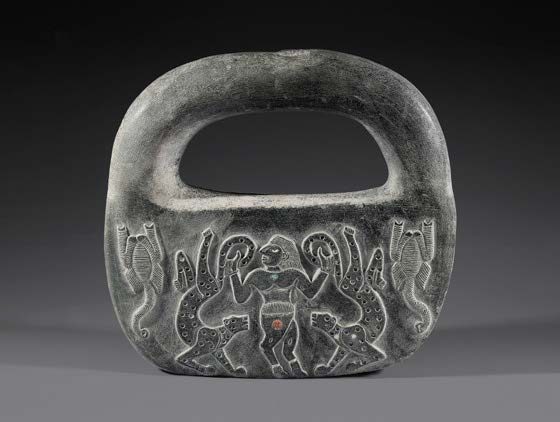
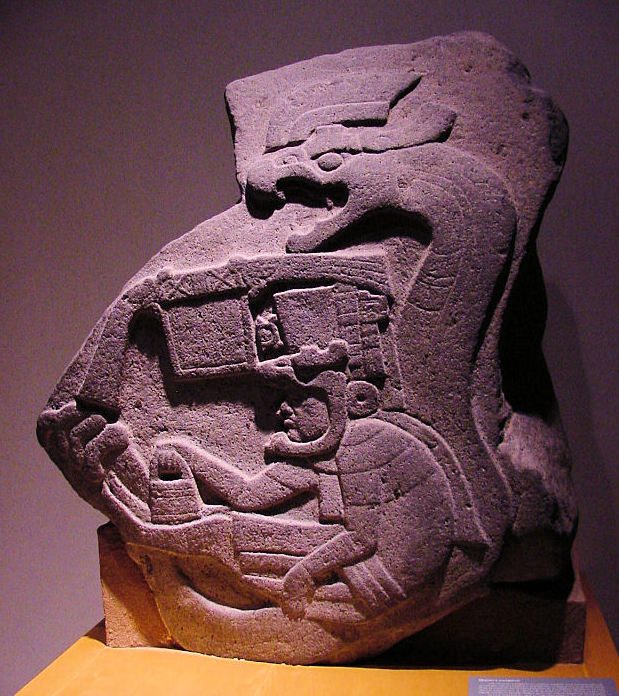
The comparison joins the three arched forms on Pillar 43, a bucket carried by Assyrian genii, handled chlorite objects from the Halil Rud region and the small object held by the figure on La Venta Monument 19. The recurring outline is worth looking at closely.
Shape and function are separate questions. Assyrian ritual context supports a bucket-and-purifier interpretation; the function of the Göbekli forms remains uncertain. A handle is also a practical solution that can recur independently. A useful investigation would compare handle attachment, proportions, decoration and accompanying figures, while retaining uncertainty about what each object was for. See the excavation team's Pillar 43 discussion and the Halil Rud wear study.
Pigs, lizards & other stone animals
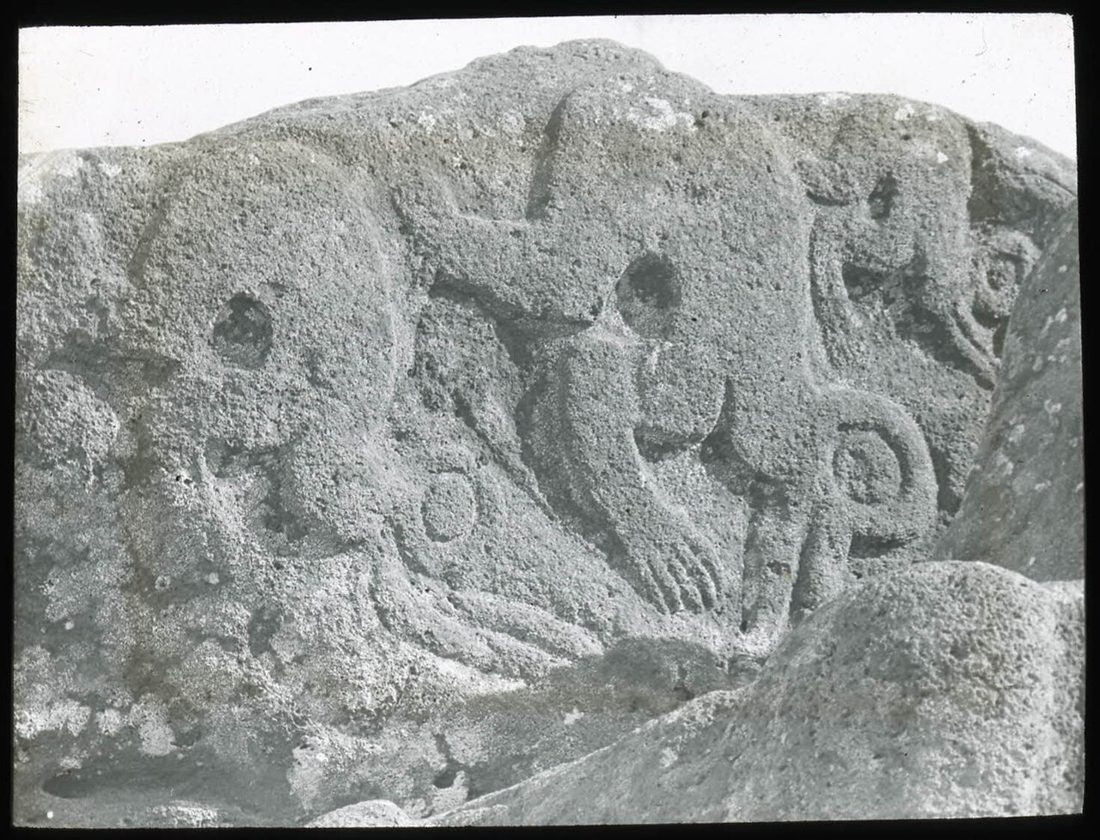
The animal comparisons extend beyond bird-headed figures. Rounded bodies, projecting snouts and splayed limbs can make distant carvings feel familiar. These reference photographs are observations to investigate, not results from the earlier image corpus. Open a photograph to inspect the supplied original.
Pigs, boars and a compact stone silhouette
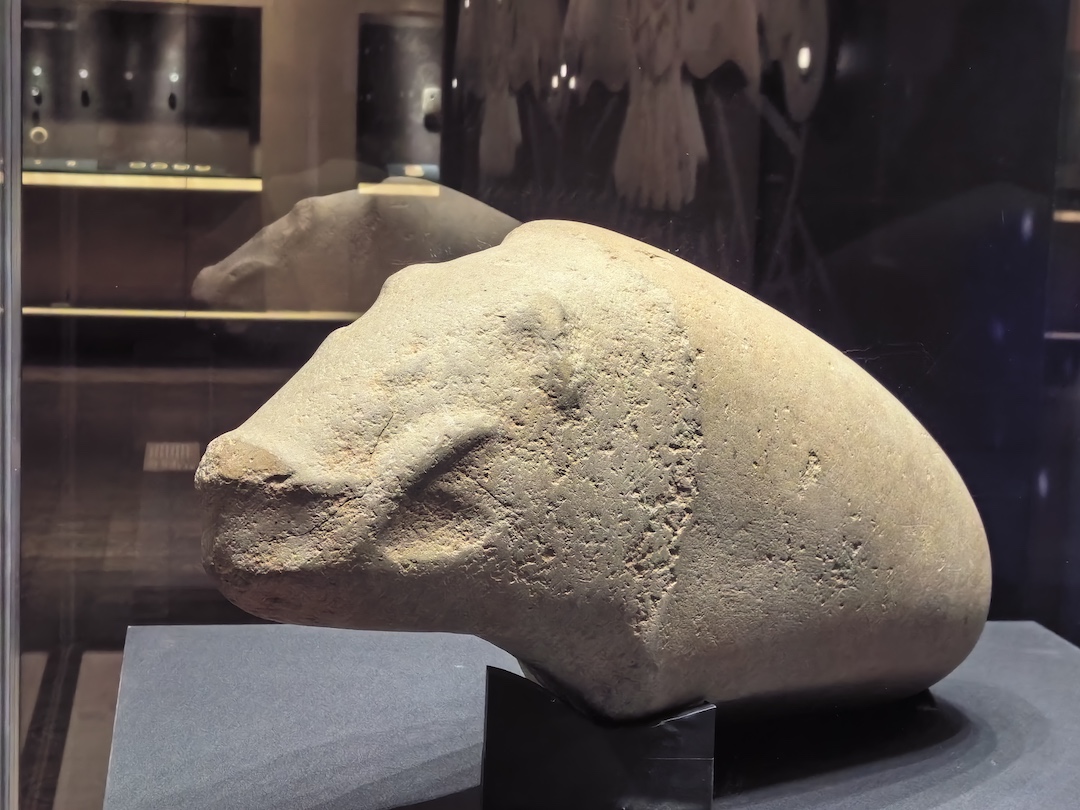
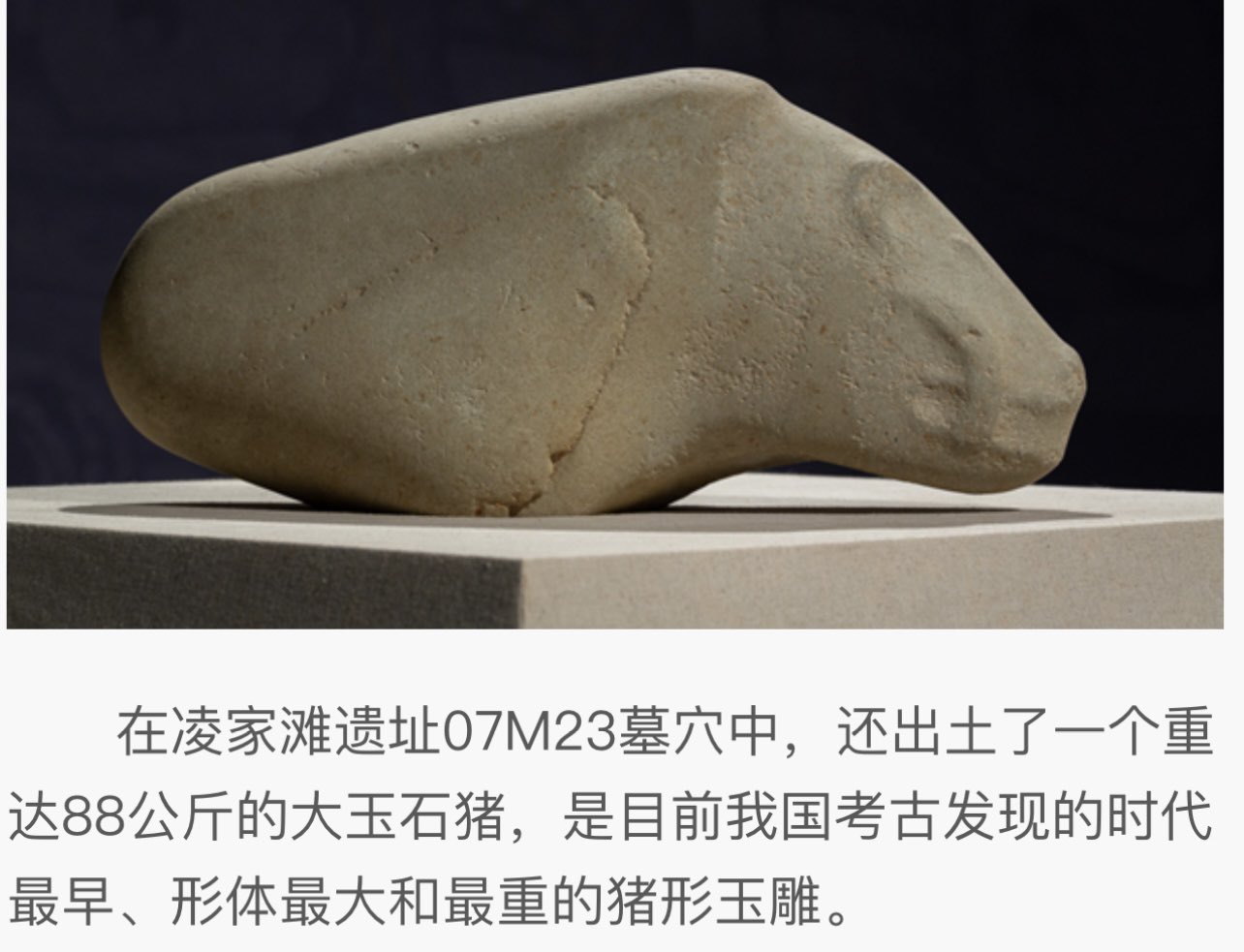
The low, rounded body, raised back, lowered head and projecting snout make an immediately legible visual rhyme. The mouth treatment and outline differ, and the photographs do not establish equal scale. Both anatomy and carving choices could contribute: the next useful comparison is with other securely identified pig and boar sculptures.
Reptile-like forms—and the animal in its setting
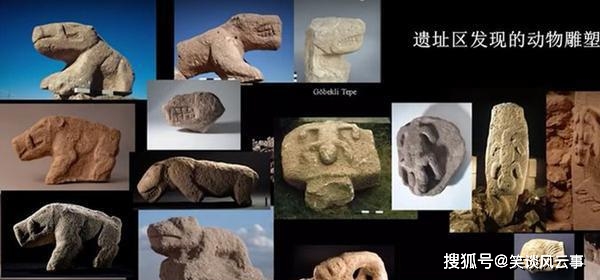
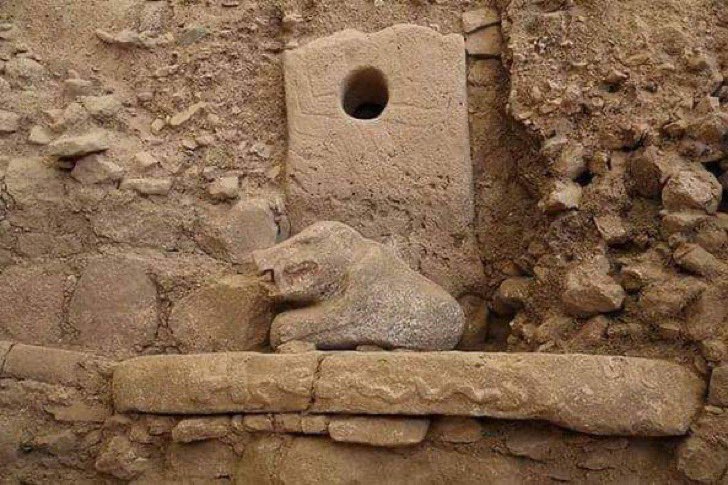
The splayed limbs, low bodies and pronounced jaws are worth following as a family of forms. “Lizard” should remain a proposed identification where the animal is uncertain. The excavation team's discussion of Enclosure C distinguishes boars from snarling predators and considers their arrangement together. That context may be as informative as an isolated silhouette.
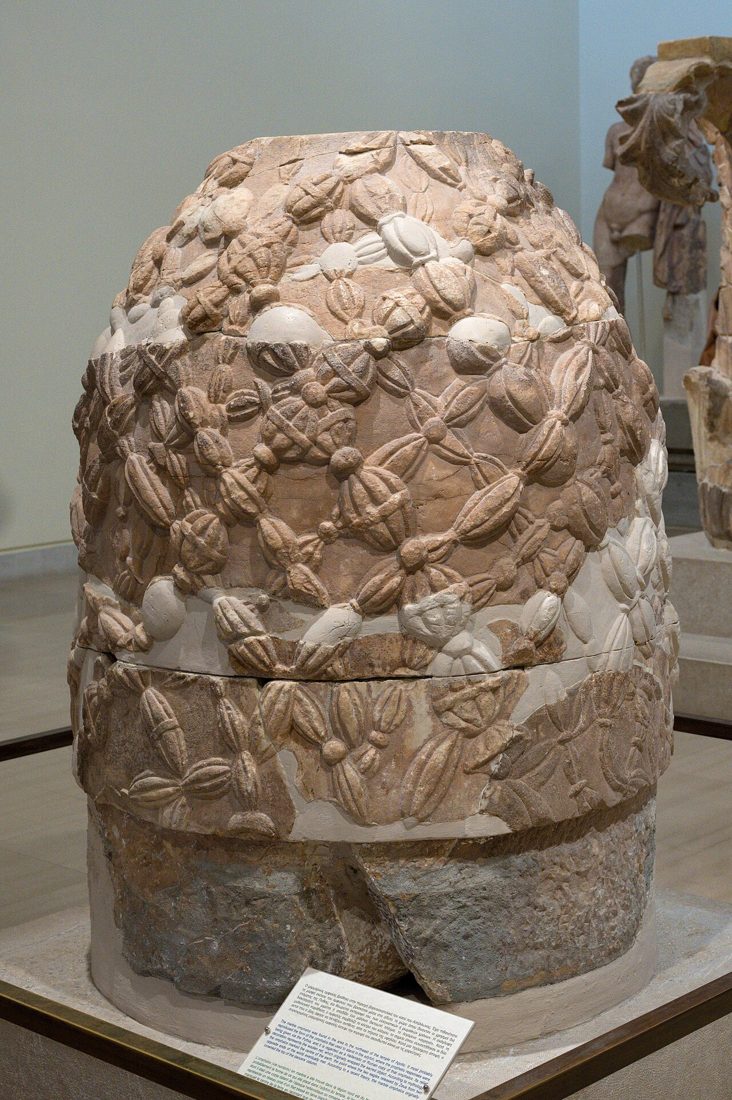
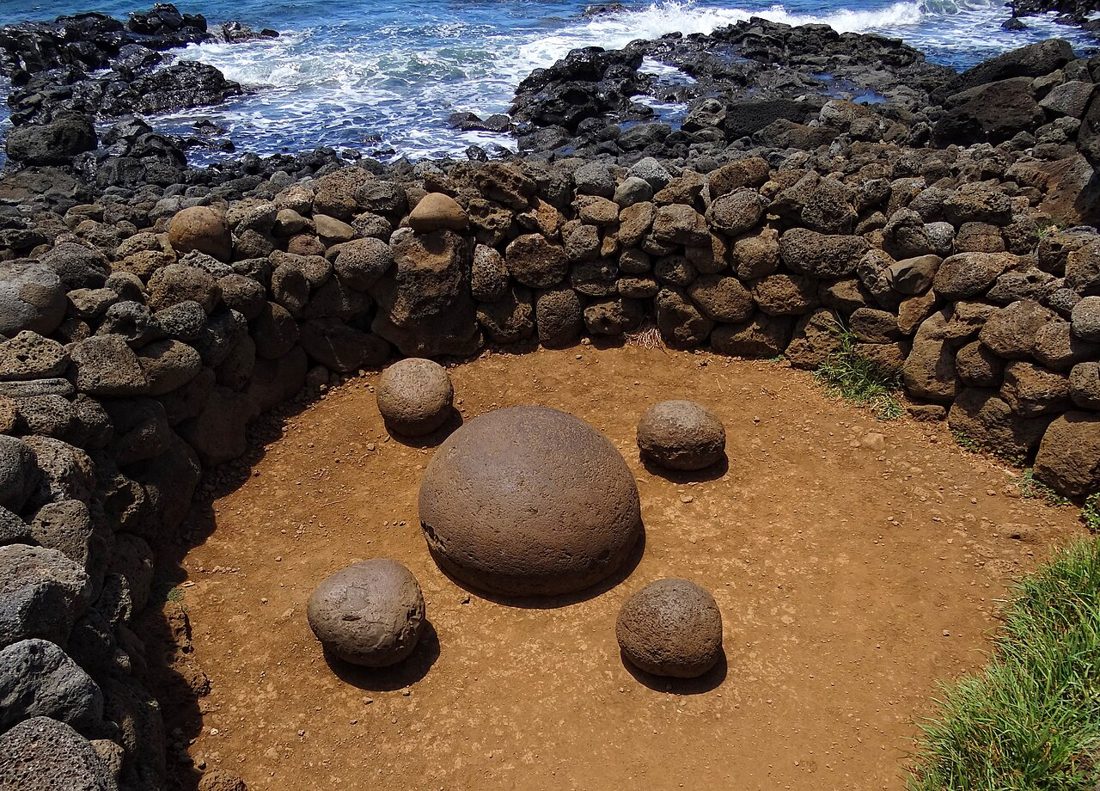
The navel of the world
A sacred centre described as a navel is an evocative parallel. It is also a linguistic claim that needs its own source history. The Greek omphalos, the gloss of Cusco in Garcilaso's account, Rapanui Te Pito o te Henua and the modern Turkish name Göbekli Tepe are not interchangeable kinds of evidence.
For each, the questions are: what does the expression mean in its language, when is that meaning first recorded, and was it a name the ancient builders used? The myth experiment's scope note matters here: a catalogue category for a world axis does not directly test a place-name etymology. Shared bodily metaphors are possible; a particular inherited usage would need more specific evidence.
Hands on the belly
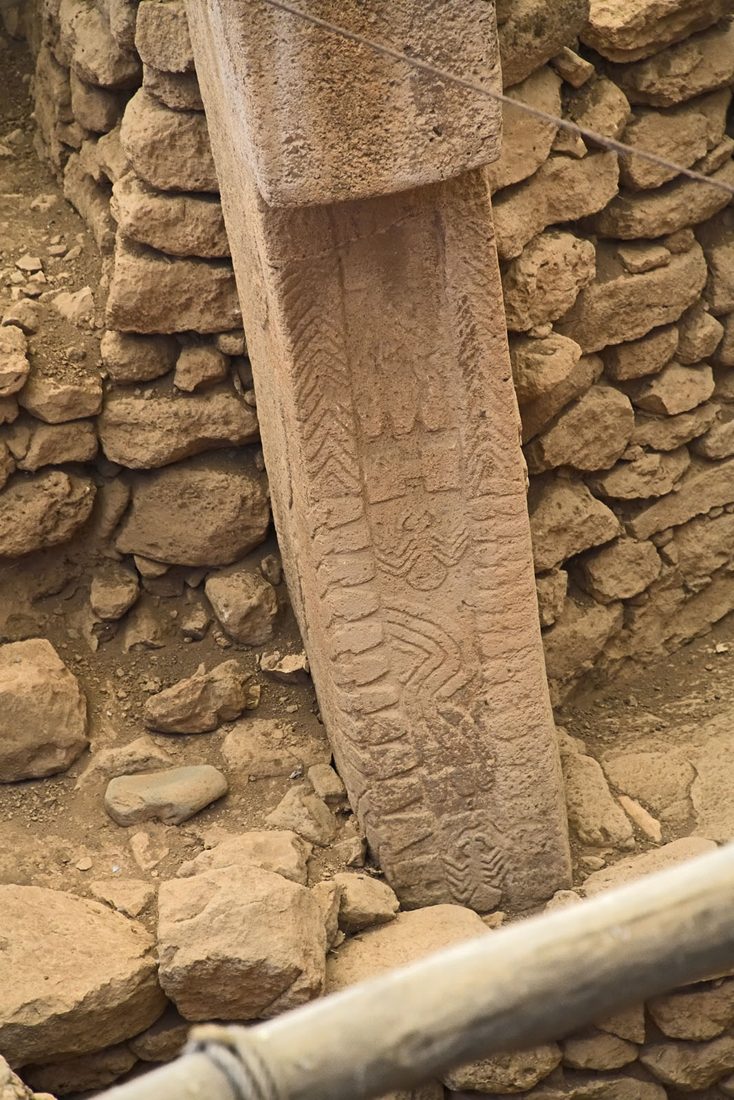
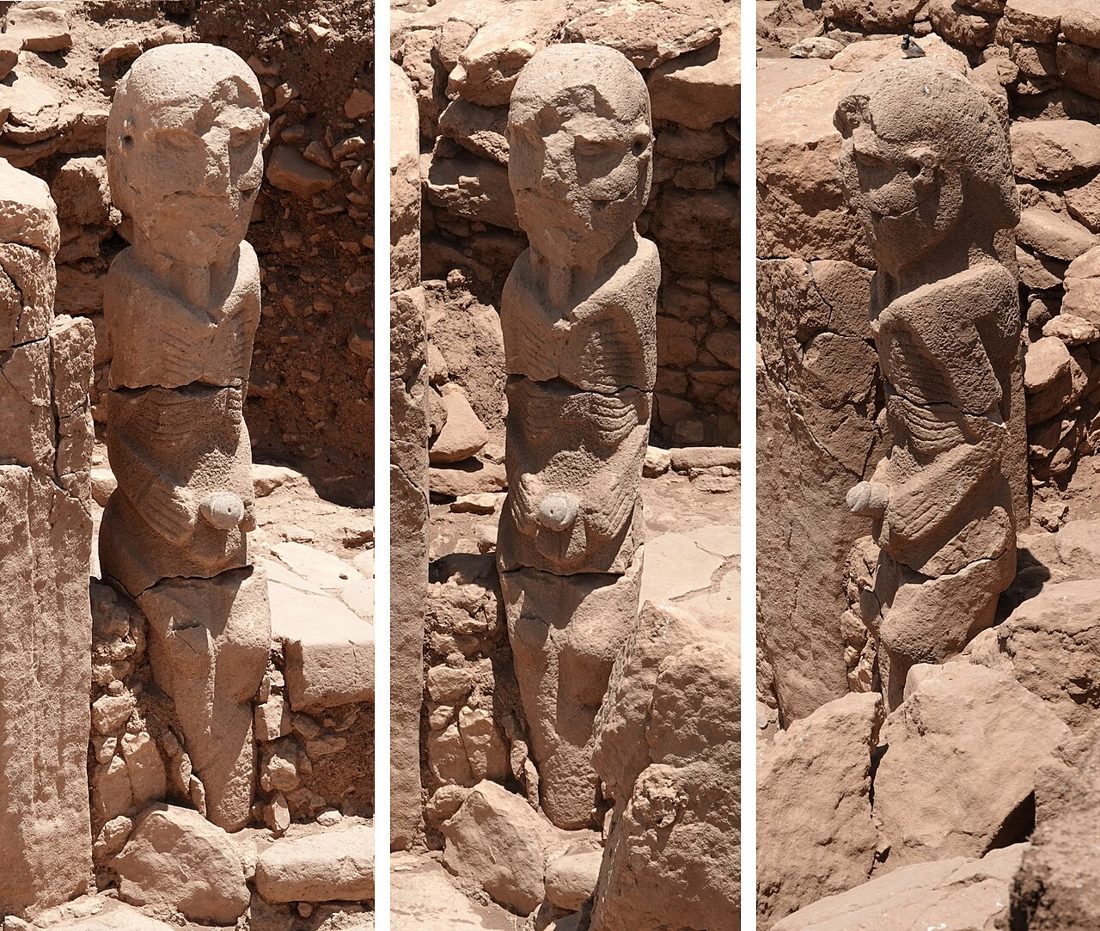
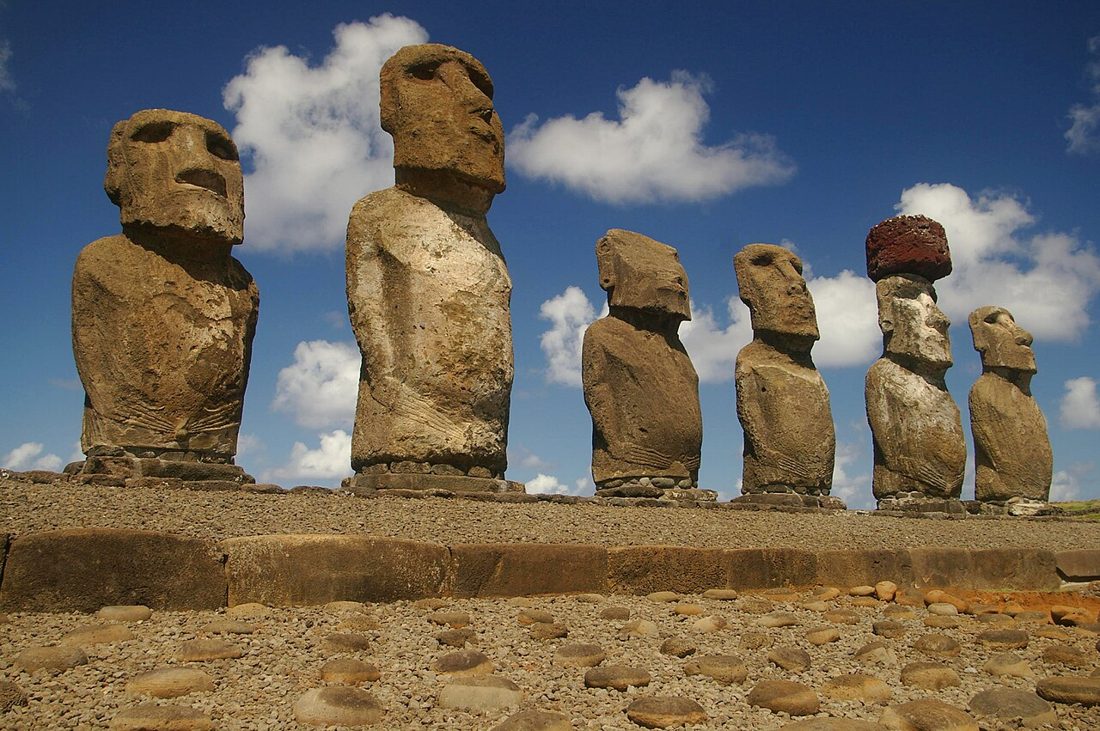
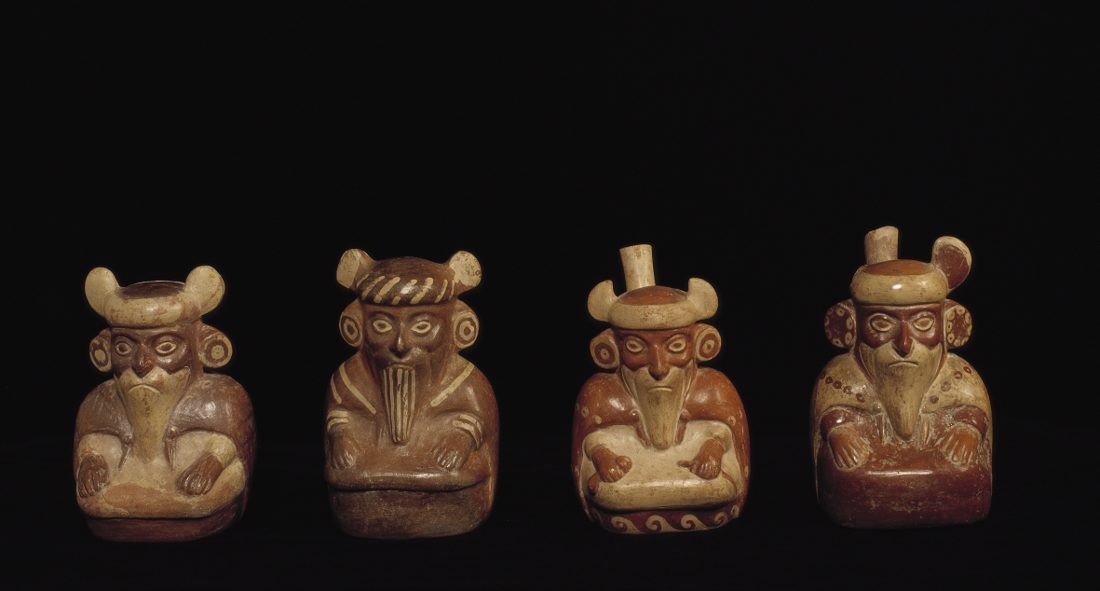
The hands and arms are part of what makes these monuments feel related. Compare where the hands meet, the direction and length of the fingers, the belt, and whether the figure holds anything. A hand across the abdomen and a hand at the groin are close in outline but different observations.
Carving limbs against a stone body can protect them from breakage, making material constraints a plausible contributor to the pose. That does not settle its symbolic meaning. The useful comparison includes both the particular gesture and other figures made in the same medium, rather than assuming either common descent or coincidence from posture alone.
Serpents, and the feathered serpent
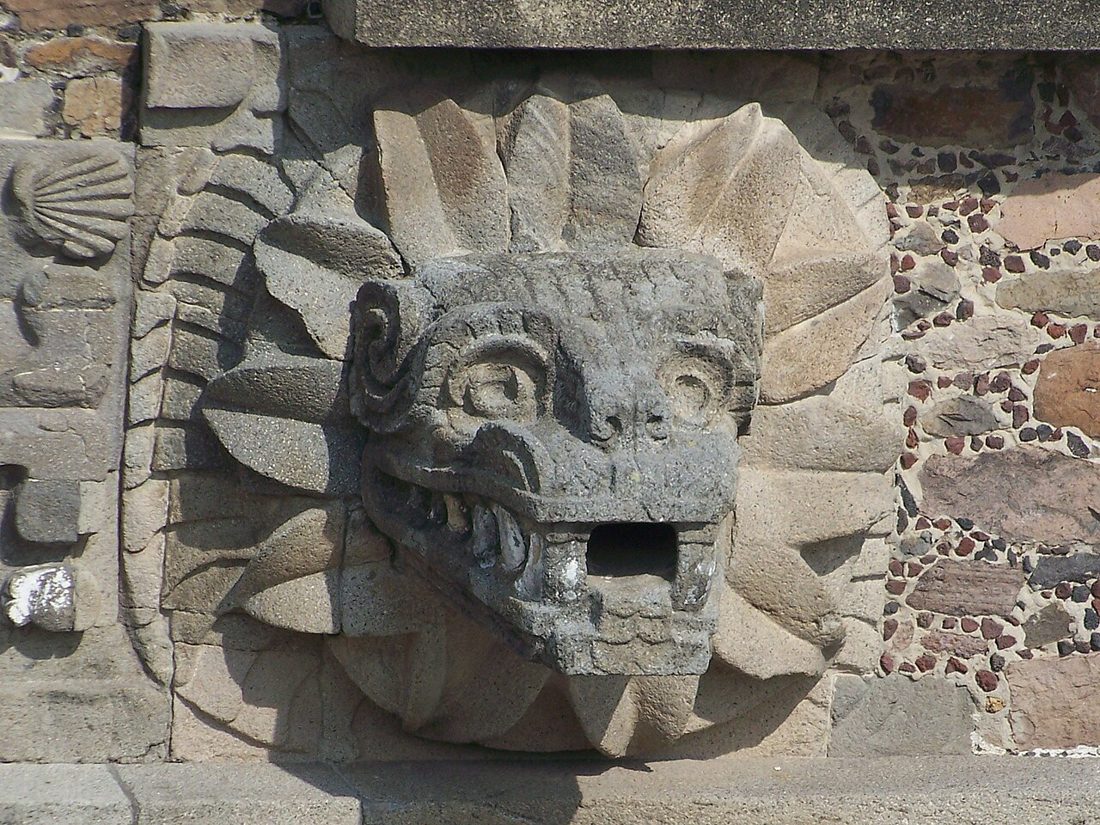
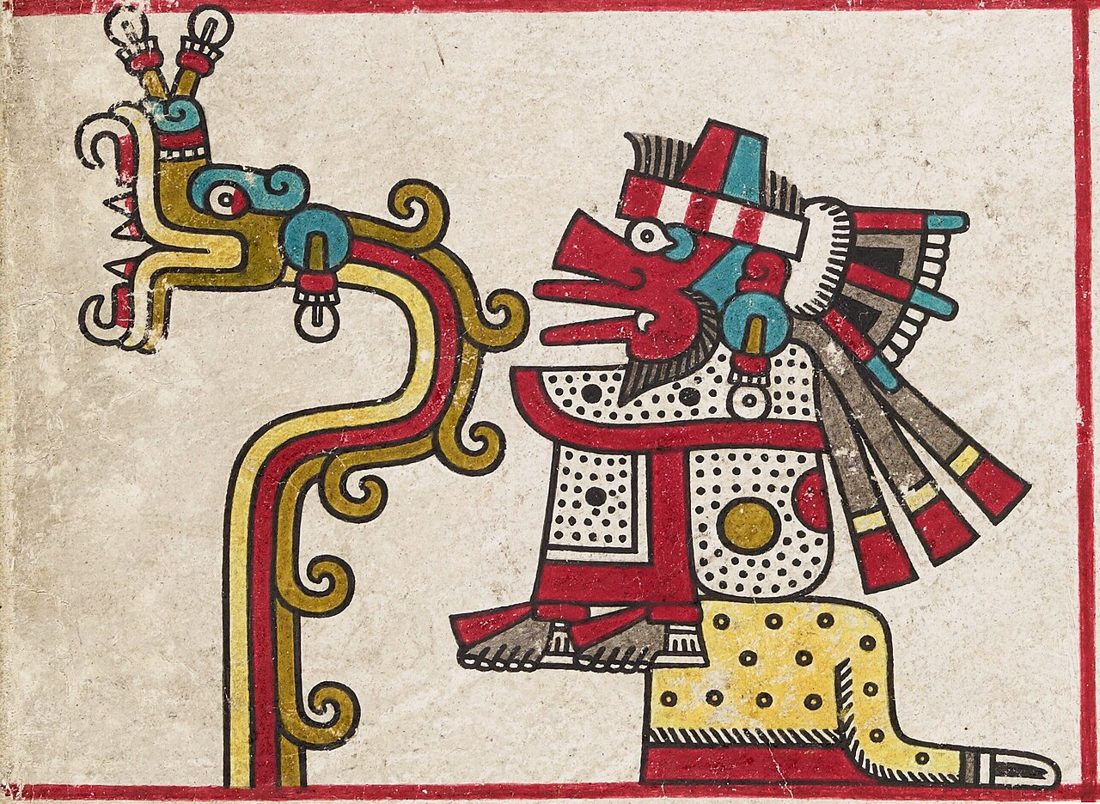
Serpents appear alongside other figures on the objects below; the feathered serpent of Mesoamerica is a more specific combination than the broad category “snake.” A comparison should preserve that distinction, including feathers, head shape, body arrangement and the relationship to a human figure.
The catalogue analysis reports a broad cosmic-serpent class in 37% of its sampled traditions. Its geographical result describes that selected category and dataset. It cannot, by itself, distinguish independent invention from very old transmission or establish the ancestry of an individual carving.
The people who brought the arts
The narrative parallel is just as arresting as the visual one: a figure brings knowledge, changes human life and departs. Oannes, Viracocha, Quetzalcoatl and Bochica recur in these comparisons. But the exact arrival, teaching and departure need to be read in each account, rather than supplied by a composite biography.
The original AI lineups did find a similarity signal under their conditions, with serious limits. The source-level follow-up opens the passages themselves: sea arrival and sea departure, particular crafts, catastrophe sequence and return promises. It keeps earlier accounts and later retellings separate. A colonial recording date is a reason to examine mediation, not proof that every detail was invented by a chronicler.
A navigator in Micronesia
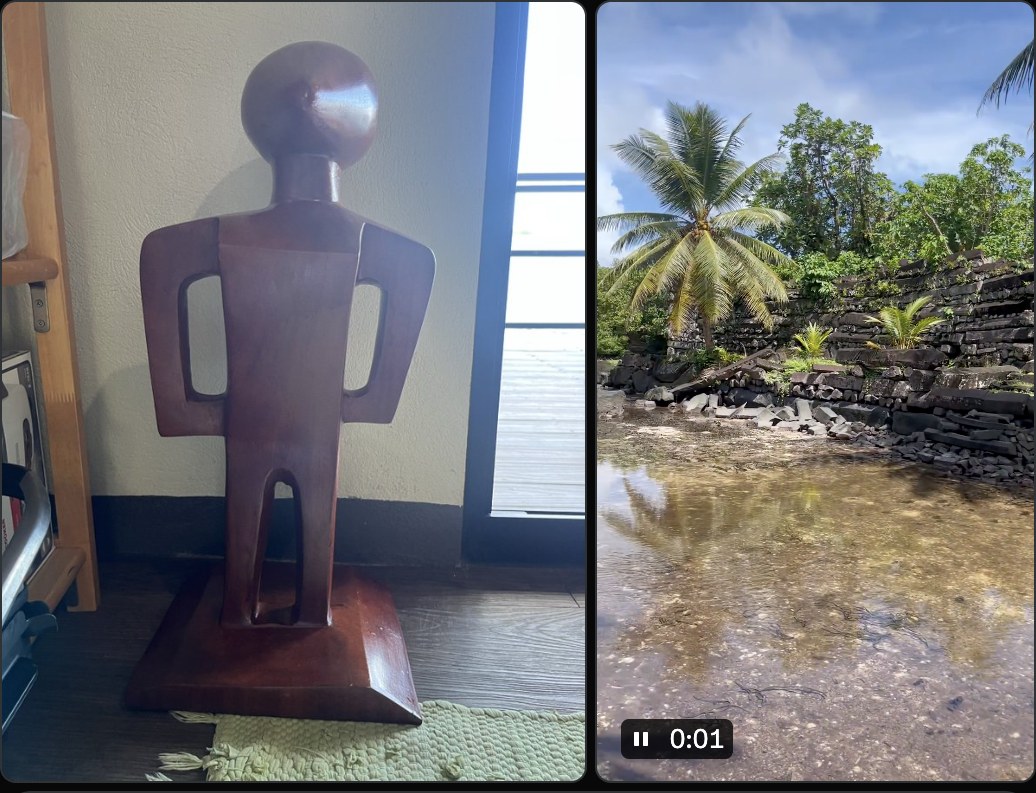
A post by the X account Archaic Lens on 6 September 2026 reports, from a visit to Nan Madol on Pohnpei, "a strong oral tradition of 'the navigator' who is said to have arrived at some distant time in the past and taught the people of Micronesia many important things", whose effigy is still carved and given as a gift across the islands, and calls it "almost an identical story to Quetzalcoatl". Nan Madol is the megalithic seat of the Saudeleur dynasty: ninety-two artificial islets of basalt in a lagoon, with the megalithic building placed at about 1180–1200 CE and occupation until about 1628.
Its recorded traditions do have arrivals by canoe. The twin sorcerers Olisihpa and Olosohpa came from a land in the west to build an altar and founded the dynasty; Isokelekel sailed in with 333 companions, overthrew the Saudeleur and set up the chiefly system that survives, a story published in at least thirteen variants. Whether "the navigator" is one of these figures under another name, or a separate tradition, needs a recorded source: who told it, where and when. The carving's maker is not identified; carvers from Kapingamarangi living in Kolonia are known for figures in local hardwoods. The story has the right shape for the source audit, which asks exactly these questions of Oannes, Viracocha and Quetzalcoatl; it has not been added to the ledger.
What survives the water?
Flood stories raise several different questions: whether people remember local disasters, whether particular stories travelled, and whether traditions preserve much older environmental knowledge. None requires every version to retain the same details or to lose its regional character.
The flood experiment maps details in 263 summaries. Its regional patterns are useful observations. Establishing the age of a memory, or showing that a particular detail was borrowed from Genesis, needs additional source and historical evidence. Its limitations now make that distinction explicit.
Sources
Objects and sites
- Pitts, M., Miles, J., Pagi, H. & Earl, G. (2014). Hoa Hakananai'a: a new study of an Easter Island statue in the British Museum. Antiquaries Journal 94. Cambridge Core.
- Dietrich, O. Of animals and a headless man: Göbekli Tepe, Pillar 43. Tepe Telegrams, 2016; and More than a vulture: a response to Sweatman and Tsikritsis, 2017.
- Sweatman, M. & Tsikritsis, D. (2017). Decoding Göbekli Tepe with archaeoastronomy. Mediterranean Archaeology and Archaeometry 17(1).
- Vidale, M. & Micheli, R. The function of a chlorite hand-bag of the Halil Rud civilization as inferred from its wear traces. Iranian Journal of Archaeological Studies. link.
- Lee, G. (1992). The Rock Art of Easter Island: Symbols of Power, Prayers to the Gods. UCLA.
- Wikipedia and Wikimedia Commons entries for Göbekli Tepe, Urfa Man, Olmec colossal heads, Gate of the Sun, Hoa Hakananai'a, Apkallu, La Venta, Cacaxtla, Etowah plates, Omphalos, Tangata manu, Axis mundi, Hyperdiffusionism, White gods (accessed September 2026).
- Ahu Te Pito Kura: Imagina Rapa Nui.
- Archaic Lens (@ArchaicLens), post on X, 6 September 2026, on Nan Madol and "the navigator"; screenshot preserved in
inputs/. Nan Madol and Isokelekel: Wikipedia (accessed September 2026), citing Petersen, G. (1990), Lost in the Weeds: Theme and Variation in Pohnpei Political Mythology. - Posts on X by Jason Wilde (@JasonWilde108) and Archaic Lens (@ArchaicLens), 10 September 2026, on the winged attendants of the Gate of the Sun: the source of the supplied photograph; screenshot preserved in
inputs/.
Myths and their history
- Berossus, Babyloniaca, as preserved by Alexander Polyhistor and Eusebius (the Oannes passage).
- Townsend, C. (2003). Burying the White Gods: new perspectives on the conquest of Mexico. American Historical Review 108(3).
- Restall, M. (2003). Seven Myths of the Spanish Conquest. Oxford.
- Cobo Betancourt, J. F. (2024), on Bochica and colonial reinterpretation.
- Berezkin, Yu. E. & Duvakin, E. N. Thematic classification and areal distribution of folklore-mythological motifs. ruthenia.ru.
- d'Huy, J. (2016). Scientists trace society's myths to primordial origins. Scientific American, December 2016.
- Witzel, E. J. M. (2012). The Origins of the World's Mythologies. Oxford.
- Eliade, M. (1959). The Sacred and the Profane.
The lost-source account and its critics
- Hancock, G. (2015). Magicians of the Gods. Coronet. (Handbags as badge of office; Göbekli Tepe and Easter Island; navel sites.)
- Newman, H. Megalithic origins: ancient connections between Göbekli Tepe and Peru. grahamhancock.com.
- Heyerdahl, T. (1952). American Indians in the Pacific.
- Sitchin, Z. (1976). The 12th Planet.
- Elliot Smith, G. (1923). The Ancient Egyptians and the Origin of Civilization.
- Dibble, F. & Hancock, G., Joe Rogan Experience #2136, April 2024; summaries at Archaeology Southwest.
- Ioannidis, A. G. et al. (2020). Native American gene flow into Polynesia predating Easter Island settlement. Nature 583.
- Fehren-Schmitz, L. et al. (2017). Genetic ancestry of Rapanui before and after European contact. Current Biology 27.
- Holliday, V. T. et al. (2023). Comprehensive refutation of the Younger Dryas impact hypothesis. Earth-Science Reviews 247.
- Timeline Auctions, The handbag that wasn't: the truth about the "handbags of the gods". link.
Image provenance and reuse
The eight reference pictures, and the fourteen pictures from Fenton's thread, are reproduced for commentary. Seven of the reference photographs and the thread's nine attachments are unchanged copies; six pictures that were only captured inside phone screenshots, five from the thread and one from the Nan Madol post, are cropped from those screenshots, with the crop boxes recorded. Original files remain in inputs/; unresolved object identities and photographic credits are recorded in the image register. No new dates, measurements or licences are inferred from appearance. Identifications made since publication by comparing the pictures with published images are recorded in the register and in the transcript's addendum. Their unresolved credits are separate from the existing gallery credits below; the detail of the Pillar 43 bird is cropped from the Commons photograph credited there.
Image credits
The tweet screenshots on the study pages, and the pictures from Fenton's thread in the separate essay, are reproduced for commentary. The existing gallery photographs are from Wikimedia Commons under the licences listed, or public domain. The additional reference photographs and the thread pictures have separate, partly unresolved credits in the image register.