Deep Memory/ Clues to a deeper past
← The pillar, the moai & the bird
A closer investigation · 22 objects · September 2026

The resemblance,
under a closer light.

What persists when we compare the actual arrangements, their local alternatives and the dates behind them?

01 / Look closely

A bird. A rounded form.
A particular relationship.

Separate what the photograph shows from what its symbols might mean.

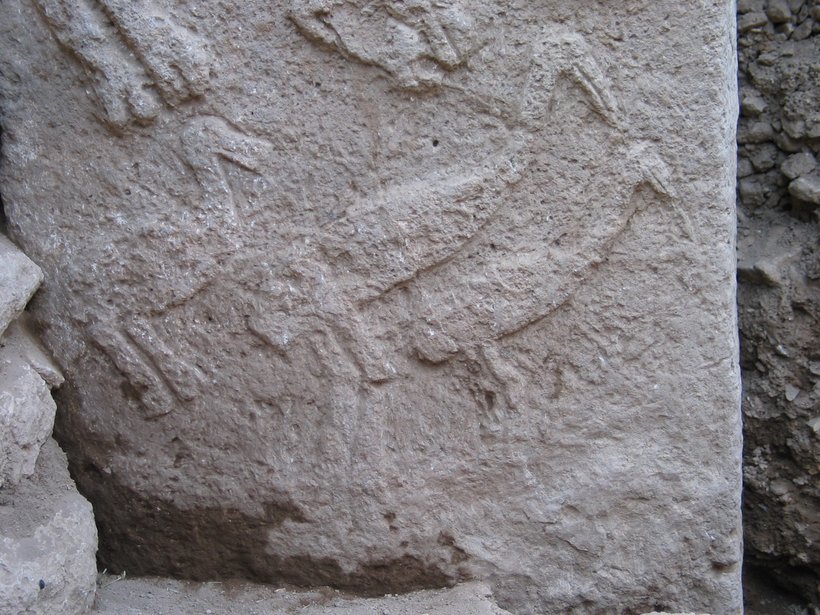
Pillar 43. Large bird in the upper-left scene
Neolithic Anatolia

Pillar 43

10th–9th millennium BCE · site context

A strong correspondence in arrangement; the type of limb and the disc’s meaning remain open.

Image, annotations & sources

DAI / K. Schmidt · Copyright DAI; used for critical comparison. Source image / record.

  1. 1. Bird The large bird’s head and body; its wing is not automatically a human arm.
  2. 2. Disc The disc is above the end of the forward wing. Its meaning is unresolved.
  3. 3. Forward wing Inspect the edge and the gap. Proximity does not establish a grasp.

Pillar 43 · excavation-team account

Broad Early Neolithic context, not a direct date for these particular cuts.

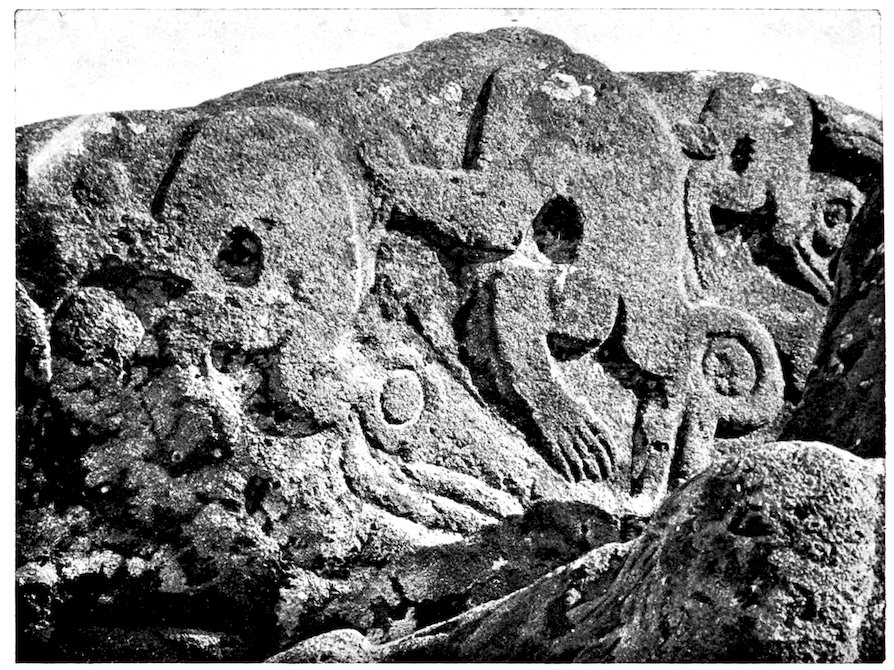
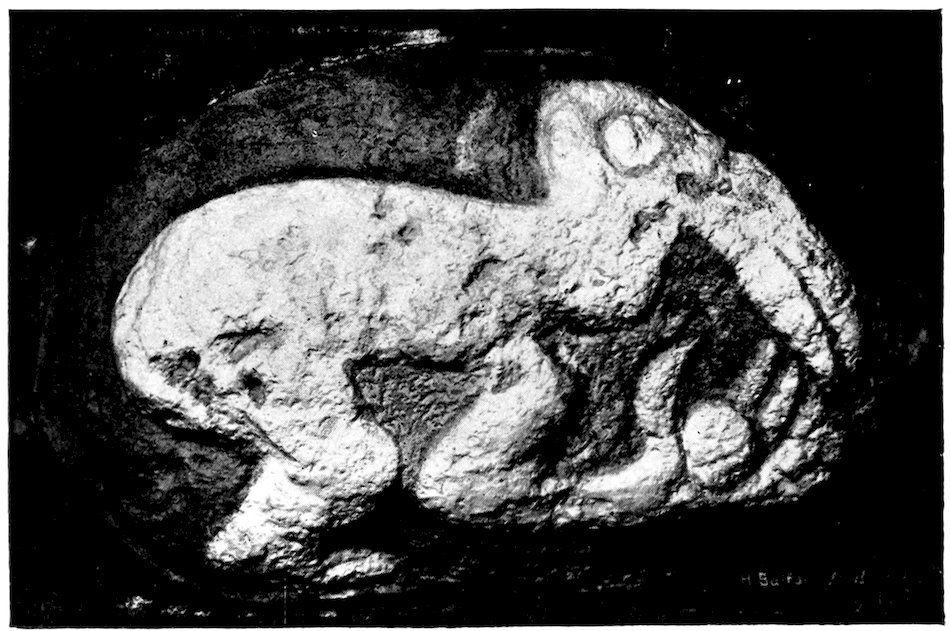
Orongo birdman boulder. Single birdman relief
Rapanui traditions

Orongo birdman boulder

1750–1875 · catalogue estimate

The best-documented focal case of a beaked figure with a rounded object at its hand.

Image, annotations & sources

Mana Expedition / Routledge (1919), fig. 112 · Public-domain publication. Source image / record.

  1. 1. Birdman The beaked head and bent neck belong to the crouched figure.
  2. 2. Rounded object An egg according to the museum and the early published caption.
  3. 3. Forearm and hand A low-reaching arm/hand is adjacent to the rounded object; exact fingers are difficult in this reproduction.

Birdman boulder · Oc1920,0506.1 · The Mystery of Easter Island

Routledge’s figure 112 independently documents the carving by its 1914 excavation.

Source-informed editorial annotations, prepared with AI. Independent review remains open. Regions are viewing aids, not archaeological tracings or model predictions.

Readings within the stated scene and photograph. “Not seen” is not absence from the whole object or culture.
RelationshipPillar 43Orongo birdman boulder
Beaked figureObservedBeak and bird body are visible.ObservedA long beak is visible.
Arm or wing extends forwardObservedThe forward wing extends toward the disc.ObservedThe crouched figure extends an arm low in front.
Separate rounded formObservedA disc lies above the wing tip.ObservedA compact rounded object is separate from the head and torso.
Rounded form at the limbObservedDisc above the extended wing; touching or holding is not established.ObservedThe early caption and museum identify an egg in the hand.
Facing beaked figuresNot seen in this viewOther birds occur, but this is not the moai’s opposed pair.Not seen in this viewOne figure in this relief.
What counts as a shared feature?

Beaked figure — A beaked head on the selected figure; a museum deity name alone is insufficient.

Arm or wing extends forward — A limb projects in front of the selected beaked figure. An arm and a wing remain different anatomical readings.

Separate rounded form — A disc, ring or compact rounded object, excluding an eye, body outline or suspension hole.

Rounded form at the limb — The same beaked figure’s arm or wing reaches to the rounded form. Nearness does not prove a grip or shared meaning.

Facing beaked figures — Two beaked figures face one another within the same scene. Separate objects never create this feature.

These definitions were developed while inspecting the material. This is an exploratory reading exercise, not a preregistered similarity test. Agreement between AI readers would not substitute for independent archaeological review.

The current assessment

A resemblance clarified.
A history still to establish.

The ring deserves its published alternative.

The 2014 study proposes that the moai’s older ring was absorbed into the later birdman scene, perhaps as an egg. Damaged arms make a simple “held / not held” verdict too strong.

Hoa Hakananai’a: a new study · Author-uploaded 2014 paper

02 / Give the comparison context

The surrounding evidence.

Three focal objects, six local examples, twelve museum selections and one previously proposed Assyrian comparison.

22 selected objects. These counts are not worldwide motif frequencies.

Pillar 43
Neolithic Anatolia

Pillar 43

Pillar 43
10th–9th millennium BCE · site context

A strong correspondence in arrangement; the type of limb and the disc’s meaning remain open.

Full observation record

Scope: Large bird in the upper-left scene

Beaked figure
Beak and bird body are visible.
Arm or wing extends forward
The forward wing extends toward the disc.
Separate rounded form
A disc lies above the wing tip.
Rounded form at the limb
Disc above the extended wing; touching or holding is not established.
Facing beaked figures
Other birds occur, but this is not the moai’s opposed pair.

Broad Early Neolithic context, not a direct date for these particular cuts.

Pillar 43 · excavation-team account

DAI / K. Schmidt. Copyright DAI; used for critical comparison.

Orongo birdman boulder
Rapanui traditions

Orongo birdman boulder

Oc1920,0506.1
1750–1875 · catalogue estimate

The best-documented focal case of a beaked figure with a rounded object at its hand.

Full observation record

Scope: Single birdman relief

Beaked figure
A long beak is visible.
Arm or wing extends forward
The crouched figure extends an arm low in front.
Separate rounded form
A compact rounded object is separate from the head and torso.
Rounded form at the limb
The early caption and museum identify an egg in the hand.
Facing beaked figures
One figure in this relief.

Routledge’s figure 112 independently documents the carving by its 1914 excavation.

Birdman boulder · Oc1920,0506.1 · The Mystery of Easter Island

Mana Expedition / Routledge (1919), fig. 112. Public-domain publication.

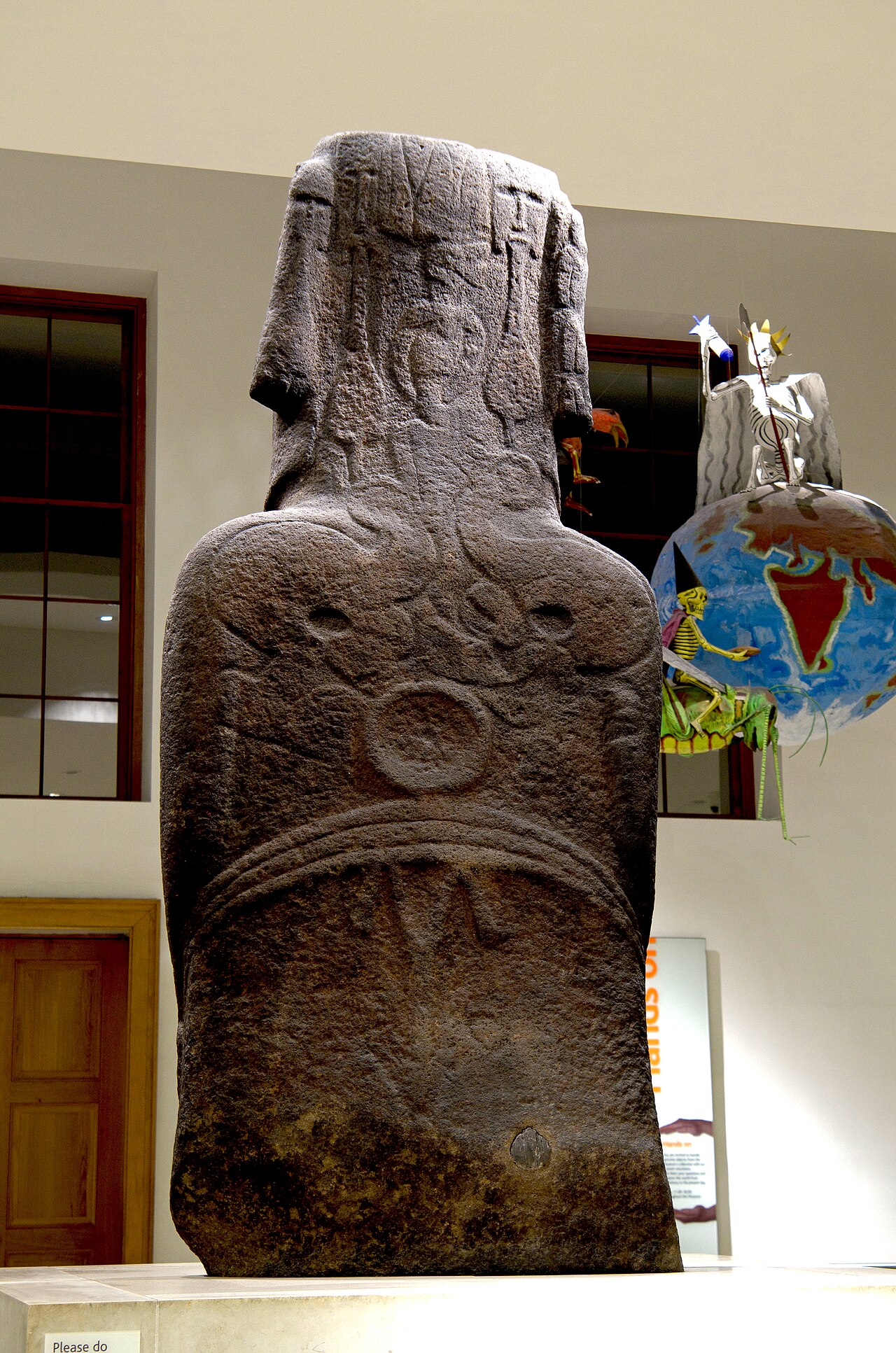
Hoa Hakananai’a · back
Rapanui traditions

Hoa Hakananai’a · back

Oc1869,1005.1
Carvings present by 1868

The older ring may have gained a new role in a later birdman composition. That is a published interpretation, not a settled reading.

Full observation record

Scope: Later birdman scene and older central ring

Beaked figure
Two prominent bird-headed figures.
Arm or wing extends forward
The study reads arms reaching toward the ring; damaged anatomy limits this view.
Separate rounded form
A large ring is below the birdmen.
Rounded form at the limb
A published egg/reuse reading exists; a literal grip remains uncertain.
Facing beaked figures
The two main birdmen face inward.

A documentary upper bound. The interval between original statue, ring and later carvings is not directly dated here.

Hoa Hakananai’a · Oc1869,1005.1 · Hoa Hakananai’a: a new study · Author-uploaded 2014 paper

James Miles. CC BY-SA 4.0.

Pillar 2
Neolithic Anatolia

Pillar 2

Pillar 2
10th–9th millennium BCE · site context

A local example of the bird anatomy discussed by the excavation team.

Full observation record

Scope: Lower bird, beneath the fox

Beaked figure
A long-beaked bird occupies the lower scene.
Arm or wing extends forward
No arm reaching to an object is resolved.
Separate rounded form
No separate rounded motif is identified in this bird scene.
Rounded form at the limb
The specific relation is not seen in this view.
Facing beaked figures
One bird in the selected scene.

Broad Early Neolithic context, not a direct date for these particular cuts.

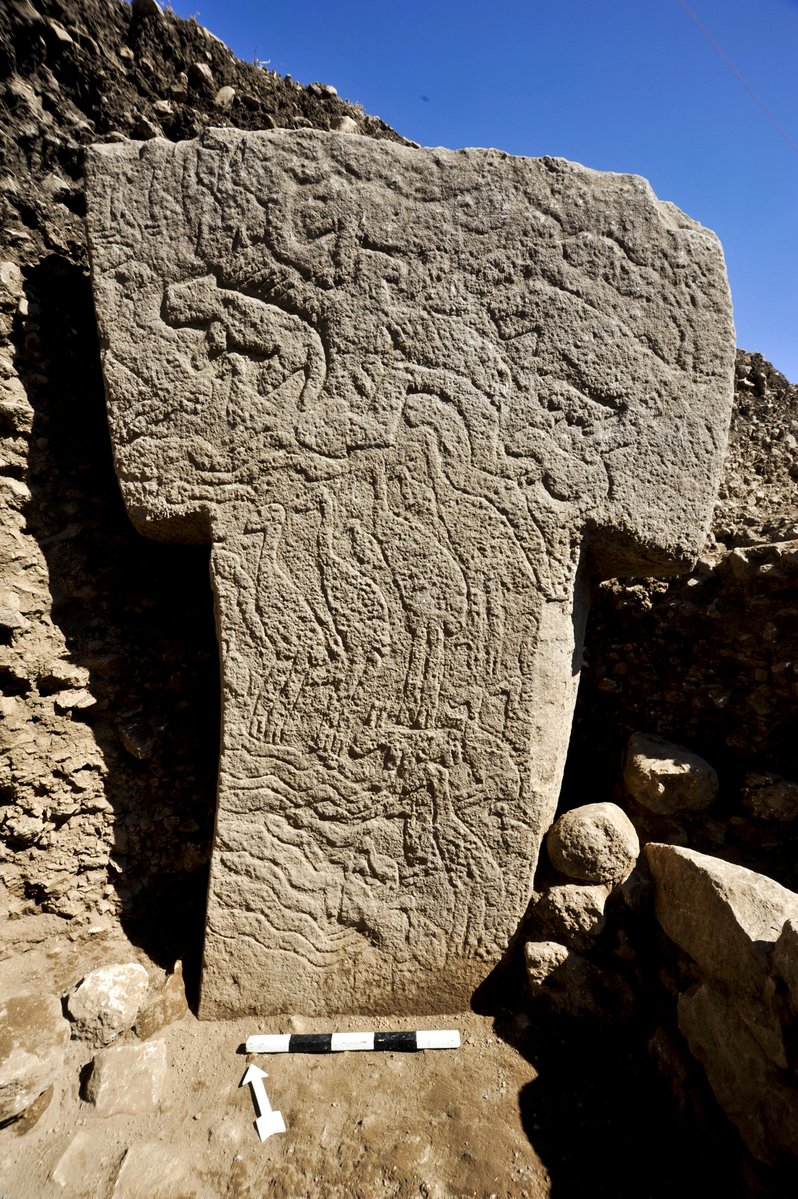
Birds on Pillars 2, 33, 38 and 56

Teomancimit / World History Encyclopedia. CC BY-SA 3.0.

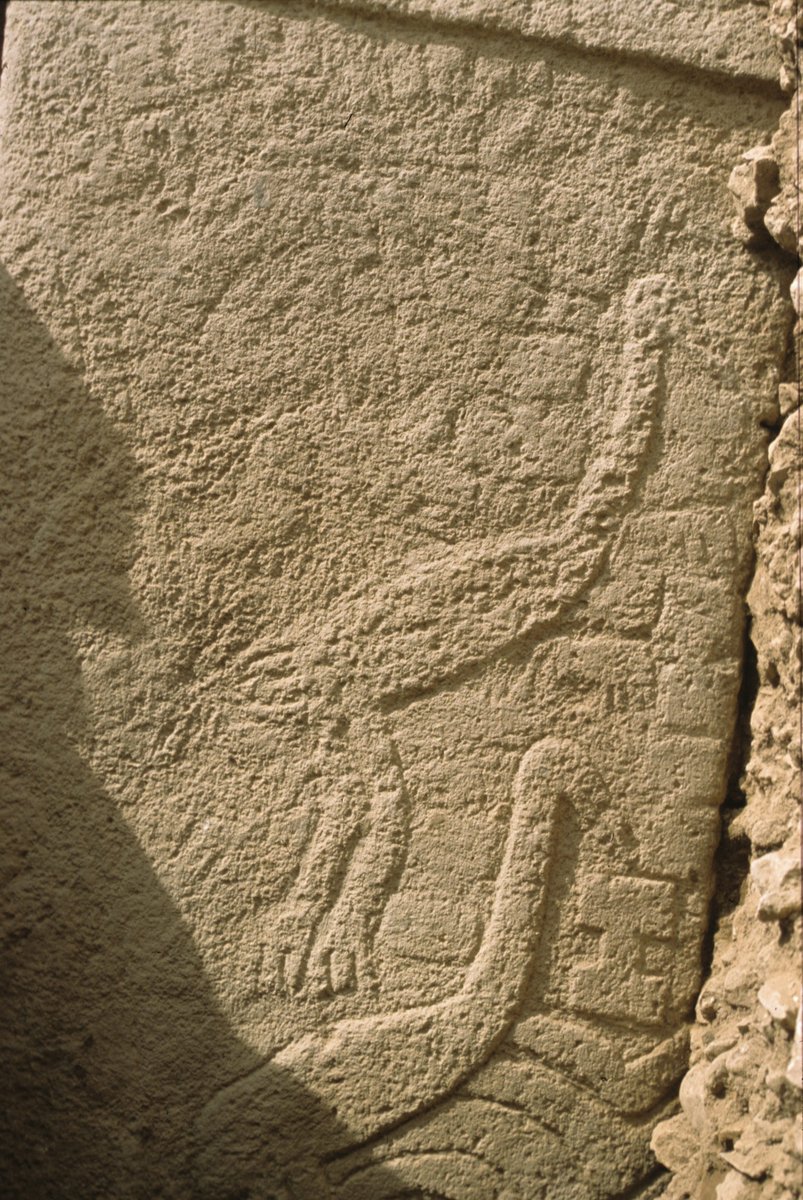
Pillar 33
Neolithic Anatolia

Pillar 33

Pillar 33
10th–9th millennium BCE · site context

The robust bent legs matter to the local bird–human interpretation.

Full observation record

Scope: Bird in the source’s detail photograph

Beaked figure
Long neck and beak are visible.
Arm or wing extends forward
Legs are visible; a forward object-bearing arm is not.
Separate rounded form
No separate rounded form is identified in this detail.
Rounded form at the limb
The target relation is not resolved.
Facing beaked figures
One bird in this detail.

Broad Early Neolithic context, not a direct date for these particular cuts.

Birds on Pillars 2, 33, 38 and 56

DAI / K. Schmidt. Copyright DAI; source photograph for critical comparison.

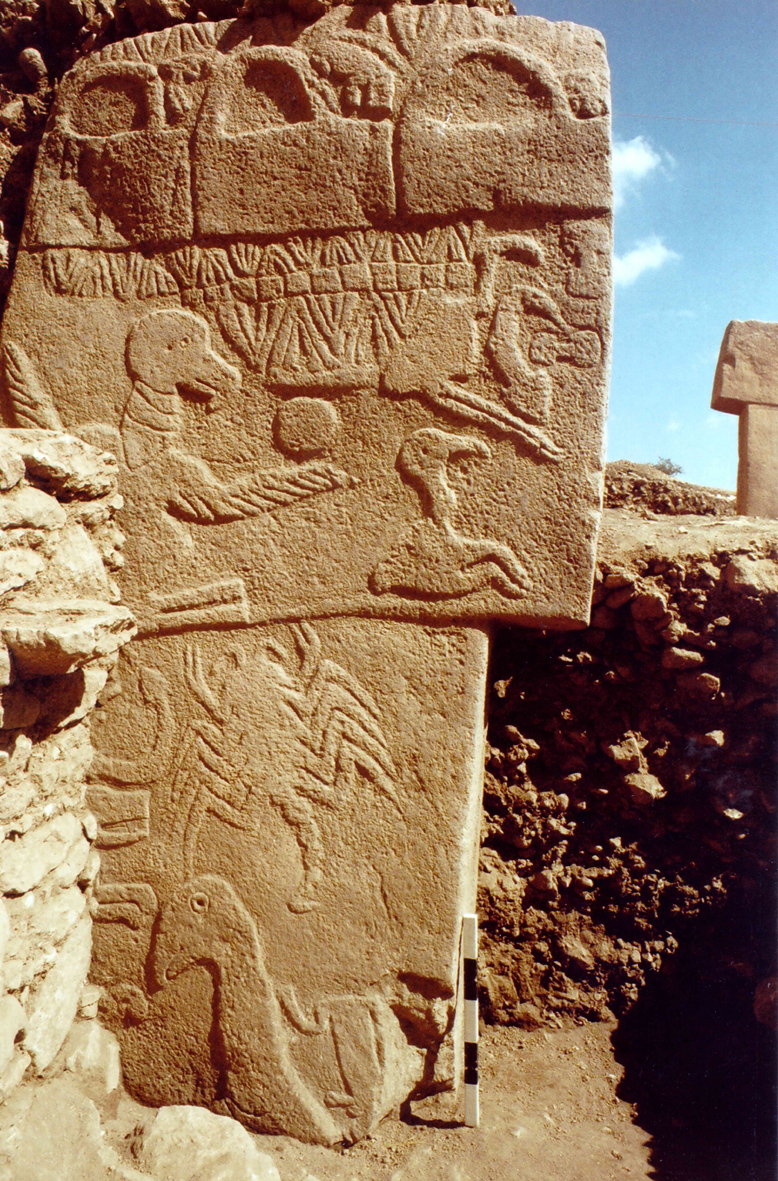
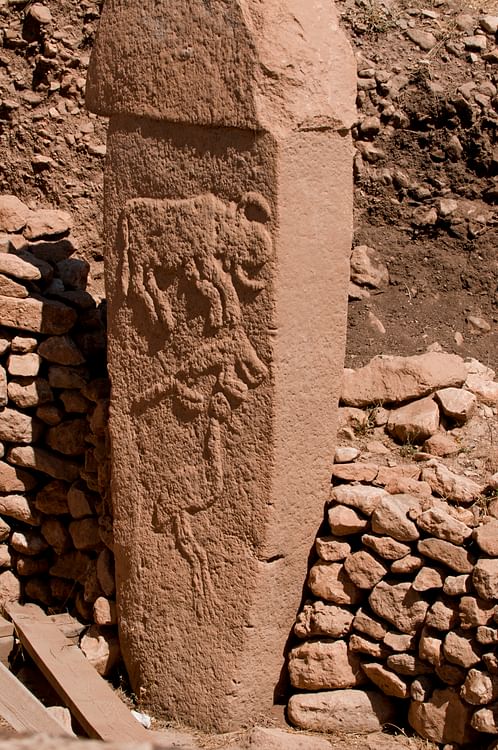
Pillar 38
Neolithic Anatolia

Pillar 38

Pillar 38
10th–9th millennium BCE · site context

Multiple birds belong to one pillar, not several independent artefacts.

Full observation record

Scope: Bird group in the photographed surface

Beaked figure
Several beaked figures occur.
Arm or wing extends forward
Limb contours are weathered.
Separate rounded form
No separate rounded motif is identified.
Rounded form at the limb
No disc-at-limb relation is resolved.
Facing beaked figures
The pictured birds do not form a clear facing pair.

Broad Early Neolithic context, not a direct date for these particular cuts.

Birds on Pillars 2, 33, 38 and 56

DAI / Göbekli Tepe Project. Copyright DAI; source photograph for critical comparison.

Pillar 56
Neolithic Anatolia

Pillar 56

Pillar 56
10th–9th millennium BCE · site context

A local anatomical contrast; the source treats these legs as more naturalistic.

Full observation record

Scope: Long-legged birds among the relief animals

Beaked figure
Beaked figures appear on the lower part.
Arm or wing extends forward
Visible limbs are primarily legs.
Separate rounded form
The rounded field stone outside the pillar is not a carving.
Rounded form at the limb
No object-at-wing relation is resolved.
Facing beaked figures
No opposed pair is identified in the selected bird scenes.

Broad Early Neolithic context, not a direct date for these particular cuts.

Birds on Pillars 2, 33, 38 and 56

DAI / N. Becker. Copyright DAI; source photograph for critical comparison.

Mata Ngarau rock
Rapanui traditions

Mata Ngarau rock

Routledge fig. 110
Photographed in 1914–15

A local concentration of birdmen. This is the same surface as the earlier atlas photograph.

Full observation record

Scope: Birdmen on the photographed surface

Beaked figure
Several long-beaked heads are visible.
Arm or wing extends forward
Arms and fingers overlap other contours.
Separate rounded form
The prominent circular forms are eyes, not detached discs.
Rounded form at the limb
No separate egg is confidently identified in this photograph.
Facing beaked figures
Multiple birdmen, without a clear opposed pair here.

Publication in 1919 is later than the expedition photograph; the carving date is unknown.

The Mystery of Easter Island

Mana Expedition / Routledge (1919), fig. 110. Public-domain publication.

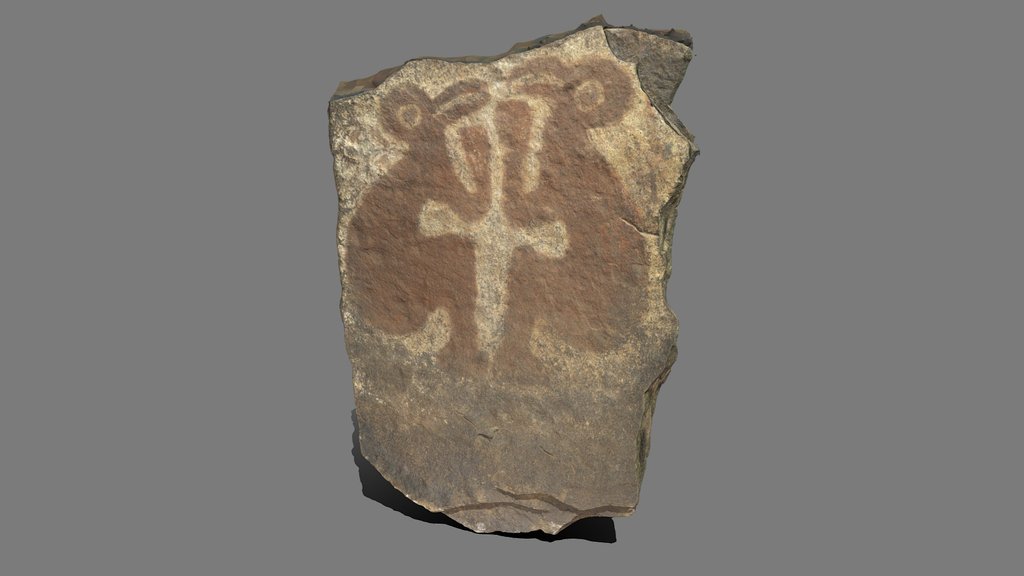
Painted Orongo slab
Rapanui traditions

Painted Orongo slab

MAPSE 17-00-1312
At the museum by 1974

A paired arrangement recurs locally in painting as well as carving.

Full observation record

Scope: Two painted facing birdmen

Beaked figure
Both painted figures have beaked heads.
Arm or wing extends forward
Arm/wing detail is not fully resolved in this preview.
Separate rounded form
Circular eyes do not count as separate rounded objects.
Rounded form at the limb
No detached object at a limb is established.
Facing beaked figures
The museum explicitly identifies two facing tangata manu.

Collection event, not a date of the painting.

Painted Orongo slab · MAPSE 17-00-1312

Factum Foundation / Museo Rapa Nui. No open licence stated; source preview for critical comparison.

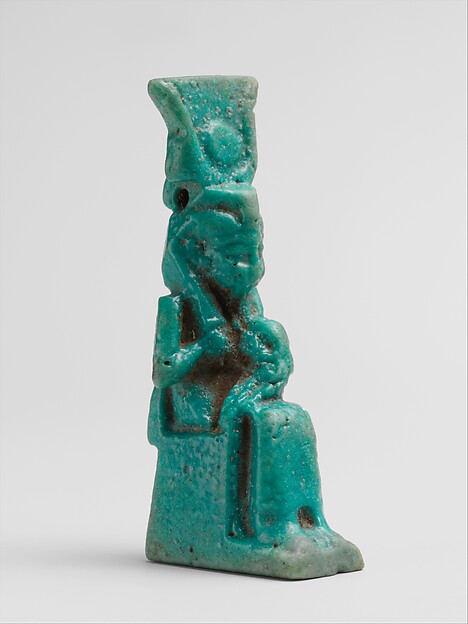
Isis and infant Horus
Egyptian traditions

Isis and infant Horus

74.51.4476
664–334 BCE

A deity-name search can return a scene with no bird head.

Full observation record

Scope: Preserved figure or scene in the primary museum photograph

Beaked figure
The named Horus is an infant, not a beaked figure.
Arm or wing extends forward
No beaked figure for this relation.
Separate rounded form
A disc-like element is between the headdress horns.
Rounded form at the limb
The rounded form is on the adult’s head.
Facing beaked figures
An adult and infant, not two facing birds.

Museum attribution; not a direct radiometric measurement.

Faience amulet of Isis and Horus · 74.51.4476

The Metropolitan Museum of Art. Public domain / Open Access.

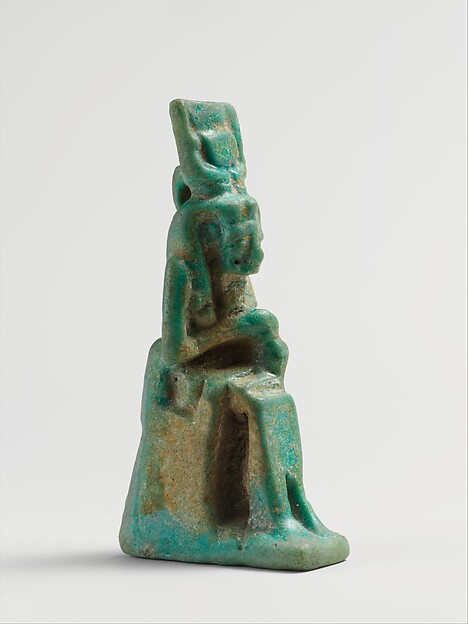
Isis and infant Horus
Egyptian traditions

Isis and infant Horus

74.51.4477
664–334 BCE

The headdress is a useful alternative location for a round motif.

Full observation record

Scope: Preserved figure or scene in the primary museum photograph

Beaked figure
The adult and child have human forms.
Arm or wing extends forward
No beaked figure for this relation.
Separate rounded form
A disc is framed by the crown’s horns.
Rounded form at the limb
The disc is a headdress element.
Facing beaked figures
An adult and infant.

Museum attribution; not a direct radiometric measurement.

Faience amulet of Isis and Horus · 74.51.4477

The Metropolitan Museum of Art. Public domain / Open Access.

Isis suckling Horus
Egyptian traditions

Isis suckling Horus

74.51.4478
664–334 BCE

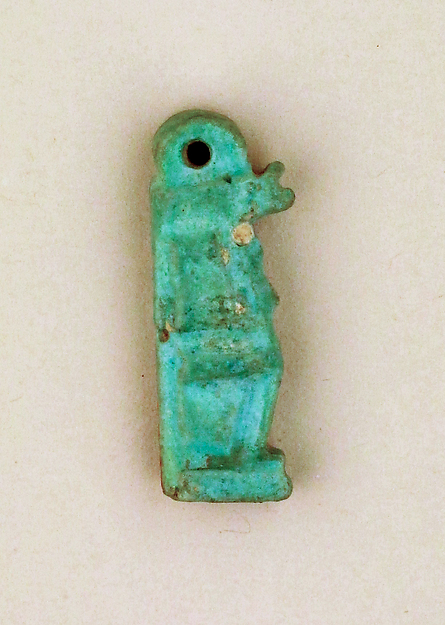
A real hole can look like a ring in a small photograph.

Full observation record

Scope: Preserved figure or scene in the primary museum photograph

Beaked figure
No bird head is identified in the worn profile.
Arm or wing extends forward
No beaked figure for this relation.
Separate rounded form
The conspicuous circular opening is a suspension hole.
Rounded form at the limb
The hole is not an object held in the scene.
Facing beaked figures
One adult-and-infant group.

Museum attribution; not a direct radiometric measurement.

Faience amulet of Isis suckling the infant Horus · 74.51.4478

The Metropolitan Museum of Art. Public domain / Open Access.

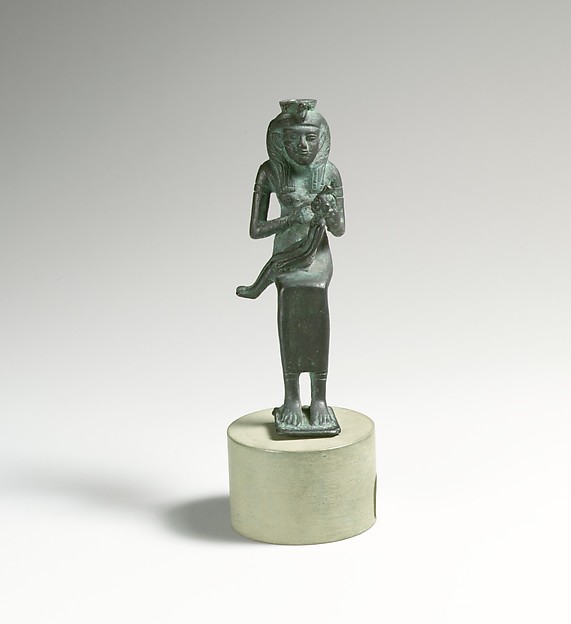
Isis with infant Horus
Egyptian traditions

Isis with infant Horus

74.51.5582
664–31 BCE

Retained by the selection rule even though it offers no obvious birdman match.

Full observation record

Scope: Preserved figure or scene in the primary museum photograph

Beaked figure
Both figures have human heads.
Arm or wing extends forward
No beaked figure for this relation.
Separate rounded form
The headdress is incomplete in this view.
Rounded form at the limb
No disc-at-bird-limb relation applies.
Facing beaked figures
An adult holds an infant.

Museum attribution; not a direct radiometric measurement.

Bronze statuette of Isis with infant Horus · 74.51.5582

The Metropolitan Museum of Art. Public domain / Open Access.

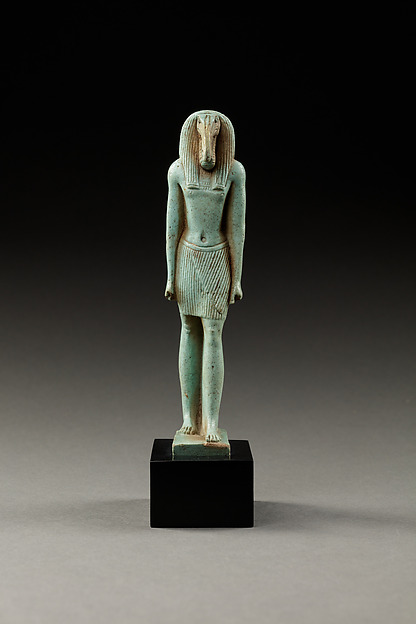
Striding Thoth
Egyptian traditions

Striding Thoth

2021.41.128
664–332 BCE

A beaked human form with a substantially different pose.

Full observation record

Scope: Preserved figure or scene in the primary museum photograph

Beaked figure
A long beak descends in front of the chest.
Arm or wing extends forward
Both arms hang alongside the body.
Separate rounded form
No separate rounded object is identified.
Rounded form at the limb
No object-at-extended-limb relation is seen.
Facing beaked figures
One figure.

Museum attribution; not a direct radiometric measurement.

Striding Thoth · 2021.41.128

The Metropolitan Museum of Art. Public domain / Open Access.

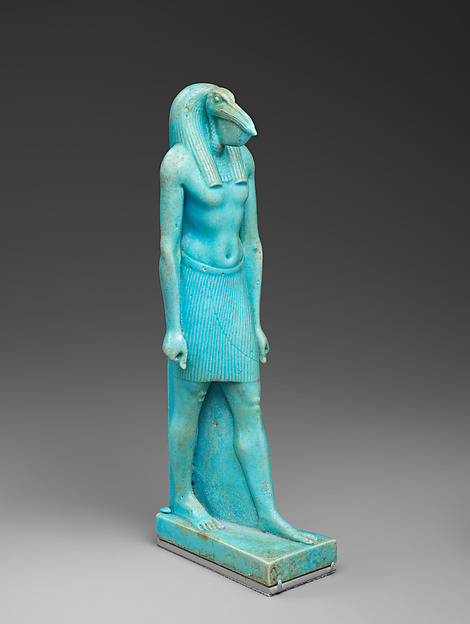
Striding Thoth
Egyptian traditions

Striding Thoth

26.7.860
332–30 BCE

A closer anatomical parallel than a shared arrangement.

Full observation record

Scope: Preserved figure or scene in the primary museum photograph

Beaked figure
The side view clearly shows the projecting beak.
Arm or wing extends forward
The arms hang down, rather than reaching forward.
Separate rounded form
No detached rounded object is identified.
Rounded form at the limb
The narrow relationship is not seen.
Facing beaked figures
One figure.

Museum attribution; not a direct radiometric measurement.

Striding Thoth · 26.7.860

The Metropolitan Museum of Art. Public domain / Open Access.

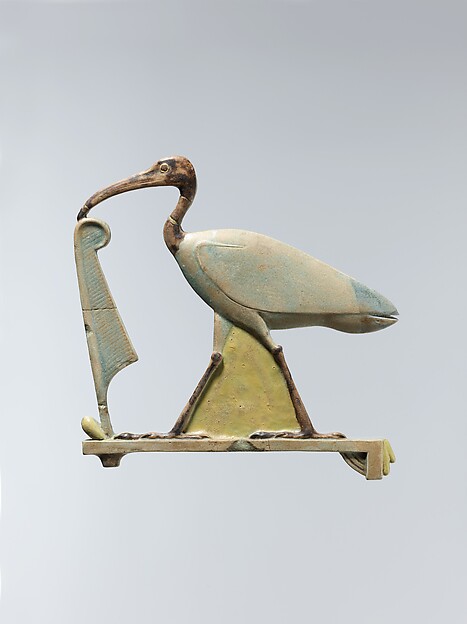
Thoth as an ibis
Egyptian traditions

Thoth as an ibis

26.7.992
360–343 BCE

A bird beside an emblem: similar ingredients, different anatomical relation.

Full observation record

Scope: Preserved figure or scene in the primary museum photograph

Beaked figure
A long curved beak meets a feather-like element.
Arm or wing extends forward
The bird’s visible wing is folded against its body.
Separate rounded form
The museum identifies the upright element as a Maat feather.
Rounded form at the limb
The beak, not a forward arm or wing, reaches the emblem.
Facing beaked figures
One bird.

Museum attribution; not a direct radiometric measurement.

Inlay depicting Thoth as the ibis with a Maat feather · 26.7.992

The Metropolitan Museum of Art. Public domain / Open Access.

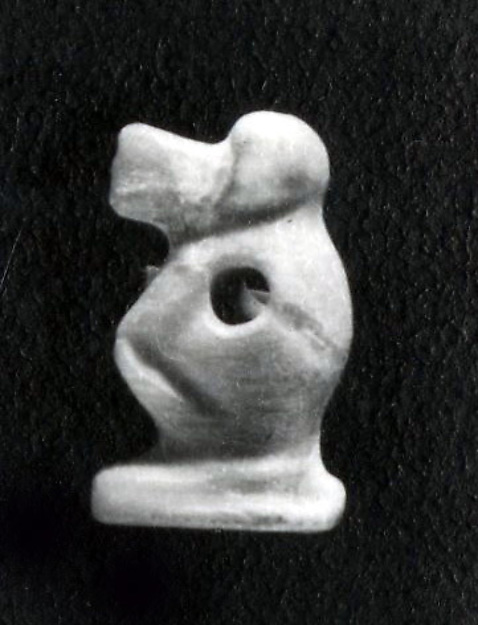
Thoth amulet
Egyptian traditions

Thoth amulet

65.46.4
ca. 2110–2030 BCE

The title “Thoth” does not guarantee a bird-headed representation.

Full observation record

Scope: Preserved figure or scene in the primary museum photograph

Beaked figure
This view shows a rounded muzzle rather than an ibis beak.
Arm or wing extends forward
No beaked figure is resolved.
Separate rounded form
The large opening passes through the amulet.
Rounded form at the limb
A suspension hole does not establish a held disc.
Facing beaked figures
One figure.

Museum display text gives 2110–2030 BCE; API numeric dates collapse the interval to 2110 BCE. Display text retained here.

Thoth amulet · 65.46.4

The Metropolitan Museum of Art. Public domain / Open Access.

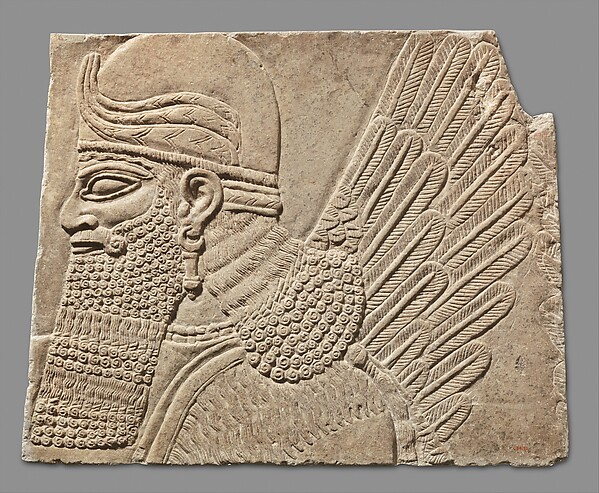
Winged figure · fragment
Assyria

Winged figure · fragment

84.11
ca. 883–859 BCE

Missing stone must stay unknown, not become an absent motif.

Full observation record

Scope: Preserved figure or scene in the primary museum photograph

Beaked figure
The preserved face is human and bearded.
Arm or wing extends forward
Hands are outside the surviving fragment.
Separate rounded form
An object could be missing with the lower body.
Rounded form at the limb
Fragmentary preservation prevents this check.
Facing beaked figures
Only one head survives.

Museum attribution; not a direct radiometric measurement.

Relief panel · 84.11

The Metropolitan Museum of Art. Public domain / Open Access.

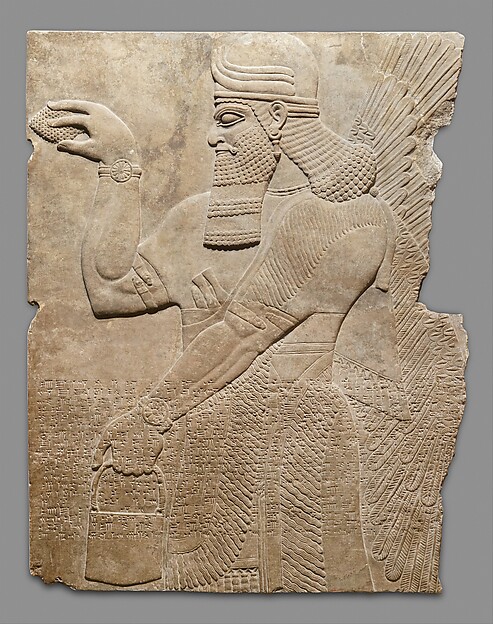
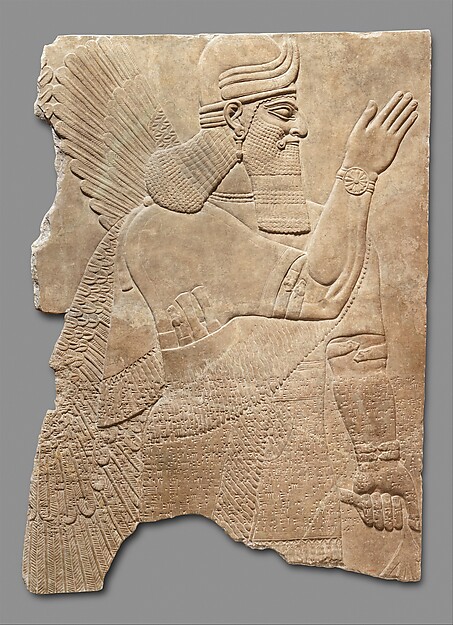
Winged figure with cone
Assyria

Winged figure with cone

17.190.2077
ca. 883–859 BCE

The hand-and-object gesture also occurs on a human-headed palace figure.

Full observation record

Scope: Preserved figure or scene in the primary museum photograph

Beaked figure
The bearded head is human.
Arm or wing extends forward
The raised arm belongs to a human-headed figure.
Separate rounded form
A compact textured cone-like object is in the raised hand.
Rounded form at the limb
A useful gesture comparison, but the figure is not beaked.
Facing beaked figures
One figure.

Museum attribution; not a direct radiometric measurement.

Relief panel · 17.190.2077

The Metropolitan Museum of Art. Public domain / Open Access.

Winged figure with raised hand
Assyria

Winged figure with raised hand

17.190.2078
ca. 883–859 BCE

An open hand and a nearby rosette can be confused with a held disc.

Full observation record

Scope: Preserved figure or scene in the primary museum photograph

Beaked figure
Human bearded head.
Arm or wing extends forward
A human-headed figure raises an open hand.
Separate rounded form
Rosettes are on the wrists; the raised hand appears empty.
Rounded form at the limb
A wrist rosette is not an object held at the fingertips.
Facing beaked figures
One figure.

Museum attribution; not a direct radiometric measurement.

Relief panel · 17.190.2078

The Metropolitan Museum of Art. Public domain / Open Access.

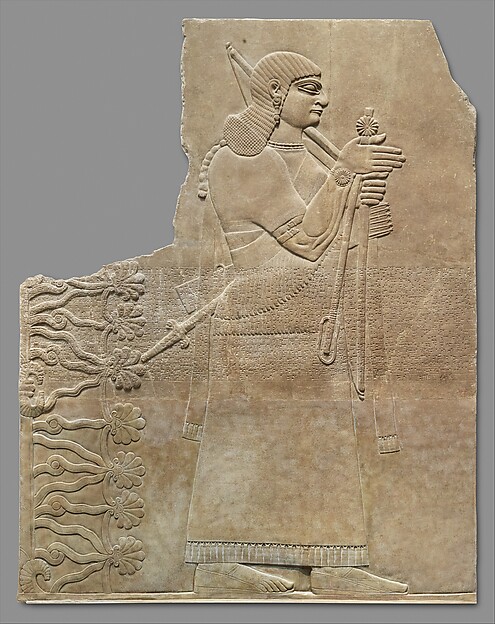
Palace attendant with flowers
Assyria

Palace attendant with flowers

17.190.2079
ca. 883–859 BCE

A rounded object near a hand can be a flower rather than an egg.

Full observation record

Scope: Preserved figure or scene in the primary museum photograph

Beaked figure
A human head with straight nose.
Arm or wing extends forward
The extended hands belong to a human figure.
Separate rounded form
A circular flower head is above the hand.
Rounded form at the limb
A stem joins the flower to the hands; no beaked figure.
Facing beaked figures
One figure.

Museum attribution; not a direct radiometric measurement.

Relief panel · 17.190.2079

The Metropolitan Museum of Art. Public domain / Open Access.

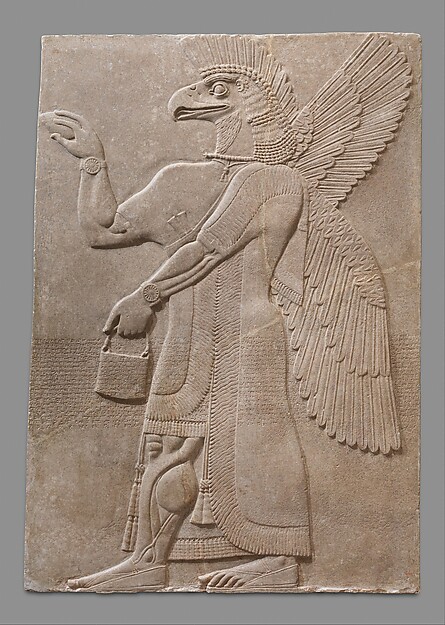
Eagle-headed protective figure
Assyria

Eagle-headed protective figure

32.143.7
ca. 883–859 BCE

A serious wider comparison. Keep the museum’s cone reading and the photograph’s ambiguity together.

Full observation record

Scope: Preserved figure or scene in the primary museum photograph

Beaked figure
An eagle-like beak is clearly carved.
Arm or wing extends forward
One arm is raised in front of the head.
Separate rounded form
The museum describes a cone; its contour is difficult in this rendition.
Rounded form at the limb
The source describes a held cone, but this view does not cleanly resolve it.
Facing beaked figures
One figure.

Museum attribution; not a direct radiometric measurement.

Relief panel · 32.143.7

The Metropolitan Museum of Art. Public domain / Open Access.

How these objects were selected

The nine focal/local records are retained in full. New museum batches were selected in ascending object-ID order under written source and date rules. The ordinary variants and incomplete views stay in the set.

Museum title queryReturnedInspected to stopping pointIncluded
Horus11744
Thoth2564
winged protective spirit110
Relief panel34144

The first spirit query returned a modern locket with zero numeric dates. It was excluded; a documented Assyrian relief query replaced it. Horus queries retained mother-and-infant scenes. Thoth priest shabtis were excluded because they depict priests.

The selected set can expose reading errors and alternative arrangements. Its search terms, image availability and small quotas do not support a global rarity estimate. Related objects from one palace are not independent traditions.

03 / Follow the dated evidence

What connects—and
where the trail stops.

Dates belong to a particular event. A photograph dates a record; a statue’s age does not date every later carving.

Anatolia

Neolithic East Mound · broad context

context

A modified crane wing at Çatalhöyük

Cuts on wing bones were interpreted as attachment work; costume use is one proposed explanation.

Not a bird-and-disc image or a demonstrated link to Rapa Nui. This broad range dates the mound context, not the individual wing.

Dance of the Cranes · Crane-wing paper · publisher PDF

Rapa Nui

c. 1250–1430 CE · estimated admixture

model estimate

Independent evidence of Pacific contact

Ancient genomes support pre-European American ancestry in Rapanui.

This dates an ancestry event, not these carvings or a connection with Anatolia.

Ancient Rapanui genomes

Sources checked, access limits & leads still to follow →

04 / Competing explanations

What would change the answer?

Local development and recurrence

What we would expect
Local variants connect the figures to particular practices; broad ingredients recur with different arrangements and meanings.
Evidence in hand
Local bird repertoires are documented on both sides. The egg has a Rapanui historical context; the Neolithic disc remains ambiguous.
Still missing
A fuller regional sequence and a defined comparison collection are still needed. Local context alone does not rule out older inheritance.
The next useful check
Acquire further dated Orongo scenes and nearby Anatolian bird compositions, preserving less similar examples.

Birds on Pillars 2, 33, 38 and 56 · The Mystery of Easter Island · Painted Orongo slab · MAPSE 17-00-1312

Transmission through intermediates

What we would expect
Several specific details recur together in a dated sequence, with independent evidence supporting the proposed connections.
Evidence in hand
Pacific–American contact has independent support. The selected Egyptian and Assyrian parallels are comparisons, not a demonstrated route from Anatolia.
Still missing
No connected sequence for this precise motif has been established by this investigation.
The next useful check
Search dated intermediates for the whole arrangement, including its unusual differences, and log unsuccessful searches.

Ancient Rapanui genomes · Relief panel · 32.143.7

A much older shared inheritance

What we would expect
The specific arrangement is attested early enough, persists or transforms through intervening traditions, and comes with evidence beyond generic resemblance.
Evidence in hand
The large chronological separation leaves a question, but does not itself supply a line of descent.
Still missing
Earlier Pacific attestations and a transmission history for the motif have not been established here. This small corpus cannot prove global absence.
The next useful check
Specify the expected inherited details and regions before expanding the search. Seek independent chronological and material support.

Pillar 43 · excavation-team account · Hoa Hakananai’a: a new study

Selection and presentation amplify the match

What we would expect
Similarity changes with view, cropping, feature definition or the alternatives included.
Evidence in hand
The museum queries returned ordinary variants, holes, headdresses and incomplete figures. The three focal objects differ in limb, arrangement and certainty of meaning.
Still missing
The annotations need independent review; the current set was assembled for exploration and cannot estimate worldwide rarity.
The next useful check
Review the reference regions, then freeze a new recognition test using alternate views and close visual alternatives.

The Met collection API · Hoa Hakananai’a: a new study

These are competing research expectations, not probabilities or exclusive historical categories. Inheritance, borrowing and local reinvention can coexist.

The next experiment

Check the observer, then compare.

Review the feature regions independently, acquire matched alternate views, then freeze a new recognition test. A correct word at the wrong location should fail. The present collection is development material.

Proposed test and outstanding reference work → · Earlier experiment records

Sources and access notes

Pillar 43 · excavation-team account

Oliver Dietrich, 2016; updated 2017. Egg, celestial body and human head are alternative readings of the disc, not identifications.

Main bird scene and disc discussion · excavation

Birds on Pillars 2, 33, 38 and 56

Jens Notroff, DAI, 2016. New photographs checked against the labelled figures. Humanlike anatomy and performance remain interpretations.

Figures 1, 2, 4 and 5 · excavation

The Mystery of Easter Island

Katherine Routledge, 1919. Historical photographs and accounts mediated through the expedition and its Rapanui interlocutors.

Figures 110, 112; pp. 261–265 · historical witness

Birdman boulder · Oc1920,0506.1

British Museum record: birdman holding an egg; approximate catalogue range 1750–1875. This is not a direct carving-age measurement.

Object description and metadata · museum

Hoa Hakananai’a · Oc1869,1005.1

Object identity and carved motifs; the statue and its later decoration need separate dates. Direct page access remains intermittent.

Collection record; indexed text · museum

Hoa Hakananai’a: a new study

Pitts, Miles, Pagi & Earl (2014). Digital study and a proposed reading of the later birdman composition. Author-uploaded full text inspected; exact carving dates remain unresolved.

pp. 303–309, 316–318; figs. 8–17 · research paper

Author-uploaded 2014 paper

Access copy of the same Pitts et al. paper, not an independent source.

Author manuscript text and figure captions · access copy

Digital recording and original viewers

James Miles, Southampton (2014). RTI and photogrammetry document surface detail; the linked legacy viewers have access limitations.

Researcher’s account · research team

Dance of the Cranes

Russell & McGowan (2003). A modified crane wing is physical evidence; costume use is a proposed explanation.

pp. 446–448; space 73, unit 1347 · research paper

Orongo in its island context

Museo Rapa Nui’s account connects Orongo’s petroglyphs with the tangata manu competition.

Aldea de Orongo · museum

Ancient Rapanui genomes

Moreno-Mayar et al. (2024). Pre-European American ancestry and an estimated admixture interval; this does not trace an Anatolian motif.

Abstract and contact-date analysis · research paper

The Met collection API

Museum metadata and public-domain image URLs. Exact query responses and inspected candidate records are retained.

Search and object endpoints · collection data

Striding Thoth · 2021.41.128

The Metropolitan Museum of Art. Museum title, date, accession and source-provided photograph checked.

Object metadata and photograph · museum
Striding Thoth · 26.7.860

The Metropolitan Museum of Art. Museum title, date, accession and source-provided photograph checked.

Object metadata and photograph · museum
Thoth amulet · 65.46.4

The Metropolitan Museum of Art. Museum title, date, accession and source-provided photograph checked.

Object metadata and photograph · museum
Relief panel · 84.11

The Metropolitan Museum of Art. Museum title, date, accession and source-provided photograph checked.

Object metadata and photograph · museum
Relief panel · 17.190.2077

The Metropolitan Museum of Art. Museum title, date, accession and source-provided photograph checked.

Object metadata and photograph · museum
Relief panel · 17.190.2078

The Metropolitan Museum of Art. Museum title, date, accession and source-provided photograph checked.

Object metadata and photograph · museum
Relief panel · 17.190.2079

The Metropolitan Museum of Art. Museum title, date, accession and source-provided photograph checked.

Object metadata and photograph · museum
Relief panel · 32.143.7

The Metropolitan Museum of Art. Museum title, date, accession and source-provided photograph checked.

Object metadata and photograph · museum