Deep Memory/ The next investigation
The resemblance in context

Birds in their
own worlds.

The pillar and the moai each belong to a local visual tradition. Looking at their neighbours makes the distant resemblance more specific—and gives us better questions to test.

01 / Context

The figures have neighbours.

Photographs retain their orientation and proportions. Equal display area does not represent equal physical size. This selection establishes context; it is not a representative sample of either tradition.

02 / Be precise

Three comparisons inside one mystery.

“Bird plus circle” leaves out the relation between them. Is the circle held, floating above a wing, or carved below a group?

The boulder offers the clearest gesture. The moai adds an intriguing possibility: a digital study proposes that its older ring was incorporated into the birdman scene, perhaps as an egg.

Observed arrangements, followed by interpretations. These are source-assisted readings, not scores from the AI trial.
ObjectVisible relationMeaning / uncertainty
Pillar 43A prominent bird extends a wing toward a disc; another bird is nearby.The excavation team considers egg, celestial body and human head readings. “Egg” is not established. Source.
Orongo boulderA bird-headed figure has a rounded object at its extended hand.Museum and early published accounts interpret an egg. That reading has local context; it does not determine the pillar’s disc. Source.
Moai backPaired birdmen above an older ring; the digital study reads arms reaching around it.An egg role is proposed, but damaged limbs leave exact contact uncertain. The ring’s earlier origin does not settle its later meaning. 2014 study.

Compare 22 objects with feature guides & dated evidence →

03 / A working explanation

Local traditions make the resemblance possible.

This is our present inference from the inspected material, not an archaeological verdict or a probability estimate.

My current working explanation is that each culture developed bird and human imagery within its own symbolic world, and that selecting particular details brings their shared forms into focus.

The local examples give that explanation concrete support: neither culture’s bird imagery rests on a single exceptional object. Bird bodies, human limbs, pairs and rounded forms provide a vocabulary that different traditions can combine.

The specific bird-and-rounded-object relationship remains worth investigating. Its historical force depends on whether it is rare, whether its meaning agrees, and whether a dated chain connects the designs. The sources checked here do not establish that chain.

Deep inheritance remains a hypothesis. A regional sequence of intermediate designs, securely dated and carrying an unusual combination of relations, would change the case much more than another isolated look-alike. The Neolithic stamp literature is one lead to examine; it is not yet an audited route to the Pacific.

04 / Evidence

Keep objects, photographs and dates separate.

The register includes the three focal objects and six local comparators. Photographs of Pillars 33, 38 and 56 are now available in the expanded study. Different views and figures on one rock remain one physical object.

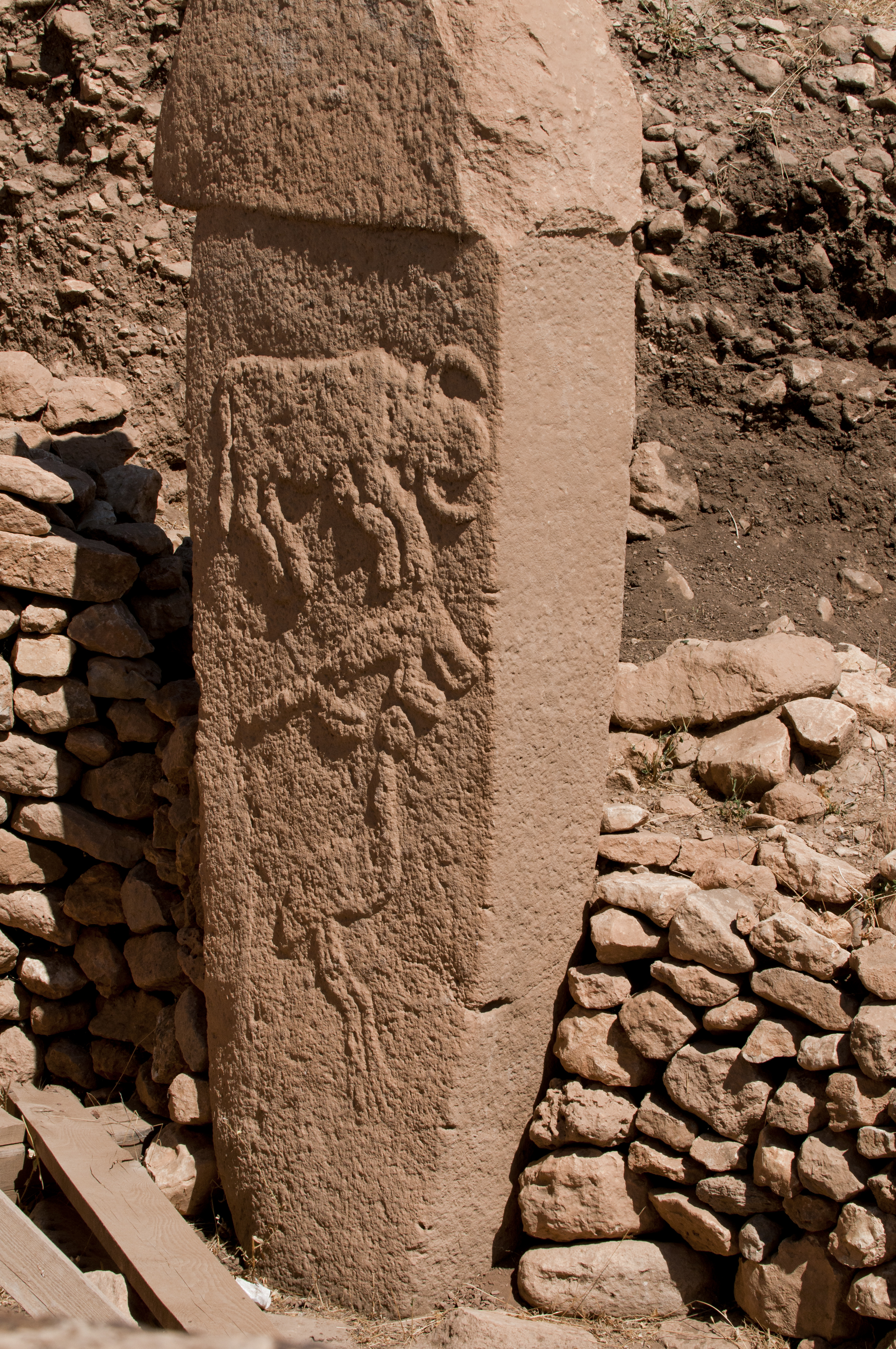
Pillar 43Anatolia · Pillar 43 · Photographs and excavation-team description
Context
Göbekli Tepe · Building D
What is dated?
Early Neolithic context; site broadly tenth–ninth millennium BCE. Context is not a direct carving date.
Observation
Prominent bird, disc above an extended wing, another nearby bird; scorpion and three arched forms elsewhere on the surface.
Why include it?
The focal bird-and-disc composition. Its disc has several published interpretations.

Of animals and a headless man: Pillar 43

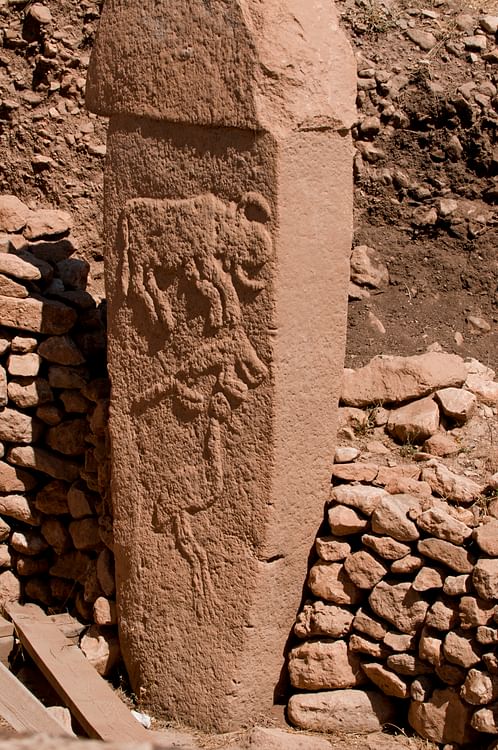
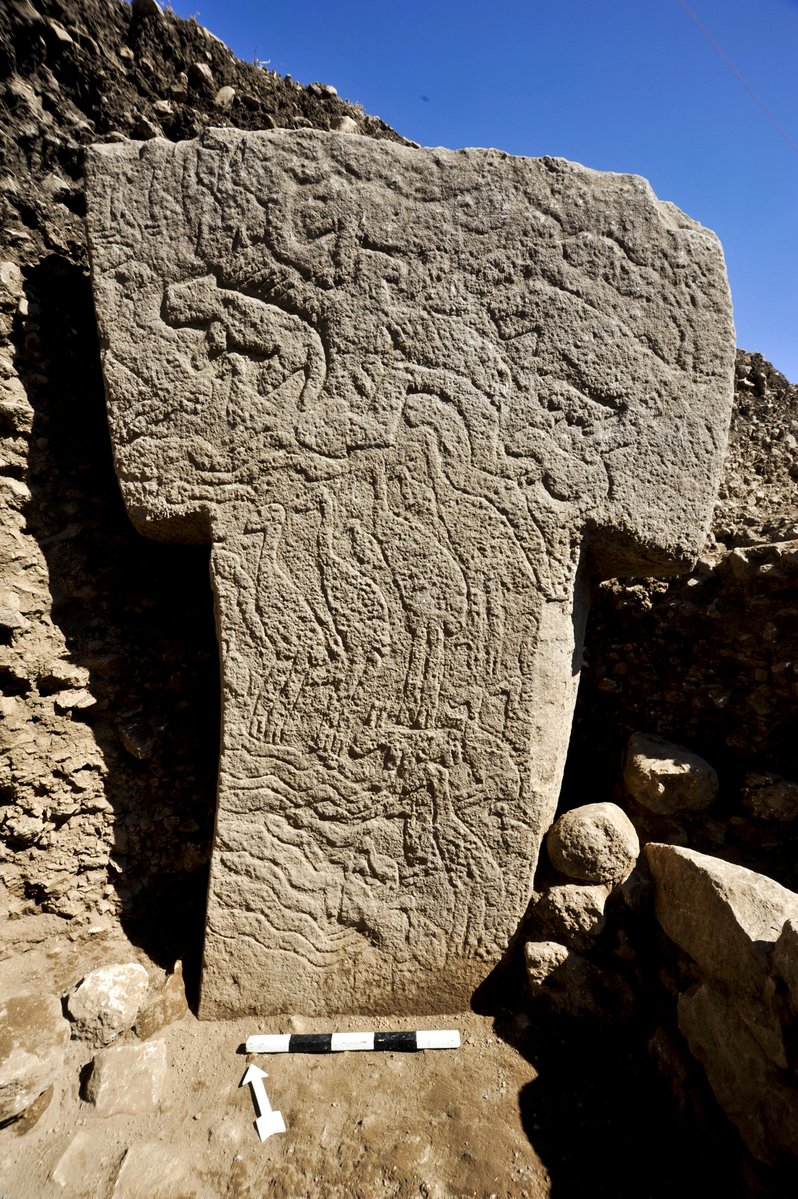
Pillar 2Anatolia · Pillar 2 · Photograph and excavation-team description
Context
Göbekli Tepe · Building A
What is dated?
Early Neolithic site context; no motif-specific date established here.
Observation
A crane below a fox and aurochs. The excavation team discusses its unusual legs.
Why include it?
Birds with humanlike traits have a local comparison beyond Pillar 43.

Dances with Cranes: animal masquerade in Pre-Pottery Neolithic ritual

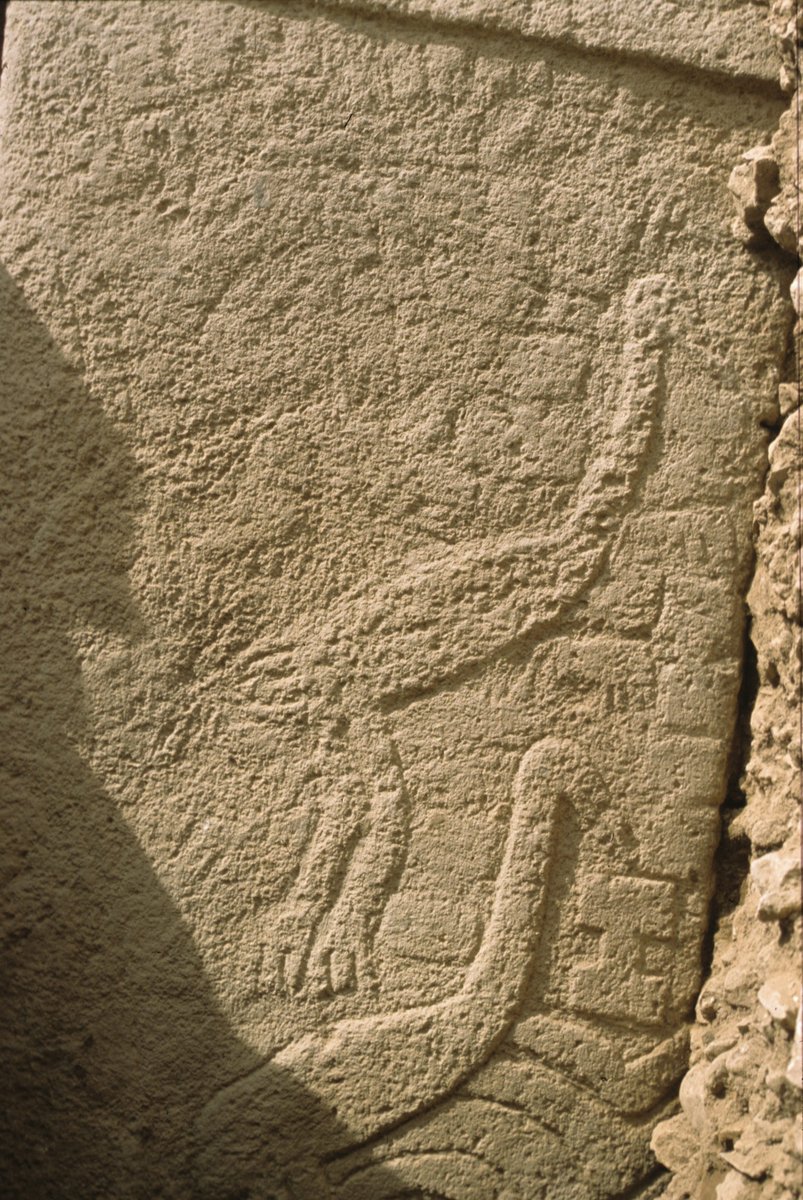
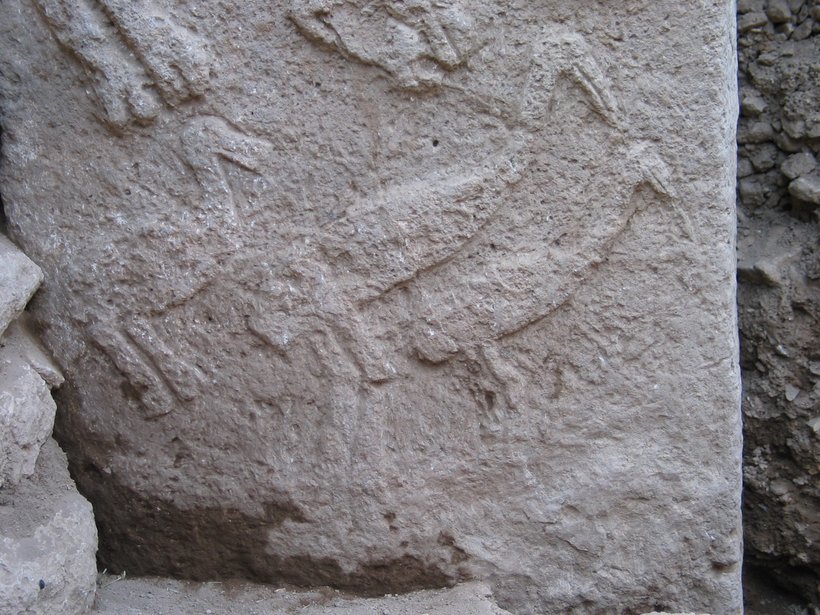
Pillar 33Anatolia · Pillar 33 · Excavation-team photograph acquired and inspected, 20 September 2026
Context
Göbekli Tepe
What is dated?
Early Neolithic site context; no motif-specific date established here.
Observation
The source illustrates a crane with thick, bent legs.
Why include it?
A second local anatomical variant. Species and performance interpretations need checking against the carving.

Dances with Cranes: animal masquerade in Pre-Pottery Neolithic ritual

Pillar 38Anatolia · Pillar 38 · Excavation-team photograph acquired and inspected, 20 September 2026
Context
Göbekli Tepe
What is dated?
Early Neolithic site context; no motif-specific date established here.
Observation
The source describes three birds, at least two with unusual legs.
Why include it?
Repeated birds within the same site; not three independent artefacts.

Dances with Cranes: animal masquerade in Pre-Pottery Neolithic ritual

Pillar 56Anatolia · Pillar 56 · Excavation-team photograph acquired and inspected, 20 September 2026
Context
Göbekli Tepe
What is dated?
Early Neolithic site context; no motif-specific date established here.
Observation
The source contrasts these birds’ more naturalistic legs with those on other pillars.
Why include it?
A local contrast, useful for testing a broad claim that all the birds are humans in costume.

Dances with Cranes: animal masquerade in Pre-Pottery Neolithic ritual

Hoa Hakananai’a · backRapa Nui · BM Oc1869,1005.1 · Photographs and museum / digital-study records
Context
Orongo · formerly in the house Taura Renga
What is dated?
Birdman carvings are later than the original statue. Removed from Rapa Nui in 1868; exact carving dates uncertain.
Observation
Two principal birdman figures, a smaller central bird and a large ring below the main figures.
Why include it?
The 2014 study proposes that an older ring gained an egg-like role in the later birdman composition. Damaged arms make a categorical held/not-held reading premature.

Hoa Hakananai’a · Oc1869,1005.1 · Update on the Hoa Hakananai’a statue · Hoa Hakananai’a: a new study

Birdman boulderRapa Nui · BM Oc1920,0506.1 · Museum record; modern and 1919 photographs
Context
Orongo · collected in 1914–15
What is dated?
Carved by its 1914 excavation; catalogue range 1750–1875 is approximate.
Observation
A bird-headed figure with a rounded object at the hand, interpreted as an egg.
Why include it?
The more specific comparison with Pillar 43: a birdlike figure next to a rounded object and an extended limb.

Birdman boulder · Oc1920,0506.1 · The Mystery of Easter Island · figures 110 and 112; pages 261–263

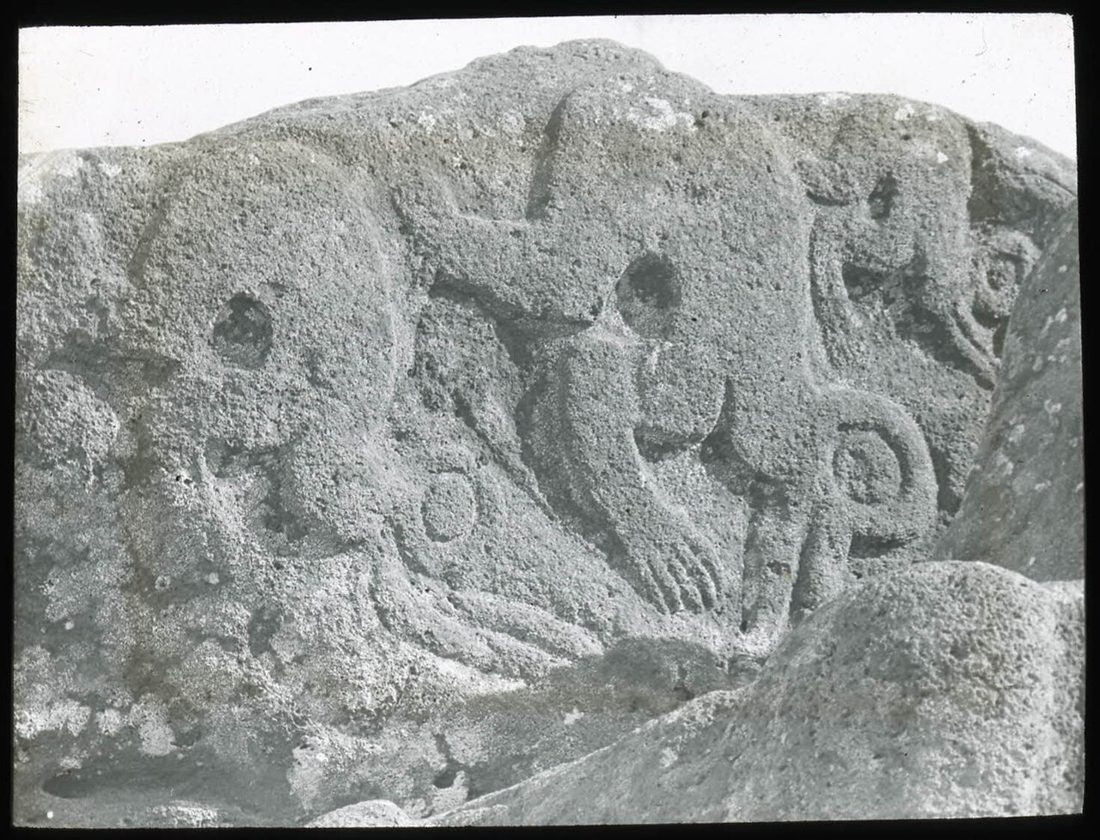
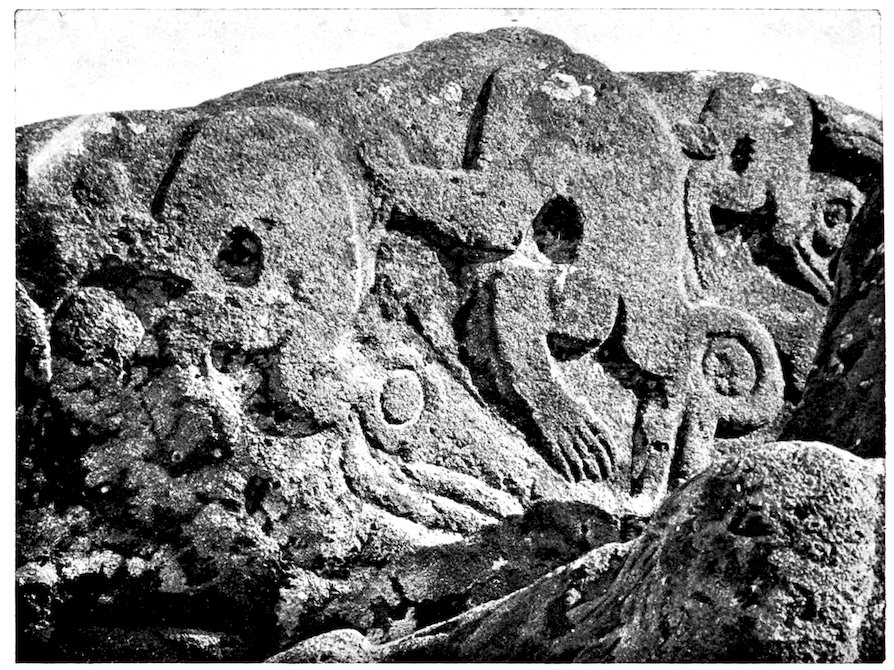
Mata Ngarau rockRapa Nui · BM photograph Oc,G.T.1647; Routledge figure 110 · Two reproductions of the same historic photograph
Context
Orongo · carved rock surface
What is dated?
Present when photographed during the 1914–15 expedition. Carving date not established here.
Observation
Three bird-headed figures occur together on the photographed surface.
Why include it?
Local repetition of the figure type. The two reproductions count as one surface.

The Mystery of Easter Island · figures 110 and 112; pages 261–263

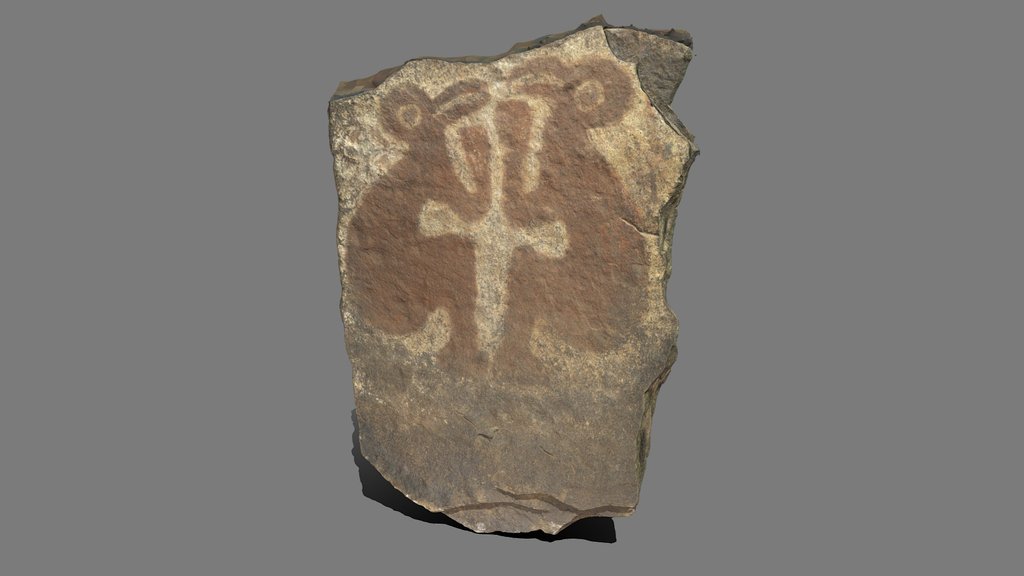
Painted Orongo slabRapa Nui · MAPSE 17-00-1312 · Museum record and preview of Factum Foundation’s 3D recording
Context
Orongo house; now Museo Rapa Nui
What is dated?
Moved to the museum in 1974. The consulted record does not specify the painting date.
Observation
Two facing tangata manu, identified by the Rapa Nui museum.
Why include it?
The paired birdman arrangement appears on another local object and in a different medium.

Painted slabs from the ceremonial village of Orongo · Rapa Nui MAPSE 17-00-1312 · 3D recording

Download the object and image register. Selection is purposive. Specialist and Rapanui community review has not yet taken place.

05 / Sources

Follow each observation.

Of animals and a headless man: Pillar 43

Oliver Dietrich / Göbekli Tepe Research Project · 2016; updated 2017

Motifs and competing readings of the disc. The author’s 17 October 2016 reply discusses possible later regional continuities while stressing missing links.

Painted slabs from the ceremonial village of Orongo

Museo Antropológico Padre Sebastián Englert, Rapa Nui · Museum collection page; checked September 2026

Identifies MAPSE 17-00-1312 as two facing tangata manu from a house at Orongo, brought to the museum in 1974 during restoration. That is a collection event, not the painting date.

Rapa Nui MAPSE 17-00-1312 · 3D recording

Factum Foundation; linked by the Rapa Nui museum · Model published 3 May 2020

Model identity, creator and preview verified through the public Sketchfab API. The preview is a textured 3D rendering, not an excavation photograph or an AI reconstruction. No open reuse licence is stated.

The Mystery of Easter Island · figures 110 and 112; pages 261–263

Katherine Routledge / Mana Expedition · 1919, reporting work in 1914–15

Historical photographs and interpreted birdman traditions, recorded through Rapanui interlocutors. Figure 110 reproduces the same carved surface as the existing Mata Ngarau image; these are not independent examples.

Hoa Hakananai’a · Oc1869,1005.1

British Museum · Collection record

Identity and carved motifs; distinguish the statue from subsequent carving episodes. Exact motif dates are unresolved.

Birdman boulder · Oc1920,0506.1

British Museum / Google Arts & Culture · Collection record

Orongo provenance and egg interpretation. The catalogue range 1750–1875 is approximate, not a direct measurement of carving age.

Update on the Hoa Hakananai’a statue

James Miles / Archaeological Computing Research Group, Southampton · 1 August 2014

Research team’s photogrammetry and reflectance-transformation imaging. The original top-back RTI link returned HTTP 403 on this check; its existence does not mean the dataset was successfully examined here.

Hoa Hakananai’a: a new study

Pitts, Miles, Pagi & Earl · 2014; checked 20 September 2026

The study proposes that arms reach toward an older ring, possibly reinterpreted as an egg in the later composition. Exact contacts and meaning remain open.
Photographs and recording preview

  • pillar2.jpg — Teomancimit, 6 September 2011. Original on Wikimedia Commons; downloaded from World History Encyclopedia. CC BY-SA 3.0; https://creativecommons.org/licenses/by-sa/3.0/. Original bytes unchanged; SHA-1 matches Commons c177bdb4d9b1f116476fef0c55019cbee012ce0b. Context / record.
  • pillar2-web.jpg — Teomancimit / World History Encyclopedia. CC BY-SA 3.0; https://creativecommons.org/licenses/by-sa/3.0/. Publisher-provided 498 × 750 display rendition, downloaded unchanged; no crop added by this project. Context / record.
  • orongo-rock-1919.jpg — Mana Expedition; published in Katherine Routledge (1919), figure 110; digitised by Project Gutenberg. Public-domain publication. Downloaded bytes unchanged; printed reproduction of the same photograph already represented by orongo.jpg. Context / record.
  • orongo-painted-slab.jpeg — Factum Foundation / Museo Rapa Nui; preview of 3D recording MAPSE 17-00-1312. No open licence stated; small source preview reproduced for identification and critical comparison, not offered as a freely licensed asset. Source-provided textured 3D preview; downloaded unchanged; not an AI reconstruction. Context / record.
  • pillar33.jpg — DAI / K. Schmidt. Copyright DAI; source photograph for critical comparison.. Source-provided rendition; downloaded bytes unchanged. Annotations are separate SVG overlays.. Context / record.
  • pillar38.jpg — DAI / Göbekli Tepe Project. Copyright DAI; source photograph for critical comparison.. Source-provided rendition; downloaded bytes unchanged. Annotations are separate SVG overlays.. Context / record.
  • pillar56.jpg — DAI / N. Becker. Copyright DAI; source photograph for critical comparison.. Source-provided rendition; downloaded bytes unchanged. Annotations are separate SVG overlays.. Context / record.