Central figures with something on each side: one broad family, several distinct arrangements.
1 selected records · 2 intake leads. Membership records a resemblance; it does not establish common origin.
Compare the recorded features
Each row describes one object, surface or textual scope. A dash means “not recorded”, not “absent”. Features across different rows do not establish co-occurrence.
Central figurePaired flanking attributesTwo staffs
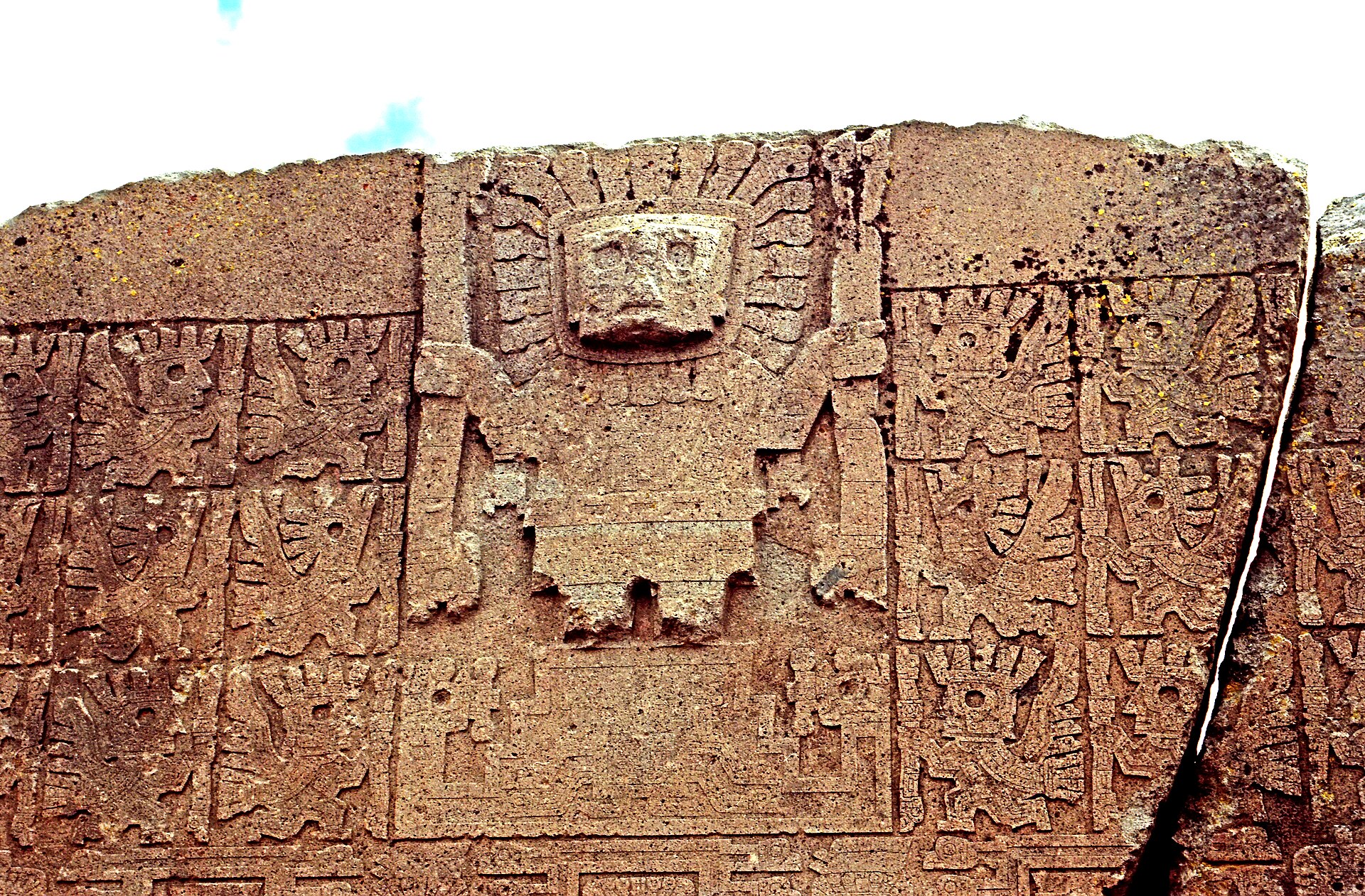
Two staffs flank the central figure; the surrounding bird-headed attendants are another part of the scene.
Episode, sources & image
Observation scope: single surface
Carving date unresolved here · unresolved The input register gives a broad Tiwanaku-period attribution. No object-specific dating source has been checked for this entry.
Dennis G. Jarvis CC BY-SA 2.0 Image record Wikimedia Commons server-rendered JPEG at 1920 px wide; not cropped.
The identification queue
Leads worth following.
Preserved claims and images, awaiting the checks needed for object records.
Identification open · claim
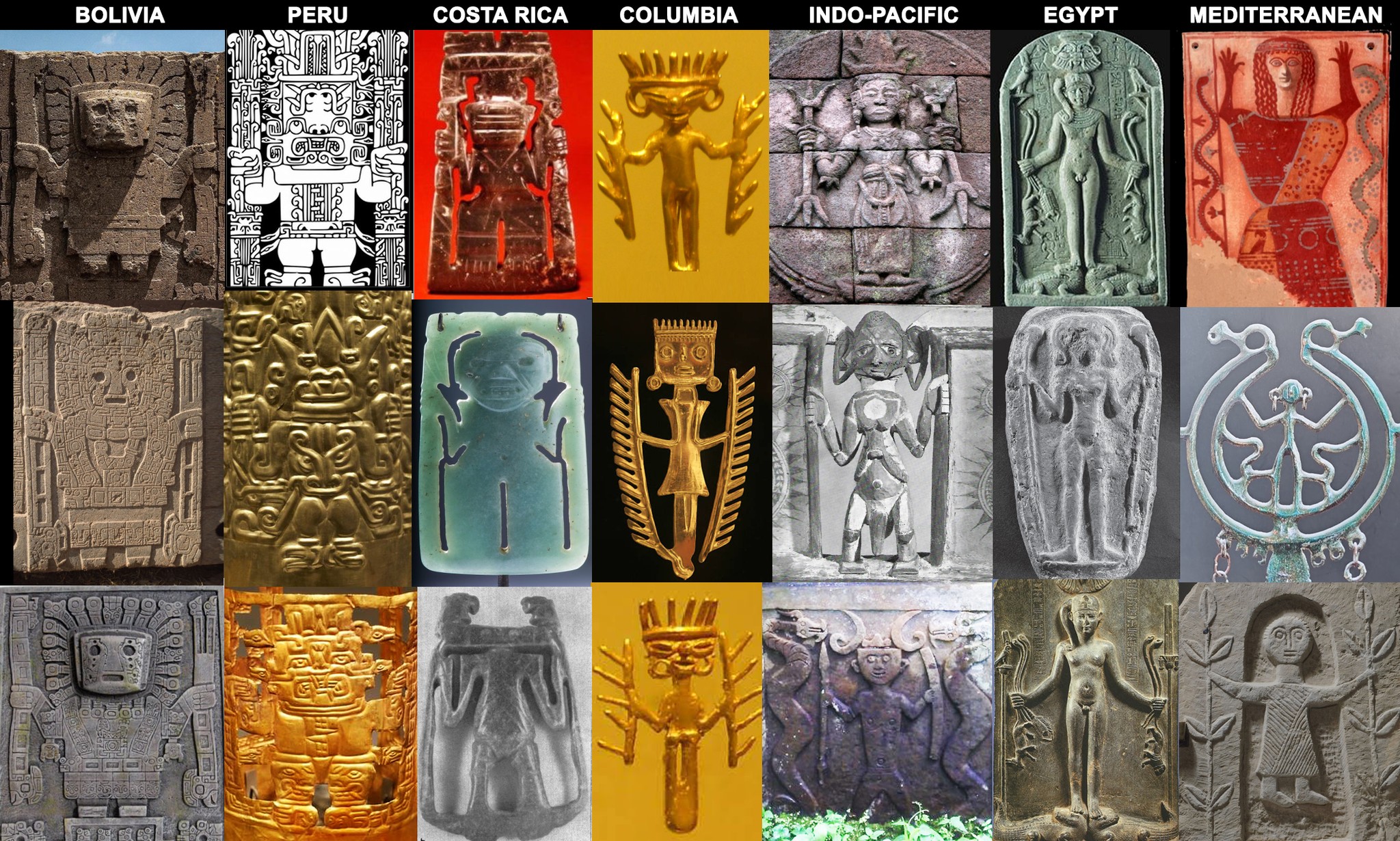
Staff holders and “masters of animals”
The seven headings mix countries and huge regions. Similar flanking layouts do not establish that every figure holds animals or two staffs. Repeated views may occur.
Images, source check & next step
Supplied 21-panel montage of figures with staffs, animals and flanking forms. Its regional captions are unverified. Supplied reference; original photographer or compiler uncredited unless stated in the audit. Rights unresolved; retained for source criticism. Not covered by the code licence.
Next: Identify each panel against a collection or excavation record; compare held animals, staffs and free-standing attendants separately.
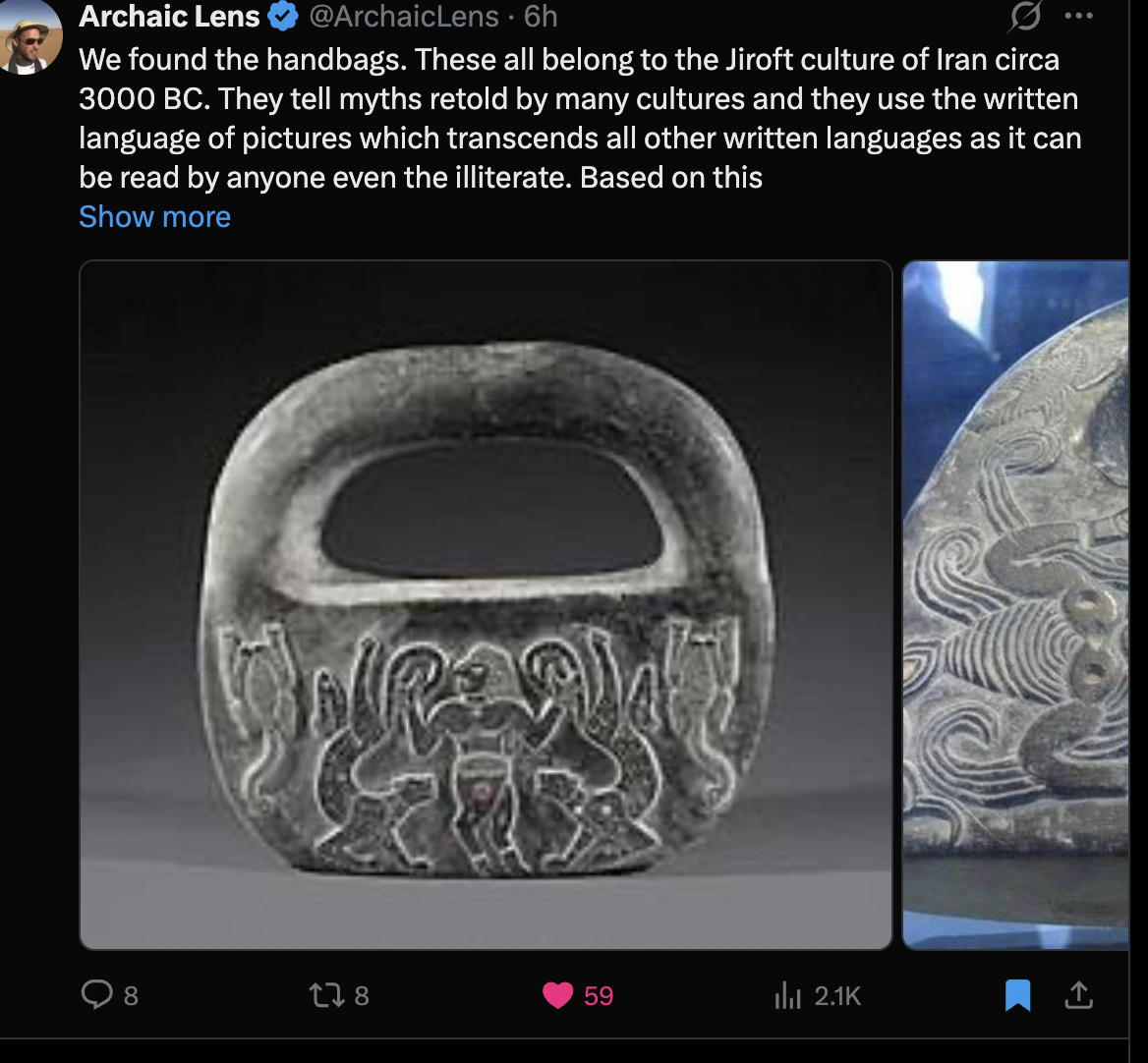
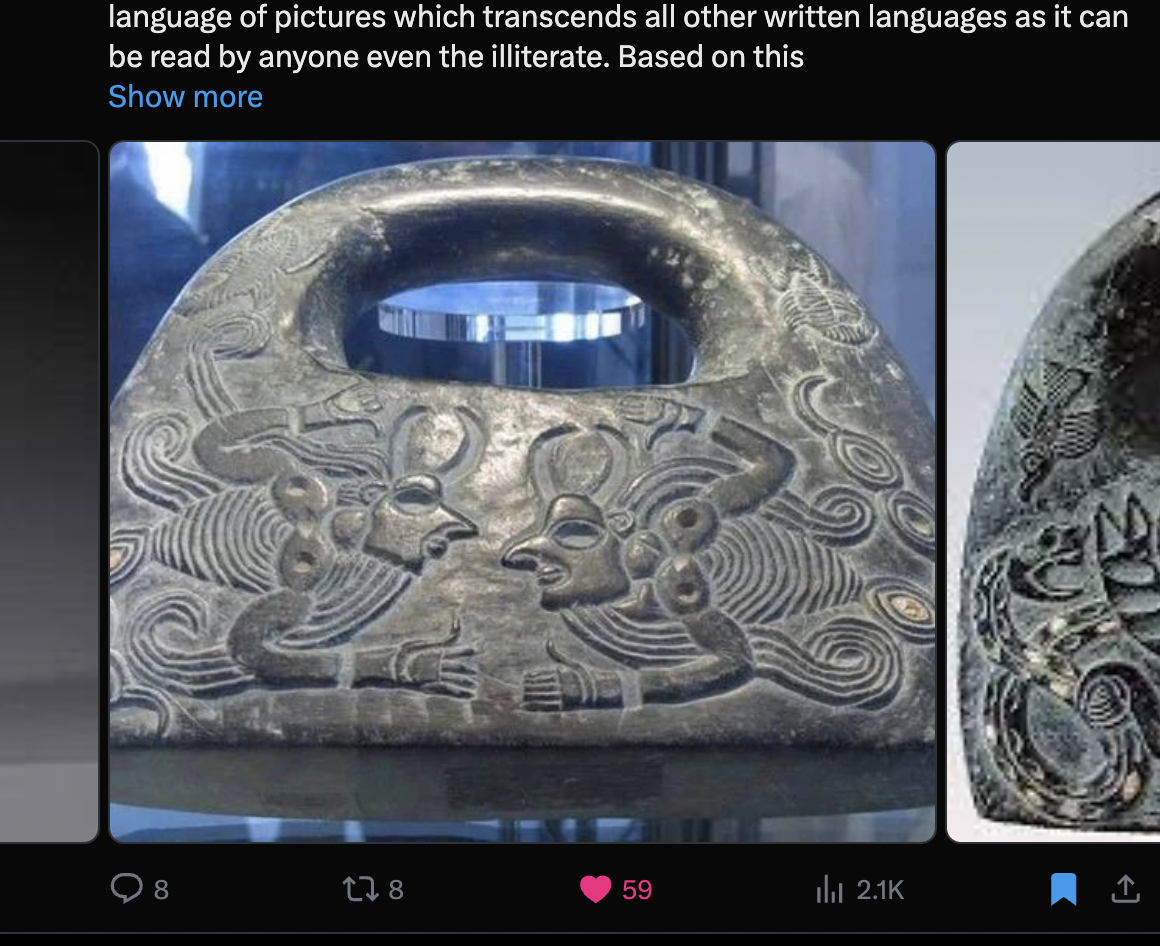
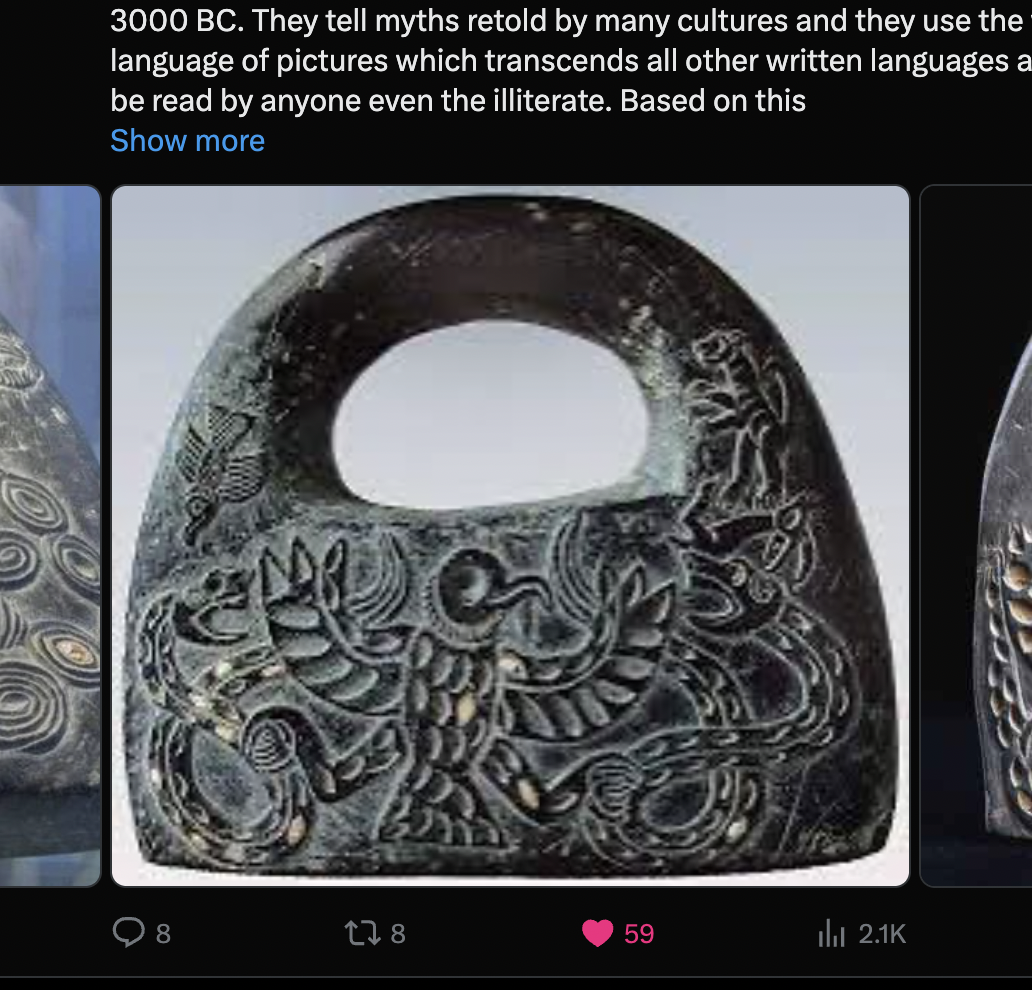
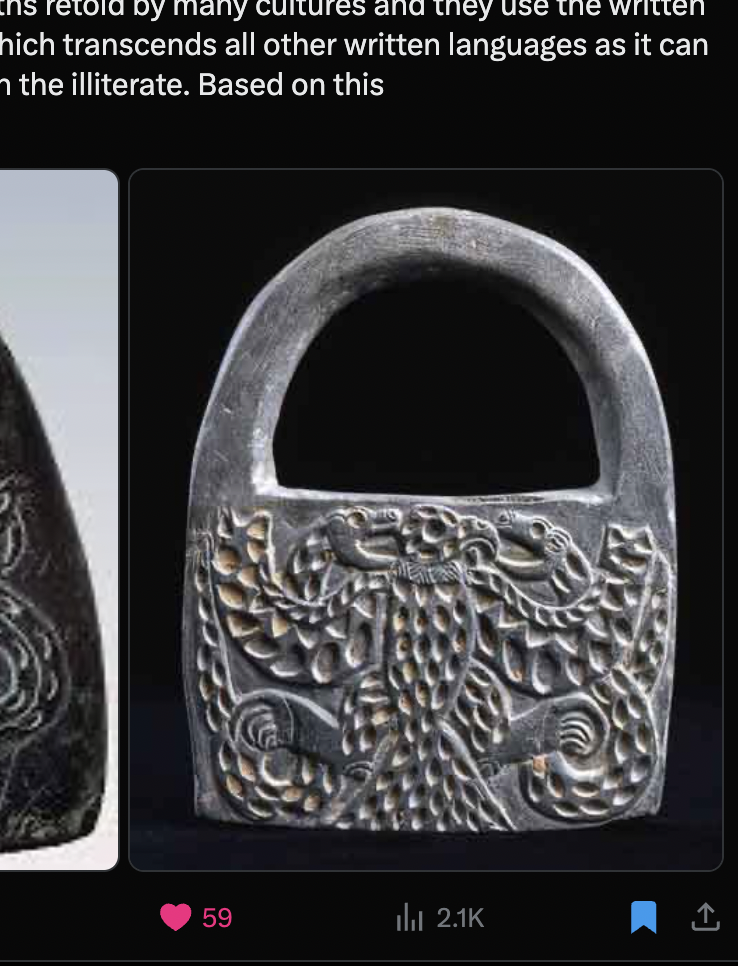
The screenshots extend the single Jiroft record with several designs. Their caption’s “3000 BC” is not an independently checked date; exact provenance and authenticity remain open.
Images, source check & next step
Handled stone object attributed in the post to Jiroft; individual provenance unresolved. Supplied reference; original photographer or compiler uncredited unless stated in the audit. Rights unresolved; retained for source criticism. Not covered by the code licence.Handled stone object attributed in the post to Jiroft; individual provenance unresolved. Supplied reference; original photographer or compiler uncredited unless stated in the audit. Rights unresolved; retained for source criticism. Not covered by the code licence.Handled stone object attributed in the post to Jiroft; individual provenance unresolved. Supplied reference; original photographer or compiler uncredited unless stated in the audit. Rights unresolved; retained for source criticism. Not covered by the code licence.Handled stone object attributed in the post to Jiroft; individual provenance unresolved. Supplied reference; original photographer or compiler uncredited unless stated in the audit. Rights unresolved; retained for source criticism. Not covered by the code licence.
Next: Match each design to an inventory and find context; establish whether any image repeats the existing record.
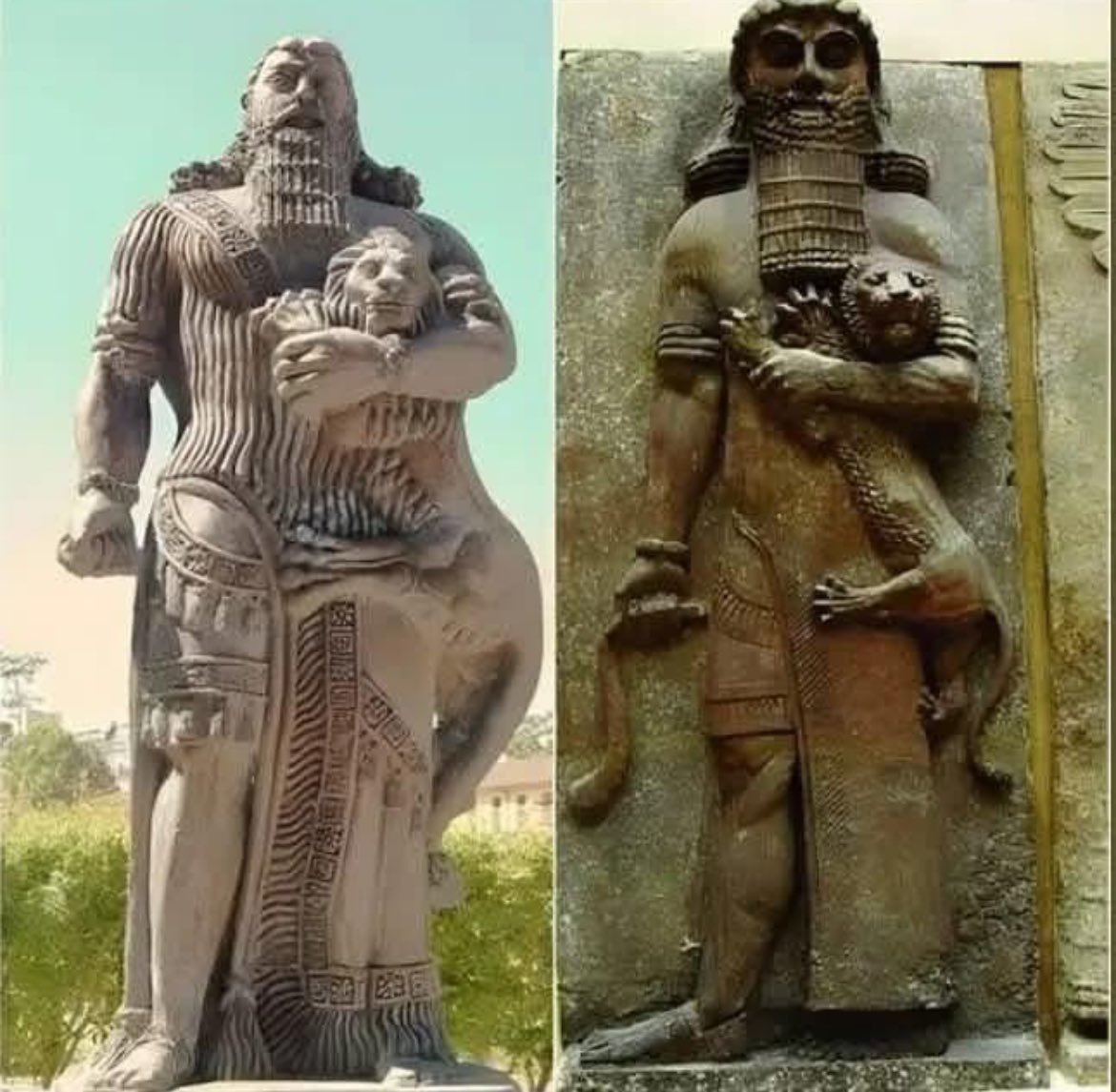
The left figure is Sydney’s modern Gilgamesh, unveiled in 2000. The right is an Assyrian hero type; its exact Louvre accession needs image matching. This is a useful modern reception control, not an independent ancient Australian parallel.
Images, source check & next step
Modern Sydney Gilgamesh sculpture beside an Assyrian hero holding a lion. Supplied reference; original photographer or compiler uncredited unless stated in the audit. Rights unresolved; retained for source criticism. Not covered by the code licence.
Next: Trace the modern artist’s sources and identify the particular Assyrian relief.