Deep Memory/ Clues to a deeper past
← All comparisons
Context control · Contact evidence / Signs & scripts

Objects that really travelled

The Indus world and Mesopotamia as a documented exchange control.

2 groups · 2 registered records · reviewed 2026-09-19

Motif families:

Indus / Harappan

The Indus sign corpus

A distributed body of inscriptions.

Why these examples belong together

The entity represents a corpus; its display image is only an example, not the full sample.

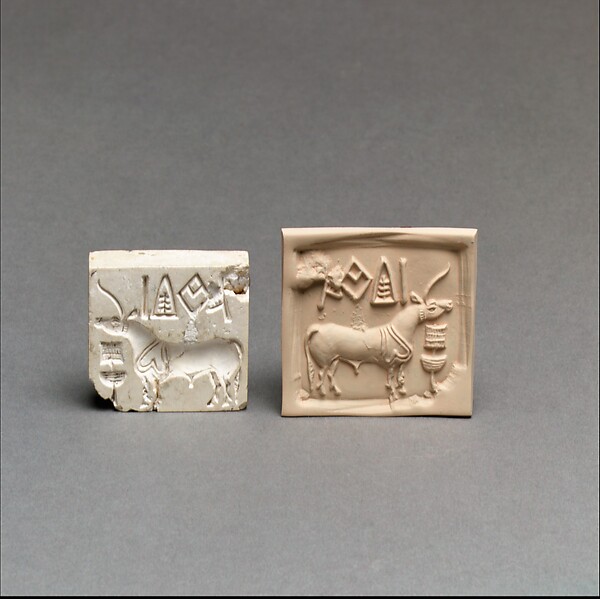
Indus stamp seal and a modern impression; Met 49.40.1
corpus · Indus region

Indus signs

A seal and modern impression stand for a much larger sign corpus. Metric tests used catalogue drawings, not this photograph.

Dates, sources & image record
  • c. 2600–1900 BCEcorpus context · Museum date for the pictured example, compatible with the Mature Harappan corpus; not a date for each sign. Date source

photograph · The Metropolitan Museum of Art. Public domain / Open Access. Image record
Museum web-large photograph downloaded unchanged (DP23101). The impression is modern.

Indus seal · 49.40.1 · Indus and rongorongo: the comparison-chart audit

Mesopotamian exchange contexts

Mesopotamian exchange evidence

A source-based summary of seals found across the two regions.

Why these examples belong together

This is a contextual evidence record. It does not use a later Assyrian carving as a proxy for Bronze Age trade.

Research evidence

Seals found outside their producing regions provide material evidence of exchange.

research · Mesopotamia

Seals across trading regions

The Met’s survey describes Indus seals found in Mesopotamian cities and Mesopotamian seals at Indus sites. This record summarises that evidence; it is not an individual object or a count of exchanged seals.

Dates, sources & image record
  • Bronze Age exchange · individual finds pendingundated register summary · The source discusses exchanged seals. Individual find contexts and dated assemblages have not yet been entered, so no numerical range is assigned to this summary. Date source

South and Southeast Asian art: Indus trade

The proposed connection

What makes it a question?

Ordinary exchange has material evidence. This control explains the standard that distant resemblance hypotheses should aim to meet.

Institutional discussion of actual exchanged seals; this entry is a context control, not an artefact pair.
South and Southeast Asian art: Indus trade

Look closely

What appears to correspond

  • Indus and Mesopotamian finds support long-distance exchange in the Bronze Age.
Keep in the frame

What differs or remains uncertain

  • The displayed Met seal illustrates Indus writing; it is not claimed here to be one of the exported seals.
  • The counterpart is a summary of exchange evidence. Individual imported finds and their archaeological contexts remain to be catalogued.
Transmission check

Independent contact evidence

Regional trade is supported by finds in the other region, independently of similarity. The Met education source describes that evidence.

What would move this forward

  • Register excavated traded seals with findspots, dated contexts and photographs, distinguishing Indus, Gulf and locally adapted forms.
Follow the evidence

Sources & scope

Provisional editorial record; no independent specialist sign-off. Status describes review depth, not the probability of a historical connection.

  1. museum · The Metropolitan Museum of Art

    South and Southeast Asian art: Indus trade

    Indus seals in Mesopotamian contexts and the reverse support exchange. A useful control for what independent contact evidence looks like.

  2. museum · The Metropolitan Museum of Art

    Indus seal · 49.40.1

    Exact pictured seal and modern impression, dated ca. 2600–1900 BCE. This photograph is an example, not the inventory used for the old metric.

  3. project · Deep Memory

    Indus and rongorongo: the comparison-chart audit

    Scanned sign inventories, the circulating chart and metric limitations. Recognition was imperfect; rankings do not settle historical relationship.