← All comparisons
Evidence examined · Signs & scripts
Two unread scripts
Does the resemblance survive beyond the famous selected signs?
2 groups · 2 registered records · reviewed 2026-09-19
Motif families: Signs & scripts
Indus / Harappan
The Indus sign corpus
A distributed body of inscriptions.
Why these examples belong together
The entity represents a corpus; its display image is only an example, not the full sample.
corpus · Indus regionIndus signs
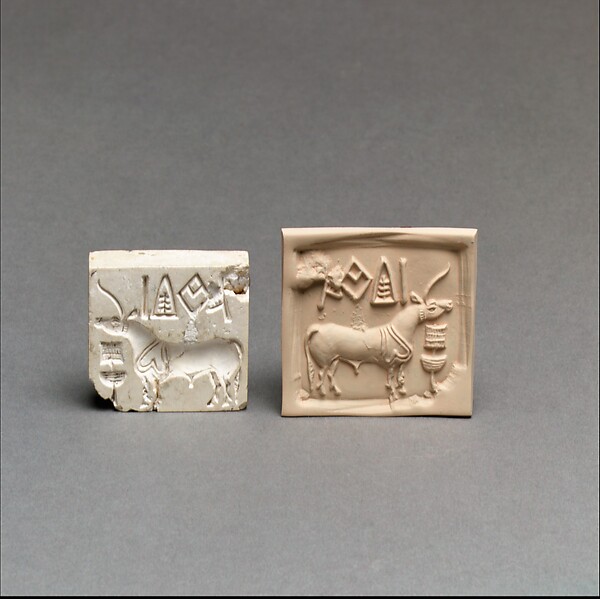
A seal and modern impression stand for a much larger sign corpus. Metric tests used catalogue drawings, not this photograph.
Dates, sources & image record
- c. 2600–1900 BCEcorpus context · Museum date for the pictured example, compatible with the Mature Harappan corpus; not a date for each sign. Date source
photograph · The Metropolitan Museum of Art. Public domain / Open Access. Image record
Museum web-large photograph downloaded unchanged (DP23101). The impression is modern.
Indus seal · 49.40.1 · Indus and rongorongo: the comparison-chart audit
Rapanui traditions
The rongorongo corpus
Inscribed Rapanui objects and their sign inventories.
Why these examples belong together
A corpus-level group. Drawings, photographs, individual tablets and wood dates must stay distinguishable.
corpus · Rapa NuiRongorongo signs
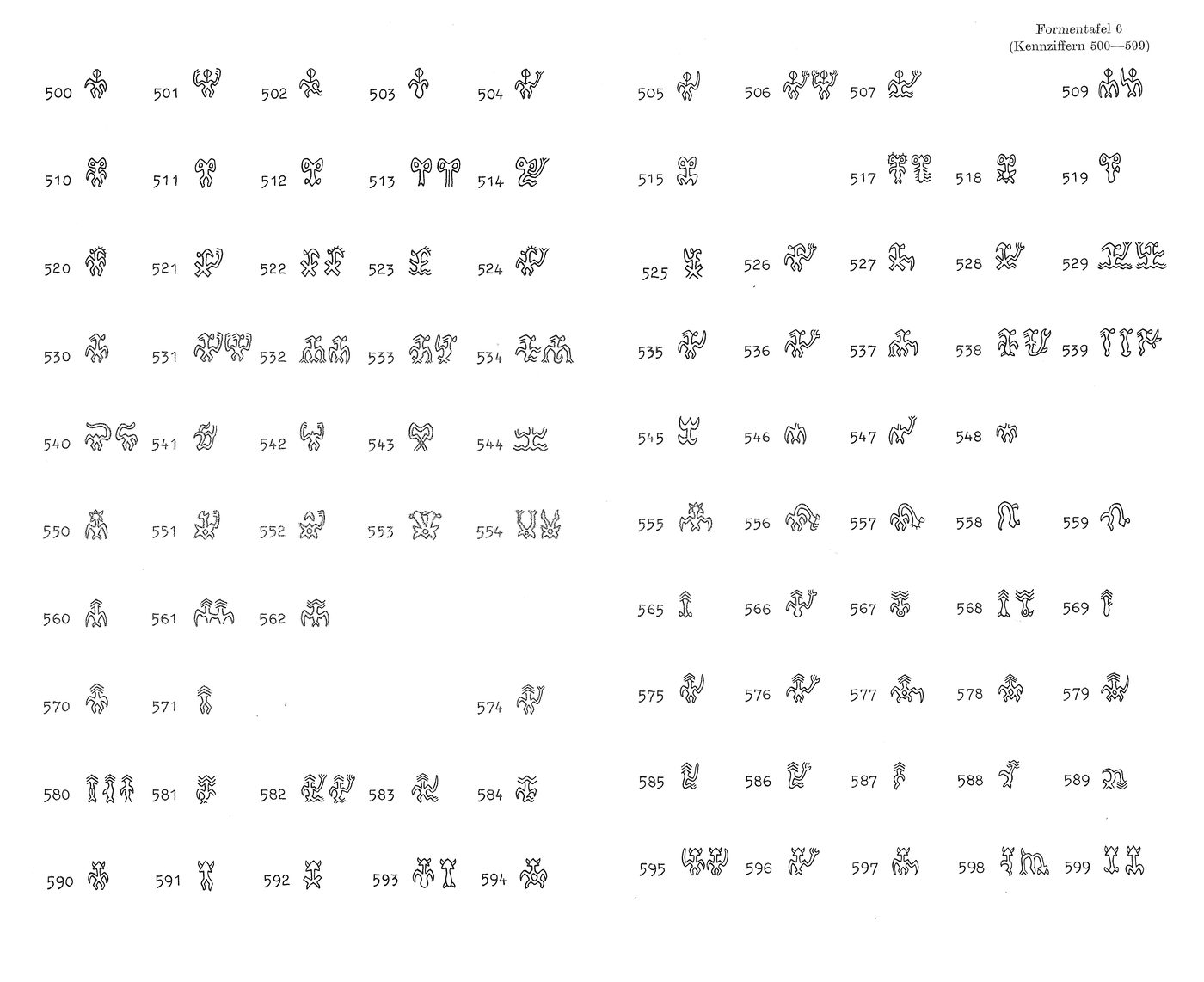
A plate of catalogue drawings is shown. The 2024 wood-dating study neither dates every inscription nor establishes a script relationship.
Dates, sources & image record
- Date unresolvedunresolved · There is no single date for this sign corpus. Dated wood, carving episodes and nineteenth-century collecting are different events.
catalogue drawing · Thomas S. Barthel, 1958; scan retained by the earlier study. Copyright catalogue excerpt, reproduced for critical comparison. Image record
Existing source image; displayed uncropped. No generated reconstruction.
New radiocarbon dates on rongorongo · Rongorongo tablet · Oc1903,-.150 · Indus and rongorongo: the comparison-chart audit
The proposed connection
What makes it a question?
Selected sign charts propose affinities across a large gap in time and geography. A script relationship should predict more than a few convincing outlines.
The project audits the circulating comparison chart and historical attribution to de Hevesy; the original proposing publication still deserves a complete source review.
Indus and rongorongo: the comparison-chart audit
Look closely
What appears to correspond
- Some selected signs appear similar when drawn and aligned.
Keep in the frame
What differs or remains uncertain
- The circulating chart and published inventories do not always depict the same forms.
- The old metric’s retrieval validation was imperfect; its rankings cannot settle the human-visible comparison.
- A corpus’s writing system, language and chronology are separate questions.
Transmission check
No route established in this review
No transmission sequence for this specific comparison has been established in the sources reviewed. That is not proof that contact was impossible.
What would move this forward
- Compare untouched inscriptions as well as drawings.
- Test recurring sign sequences and structural correspondences with specialists.
- Maintain wood dates and engraving dates separately.
Follow the evidence
Sources & scope
Provisional editorial record; no independent specialist sign-off. Status describes review depth, not the probability of a historical connection.
- project · Deep Memory
Scanned sign inventories, the circulating chart and metric limitations. Recognition was imperfect; rankings do not settle historical relationship.
- museum · The Metropolitan Museum of Art
Exact pictured seal and modern impression, dated ca. 2600–1900 BCE. This photograph is an example, not the inventory used for the old metric.
- research · Ferrara et al., 2024
Four tablets dated; one has earlier wood. Wood age and inscription age must be distinguished. This does not date every sign or settle an Indus connection.
- museum · British Museum
Specific object has a 1700–1850 catalogue range. The older account of script origins is not a settled chronology of the whole tradition.