From selected look-alikes to whole repertoires and families of signs.
2 selected records · 1 intake lead. Membership records a resemblance; it does not establish common origin.
Compare the recorded features
Each row describes one object, surface or textual scope. A dash means “not recorded”, not “absent”. Features across different rows do not establish co-occurrence.
Corpus record, not an attestation of every chart pairing.
Episode, sources & image
Observation scope: corpus overview
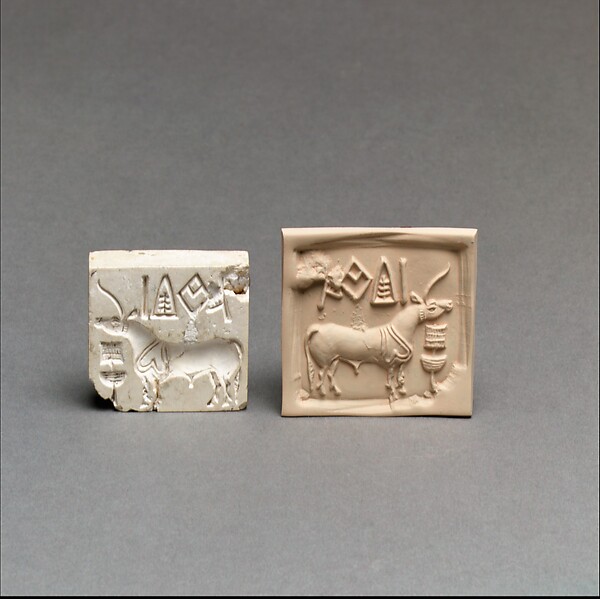
c. 2600–1900 BCE · corpus context Museum date for the pictured example, compatible with the Mature Harappan corpus; not a date for each sign. Date source
The Metropolitan Museum of Art Public domain / Open Access Image record Museum web-large photograph downloaded unchanged (DP23101). The impression is modern.
Cultural context
Rapanui traditions
Source-linked observation
Rongorongo signs
Date unresolved
Repeated graphic signs
Corpus record, not an attestation of every chart pairing.
Episode, sources & image
Observation scope: corpus overview
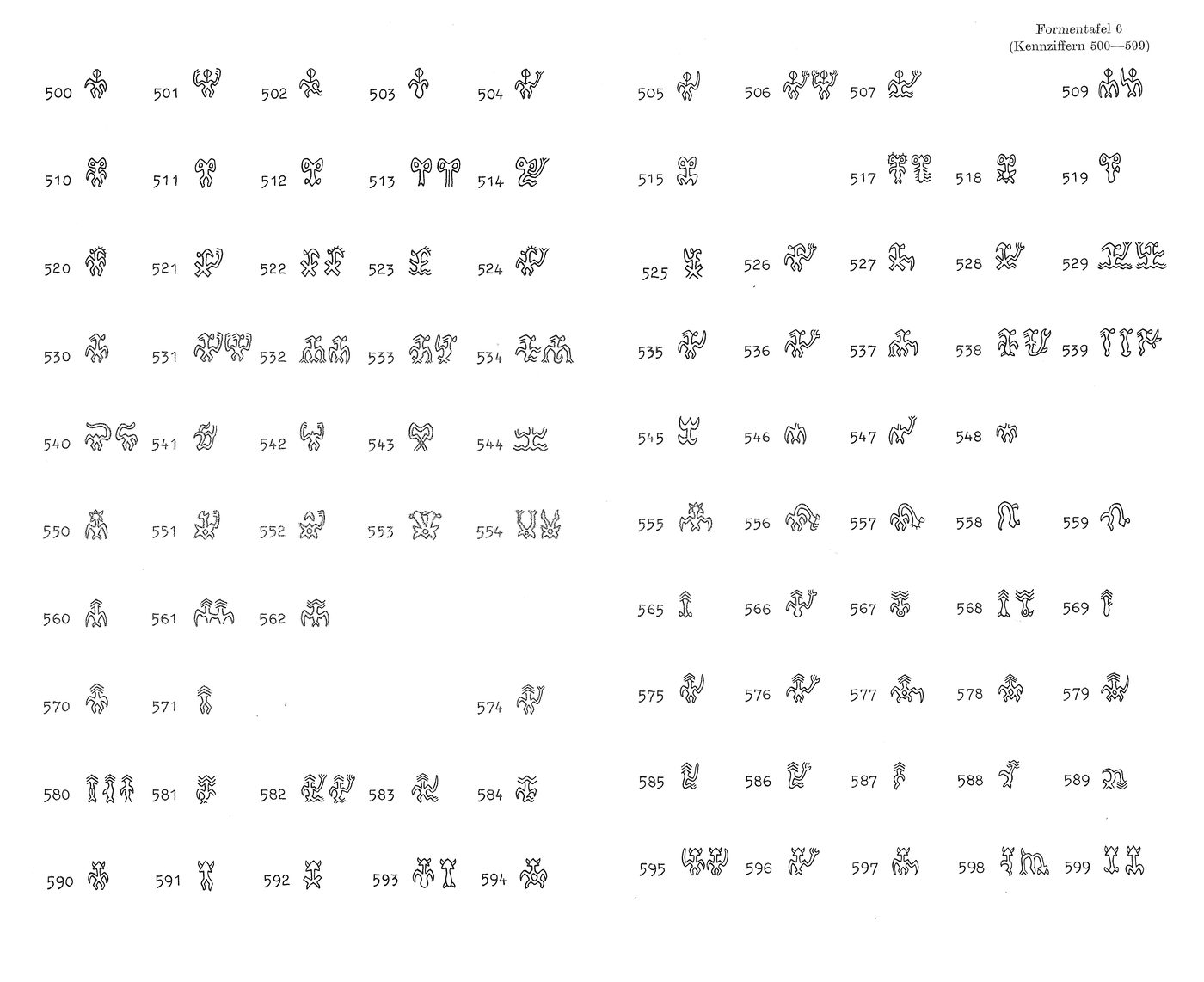
Date unresolved · unresolved There is no single date for this sign corpus. Dated wood, carving episodes and nineteenth-century collecting are different events.
Thomas S. Barthel, 1958; scan retained by the earlier study Copyright catalogue excerpt, reproduced for critical comparison Image record Existing source image; displayed uncropped. No generated reconstruction.
The identification queue
Leads worth following.
Preserved claims and images, awaiting the checks needed for object records.
Identification open · claim
Other proposed rongorongo affinities
The supplied AI research draft mentions Cuna/Guna pictographs, Chinese “Yü Pei” signs, Egyptian hieroglyphs, Shang oracle-bone signs, Sumatran ship-cloths, South American systems and Rapanui kai-kai. These are unverified bibliographic leads, not accepted identifications or explanations.
Images, source check & next step
Next: Locate the original proposing publications; add specific signs and witnesses only after source checks.