Deep Memory/ Clues to a deeper past
← All comparisons
Research lead · Birds & birdmen

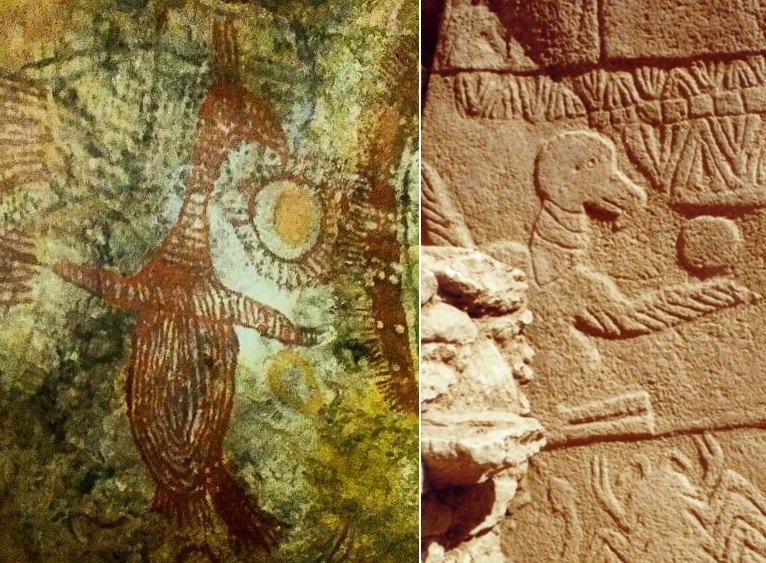
Another bird and rounded form

The Australian painting in Fenton’s proposed connection.

2 groups · 2 registered records · reviewed 2026-09-19

Motif families: Birds & human forms

Arnhem Land · attribution open

Arnhem Land comparison lead

A painting featured in Fenton’s argument.

Why these examples belong together

An unresolved panel, not a sample of the entire Aboriginal rock-art tradition.

Bird-and-rounded-form painting attributed to Arnhem Land in the claim
surface · Arnhem Land, as attributed

Arnhem Land painting · panel unknown

A regional rock-art tradition’s long duration cannot date an unlocated individual painting.

Dates, sources & image record
  • Date unresolvedunresolved · The exact panel, artist/tradition attribution and age have not been verified.

photograph · Photographer and panel unresolved. Rights unresolved; supplied claim image. Image record
Existing source image; displayed uncropped. No generated reconstruction.

Preserved Fenton comparison thread · Supplied-image identity register

Neolithic Anatolia

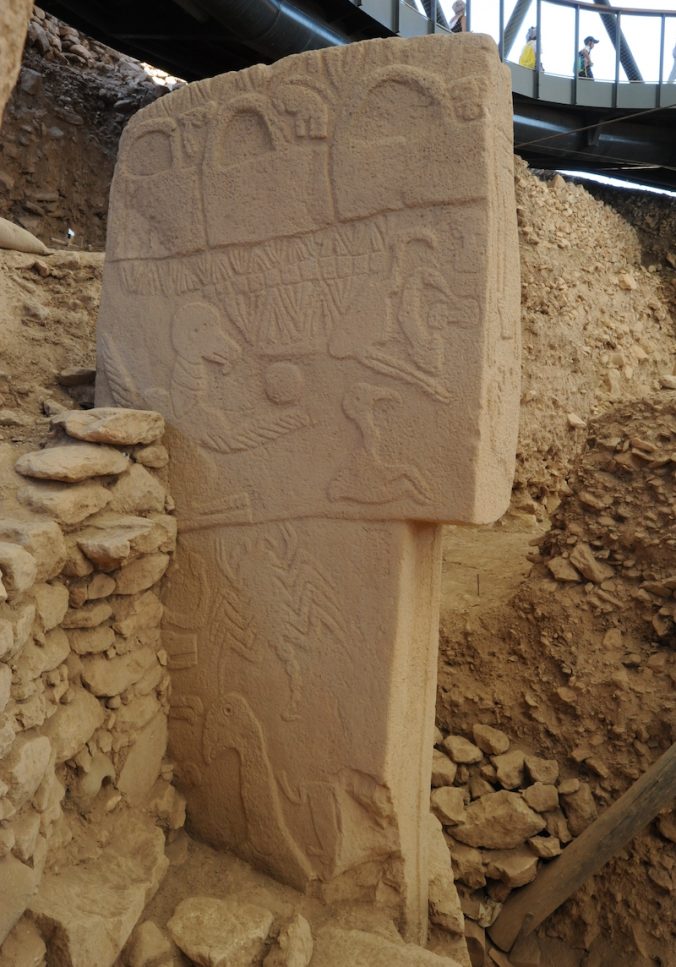
Pillar 43 · bird and disc

One composition within the wider Anatolian repertoire.

Why these examples belong together

A deliberately narrow subset, used to inspect the specific relation between a bird and a rounded form.

Pillar 43, western carved face, photographed at Göbekli Tepe
object · Göbekli Tepe

Pillar 43

One carved surface contains several animals and signs. The disc’s meaning and the upper arched forms remain disputed.

Dates, sources & image record
  • 10th–9th millennia BCEsite context · Broad published site context. No direct measurement dates this individual motif. Date source

photograph · DAI / K. Schmidt. Copyright; reproduced for critical comparison. Image record
Existing source image; displayed uncropped. No generated reconstruction.

Pillar 43: of animals and a headless man · The Göbekli Tepe research project

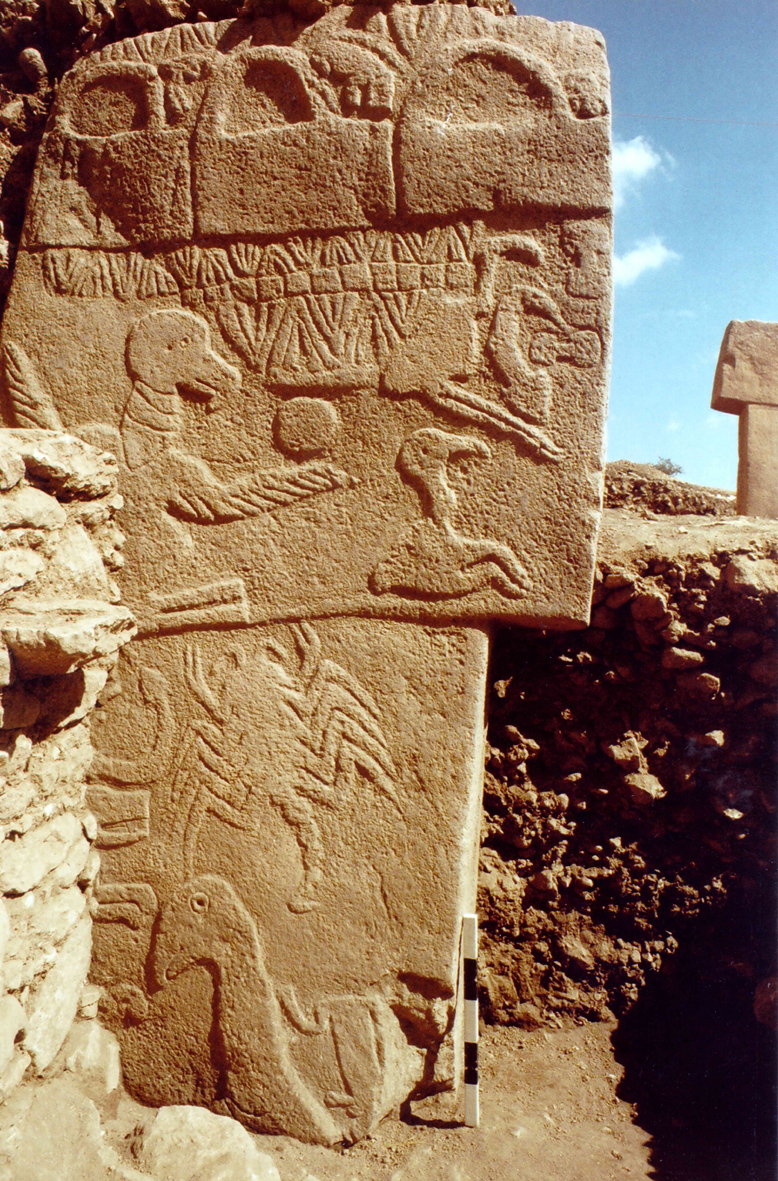
Another view of this example
Pillar 43 in a second photograph; the same carved face
DAI / Göbekli Tepe Project; original study attribution · Copyright DAI; retained for criticism and commentary, not freely licensed · Image record
None: copied or downloaded bytes unchanged
The proposed connection

What makes it a question?

The proposal connects a northern Australian painting with Neolithic Anatolia; the Australian panel’s age is central to testing it.

A specific comparison in the preserved thread. This is a record of that proposal, not an endorsement of its route.
Preserved Fenton comparison thread

Look closely

What appears to correspond

  • The claim image places a bird-like figure near a rounded form.
Keep in the frame

What differs or remains uncertain

  • The exact panel and source photograph are unresolved.
  • Different paint marks could change the interpretation of contact, holding or adjacency.
Transmission check

Transmission not yet assessed

The comparison is not yet identified or dated well enough to exclude ordinary transmission, later borrowing or an image-selection effect.

What would move this forward

  • Trace the panel through Aboriginal custodians’ and specialist records.
  • Establish permissible documentation, attribution and a panel-specific chronology.
Follow the evidence

Sources & scope

Provisional editorial record; no independent specialist sign-off. Status describes review depth, not the probability of a historical connection.
  1. claim · Bruce Fenton

    Preserved Fenton comparison thread

    The project retains the supplied thread with known gaps, images and later source checks.

  2. excavation · Oliver Dietrich / DAI

    Pillar 43: of animals and a headless man

    Excavation-team discussion of the depicted animals and competing readings of the disc and upper forms.

  3. project · Deep Memory

    Supplied-image identity register

    Preserves captions, uncertainties and supplied images. A social caption is not an independent archaeological identification.

  4. excavation · DAI

    The Göbekli Tepe research project

    Site chronology: tenth and ninth millennia BCE. This is a context range, not a direct date of every carving.