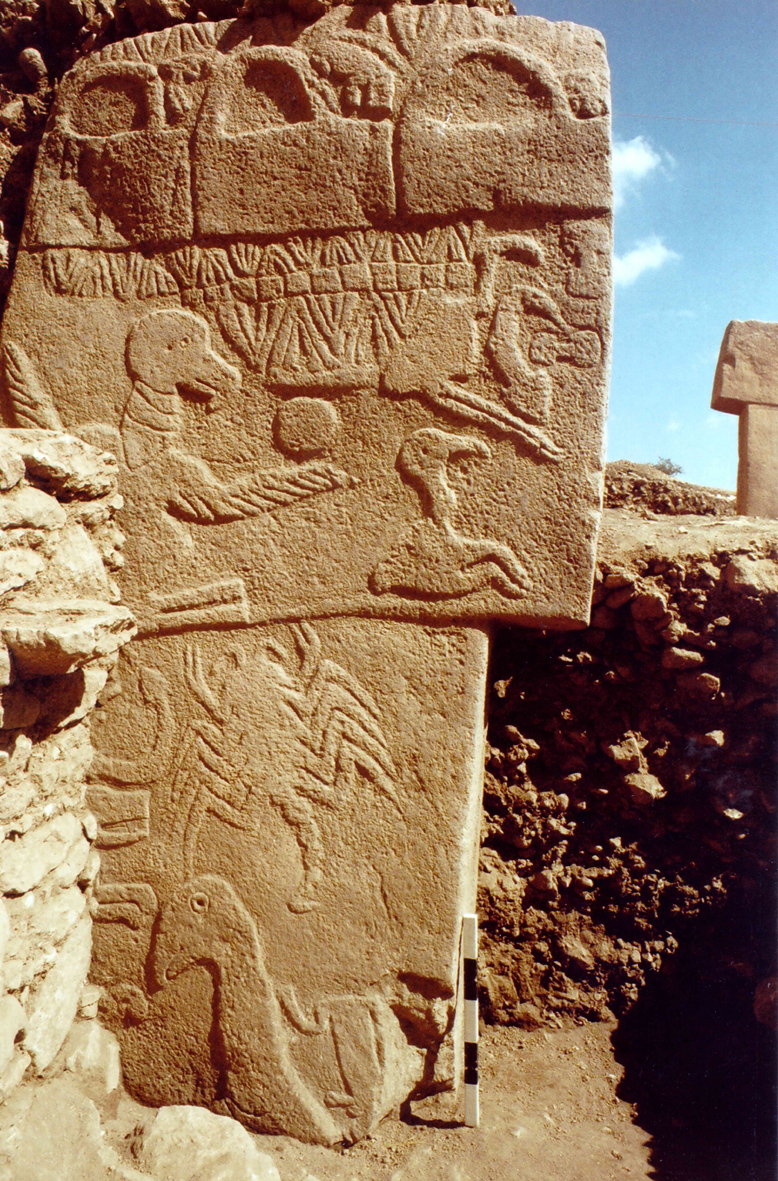
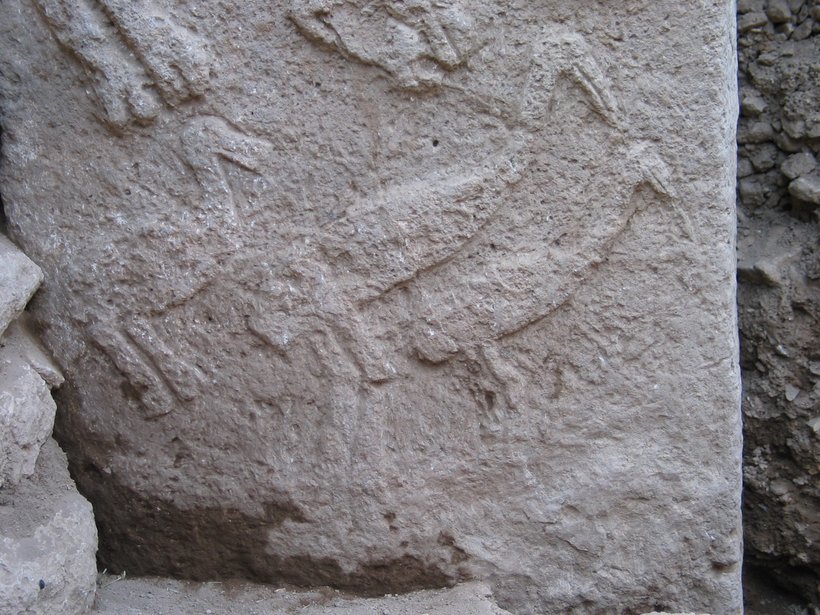
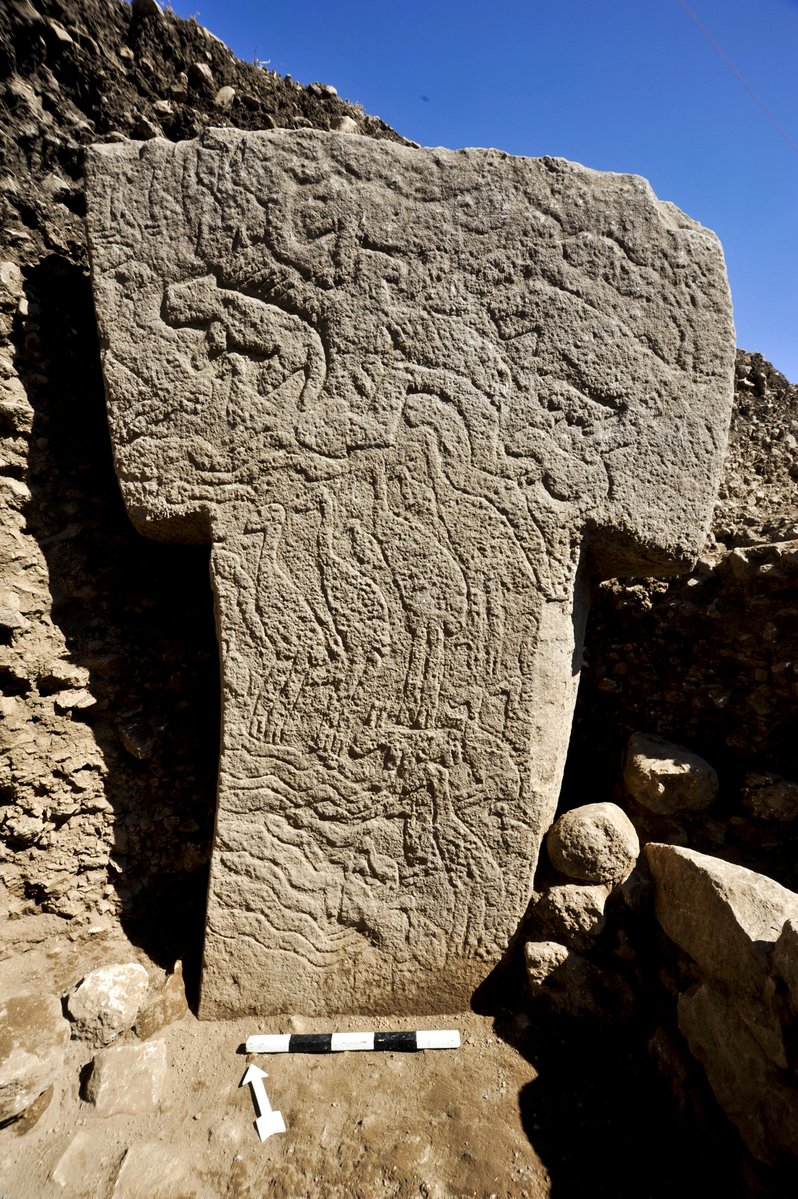
Carved birds among animal ensembles at Göbekli Tepe.
Why these examples belong together
Five named local pillars from the excavation-team accounts, retained together to examine variation. They are not a representative count of all Neolithic birds.
object · Göbekli Tepe
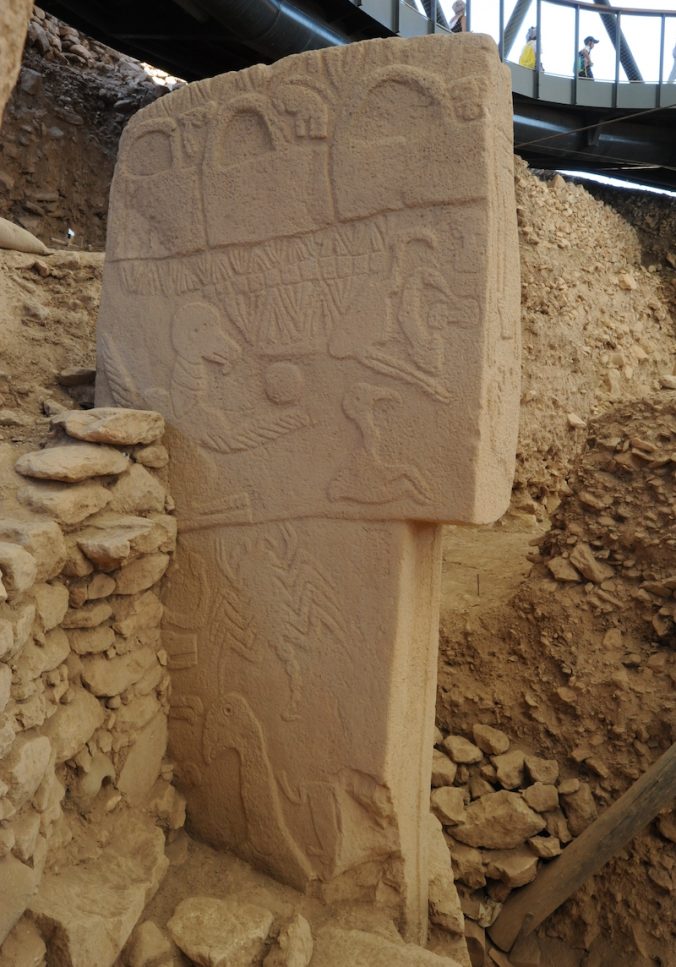
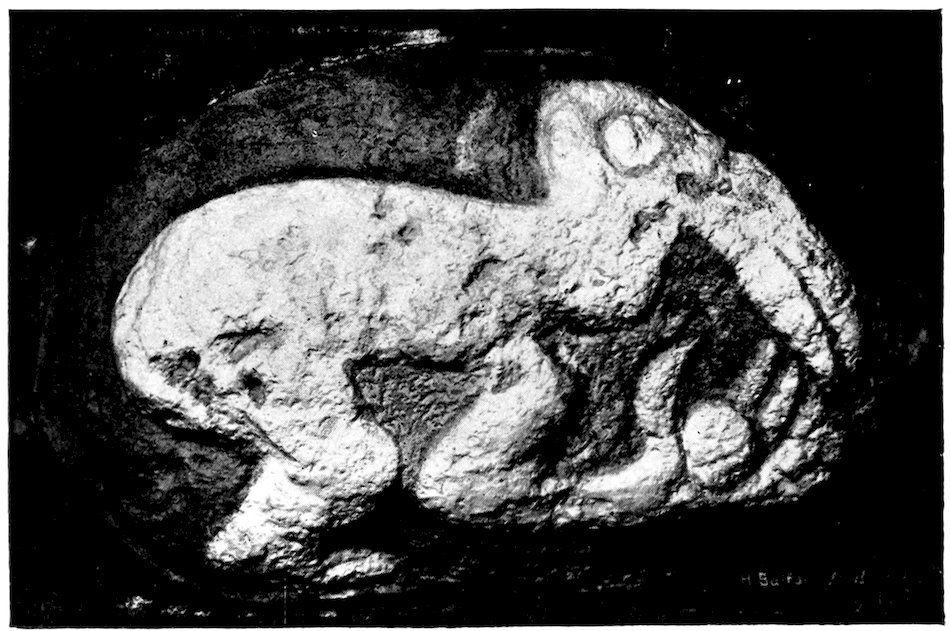
Pillar 43
One carved surface contains several animals and signs. The disc’s meaning and the upper arched forms remain disputed.
Dates, sources & image record
10th–9th millennia BCEsite context · Broad published site context. No direct measurement dates this individual motif. Date source
photograph · DAI / K. Schmidt. Copyright; reproduced for critical comparison. Image record Existing source image; displayed uncropped. No generated reconstruction.
Another view of this examplePillar 43 in a second photograph; the same carved face DAI / Göbekli Tepe Project; original study attribution · Copyright DAI; retained for criticism and commentary, not freely licensed · Image record None: copied or downloaded bytes unchanged
object · Göbekli Tepe
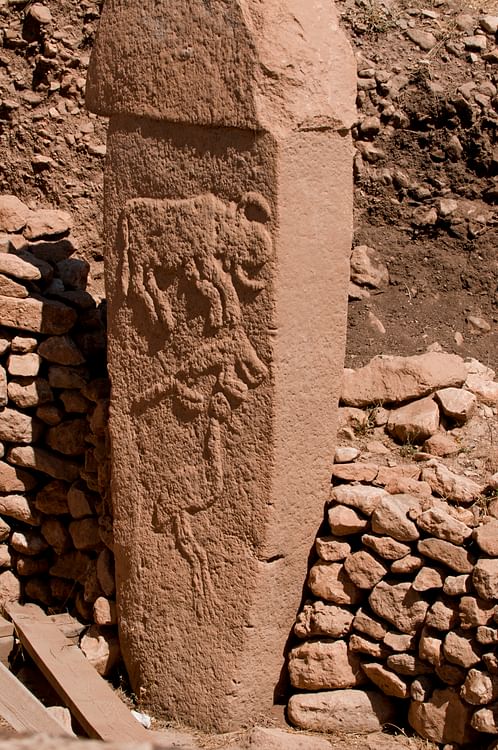
Pillar 2
A local comparator for birds and animal combinations; it does not duplicate Pillar 43’s composition.
Dates, sources & image record
10th–9th millennia BCEsite context · Broad published site context. No direct measurement dates this individual motif. Date source
photograph · Teomancimit. CC BY-SA 3.0. Image record Unchanged 750-pixel display rendition from World History Encyclopedia; original retained by the project.
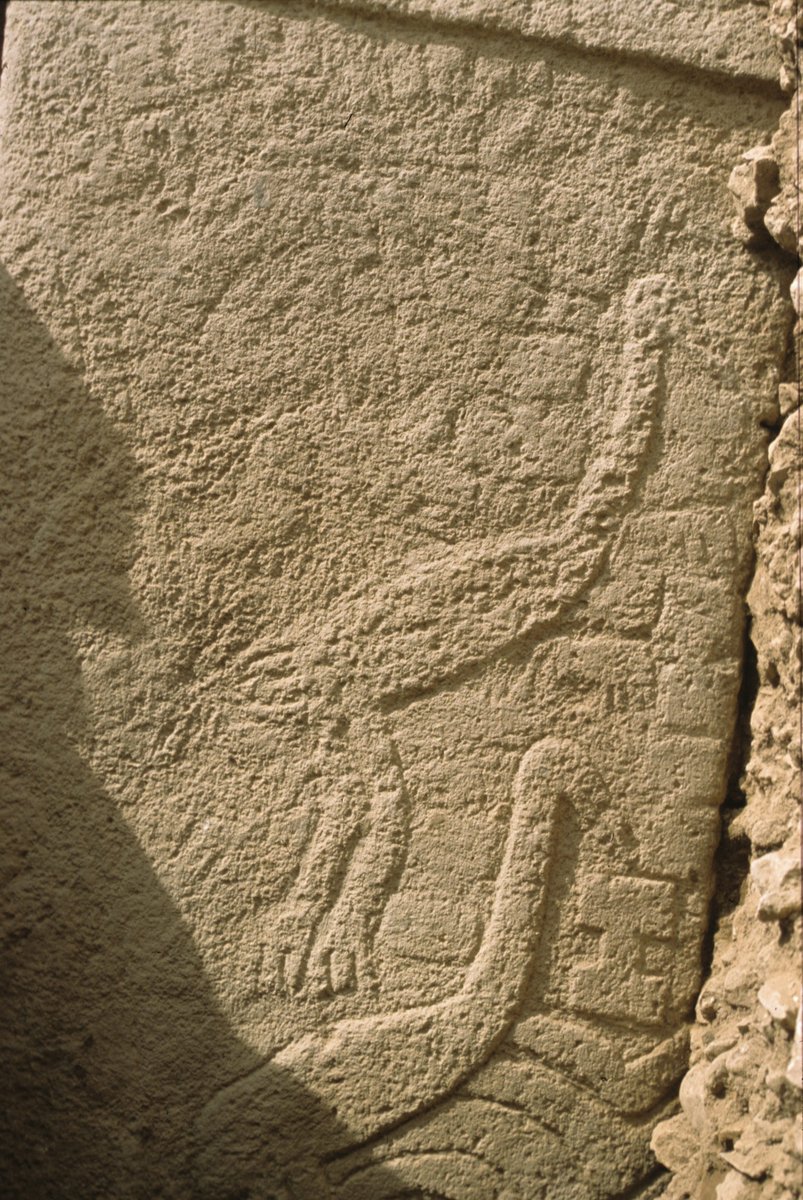
The robust bent legs matter to the local bird–human interpretation.
Dates, sources & image record
10th–9th millennia BCEsite context · Broad published site context. No direct measurement dates this individual motif. Date source
photograph · DAI / K. Schmidt. Copyright DAI; source photograph for critical comparison.. Image record Source-provided rendition; downloaded bytes unchanged. Annotations are separate SVG overlays.
Multiple birds belong to one pillar, not several independent artefacts.
Dates, sources & image record
10th–9th millennia BCEsite context · Broad published site context. No direct measurement dates this individual motif. Date source
photograph · DAI / Göbekli Tepe Project. Copyright DAI; source photograph for critical comparison.. Image record Source-provided rendition; downloaded bytes unchanged. Annotations are separate SVG overlays.
A local anatomical contrast; the source treats these legs as more naturalistic.
Dates, sources & image record
10th–9th millennia BCEsite context · Broad published site context. No direct measurement dates this individual motif. Date source
photograph · DAI / N. Becker. Copyright DAI; source photograph for critical comparison.. Image record Source-provided rendition; downloaded bytes unchanged. Annotations are separate SVG overlays.
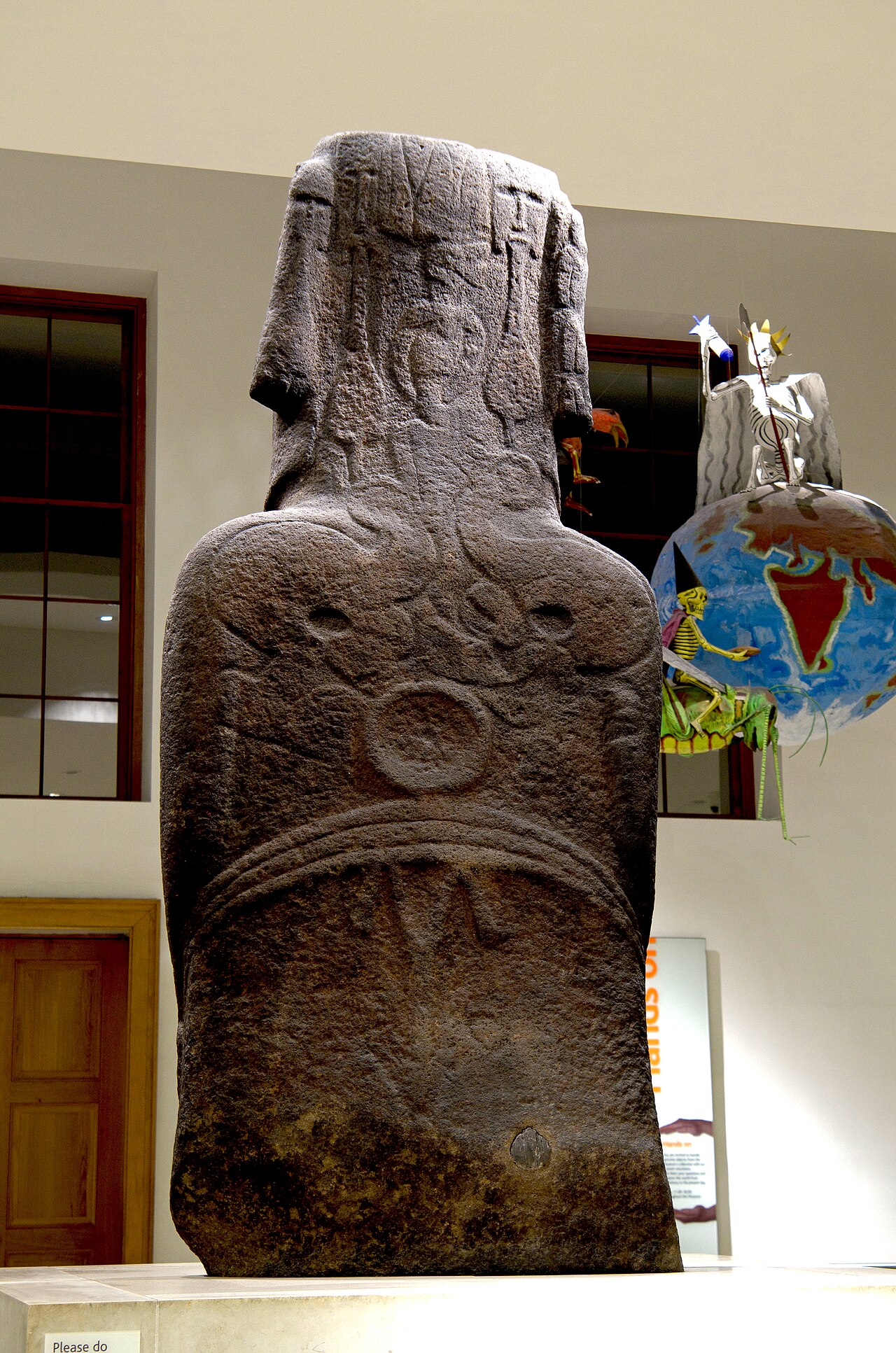
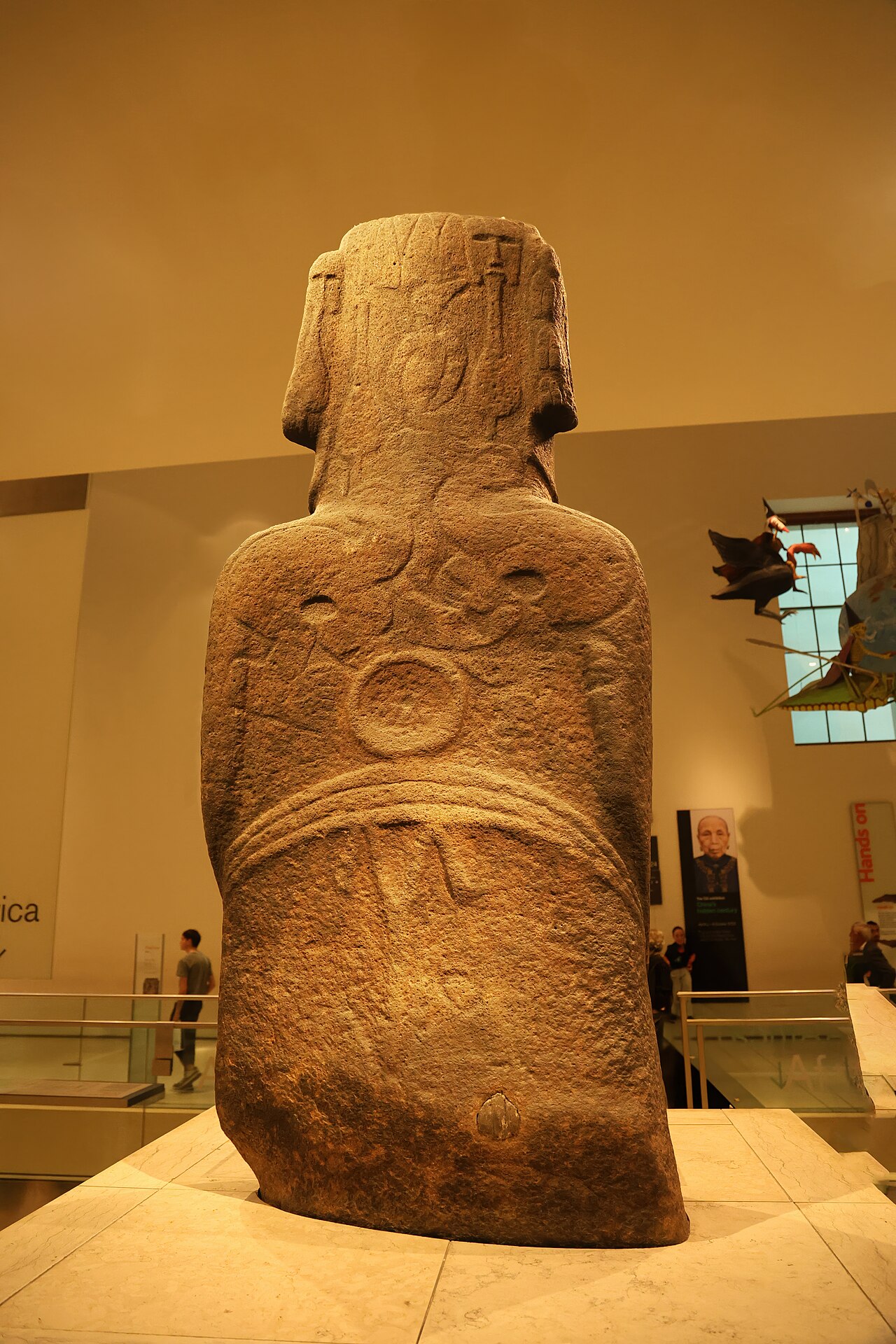
Another view of this exampleThe back of Hoa Hakananai’a photographed in different light Sanjay ach · CC BY-SA 4.0 · Image record None: copied or downloaded bytes unchanged
object · Orongo · Rapa Nui
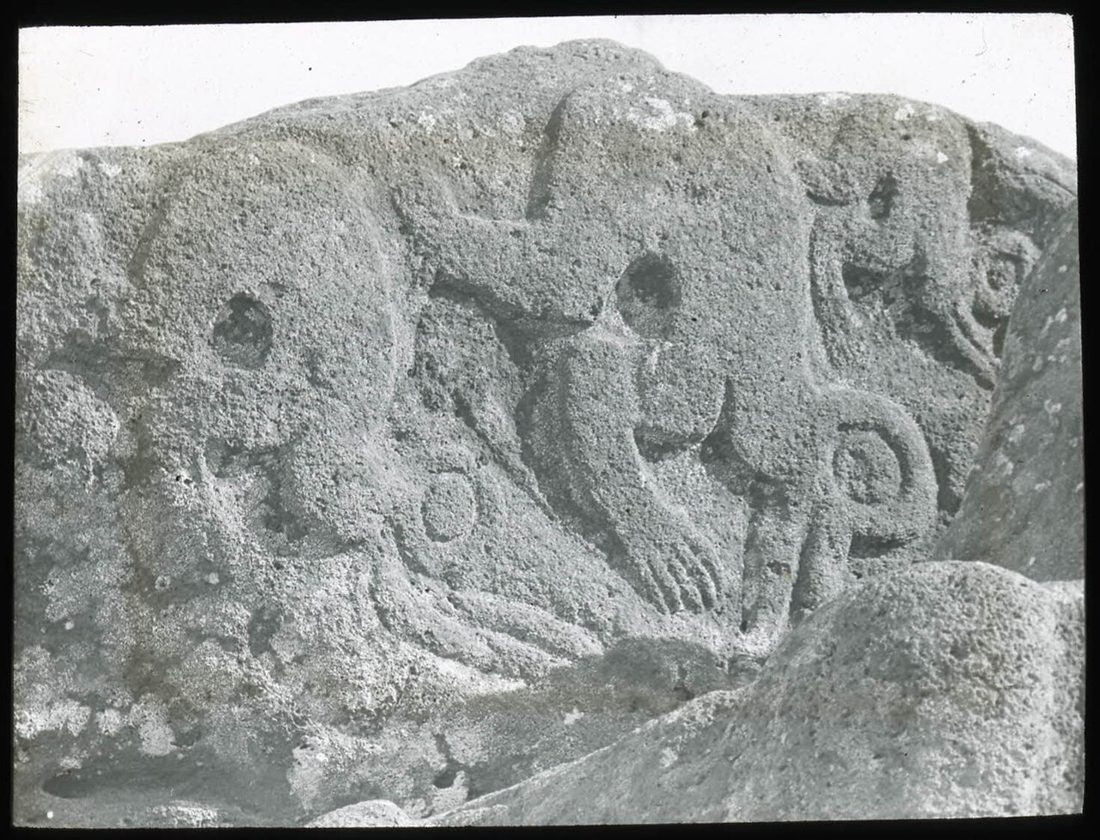
Orongo birdman boulder
Museum number Oc1920,0506.1. A rounded form is close to the bent hand; the source reads it as an egg.
Dates, sources & image record
c. 1750–1875 CEcatalogue estimate · Approximate museum date; not direct dating of the motif. Date source
historical photograph · Katherine Routledge / Mana Expedition. Public domain. Image record Existing source image; displayed uncropped. No generated reconstruction.
Three relief birdmen belong to an Orongo rock surface; another printed view is not a new independent object.
Dates, sources & image record
Date unresolvedunresolved · A photograph published in 1919 gives a latest possible existence date, not an origin date.
historical photograph · Photographer not identified; Mana Expedition / British Museum archive. Public domain. Image record Existing source image; displayed uncropped. No generated reconstruction.
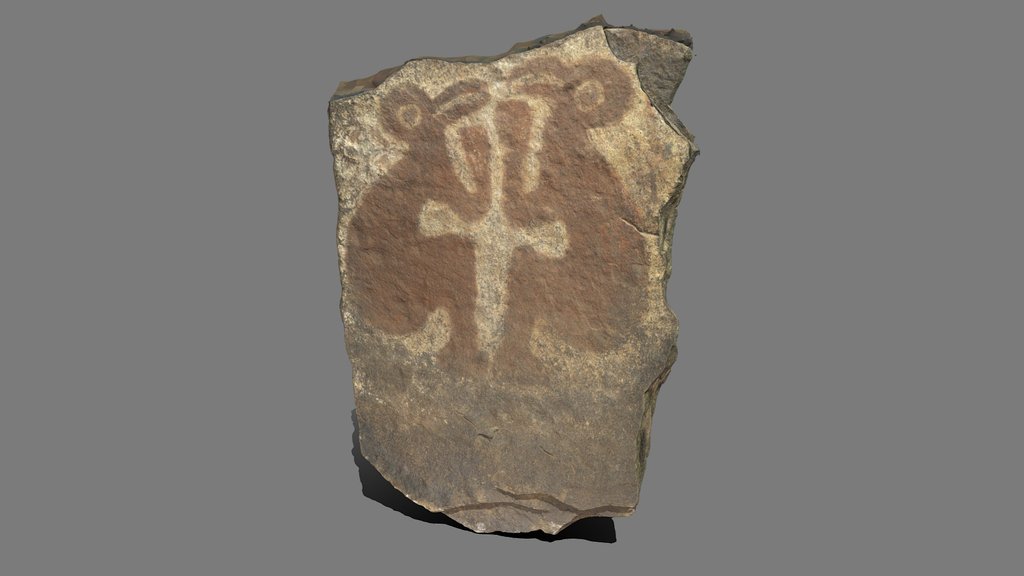
MAPSE 17-00-1312. The displayed image is a textured 3D record of a surface.
Dates, sources & image record
Date unresolvedunresolved · The 1974 museum transfer and 2020 digital recording do not date the painting.
3D record · Factum Foundation / Museo Rapa Nui. No open licence stated; small preview reproduced for critical comparison. Image record Unchanged publisher preview; a recorded surface, not an AI reconstruction.
The recurring features invite a comparison between repertoires, rather than a single fortunate pairing. A historical link would have to bridge a very large chronology gap.
Starting comparison from the supplied project material; Lee Paqui’s 2024 article independently states the narrower bird-and-rounded-object parallel. The pillar, the moai and the bird: source dossier
Look closely
What appears to correspond
Both groups include bird imagery in complex carved or painted scenes.
The narrow bird-and-rounded-form correspondence is strongest for Pillar 43 and the Orongo boulder; it is not equally present in every group member.
Keep in the frame
What differs or remains uncertain
The Rapanui group includes human–bird hybrids; the Pillar 43 figure is generally described as a vulture.
The moai’s ring is below the birdmen; the boulder’s rounded object is at a bent hand; Pillar 43’s disc lies above a wing.
The group samples were selected for this inquiry. They do not establish how common or rare the combination is.
Transmission check
No route established in this review
No transmission sequence for this specific comparison has been established in the sources reviewed. That is not proof that contact was impossible.
What would move this forward
Build dated local sequences on both sides.
Use expert-reviewed feature locations and relations before any similarity ranking.
Add a documented comparison corpus selected independently of the proposed match.
Follow the evidence
Sources & scope
Provisional editorial record; no independent specialist sign-off. Status describes review depth, not the probability of a historical connection.
Guest article, 19 October 2024. Proposes ribbed-figure and bird-with-rounded-object parallels. Its medical and ancestral interpretations are not established by the photographs.