Deep Memory/ Clues to a deeper past
← All comparisons
Sources partly checked · Handled forms

The so-called handbags

Arched forms and carried containers: how much of the resemblance survives context?

3 groups · 3 registered records · reviewed 2026-09-19

Motif families: Handled forms

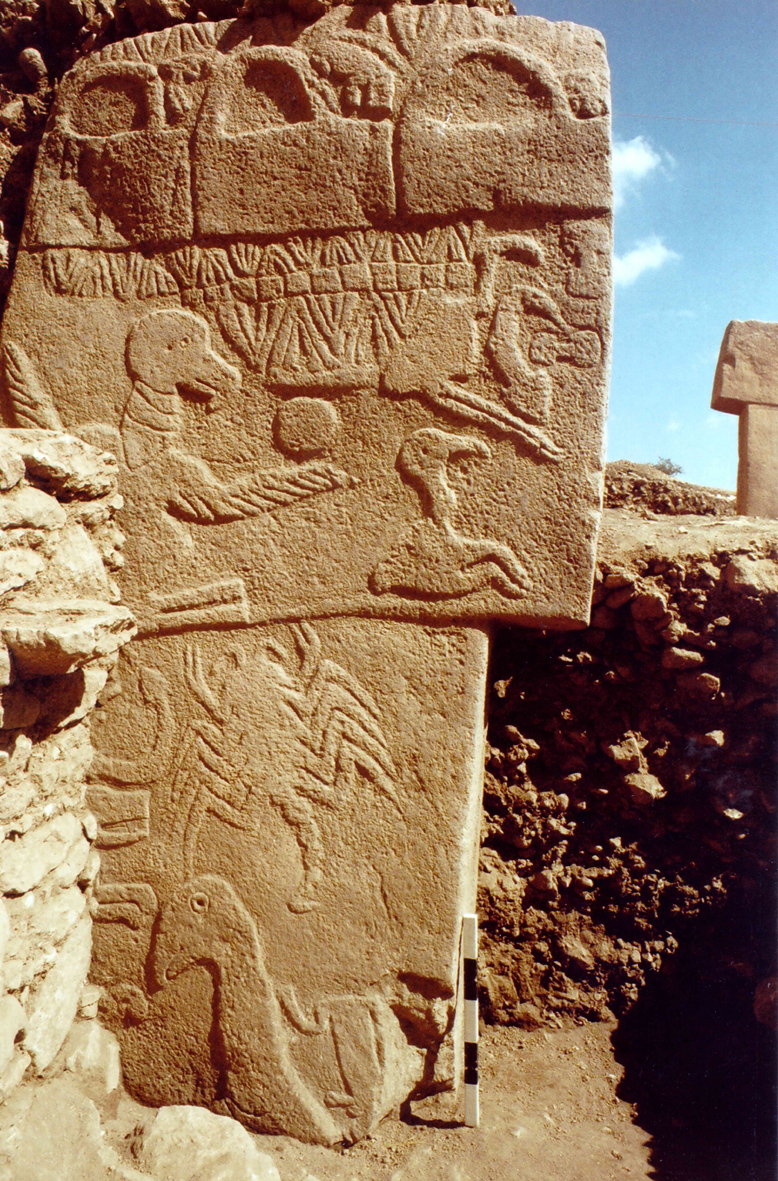
Neolithic Anatolia

Pillar 43 · upper arched forms

The upper register of one Neolithic pillar.

Why these examples belong together

A specific feature subset; the same pillar also appears in the bird comparisons.

Pillar 43, western carved face, photographed at Göbekli Tepe
object · Göbekli Tepe

Pillar 43

One carved surface contains several animals and signs. The disc’s meaning and the upper arched forms remain disputed.

Dates, sources & image record
  • 10th–9th millennia BCEsite context · Broad published site context. No direct measurement dates this individual motif. Date source

photograph · DAI / K. Schmidt. Copyright; reproduced for critical comparison. Image record
Existing source image; displayed uncropped. No generated reconstruction.

Pillar 43: of animals and a headless man · The Göbekli Tepe research project

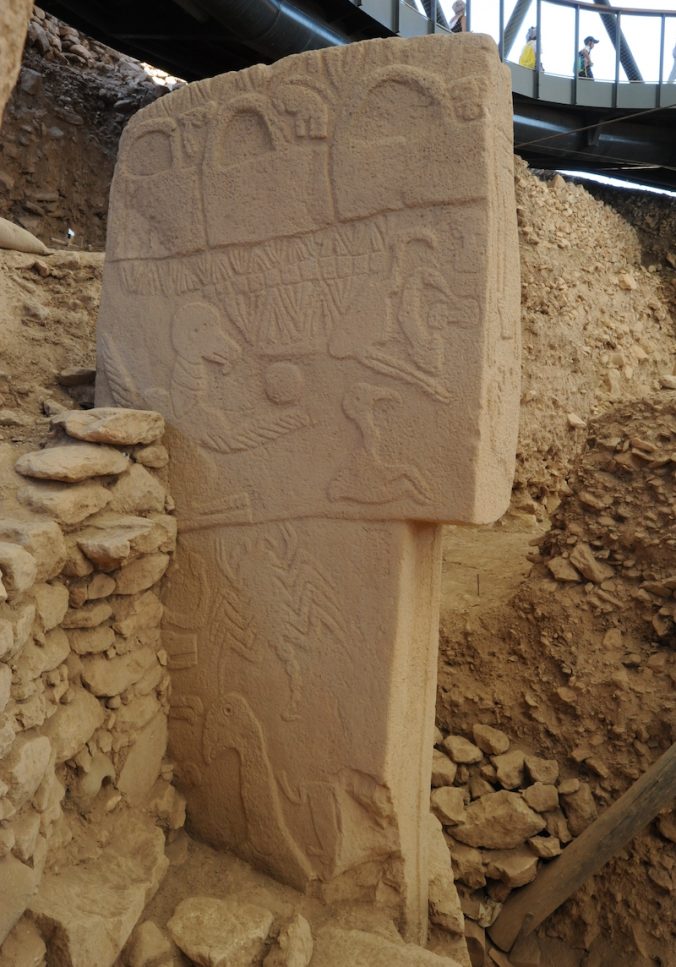
Another view of this example
Pillar 43 in a second photograph; the same carved face
DAI / Göbekli Tepe Project; original study attribution · Copyright DAI; retained for criticism and commentary, not freely licensed · Image record
None: copied or downloaded bytes unchanged
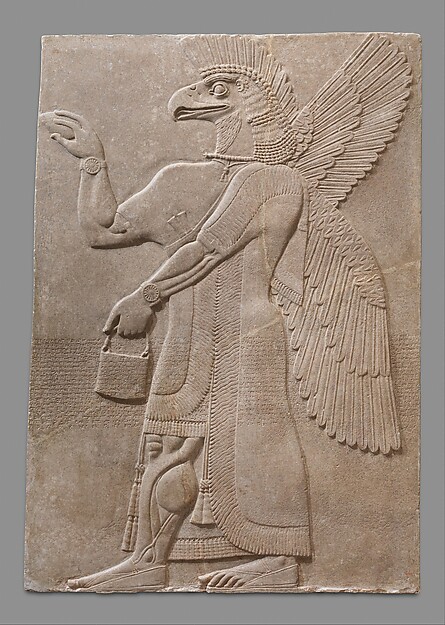
Assyrian imagery

Nimrud protective figures

A documented example from a larger Assyrian relief tradition.

Why these examples belong together

This first edition includes one museum-identified panel. Additional panels must be registered before claims about frequency.

Eagle-headed protective figure holding a bucket; Met 32.143.7
object · Nimrud

Nimrud protective figure

Met 32.143.7. This is a specific Assyrian relief, distinct from the Pergamon panel shown in the earlier atlas.

Dates, sources & image record
  • c. 883–859 BCEproduction · Museum attribution to the palace of Ashurnasirpal II. Date source

photograph · The Metropolitan Museum of Art. Public domain / Open Access. Image record
Museum web-large photograph downloaded unchanged (DP375422).

Eagle-headed relief · 32.143.7

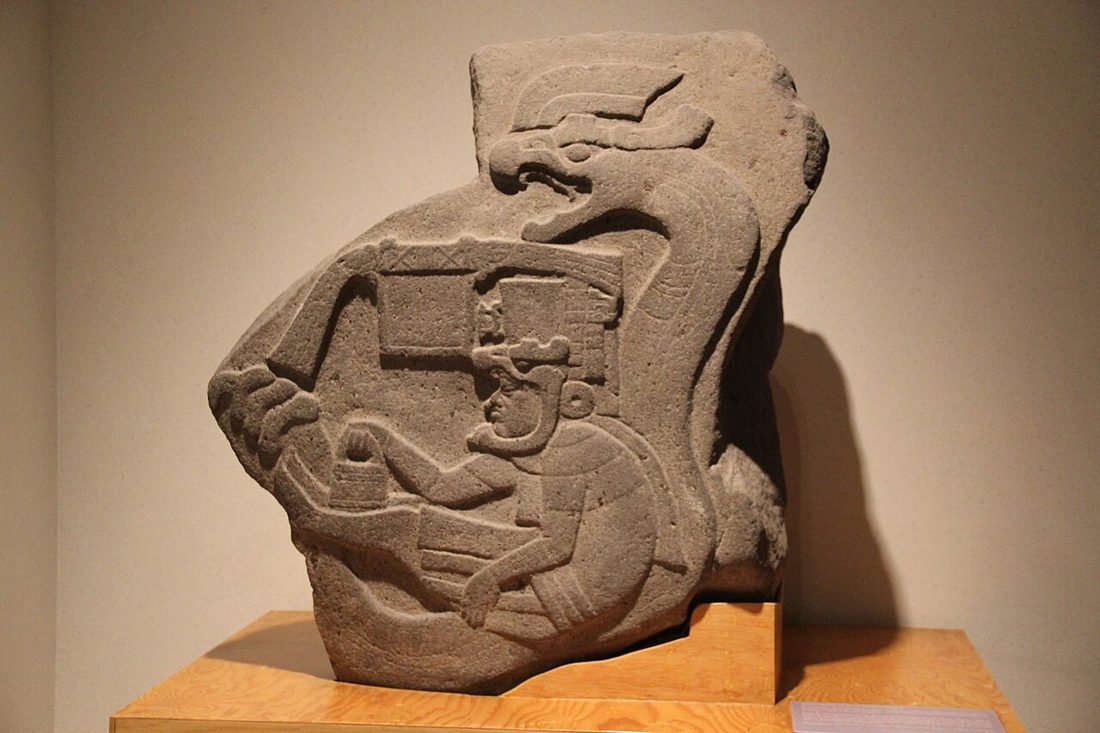
Olmec La Venta

La Venta’s figure and serpent

Monument 19, with its figure, serpent and handled object.

Why these examples belong together

One monument represents a wider proposed tradition. Its different features can participate in different comparisons.

La Venta Monument 19: seated figure inside a serpent
object · La Venta

La Venta · Monument 19

A seated figure sits within a serpent and carries a small handled form. The INAH discussion considers a copal bag.

Dates, sources & image record
  • c. 900–400 BCE · site contextsite context · Broad principal La Venta horizon; an individual monument date remains to be tightened. Date source

photograph · Gary Todd. CC0. Image record
Existing source image; displayed uncropped. No generated reconstruction.

La Venta Monument 19 in El Tlacuache 1199 · La Venta: archaeological site

The proposed connection

What makes it a question?

The same compact outline is pointed out across ancient Anatolia, Assyria and Mesoamerica. The time gaps and distant contexts motivate the proposed anomaly.

Seven explicitly develops the Göbekli Tepe / West Asian handled-form proposal. The project archive preserves the extension to La Venta; the earliest proposer of that three-way version is untraced.
Secret of the Gods: stone handbags

Look closely

What appears to correspond

  • An arch or handle rises over a roughly enclosed lower form in the selected images.
Keep in the frame

What differs or remains uncertain

  • Pillar 43’s forms are arranged overhead and are not visibly carried.
  • The Nimrud bucket belongs to a cone-and-bucket ritual ensemble.
  • La Venta’s small carried object has its own local interpretation; shared shape does not establish shared function.
Transmission check

No route established in this review

No transmission sequence for this specific comparison has been established in the sources reviewed. That is not proof that contact was impossible.

What would move this forward

  • Collect handled forms and plausible non-container alternatives without selecting only good matches.
  • Trace each interpretation to an object-specific source.
Follow the evidence

Sources & scope

Provisional editorial record; no independent specialist sign-off. Status describes review depth, not the probability of a historical connection.
  1. claim · Ryan Seven; hosted by Graham Hancock

    Secret of the Gods: stone handbags

    Guest article, 11 March 2019. Proposes a shared geometric reading of handled forms, including Göbekli Tepe.

  2. excavation · Oliver Dietrich / DAI

    Pillar 43: of animals and a headless man

    Excavation-team discussion of the depicted animals and competing readings of the disc and upper forms.

  3. museum · The Metropolitan Museum of Art

    Eagle-headed relief · 32.143.7

    Exact object pictured here: Nimrud, reign of Ashurnasirpal II, ca. 883–859 BCE. Bucket and cone in a protective ritual context.

  4. research · INAH

    La Venta Monument 19 in El Tlacuache 1199

    Page 18, figure 17: figure within a serpent and a possible copal bag. This does not establish the meaning of distant handled forms.

  5. project · Deep Memory

    The project’s illustrated comparison archive

    Records comparisons assembled from this repository and supplied material. An external first proposer has not been traced for every pair.

  6. excavation · DAI

    The Göbekli Tepe research project

    Site chronology: tenth and ninth millennia BCE. This is a context range, not a direct date of every carving.

  7. heritage · INAH

    La Venta: archaeological site

    Provides site context and a principal 900–400 BCE horizon, used as a broad context range rather than an individual monument date.