Motif family
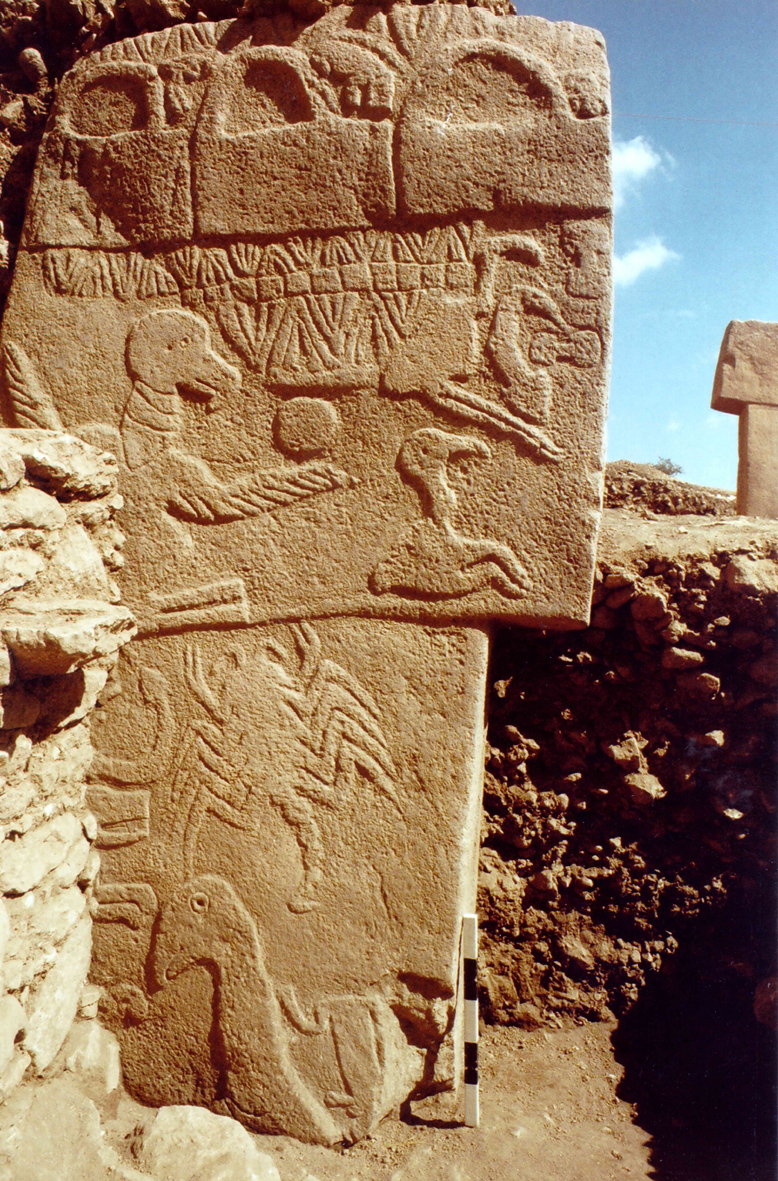
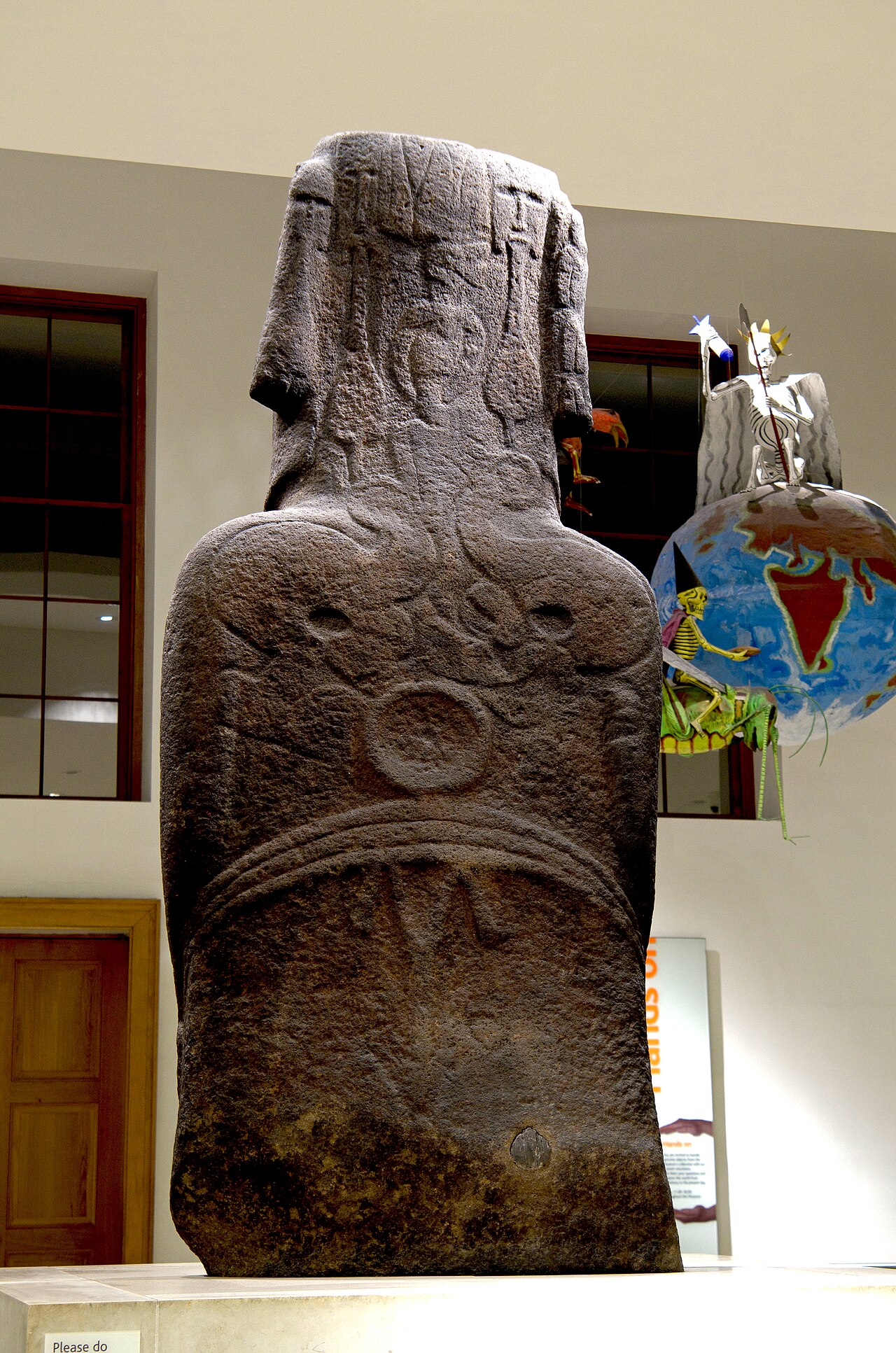
Birds & human forms
Bird bodies, human limbs, costumes and attendants. Which combinations recur?
8 traditions · 17 records · 4 leads
Follow a motif across cultures. Look closely at the objects, dates and stories behind the resemblance.
Two cultural worlds, separated by an ocean and millennia. A resemblance becomes more interesting when we place it among the objects around it.
Explore the two groups ↗Follow all three lines of comparison →Culture pairs, ordered by how many separate comparisons stay open after a source check. An index entry, never a verdict.
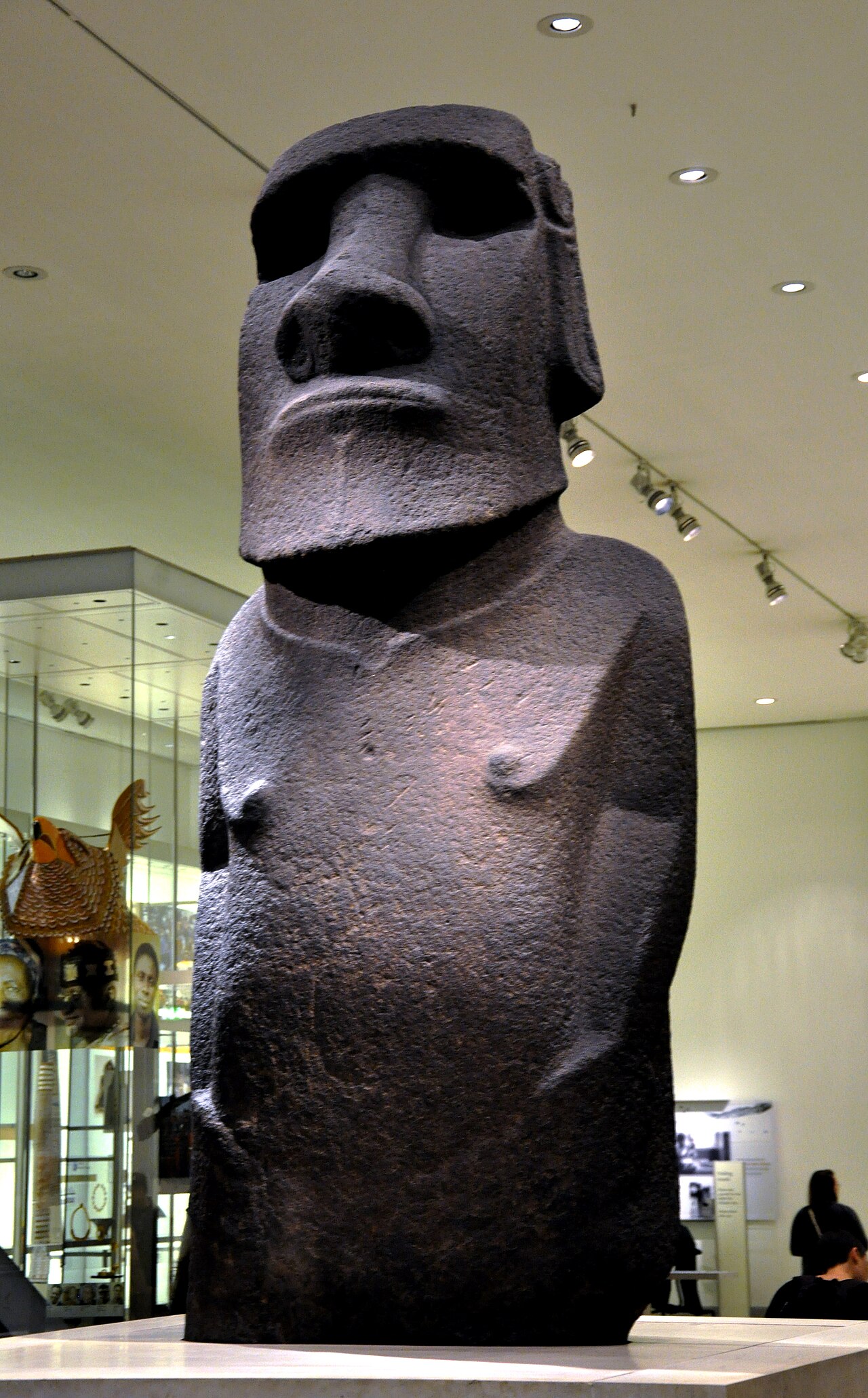
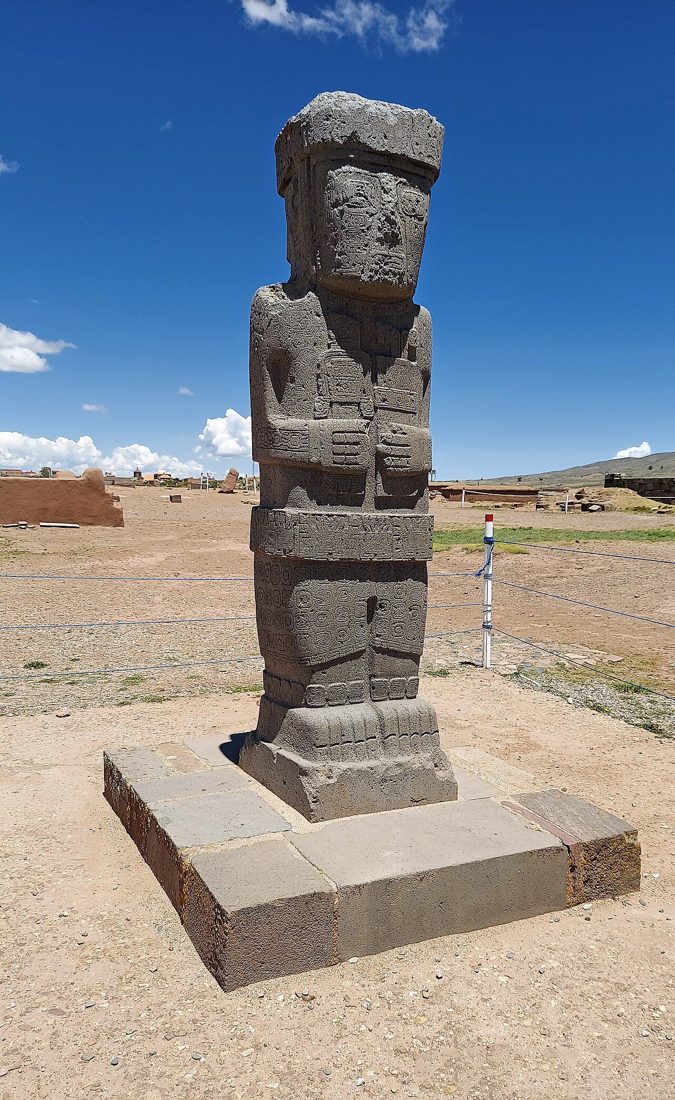
Birds & human forms · The bird & the rounded form · Hands across the torso · Ribs & lean bodies
Hands across the torso · Birds & human forms
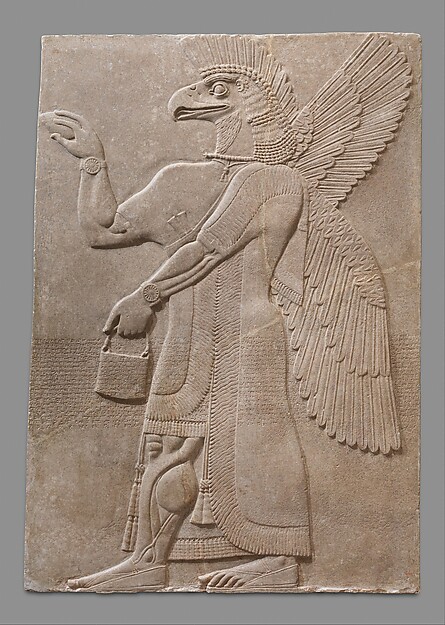
Birds & human forms
Images first. Sources always within reach.
19 motif families · 20 comparison threads
Bird bodies, human limbs, costumes and attendants. Which combinations recur?
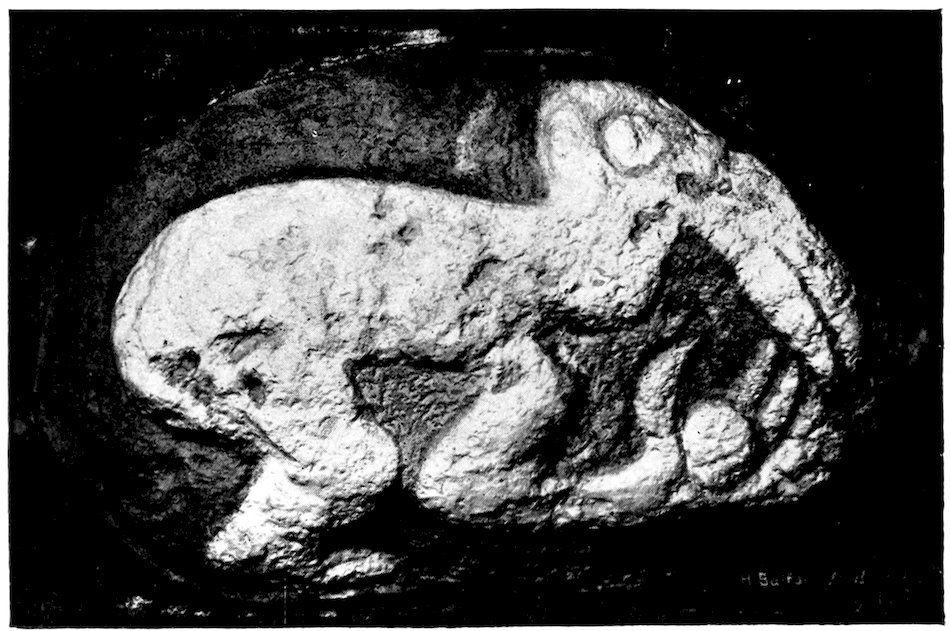
A narrower question: where is the rounded form, and how does the bird relate to it?
An arch is visible. A shared object, use or meaning still needs evidence.
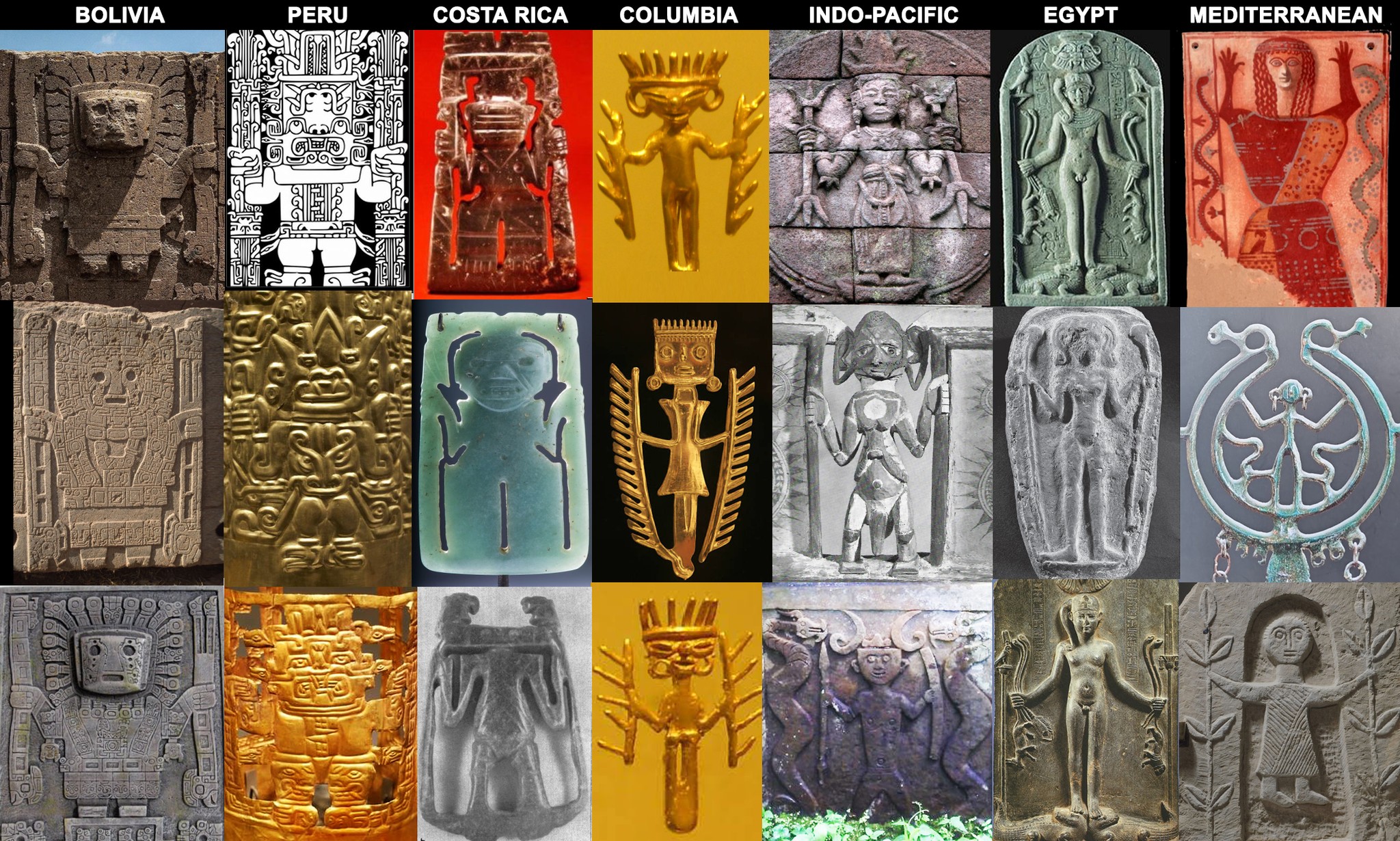
Central figures with something on each side: one broad family, several distinct arrangements.
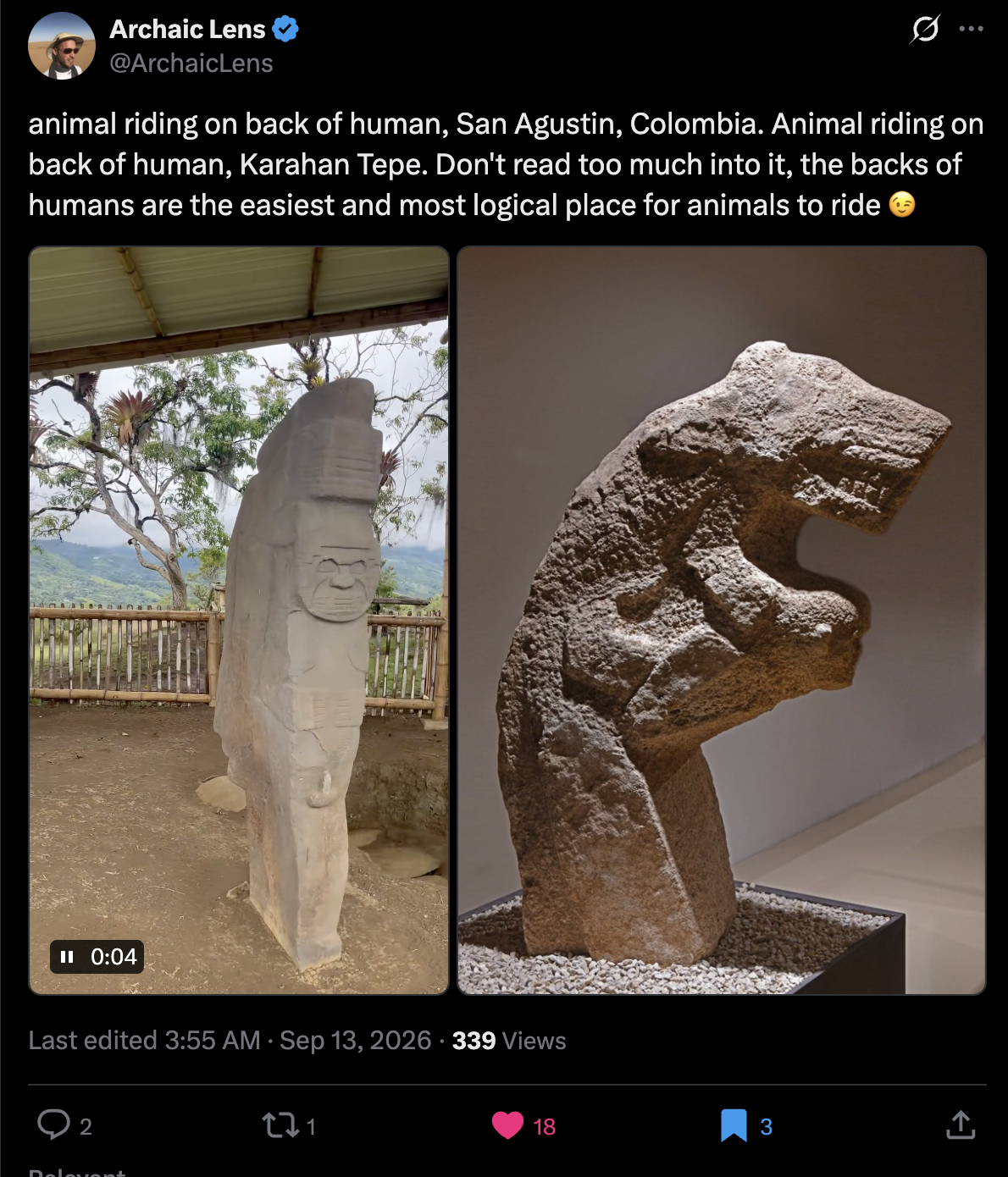
The San Agustín–Karahantepe comparison, awaiting object records.
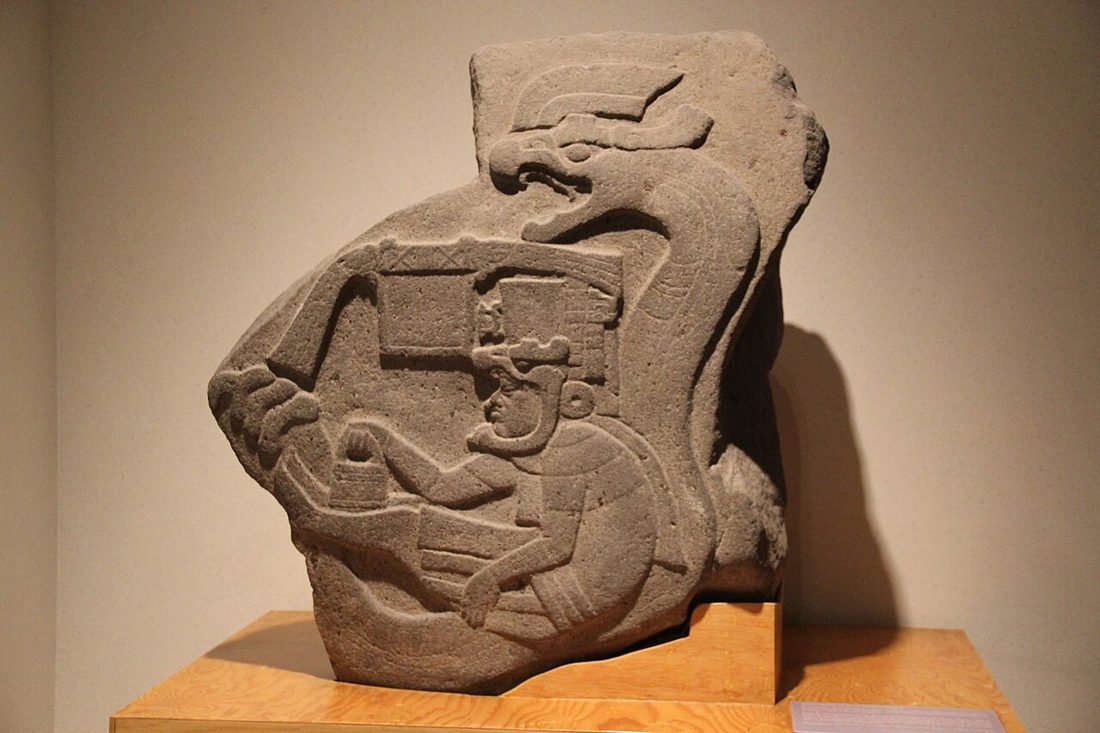
Figures framed by a serpent or a creature’s open form. The captions need checking.
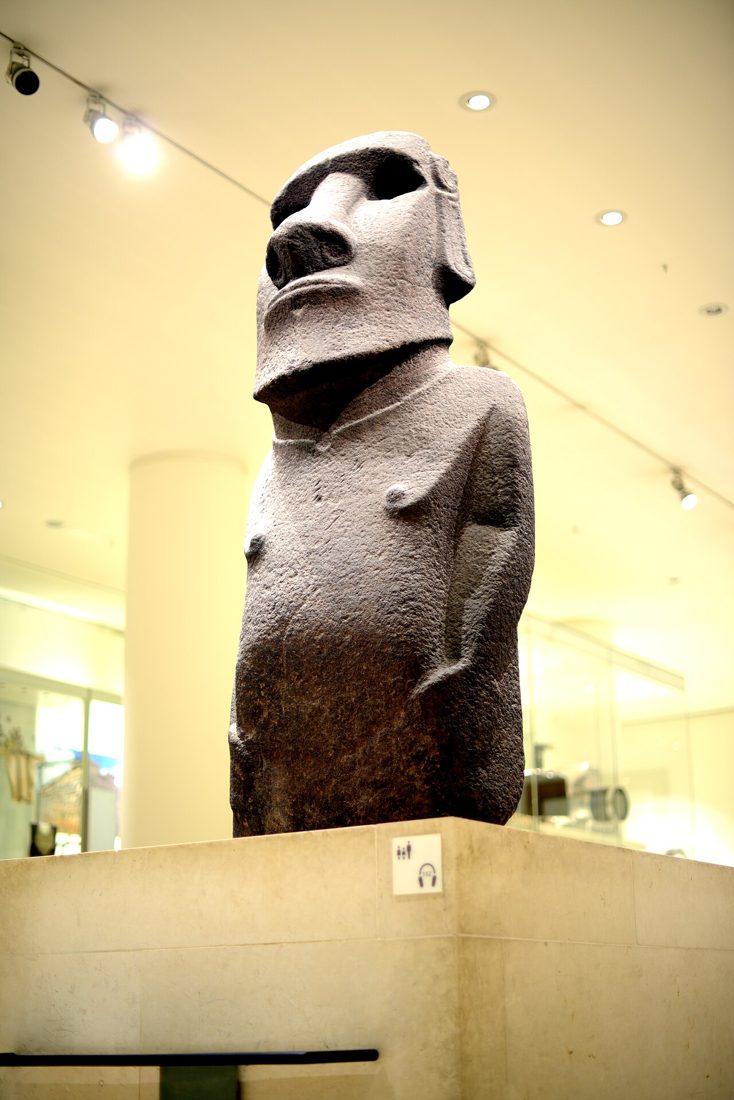
Similar poses across stone figures; the objects and carving episodes stay separate.
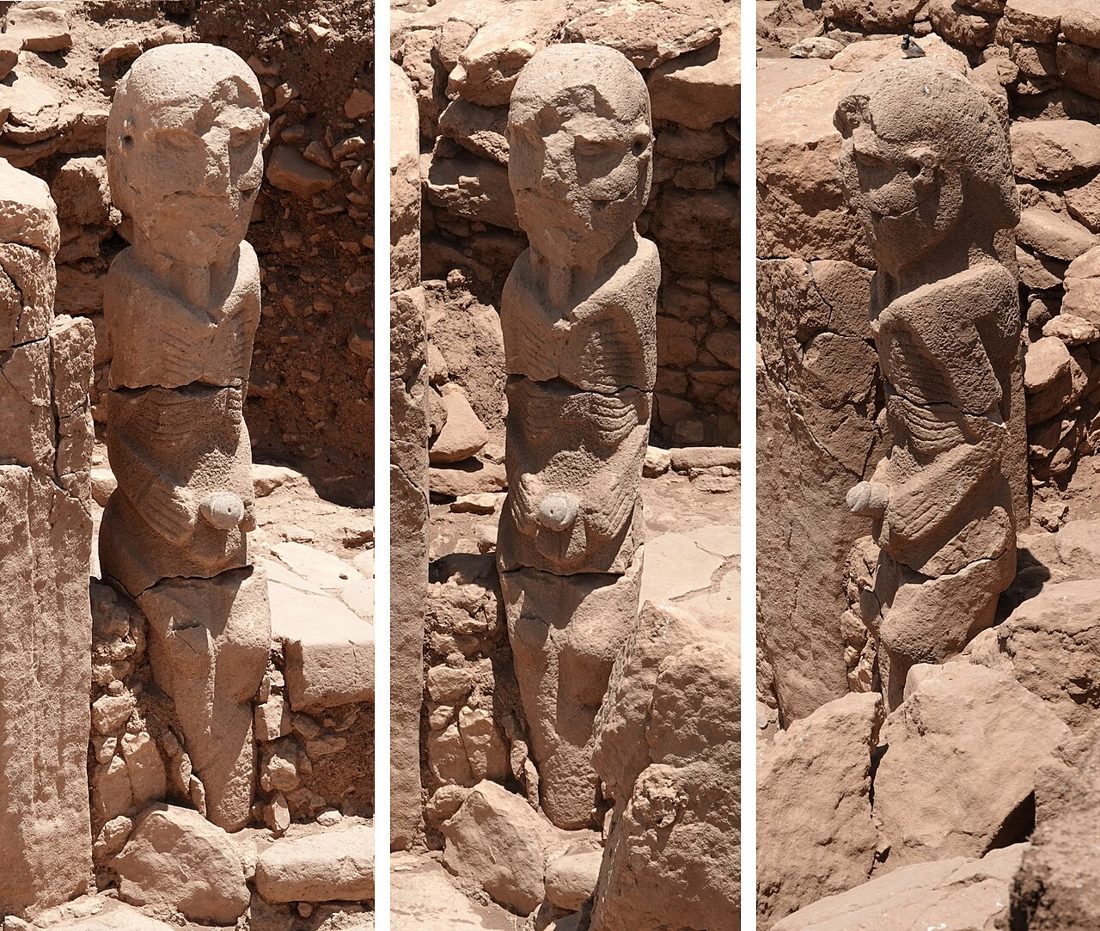
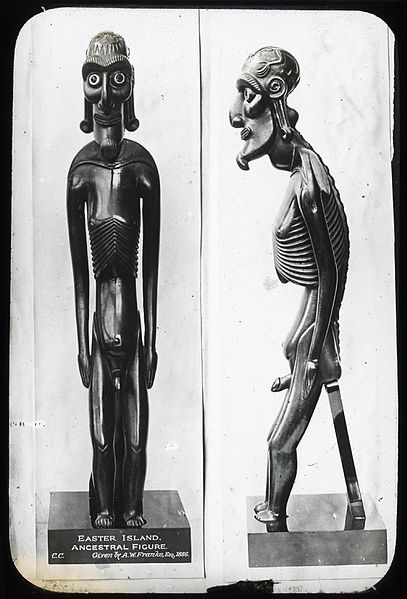
Prominent ribs in Anatolian sculpture and Rapanui wooden figures.
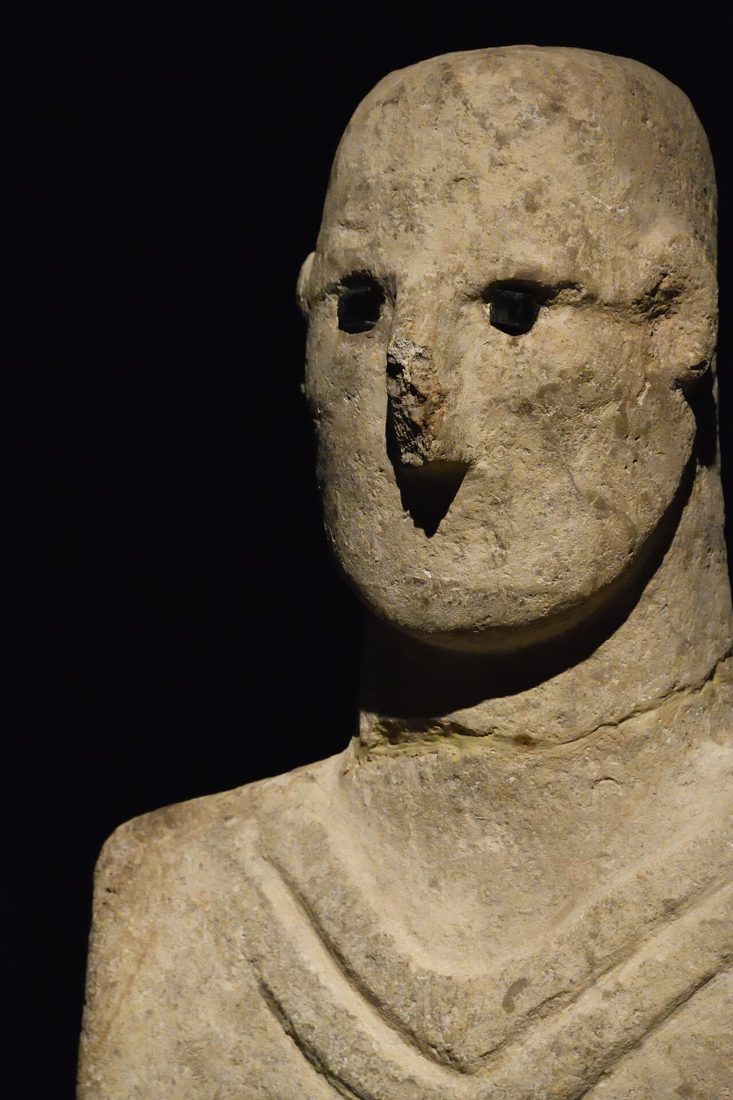
Urfa Man’s collar and the proposed “V-neck” on Pillar 43.
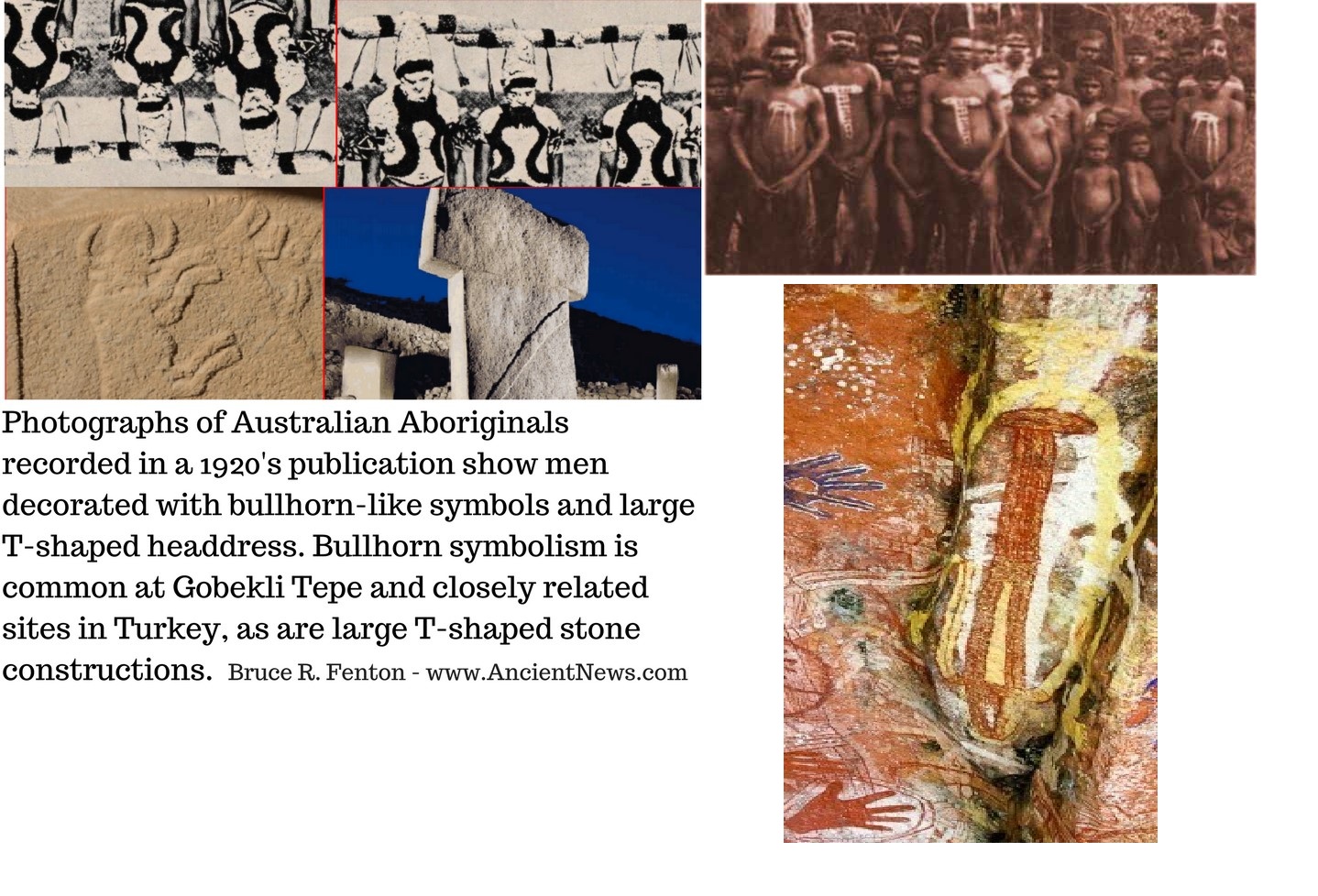
Pillars, headdresses and painted figures in a proposed Australian connection.
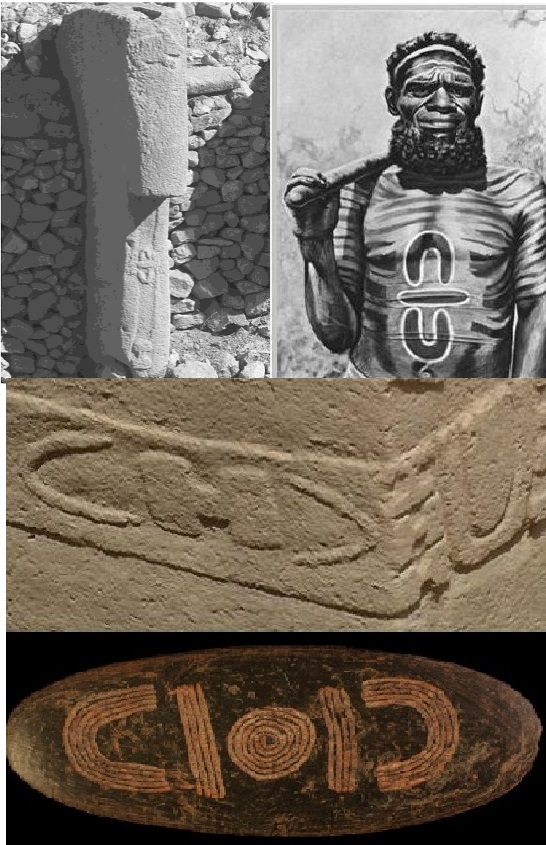
Bracketed marks, body painting and incised objects in the supplied thread.
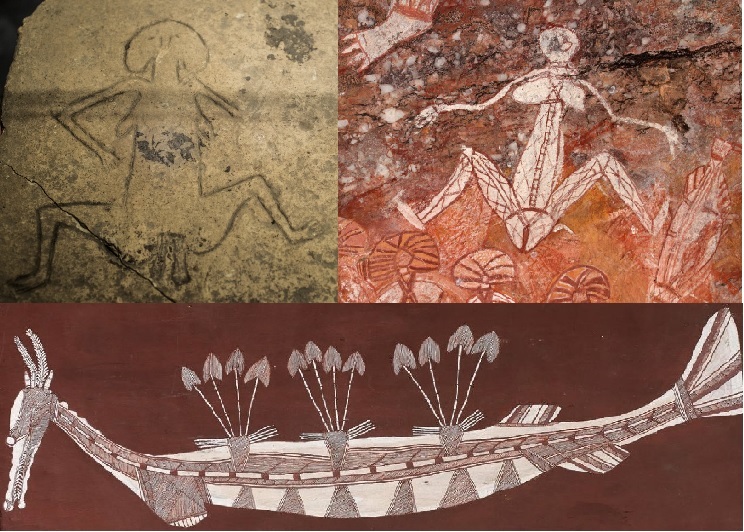
A posture comparison whose identities, episodes and meanings need untangling.
Head shapes, feathers and body curves: keep the specific feature in view.
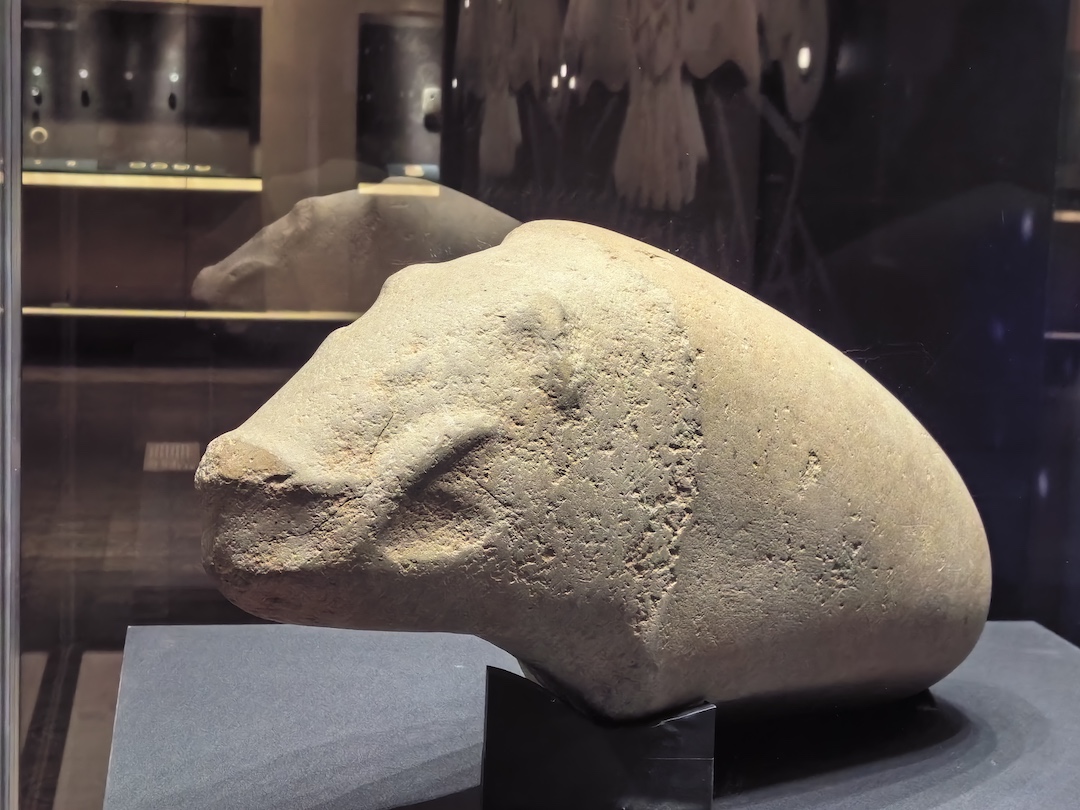
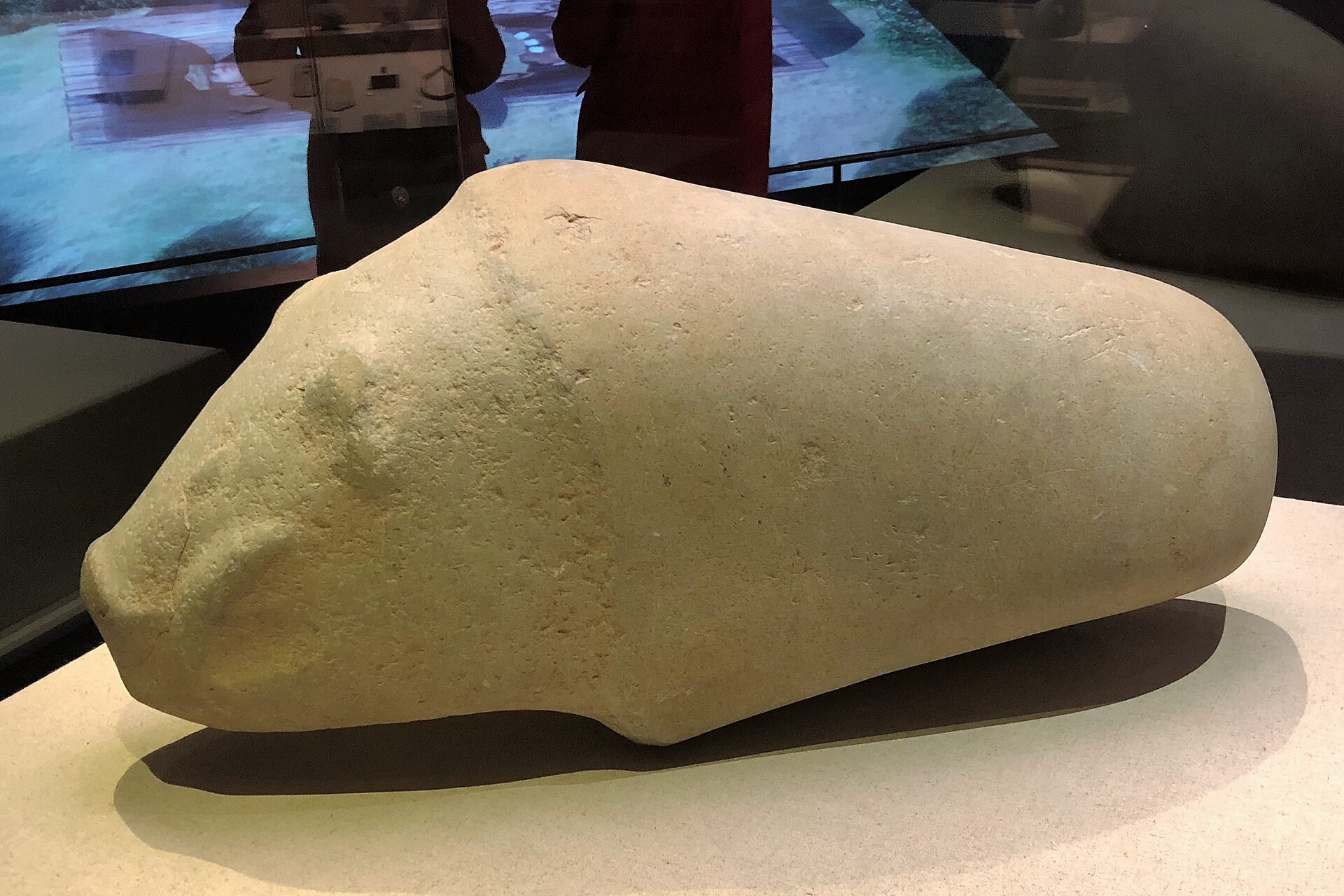
Boars, pigs and unseparated animal images from the inputs.
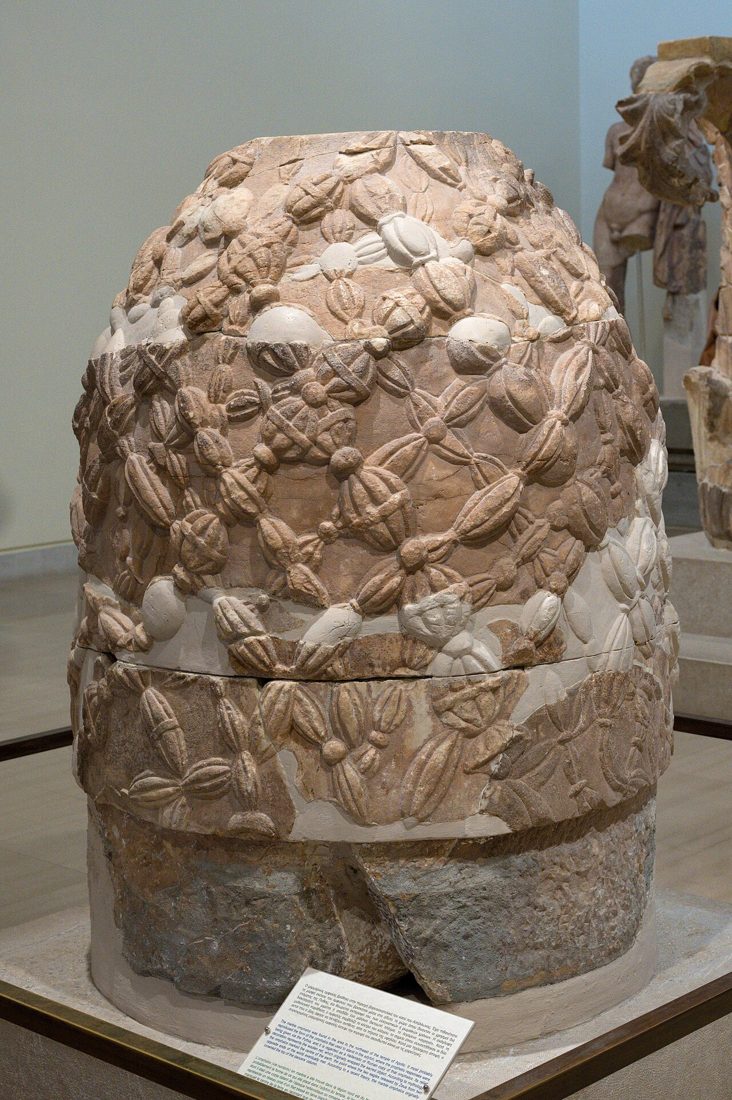
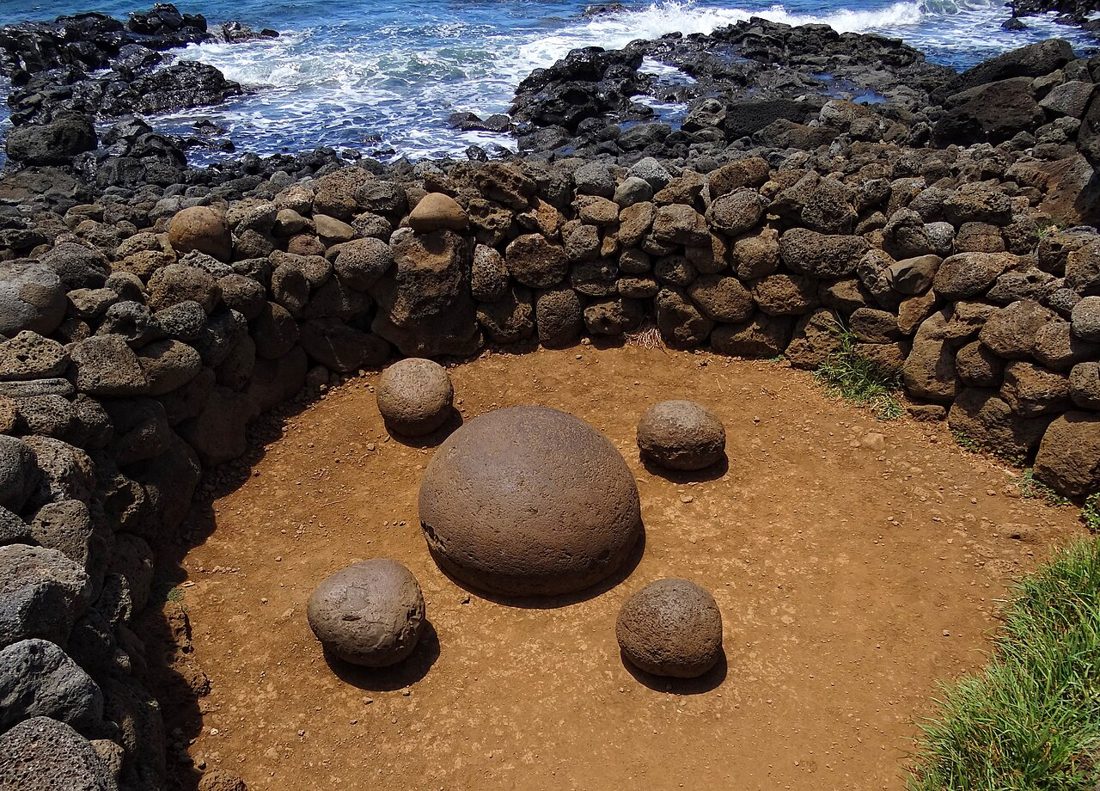
Stones, place names and claims of a sacred centre are different kinds of evidence.
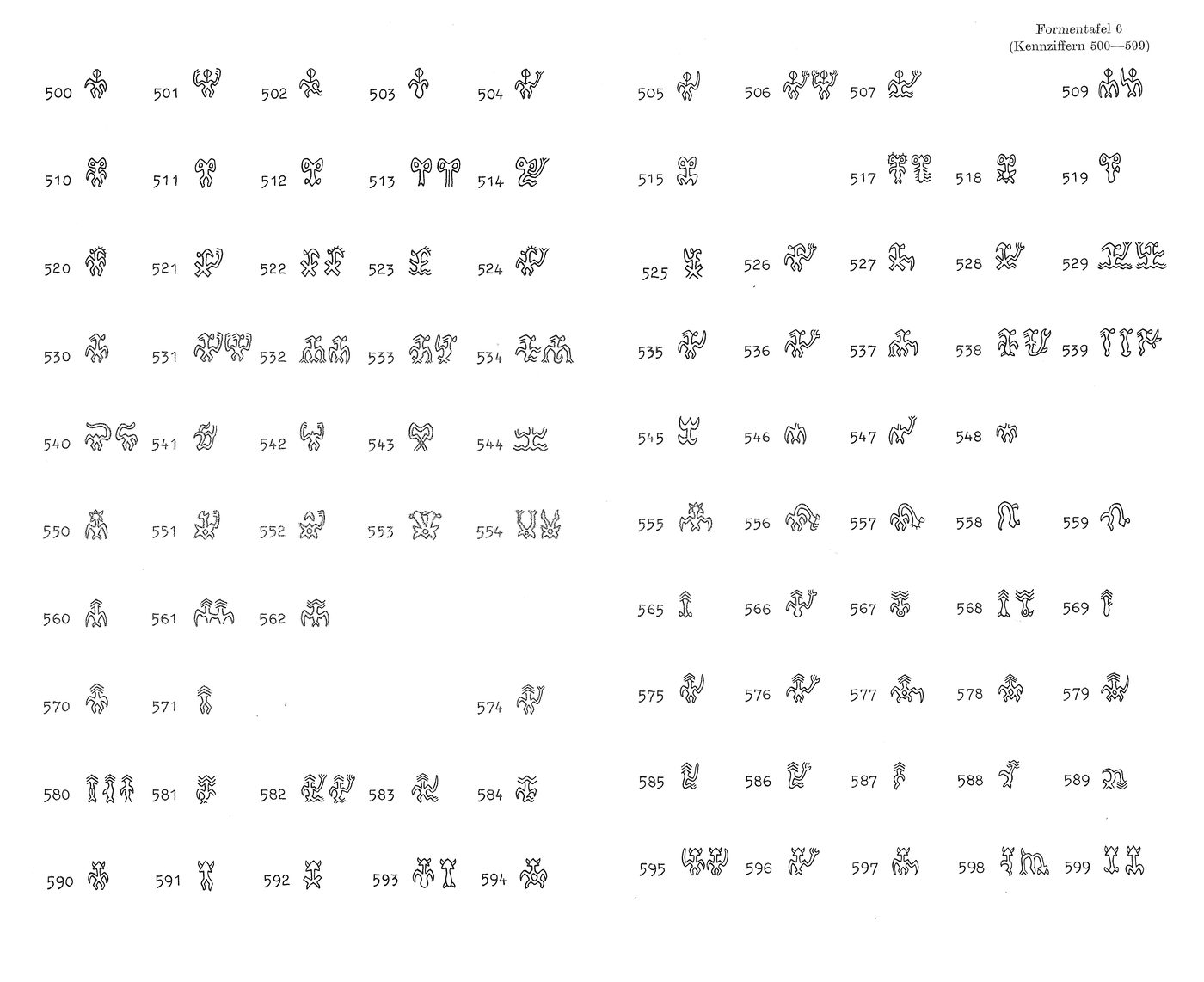
From selected look-alikes to whole repertoires and families of signs.
Arrivals, instruction and departures, checked against particular witnesses.
A boat is a broad resemblance. A sequence of actions is a more precise question.
Similar profiles invite comparison of construction, use and local predecessors.
Birds, bent limbs and rounded forms, across a vast interval in place and time.
The precise composition that makes the central puzzle worth a closer look.
Arched forms and carried containers: how much of the resemblance survives context?
Anatolian, Pacific and Andean figures invite a comparison of gesture.
Karahantepe’s stone figure and the moai kavakava repertoire.
Two repertoires transform the human figure in visibly different ways.
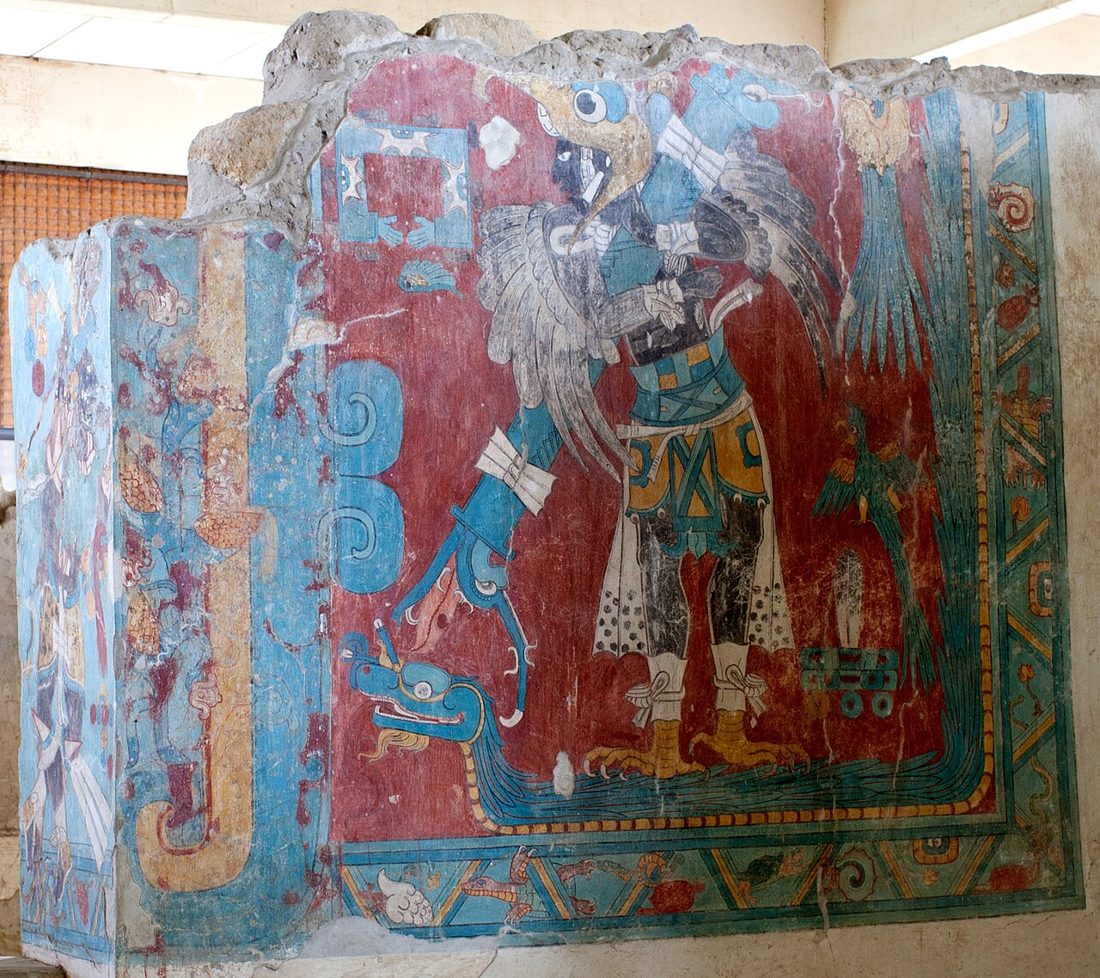
A bird-costumed mural figure beside the Rapanui birdman tradition.
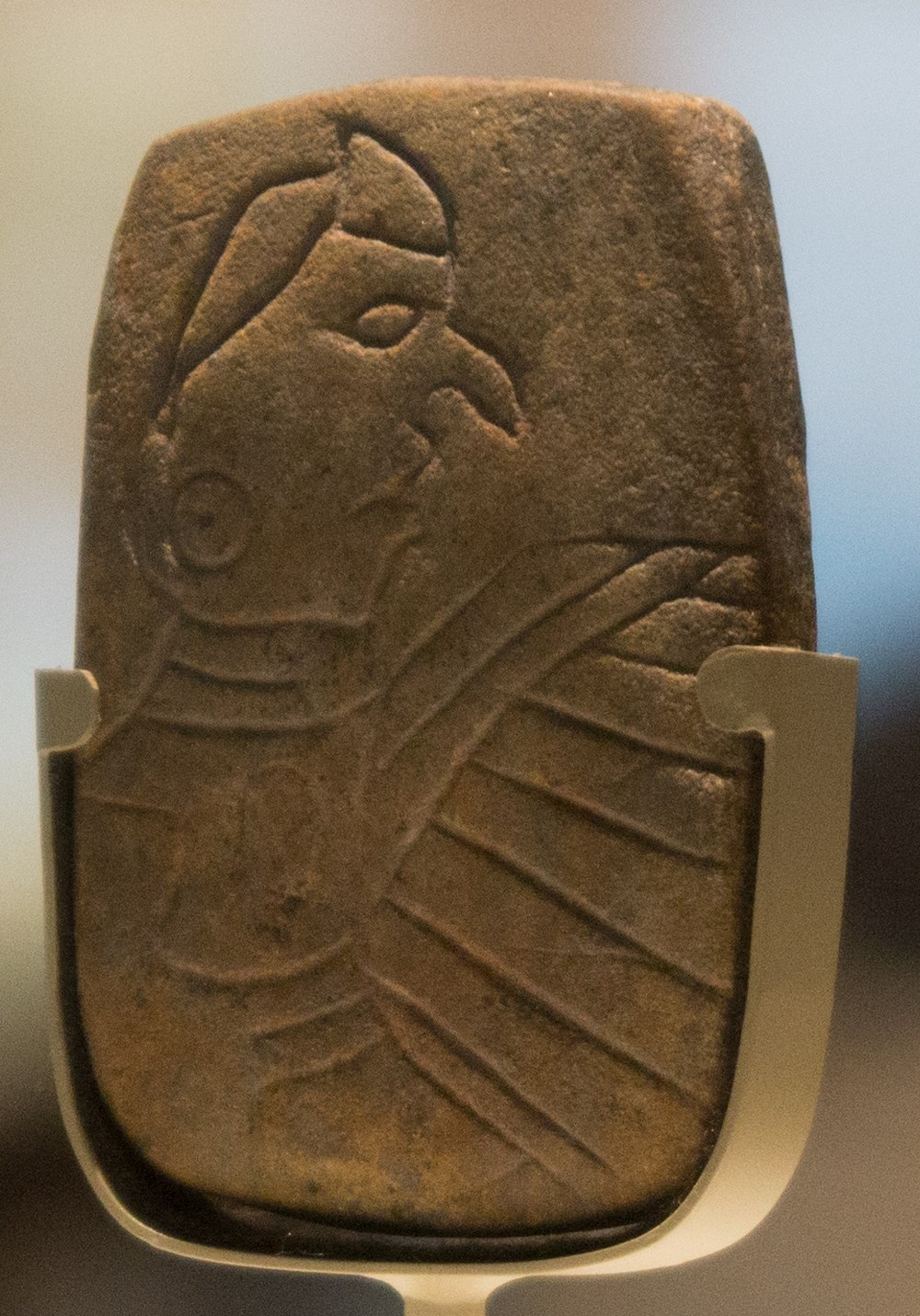
A North American lead, with the image’s status kept in view.
Delphi and Rapa Nui: a visual comparison intertwined with language.
Does the resemblance survive beyond the famous selected signs?
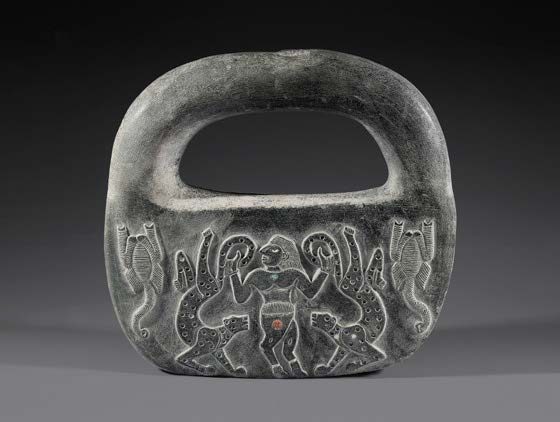
Handled forms, human figures and snakes in the Jiroft–La Venta comparison.
A boar comparison that begins with identity rather than a verdict.
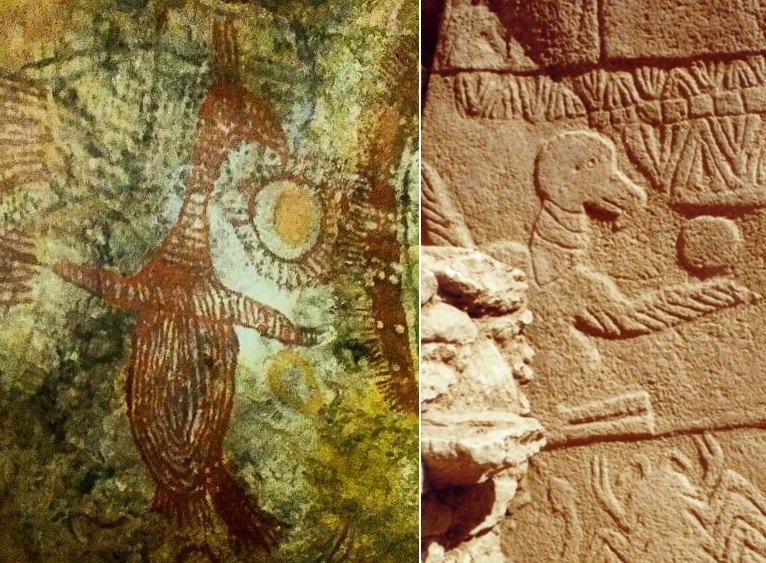
The Australian painting in Fenton’s proposed connection.
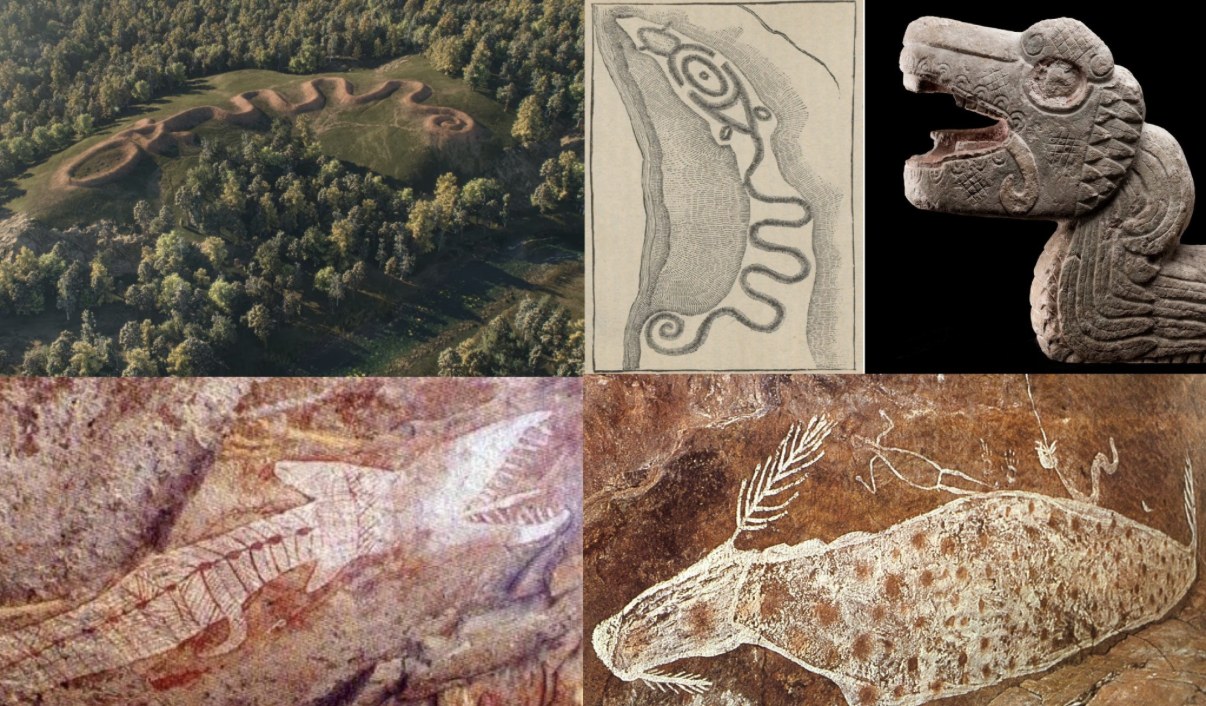
A widely shared creature needs a precise comparison.
A being from the sea teaches people, then returns to the water at night.
∿A creator and teacher travels through the Andes and departs across the sea.
∿Crafts and teachings are associated with Tollan; a later departure uses a serpent raft.
∿Oannes, Viracocha and Quetzalcoatl, compared at the level of passages.
A teaching figure arrives by an inland route in the inspected colonial account.
∿A being from the sea teaches people, then returns to the water at night.
∿Bochica shows why compressed retellings need checking.
A being from the sea teaches people, then returns to the water at night.
∿An intriguing caption, still looking for its source.
A warning, a vessel, survival through a flood, then birds sent out to seek land.
∿A fish warns Manu, has him prepare a boat, and guides it through the flood.
∿Manu and Mesopotamian flood traditions, without compressing their differences.
A stepped masonry monument at Saqqara, Egypt.
∿A stepped temple platform at Chichén Itzá, Mexico.
∿A proposed Egypt–Maya resemblance enters as a clearly marked research lead.
The moai back belongs beside Rapanui rocks, boulders and painted slabs.
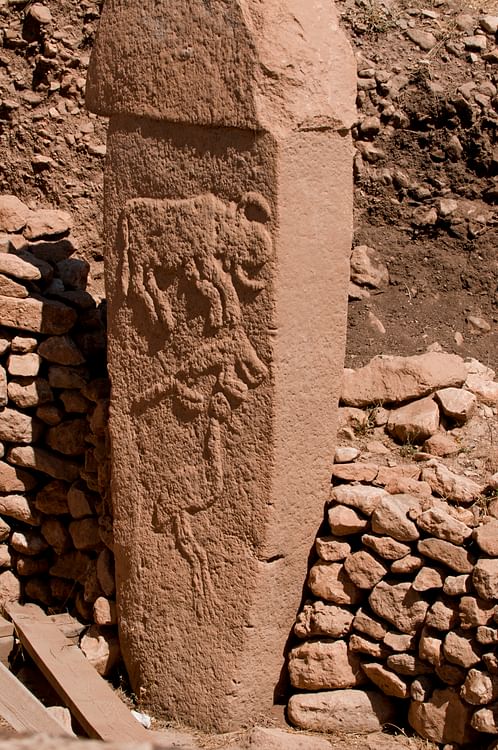
Pillar 43 considered alongside another local animal ensemble.
Ancient genomes preserve evidence of contact with people from the Americas.
∿An independent genetic line of evidence changes the question of complete isolation.
∿Rapa Nui and the Americas, through ancient genomes.
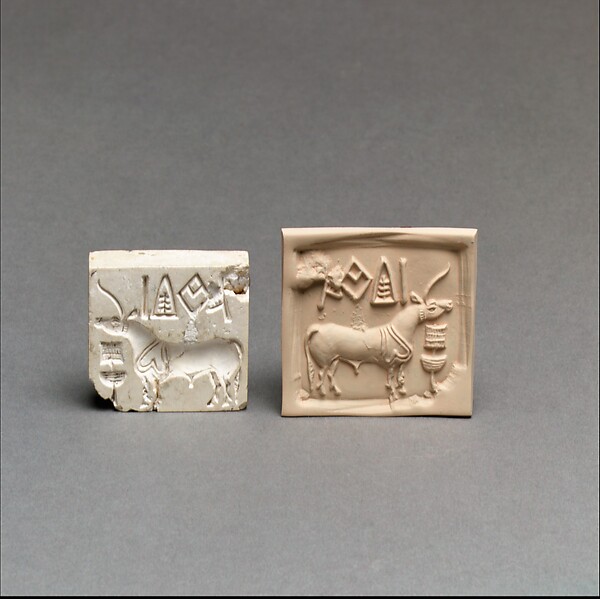
Seals found outside their producing regions provide material evidence of exchange.
∿The Indus world and Mesopotamia as a documented exchange control.
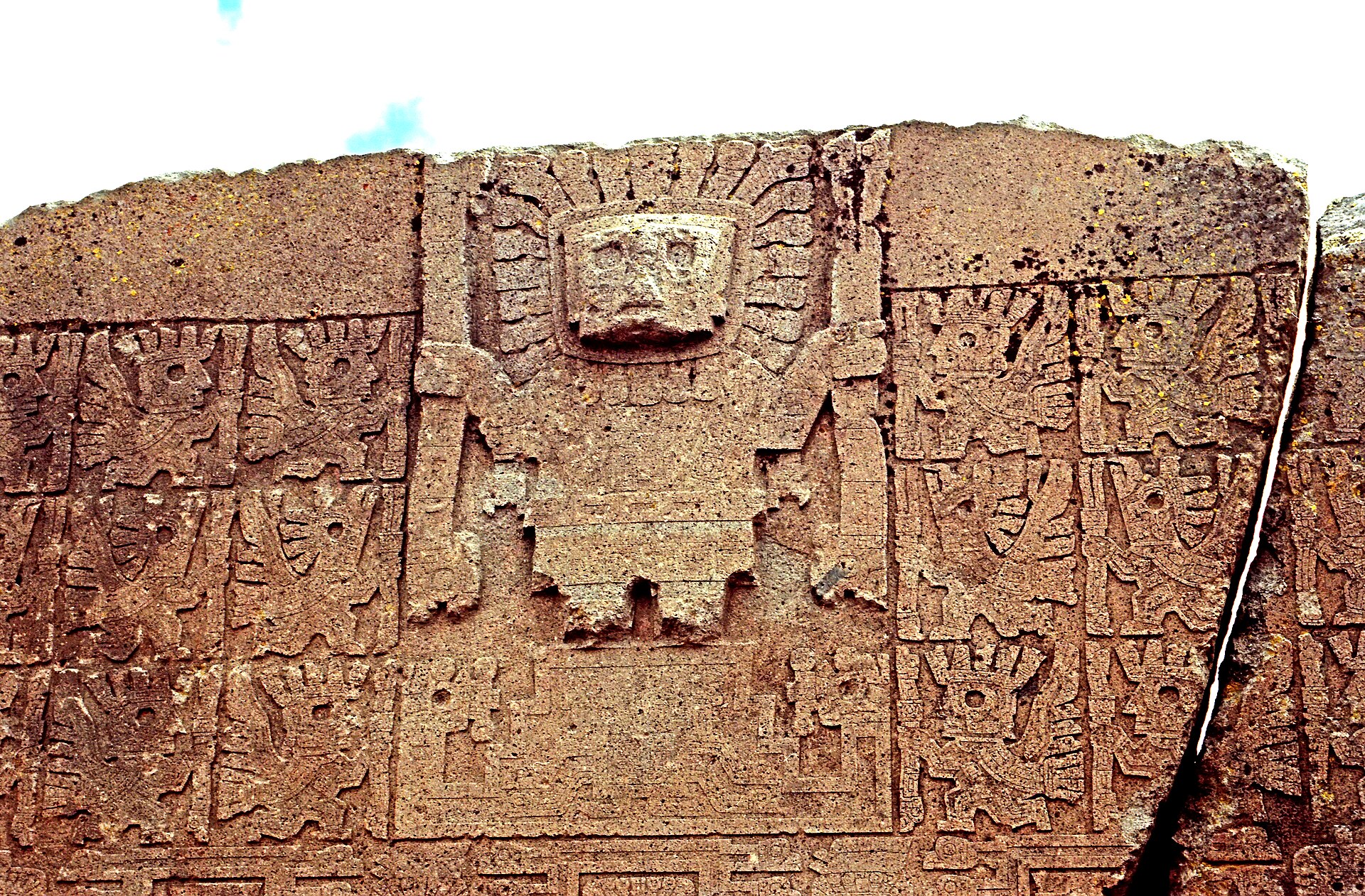
The Gate of the Sun joins the wider birdman question.
Try a broader theme or date interval. Unresolved dates and context controls can be included under Refine.
We catalogue proposed anomalies, with ordinary transmission and local examples as optional controls. Inclusion records a question, not an established historical connection.
Families gather examples across any number of cultures. Each observation names its object and features; a culture does not inherit every motif found in its comparison partners.
Review stages describe source checks, not anomaly scores. “Documented” observations are source-linked editorial readings; they are not independent expert certification. Unidentified images remain leads.
Map lines connect comparisons. Date bands describe particular objects or witnesses. Unknown dates stay unknown. Selected examples cannot establish worldwide motif frequencies.